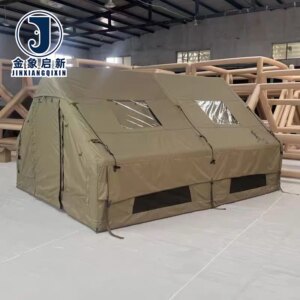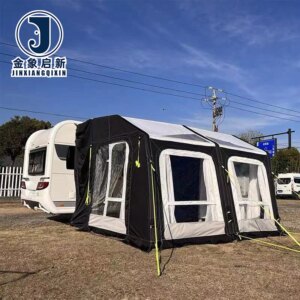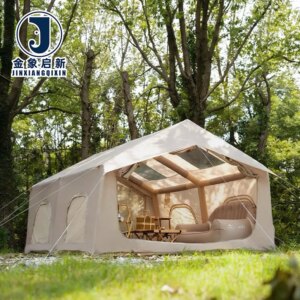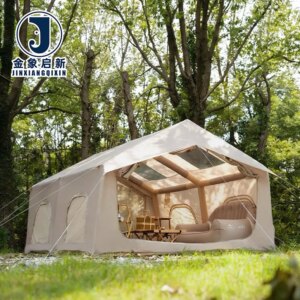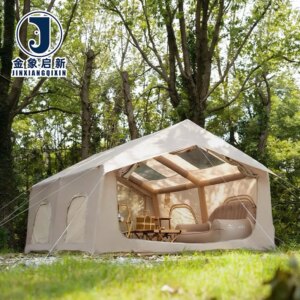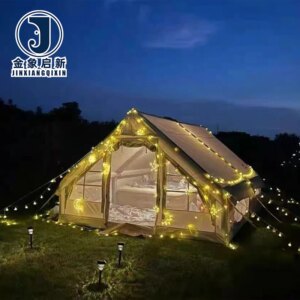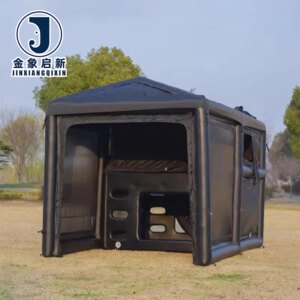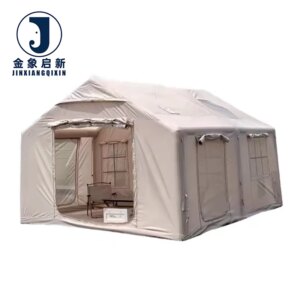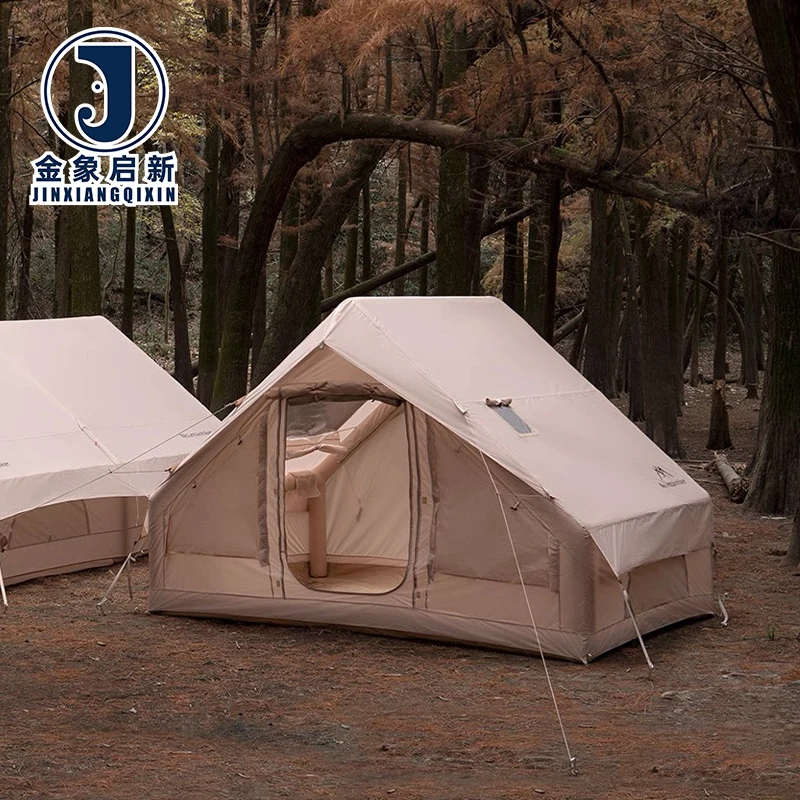
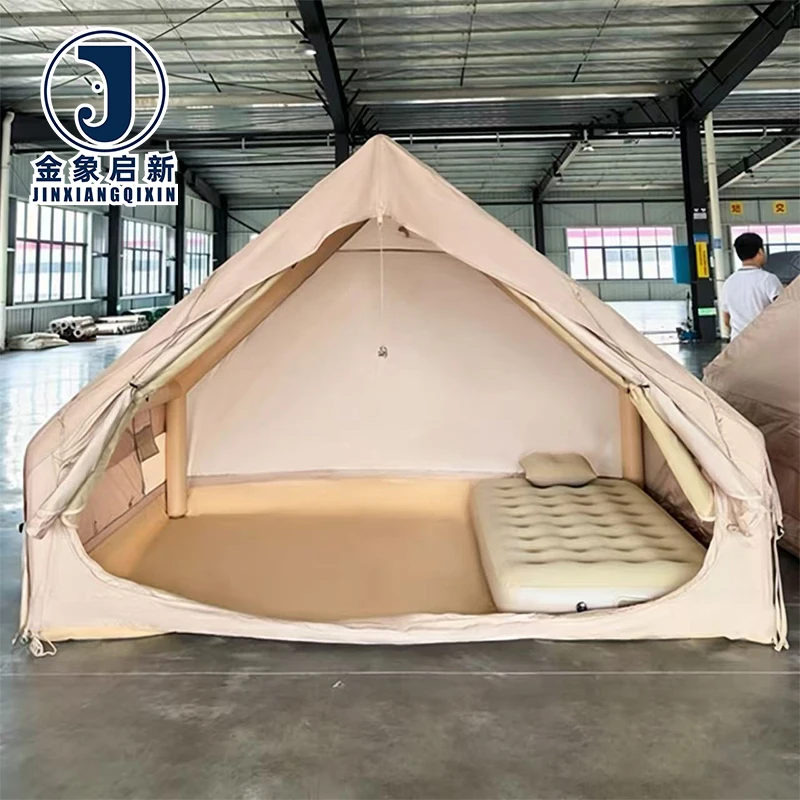
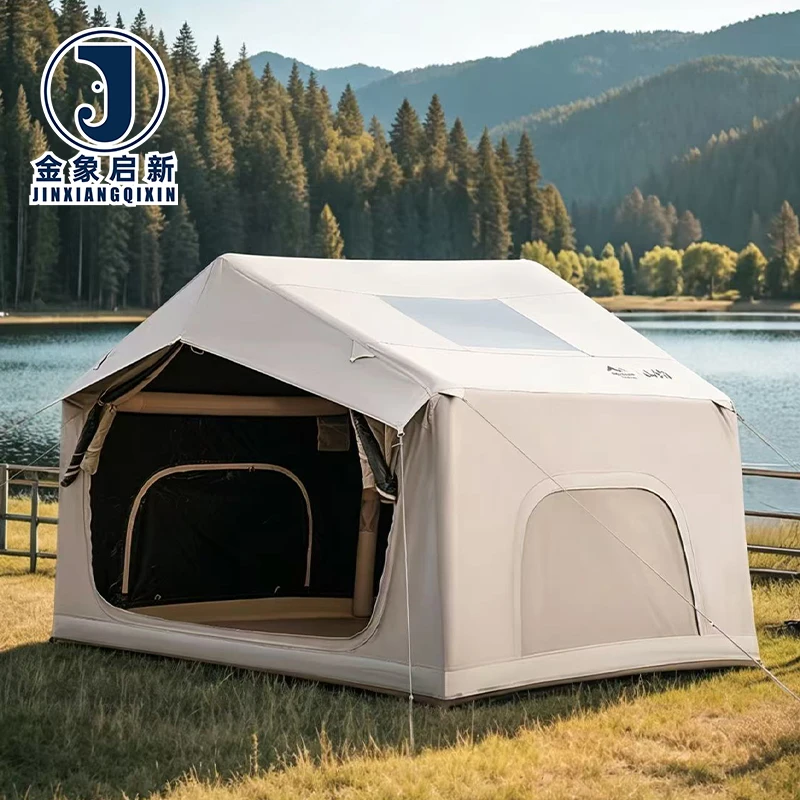
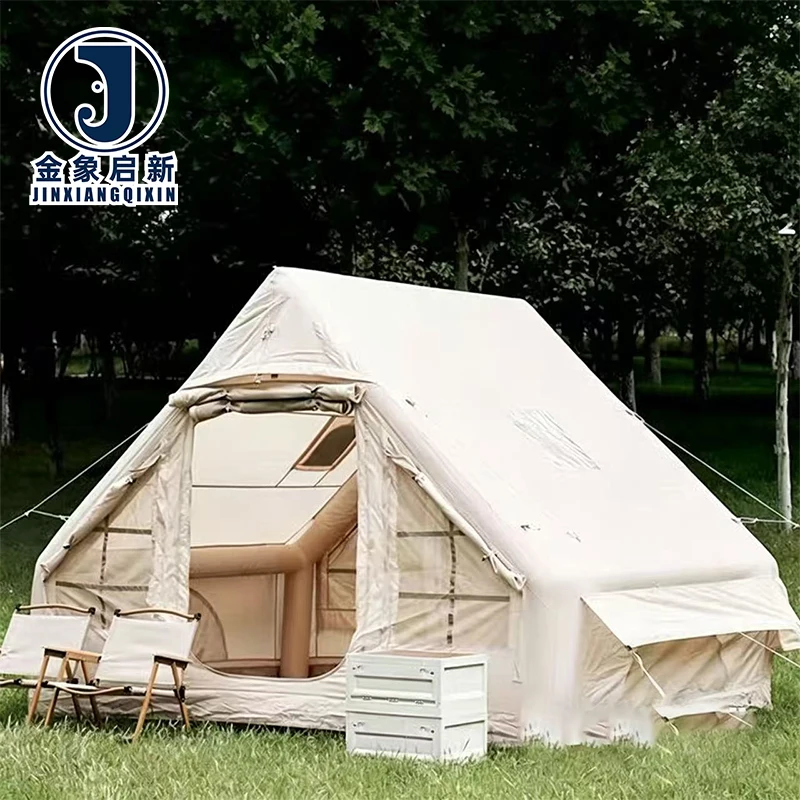
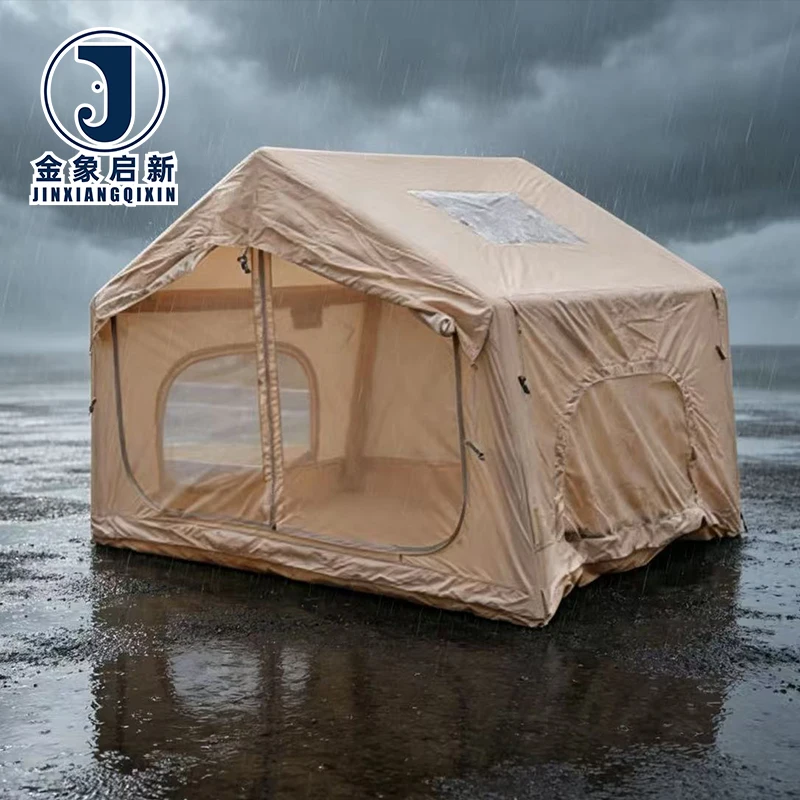
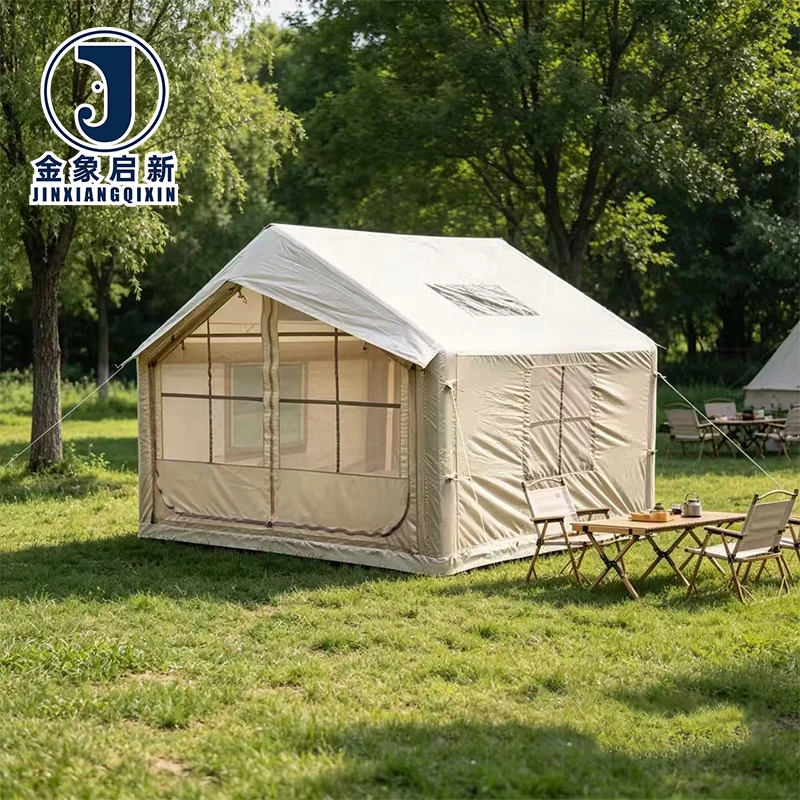
Description
Custom PVC Formulation — Every inflatable camping tent fabric run is matched to batch-specific coating weight and adhesion records, ensuring consistent inflation performance across the full production batch.
Technical Specifications
| Parameter | Value |
|---|---|
| Product Type | Inflatable Camping Tent |
| Core Material | PVC tarpaulin |
| Capacity | 1–12 Person |
| Deployment | Quick automatic opening |
| Season Rating | Four-season |
| Key Features | Waterproof, UV-resistant (test basis not stated in source), tear-resistant, fire-retardant (grade not stated in source), anti-static (standard not stated in source) |
| Customization | OEM & ODM (size adjustments, material selection, pattern printing, design modifications) |
| Production Standards | ISO 9001, ISO 14001, ISO 45001, CE |
Application Suitability
| Application | Exposure & Requirement |
|---|---|
| Temporary site shelters for construction | Wind loading on inflatable beams, ground abrasion at base, dust and moisture ingress |
| Outdoor event infrastructure and commercial enclosures | High foot traffic around entrances, UV exposure during extended assembly periods, branding visibility on exterior panels |
| Emergency response and rapid-deployment shelter | Minute-critical inflation speed, repeated pack-and-redeploy cycles, variable climate operation |
| Mobile field operation bases | Remote logistics constraints, temperature swings affecting internal air pressure, equipment storage inside |
Why "Fire-Retardant" Without a Test Certificate Fails on Site
A tent labelled fire-retardant is useless if the site inspector cannot match the claim to a recognised standard.
Buyers sourcing inflatable camping tents for construction or event sites frequently specify flame resistance in the purchase order, only to receive material with no accompanying test report. The fabric may pass a basic ignition check in a lab, yet lack the documented classification required by local fire safety regulations or the principal contractor’s site rules. When the inspector asks for the certificate, the project stalls. [NEED_CITE: fire safety documentation requirements for temporary structures on commercial sites]
Coating Consistency Across Inflatable Beam Sections
Inflatable structures depend entirely on airtight beam channels that hold pressure under load. The PVC tarpaulin used here is produced on dedicated coating lines where weight and adhesion are monitored continuously. Consistent coating thickness along the beam fabric prevents weak spots that could lead to slow leaks or sudden deflation during use. This is especially important for the 1–12 person capacity range, where beam diameter and internal pressure vary significantly between smaller and larger tent models.
Pattern Printing and Panel Colour Matching
When multiple inflatable camping tent units are deployed side by side at an event or site, visible colour variation between panels undermines the professional appearance. Colour consistency is controlled at the compounding stage, where pigment ratios are locked to a reference standard before the batch enters the coating line. Pattern printing for branding or wayfinding is applied as a separate stage, allowing buyers to specify logos or instructional graphics without affecting the base fabric specification. [NEED_CITE: colour measurement and tolerance standards for coated fabrics]
How PVC Coating Weight Relates to Beam Integrity
The inflation pressure inside structural beams places constant hoop stress on the fabric. Coating weight, measured in GSM, works together with the base fabric denier and weave density to resist this stress. A heavier coating alone does not guarantee stronger beams; if the base fabric has low tensile values, the coating may crack at fold lines during repeated packing and deployment. Conversely, a tightly woven base with adequate coating adhesion ensures the beam holds its profile without bulging at the seams. For four-season use, the fabric must also remain flexible at low temperatures and resist softening in direct summer sun, both of which depend on the specific PVC formulation chosen.
What Happens When Specifications Are Selected by Price Alone
Tent fabric ordered without verifying the relationship between coating weight, base fabric construction and intended inflation pressure often reveals its shortcomings only after deployment. Panels may stretch unevenly, causing the structure to lean. Weld seams on beam channels can separate under cyclic pressure loading, particularly at the joints where flexing concentrates. Fire-retardant or anti-static treatments applied as an afterthought rather than integrated during compounding may wash off or degrade after limited exposure, leaving the buyer to re-source compliant material mid-project. [NEED_CITE: common failure modes in inflatable structure fabric under cyclic loading]
Production Capability Behind Every Order
The 9,180 m² facility running three full production lines means inflatable camping tent fabric is not squeezed between unrelated product runs. Dedicated line time allows coating parameters to be set and held for the full batch. The 10-technician R&D team reviews each OEM or ODM request against material compatibility before sampling begins, rather than passing a generic specification through. Full-process quality inspection with dedicated QA and QC staff on site catches coating weight drift or adhesion issues before the fabric leaves the line. ISO 9001, ISO 14001, ISO 45001 and CE frameworks structure the documentation trail from raw material receipt to dispatch.
Documentation & Verification
- Material specification sheet listing base fabric, coating type and colour reference per inflatable tent batch
- Batch-specific inspection report with coating weight and adhesion test results recorded before dispatch
- UV-resistant and fire-retardant grade test reports supplied where applicable to the order specification
- ISO and CE certificates included with shipping documentation for compliance submission
- Certificate of origin and customs paperwork prepared for cross-border shipment
Fabrication, Handling & Storage
- Heat-weld beam channels using temperature and dwell time settings matched to the PVC coating formulation to prevent seam delamination
- Reinforce high-stress junctions where beam sections intersect, using compatible PVC patches bonded with solvent or hot-air welding
- Store rolled tent fabric upright on pallets in a dry, shaded area to avoid compression marks on the coating surface
- Allow cold-stored fabric to reach ambient temperature before unrolling to prevent cracking at fold lines
- Clean exterior panels with mild detergent and soft brush; avoid solvents that degrade the PVC topcoat
What to Include in Your Inquiry
Specify the deployment environment — climate range, expected wind loading and whether the inflatable camping tent will be semi-permanent or packed between uses. Confirm the fire safety or anti-static classification required by your site operator or local authority so the correct treatment grade is quoted. Provide target capacity and preferred dimensions, along with any branding or pattern printing requirements, so the sample stage addresses your exact configuration before production is scheduled.
Frequently Asked Questions
Q: How are fire-retardant and anti-static properties verified before shipment?
A: Where the order specification calls for these treatments, test reports are generated for the specific batch and included with dispatch documentation. The applicable standard or grade is stated on the report. Buyers should confirm the classification required by their site or market at inquiry stage so the correct formulation is selected and tested.
Q: How is colour consistency maintained across multiple tent panels?
A: Pigment ratios are locked at the compounding stage against a reference standard, and every batch of PVC tarpaulin is checked before coating begins. This ensures panels cut from different rolls within the same order match visually when assembled side by side at an event or project site.
Q: What custom sizing and capacity options are available?
A: The inflatable camping tent range covers capacities from 1 to 12 persons, with OEM and ODM modifications to dimensions, beam configuration and panel layout. Pattern printing, material selection and design changes are handled by the in-house R&D team. Confirm required dimensions and any branding at inquiry stage for accurate sampling.
Q: What documentation accompanies each shipment?
A: Every dispatch includes a material specification sheet, batch inspection report, relevant test certificates for UV or fire-retardant grades where applicable, ISO and CE certificates, a packing list, certificate of origin and customs documentation. This package supports compliance submission and quality traceability at the receiving end.
Q: How does sample approval work before full production starts?
A: A sample is produced to the buyer’s agreed specification, covering material selection, coating weight, colour and any printed graphics. The buyer reviews and approves the sample before the full order enters production. This step ensures the final inflatable tent fabric matches expectations and avoids costly rework on bulk quantities.