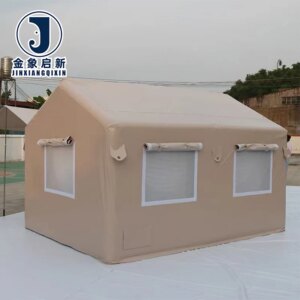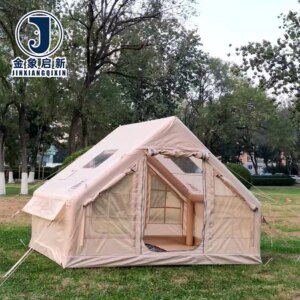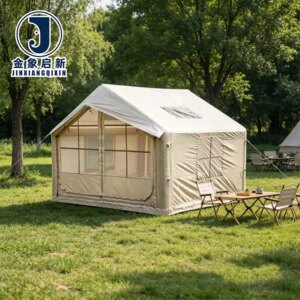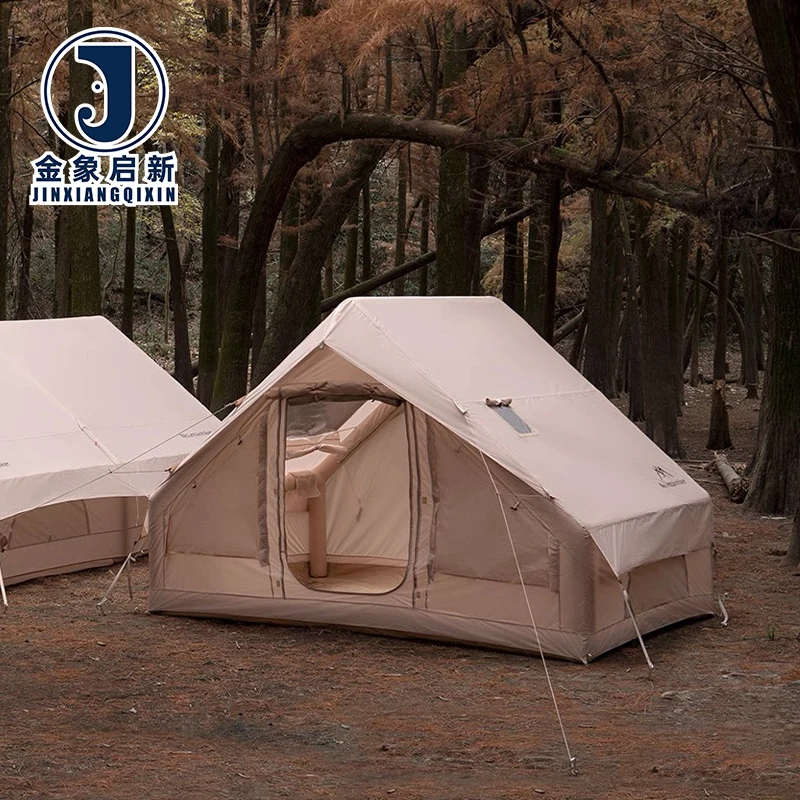
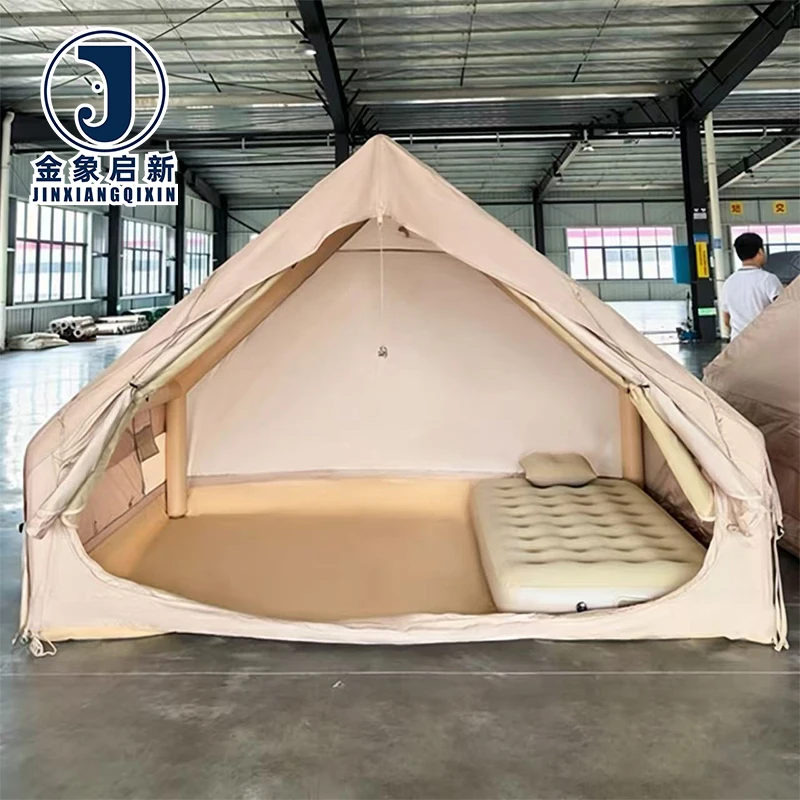
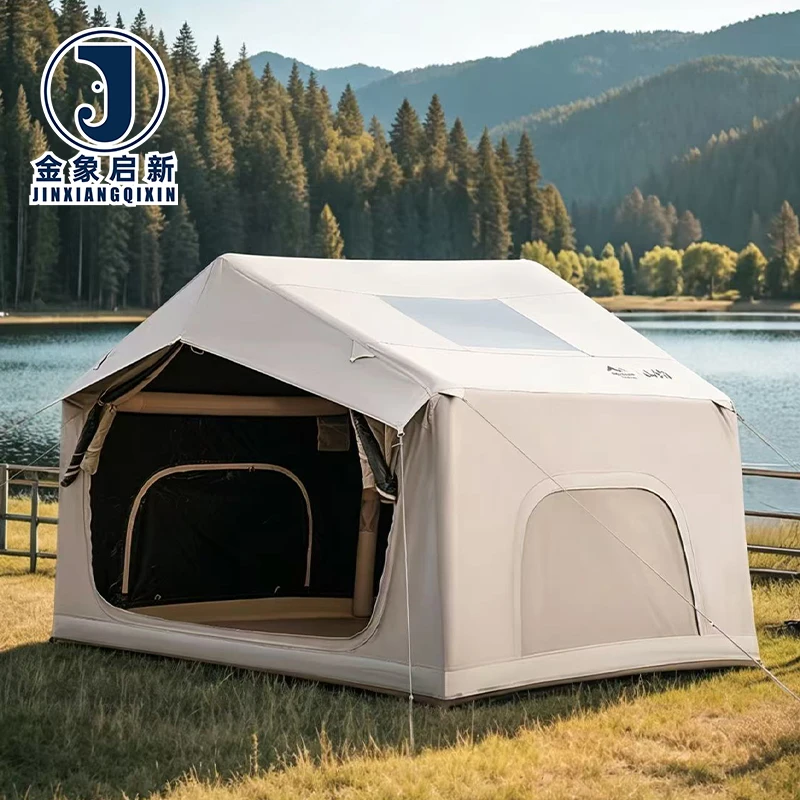
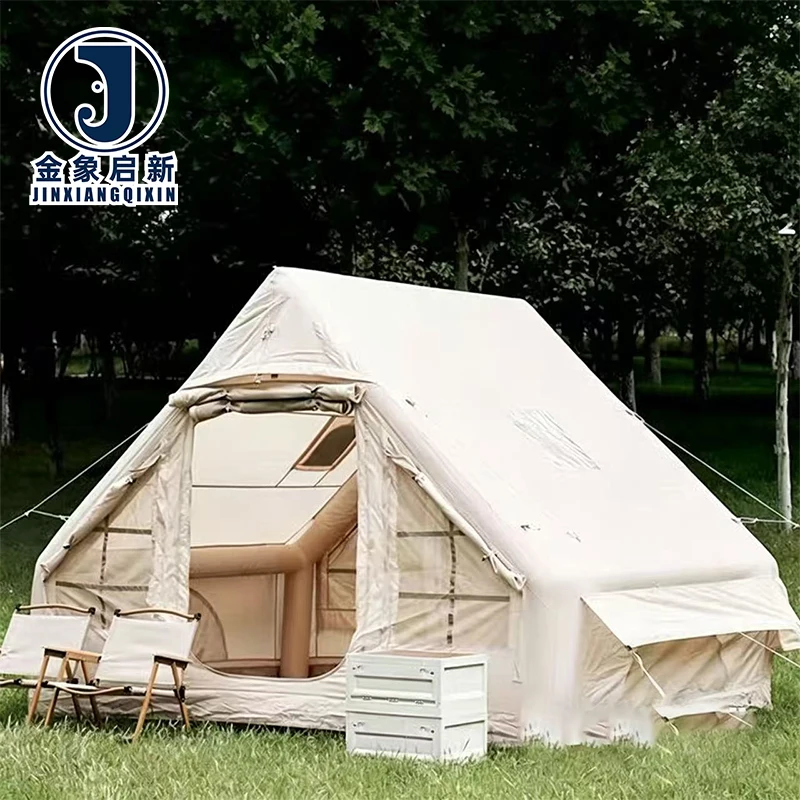
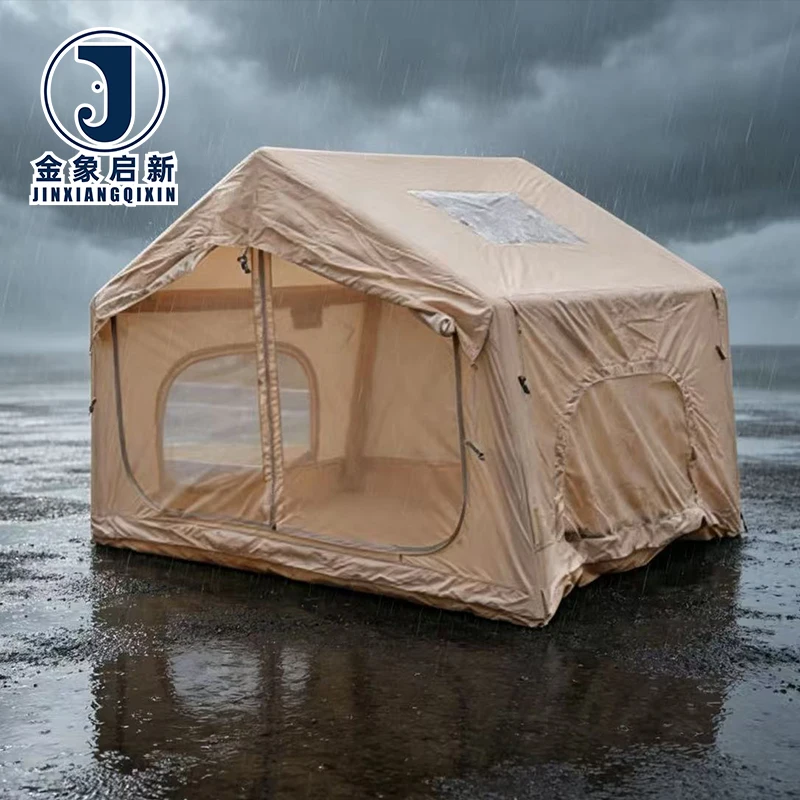
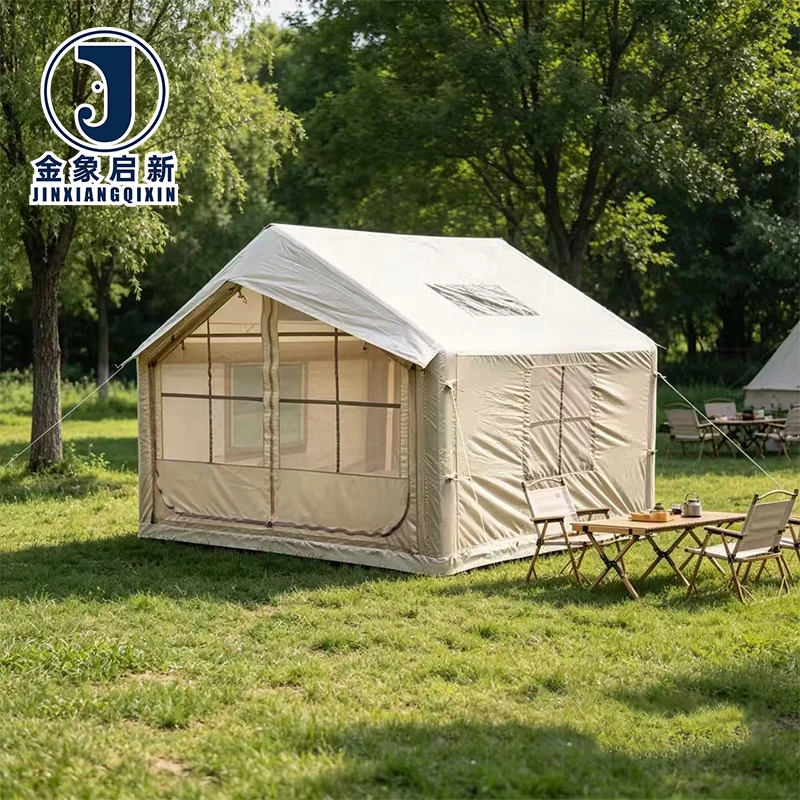
Description
Roll-to-Roll Consistency — Three full production lines and 36 sets of processing equipment maintain tight coating weight control, so every roll of inflatable camping tent fabric arrives matching the last in GSM, colour and finish.
Technical Specifications
| Parameter | Value |
|---|---|
| Product Type | Inflatable Tent |
| Core Material | PVC tarpaulin |
| Key Features | Waterproof, tear-resistant, available in UV-resistant, fire-retardant and anti-static grades |
| Fire-Retardant Grade | Available — confirm the grade required for your market |
| UV Resistance | Available — test basis to be confirmed per order |
| Anti-Static | Available — standard to be confirmed per order |
| Season Rating | Four-Season |
| Customization | OEM & ODM, sample development, pattern printing, material selection, product design |
| Production Capability | 3 full production lines, 36 sets of professional equipment |
| R&D Support | 10 technicians |
| Certifications | ISO 9001, ISO 14001, ISO 45001, CE |
Application Suitability
| Application | Exposure & Requirement |
|---|---|
| Tent and inflatable structure manufacturing | Cut-and-sew or heat-weld fabrication, batch colour consistency across panel runs, reliable coating adhesion at seam lines |
| Commercial outdoor event infrastructure | Repeated inflation and deflation cycles, UV exposure, abrasion from ground contact and handling |
| Emergency and field operations shelters | Rapid deployment, all-weather waterproofing, transport abrasion and pack-down stress |
| Tarpaulin distributor and importer stock | Shelf-ready roll presentation, consistent GSM and colour across container loads, downstream resale documentation |
Why Roll-to-Roll Colour Shift Matters More Than You Think
Batch colour consistency is the difference between a professional installation and a visible patchwork on site.
Inflatable tent manufacturers often order multiple rolls for a single production run or a multi-unit event deployment. When one roll arrives slightly warmer or cooler in tone than the next, the mismatch becomes obvious once panels are erected side by side. This is not a cosmetic issue that can be ignored at trade shows, festival grounds or corporate activations where brand appearance is contractually specified [NEED_CITE: colour tolerance standards for coated fabrics used in commercial tents]. Sourcing an inflatable camping tent roll supply with enforced batch matching eliminates rework claims and protects your fabrication schedule from sorting and rejecting deliveries on the loading dock.
How We Maintain Batch Consistency Across Bulk Roll Orders
Every production run of inflatable camping tent roll stock is tracked from base fabric lot through coating formulation to finished winding. The 10-technician R&D team sets colour targets at the compounding stage, and dedicated QA and QC staff verify shade at multiple checkpoints before the roll leaves the line. This means a container load destined for a tent manufacturer arrives with matching tone from first roll to last, supporting uninterrupted panel cutting without sorting downtime.
Coating Weight Verification Before the Roll Leaves the Factory
GSM is the specification most frequently cited on a quotation and most frequently disputed on arrival. Our process includes in-line coating weight monitoring and a final off-line sample check per roll, recorded on the pre-shipment inspection record. Buyers ordering inflatable camping tent wholesale receive documentation that ties each roll to its verified weight, removing the guesswork from incoming material inspection.
What GSM and Base Fabric Density Actually Mean for Tent Panels
The weight of a PVC tarpaulin is the combined result of the base fabric and the coating applied to it. A heavier coating on a loosely woven base can produce a high GSM figure without delivering proportional tear strength, because the yarns themselves — not the coating — resist tear propagation once a puncture starts. For inflatable tent panels that undergo repeated inflation pressure and handling stress, the denier of the yarn and the weave density of the base fabric work together with the coating to determine real-world durability. [NEED_CITE: relationship between base fabric construction and tear strength in PVC coated fabrics per ISO 1421]. Coating method also matters: knife-coated fabrics generally achieve higher peel strength at the weld line compared to laminated constructions, which influences how well heat-welded seams hold under the flexing that inflatable structures experience during inflation cycles.
The Hidden Cost of Specifying Material on Weight Alone
When a buyer selects inflatable camping tent bulk fabric based solely on a GSM figure without confirming base fabric density or coating adhesion, the result is often a roll that meets the scale but fails at the weld. Heat-welded seams concentrate stress precisely where the material flexes most during inflation, and a coating with low peel strength will delaminate before the fabric body shows any sign of wear. Equally, ordering fire-retardant fabric without specifying the grade needed for the destination market can lead to a site inspection failure that halts an entire event build [NEED_CITE: fire classification requirements for temporary structures in commercial venues]. These are not theoretical risks — they are recurring complaints across the coated fabric supply chain that a complete specification prevents.
Why Fabricators Source Inflatable Tent Fabric Through This Production Facility
Roll-stock consistency is backed by 36 sets of dedicated processing equipment that hold coating weight within tolerance across high-volume runs. The 10-technician R&D team develops custom colour matches and pattern printing proofs within days, shortening the gap between sample approval and bulk release. Full-process QA and QC inspection at every production stage — not just a final spot check — catches coating irregularities and shade drift before winding. Three full production lines provide the throughput needed to fill container orders without splitting a single batch across different machines, which is where colour variation typically enters the supply chain.
Documentation & Verification
- Material specification sheet listing GSM, base fabric construction and coating type per roll batch
- Pre-shipment inspection record confirming roll-to-roll GSM and colour verification before dispatch
- Test report for UV and flame-retardant grades supplied where applicable to support downstream compliance
- Roll packing list detailing roll count, individual weight and container loading plan for freight scheduling
- Certificate of origin and customs documentation prepared per destination country requirements
Fabrication, Handling & Storage
- Heat-weld parameters should be calibrated to the specific PVC coating formulation before panel production begins
- Store rolls upright on pallets in a covered area to prevent flat-spotting and edge compression marks
- Allow cold-stored rolls to acclimatise before unrolling to avoid coating stiffness and crease damage
- Use compatible PVC-based cleaners to protect the coating surface from solvent degradation
- Plan panel layout around roll width to minimise offcuts and maximise fabric utilisation per roll
Request a Specification Proposal
To move forward, share your target roll width, annual volume requirement and any pattern printing or colour matching specifications. Let us know the fire-retardant or anti-static grade your end market requires so we can align the material formulation before sampling. Confirm whether you need raw roll stock for your own cut-and-sew line or finished panels, and we will prepare a proposal with lead time and sample development schedule.
Frequently Asked Questions
Q: How is batch colour consistency maintained across rolls in a single order?
A: Colour targets are set during coating compounding and verified at multiple in-process checkpoints by dedicated QA and QC staff. Every roll in a bulk inflatable camping tent order is matched against the approved reference before winding, ensuring uniform tone across the full container load.
Q: How is GSM verified on arrival against the quotation?
A: Each roll undergoes off-line weight sampling as part of the pre-shipment inspection, with results recorded on the inspection report. Buyers can cross-check the documented values against their own incoming scale measurements roll by roll.
Q: How do I select roll width for efficient panel cutting?
A: Match the roll width to your largest panel dimension to reduce cross-cuts and seam count. Our R&D team can review your panel layout and recommend available widths that maximise utilisation and minimise fabric waste per inflatable tent unit.
Q: What minimum applies to custom width, colour or printed roll orders?
A: Minimums vary with the degree of customisation. Standard stock widths and colours carry lower thresholds, while custom dye lots and pattern printing runs require higher quantities to justify dedicated line setup. Share your specification and we will confirm the applicable minimum.
Q: How does pattern printing colour matching and sample approval work?
A: The R&D team produces printed samples against your supplied artwork and Pantone references. Once you approve the sample for colour accuracy and registration, bulk printing proceeds on the confirmed formulation to maintain consistency across the full inflatable camping tent fabric order.