Description
Batch-to-Roll Consistency — dedicated QA at every production stage verifies coating weight, colour match, and dimensional accuracy across every Inflatable Tent Fabric Roll Stock order before dispatch.
Technical Specifications
| Parameter | Value |
|---|---|
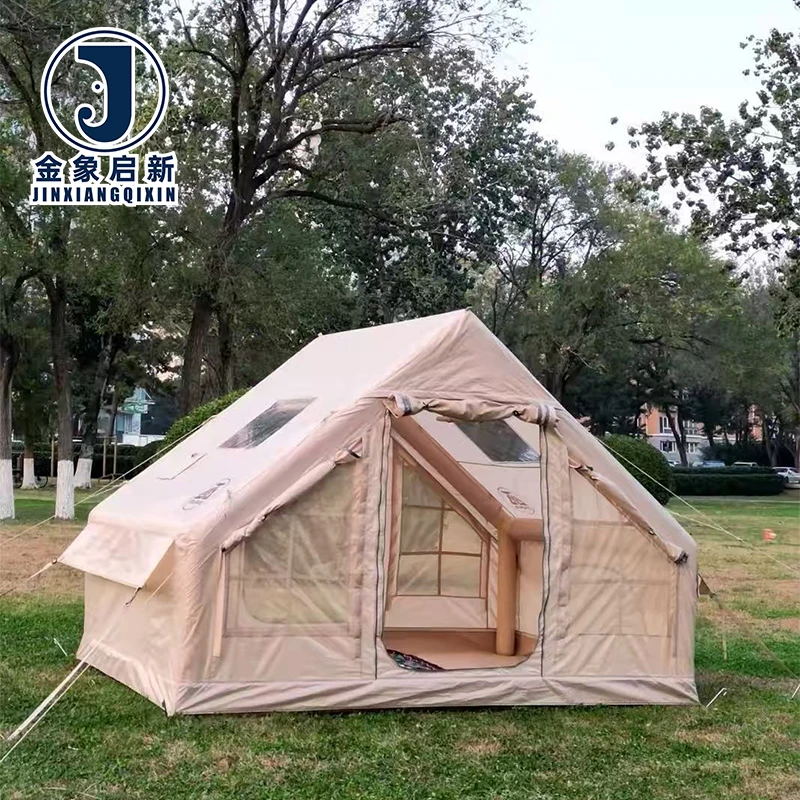
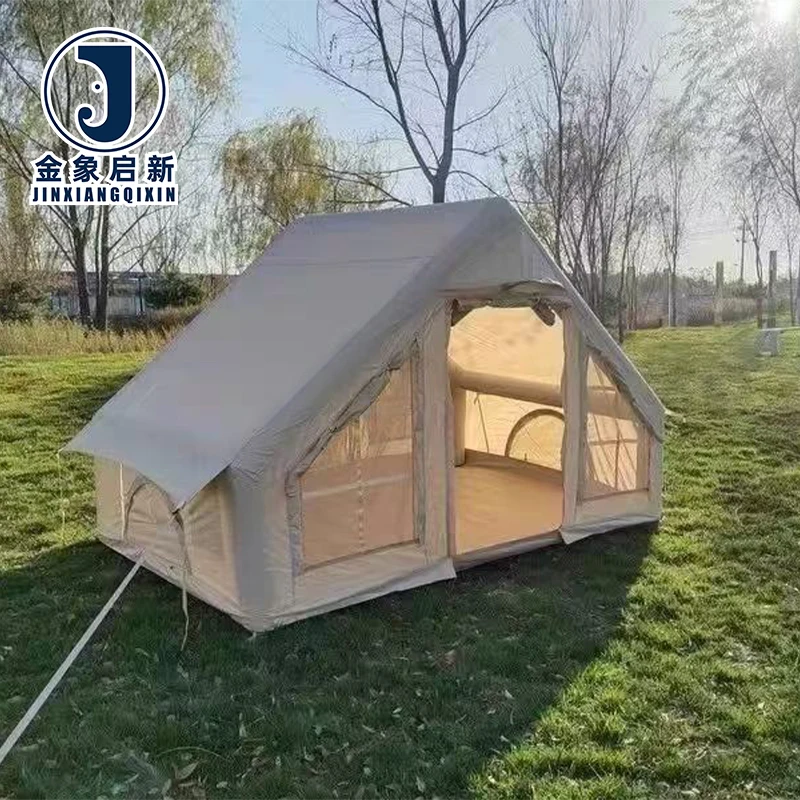
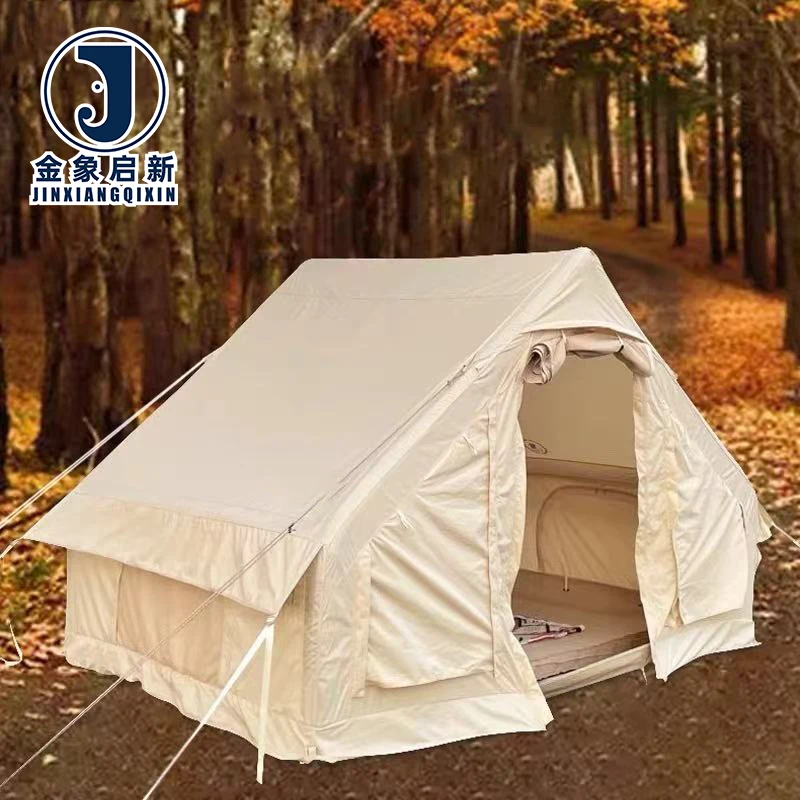
| Product Type | Inflatable Tent Fabric / Inflatable Camping Tent |
| Core Material | UV Water-resistant PVC Fabric |
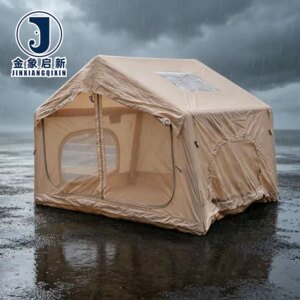
| Waterproof Rating | ≥5000mm hydrostatic head |
| UV Protection | 50+ UV protection rating (test basis not stated in source) |
| Tear Strength | ≥300N warp and weft (test standard not stated in source) |
| Fabric Thickness | 0.3mm–0.8mm range available for OEM specification |
| Customization | OEM & ODM, Pantone colour matching, heat transfer printing |
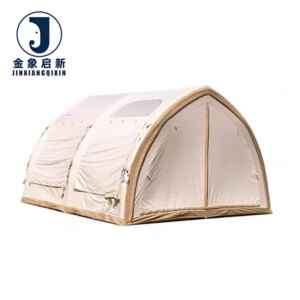
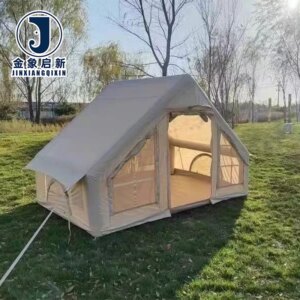
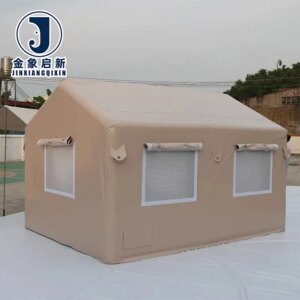
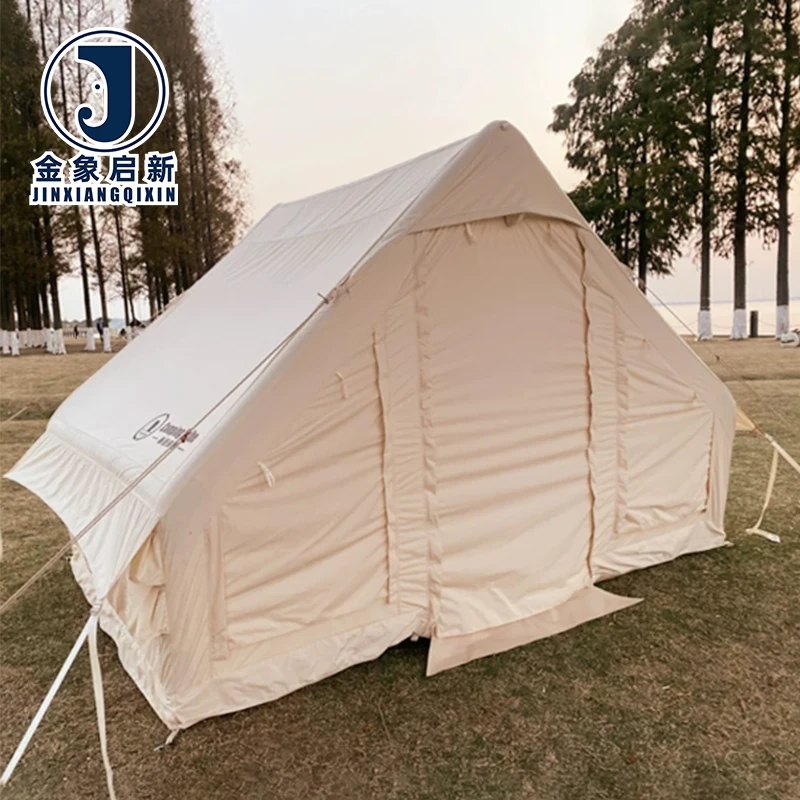
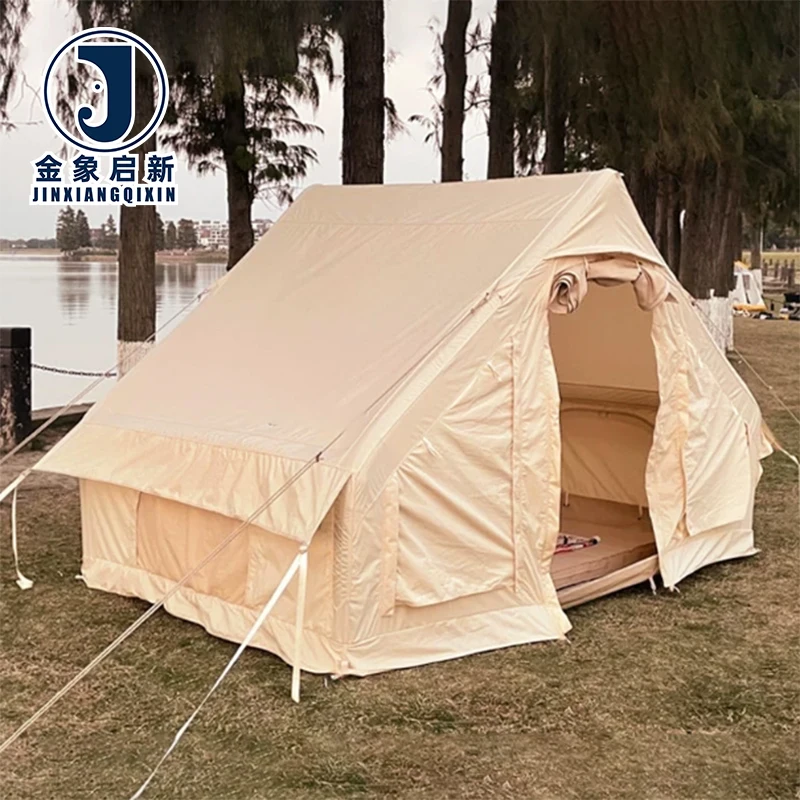
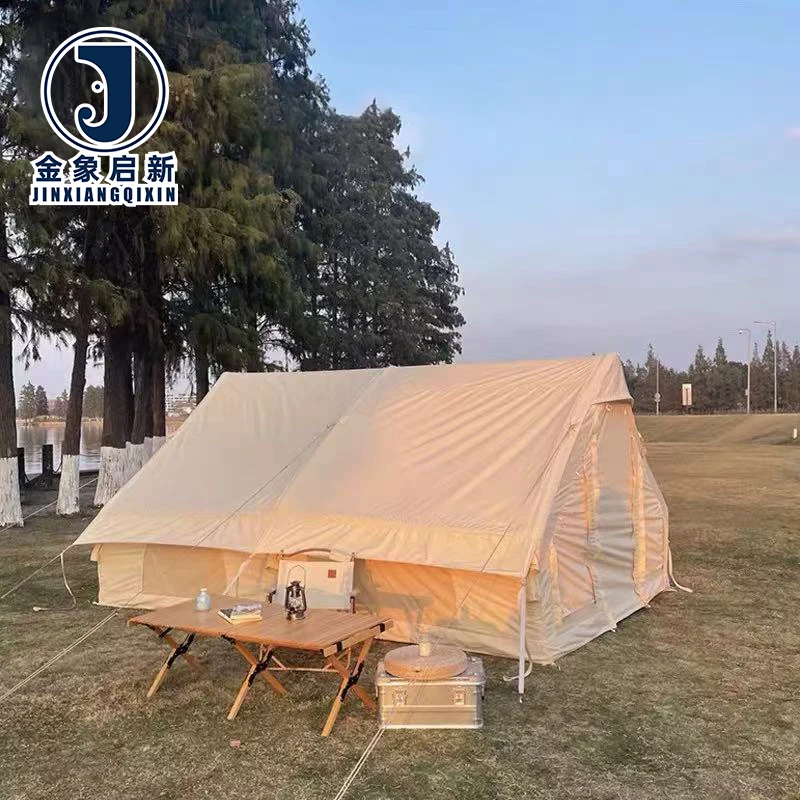
| Design | Single Layer, One Bedroom & One Living Room |
| Season Suitability | Four-Season Use |
| Capacity | 4-Person |
| Certifications | ISO9001, ISO14001, ISO45001, CE |
Application Suitability
| Application | Exposure & Requirement |
|---|---|
| Commercial inflatable camping tent production lines | Roll-to-roll colour consistency, reliable PVC coating adhesion for heat-welded seams, tear resistance at stress points |
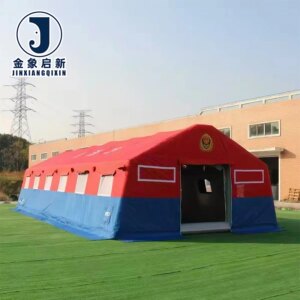
| Disaster relief and military field shelter procurement | Rapid-deploy waterproof performance, durable UV protection for extended outdoor exposure, batch traceability |
| Large-scale outdoor event temporary structures | Consistent hydrostatic head rating across bulk rolls, membrane integrity under internal air pressure, weather resistance |
| Inflatable and air-supported structure manufacturers | Air-holding PVC formulation, uniform coating weight for predictable welding behaviour, thickness tuning for structural load |
Why Inflatable Tent Fabric Roll Stock Colour and Coating Consistency Matter on the Production Floor
One off-shade roll or one light-coated panel can stop a production line and force an entire batch into rework.
When sourcing inflatable tent fabric in bulk, manufacturers frequently discover that the GSM stated on the quotation does not match the material that arrives. The roll looks the same on the outside, but the coating weight is lighter. Once two panels are welded side by side, the difference becomes visible — a shade variation or a stiffness mismatch that fails the finished tent at final inspection. Buyers need Inflatable Tent Fabric Roll Stock with documented batch consistency, not just a specification sheet that describes what the fabric should be. [NEED_CITE: coating weight variance and its effect on welded seam strength per ISO 1421 tensile testing methods]
Roll-to-Roll Uniformity Across a Container Order
PVC coated fabric for inflatable tent manufacturing demands tight control over coating weight and adhesion from the first roll to the last. In-process QA checks at every stage of production catch deviations before the roll is packed. For manufacturers running multiple cutting tables simultaneously, even a minor shift in fabric hand or surface gloss between rolls translates to visible inconsistency in the finished product. Inflatable Tent Fabric Roll Stock must arrive with predictable behaviour under the heat bar and consistent response to Pantone colour matching, so the factory floor does not waste time adjusting machine settings per roll.
Thickness Options and OEM Specification Tuning
The 0.3mm to 0.8mm thickness range allows outdoor equipment brands to calibrate fabric weight against structural demands. A lighter grade suits compact packable camping tents where weight savings drive purchasing decisions, while a heavier grade supports commercial event shelters requiring sustained air pressure and wind resistance. [NEED_CITE: relationship between PVC fabric thickness and hydrostatic head performance in air-supported structures] Sample rolls are developed within days for pre-production validation, letting manufacturers test weld parameters and seam integrity before committing to a full container of Inflatable Tent Fabric Roll Stock.
Reading the Specification Sheet Beyond the Headline Numbers
A ≥5000mm hydrostatic head rating indicates the fabric resists water penetration under substantial pressure, a necessary baseline for four-season inflatable tents exposed to heavy rainfall. However, waterproof performance depends equally on seam construction — a heat-welded joint that fails before the fabric does is a common failure point. The ≥300N tear strength in both warp and weft directions reflects the base fabric’s resistance to tear propagation once punctured, but the test standard behind that figure determines its real-world relevance. Coating adhesion, governed by the PVC formulation and application method, directly affects how well welded seams hold under the cyclic stress of inflation and deflation.
The Cost of Overlooking Batch Verification on Arrival
When fabric arrives lighter than the quoted GSM, the finished tent loses tensile strength and durability without any visible warning during production. A batch with inconsistent UV treatment may show accelerated degradation on panels installed side by side within a single season. Welded seams on under-coated rolls tend to delaminate at flex points long before the fabric body fails, generating warranty claims that trace back to material, not workmanship. [NEED_CITE: field failure analysis of coated fabric structures linked to coating weight deviation] These are costs that surface after the container has been unloaded and production has already consumed the stock.
Why Manufacturers Source Inflatable Tent Fabric Here
Three full production lines and 36 sets of professional equipment deliver bulk volume with reliable scheduling for container-load orders. A 10-person R&D team handles material selection, Pantone colour matching, and sample development within days, not weeks. Dedicated QA and QC staff conduct 100% inspection before shipment, generating batch-specific quality records covering fabric performance, weld strength, and dimensional accuracy. Production records remain retrievable by order reference for up to five years post-delivery, supporting traceability and third-party audit requirements. ISO9001, ISO14001, ISO45001, and CE certifications accompany every shipment with full documentation.
Documentation & Verification
- Material specification sheet stating GSM, base fabric, coating formulation, and colour reference per roll batch
- Test reports for UV and hydrostatic performance included with each Inflatable Tent Fabric Roll Stock shipment
- Pre-shipment inspection record documenting coating weight, dimensional accuracy, and surface consistency
- Roll packing list with lot traceability for production-floor quality control and inventory management
- Certificate of origin and customs documentation supporting export compliance in destination markets
Fabrication, Handling & Storage
- Set heat bar temperature and dwell time to match the specified PVC thickness between 0.3mm and 0.8mm
- Weld seams at stress points with overlap width calibrated to the fabric’s tear strength and coating adhesion
- Store rolls upright on pallets in dry conditions to prevent permanent creasing and surface marking
- Allow cold-stored rolls to acclimatise before unrolling to prevent coating crack in low temperatures
- Clean surfaces with mild PVC-compatible agents to preserve the water-resistant coating finish
Requesting a Quote for Bulk Roll Orders
Provide your target fabric thickness within the 0.3mm–0.8mm range, Pantone colour reference, required roll width, and estimated annual volume so we can align production scheduling. Specify whether you need UV-resistant or flame-retardant grades, and confirm the certification requirements for your destination market. Sample rolls can be dispatched for your factory to validate weld parameters and colour consistency before bulk commitment.
Frequently Asked Questions
Q: Can you match our existing fabric colour across multiple roll orders?
A: Yes. We use Pantone colour matching with in-process inspection at every production stage. Each batch is checked against your approved reference before packing, ensuring colour consistency across repeat orders of Inflatable Tent Fabric Roll Stock. Sample rolls are available for your visual approval before bulk production begins.
Q: What is the minimum order for custom width or thickness?
A: Minimums depend on the specific width, thickness between 0.3mm and 0.8mm, and colour selected. Custom Pantone matches and non-standard widths typically require a container-load commitment to maintain coating line efficiency. Contact us with your specifications for a precise minimum and lead time estimate.
Q: Do you supply fabric with fire-retardant treatment for commercial tent applications?
A: Fire-retardant grades are available — confirm the specific grade required for your market and application. We supply test documentation matching the applicable standard where treatment is specified. For commercial event shelters and public-use structures, verify your local fire code requirements before placing your order.
Q: How do you ensure GSM consistency across a full container order?
A: Dedicated QA staff verify coating weight at every production stage, not only at final inspection. Each roll is checked against the quoted specification, and batch-specific inspection records are provided with shipment. Production records are retrievable by order reference for post-delivery verification.
Q: What lead time should we plan for a custom-colour bulk roll order?
A: Custom Pantone colour orders require additional scheduling for colour formulation and approval samples. Sample rolls are developed within days for your validation, after which bulk production follows standard scheduling. Typical lead times vary with order volume and specification complexity — confirm your timeline at the quotation stage.