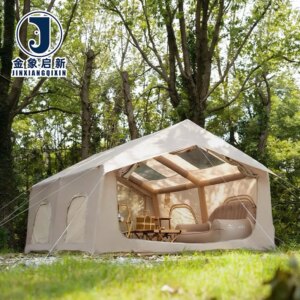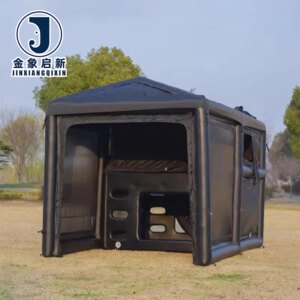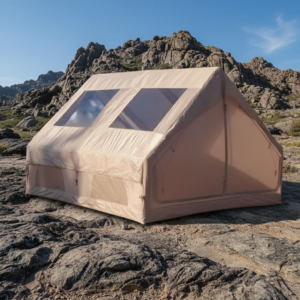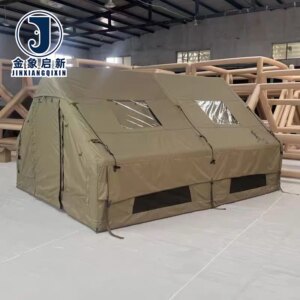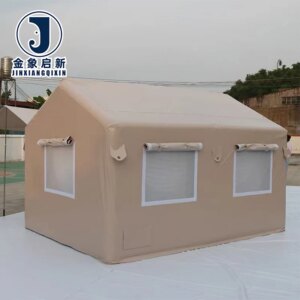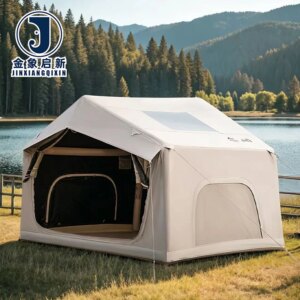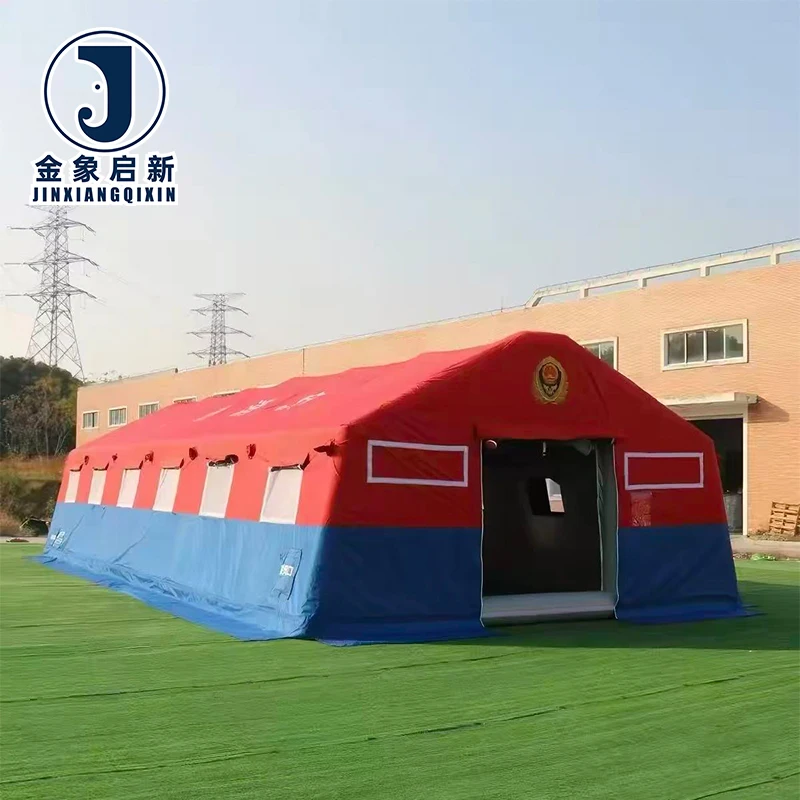
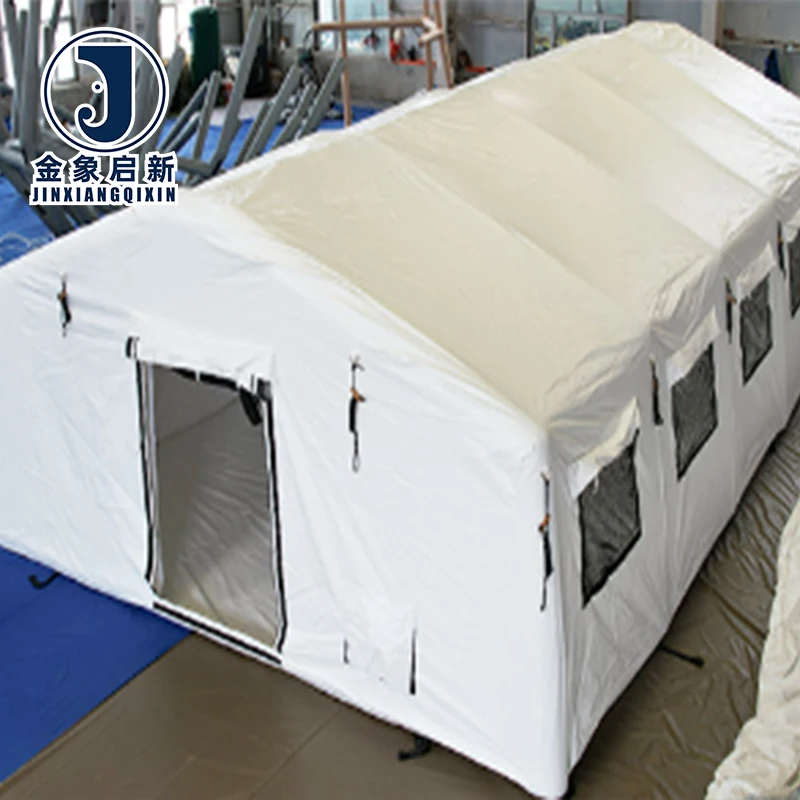
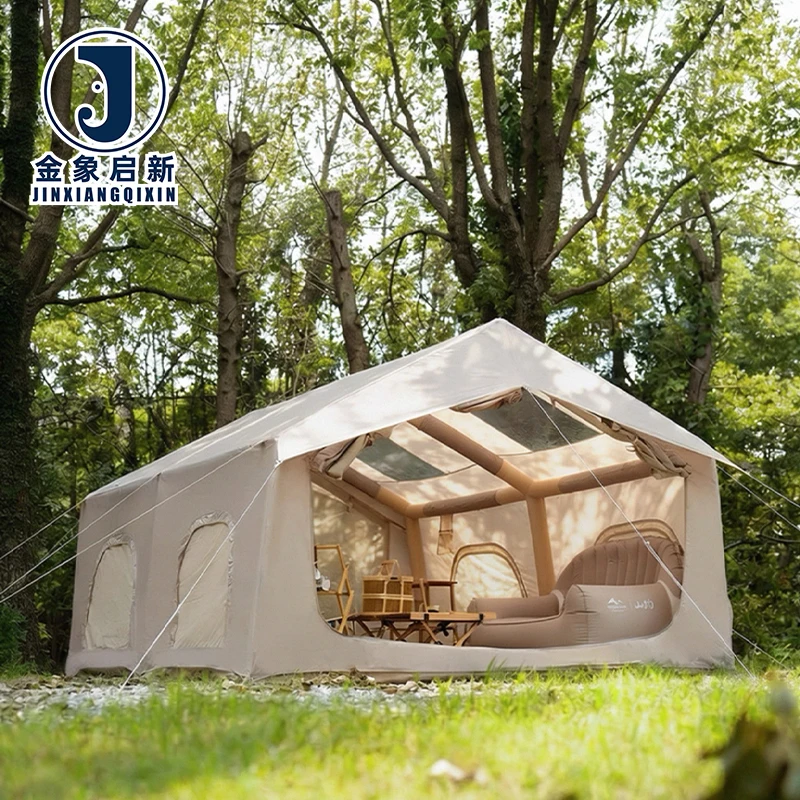
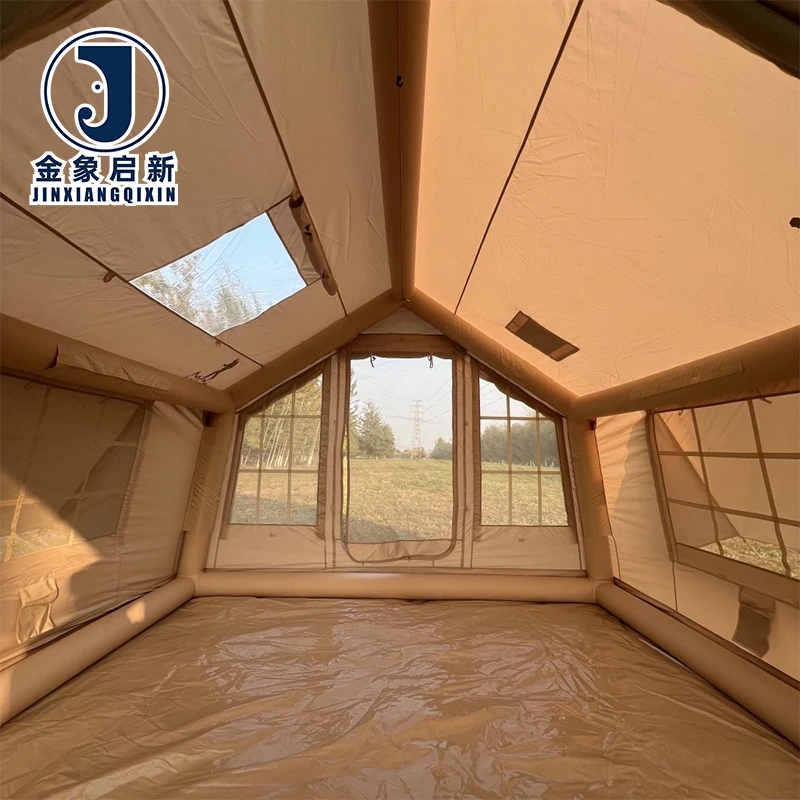
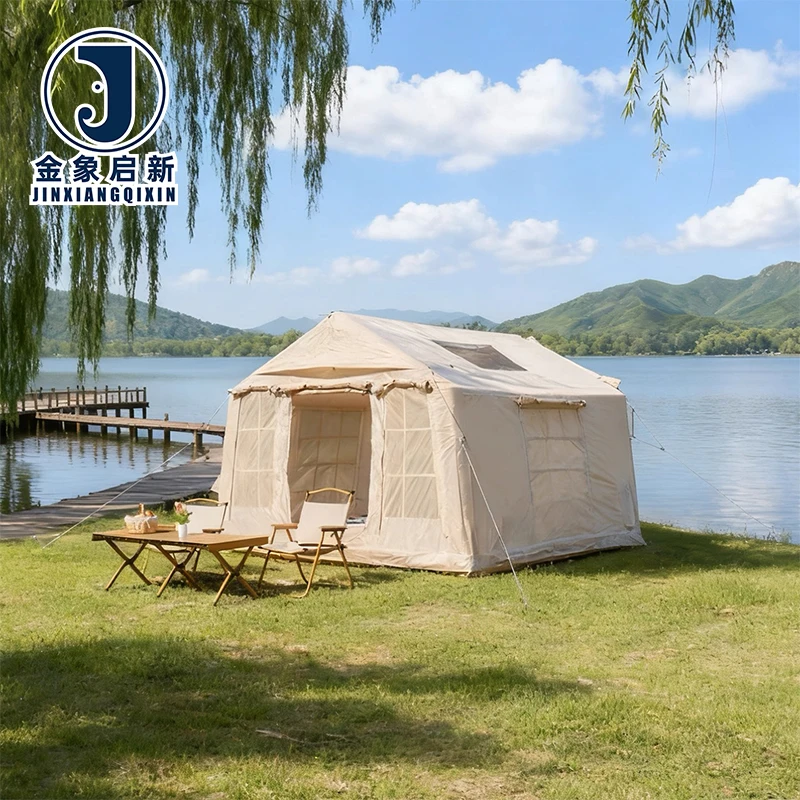
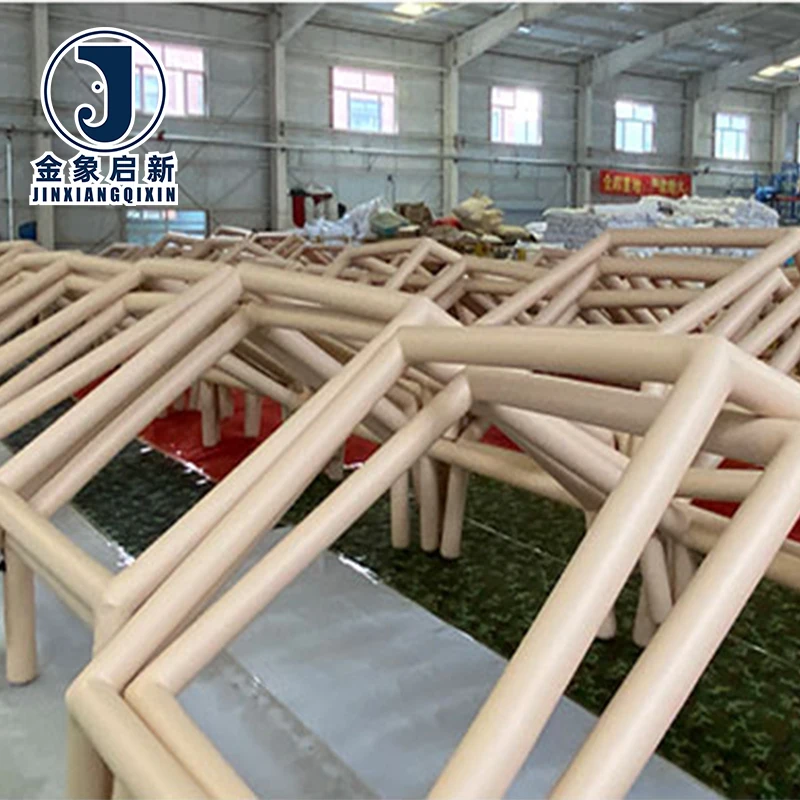
Description
Specification Control at Scale — 3 full production lines and 36 sets of processing equipment ensure inflatable PVC tent fabric meets project-specific GSM, width, and treatment requirements without compromising batch consistency across roll stock.
Technical Specifications
| Parameter | Value |
|---|---|
| Product Type | Inflatable Tent |
| Core Material | PVC Tarpaulin |
| Waterproof Rating | 3000mm |
| UV Resistance | UV-resistant formulation (test basis available on request) |
| Tear Resistance | Tear-resistant construction (test basis available on request) |
| Customization Service | OEM & ODM, sample customization, pattern printing |
| Standards Compliance | ISO9001, ISO14001, ISO45001, CE |
Application Suitability
| Application | Exposure & Requirement |
|---|---|
| Disaster Relief Shelter | Rapid deployment, continuous human occupancy, wind and rain exposure, requirement for structural inflation integrity |
| Medical Field Station | Sterile environment maintenance, equipment protection from moisture, frequent cleaning and chemical disinfectant contact |
| Temporary Equipment Storage | Four-season weather exposure, UV degradation risk, secure containment of industrial assets |
| On-Site Logistics Coordination | Repeated inflation and deflation cycles, crew traffic abrasion, requirement for branded identification |
Why the Weld Line Fails Before the Fabric Does on Inflatable Structures
Seam integrity depends on coating adhesion and thermal compatibility, not just base fabric strength.
When an inflatable PVC tent is deployed for disaster relief or medical use, the internal air pressure places continuous stress on every welded seam. If the coating weight or formulation varies across the roll, the heat-sealing parameters that worked on one section may under-bond or burn through on the next. The fabric itself may withstand the design pressure, but the joint fails at the flex point where the beam meets the roof. Batch inconsistency in the coating layer is the hidden variable that turns a field-deployable shelter into a liability. [NEED_CITE: thermal welding parameters for PVC coated fabrics]
Roll-to-Roll Consistency as a Manufacturing Discipline
Colour variation between rolls in the same order is immediately visible once inflatable structures are installed side by side at a relief site or commercial event. Our dedicated QA/QC protocol checks coating colour, GSM, and surface finish at every production stage, catching drift before it becomes a batch rejection. This is what separates a reliable Inflatable Tent manufacturer from a supplier who ships first and disputes later.
Coating Adhesion and Air-Holding Performance
The PVC tarpaulin used in inflatable tents must hold a bond between the coating and the base fabric through repeated inflation cycles. Delamination at the seam edge is a common failure mode when the coating formulation is not matched to the base fabric denier and weave density. Our process control over coating weight and adhesion directly supports the structural reliability that disaster relief and medical deployments demand. [NEED_CITE: coating adhesion test methods for PVC tarpaulin per ISO 2411]
Reading the Specification Sheet Beyond the GSM Number
The 3000mm waterproof rating indicates the hydrostatic head the PVC tarpaulin coating can resist before moisture penetration occurs — a relevant measure for ground-contact and driven-rain exposure in field conditions. However, waterproof performance in an inflatable tent also depends on seam sealing quality and valve integration. The UV-resistant formulation extends service life under prolonged sun exposure, though buyers should request the test basis to confirm suitability for their specific deployment climate and duration. Tear resistance in the base fabric prevents small punctures from propagating across a structural beam under pressure, which is why base fabric construction matters as much as the coating itself.
The Hidden Cost of Underspecifying Inflatable Tent Fabric
When a buyer selects material based on price per square metre without verifying coating adhesion or batch consistency, the consequences surface in the field. An inflatable medical shelter that loses pressure because a seam delaminates during a storm is not a material failure — it is a specification failure. Colour mismatch across a multi-unit disaster relief camp undermines professional credibility. Weld lines that crack in cold weather because the PVC formulation was not rated for low-temperature flexibility create safety incidents that no cost saving can justify. [NEED_CITE: low-temperature flexibility standards for PVC coated fabrics]
Why Sourcing Your Custom Inflatable PVC Tent Here
Nearly 30 years of focused coated fabric production means our team understands how PVC tarpaulin behaves under the specific stresses of inflation and deflation cycles. A 10-person R&D team handles material selection, pattern printing, and sample development, turning your project drawing into a producible specification within days. The 9,180 m² facility with 3 full production lines supports both roll stock supply for manufacturers and finished custom inflatable tent orders. Every roll undergoes 100% pre-shipment inspection against the stated GSM, colour reference, and waterproof rating, so what arrives at your factory matches the approved sample.
Documentation & Verification
- Material specification sheet stating base fabric denier, coating type, colour reference, and 3000mm waterproof rating
- Pre-shipment inspection record with batch-specific GSM and colour consistency verification
- UV resistance test report provided upon request to confirm formulation suitability
- ISO9001, ISO14001, ISO45001, and CE certificates for compliance documentation
- Roll packing list with batch traceability for multi-roll inflatable tent orders
Fabrication, Handling & Storage
- Set heat-sealing temperature and dwell time based on the specific PVC coating formulation and GSM confirmed on your sample approval
- Store rolls upright in a climate-controlled area to prevent compression creasing that affects inflation beam uniformity
- Use compatible PVC adhesive and primer for field repairs, matching the coating chemistry of the supplied tarpaulin
- Avoid dragging unrolled fabric across abrasive surfaces during tent assembly to protect the coating surface
- Clean with mild detergent only — solvent-based cleaners may compromise the UV-resistant treatment layer
How to Specify Your Inflatable Tent Project
Provide your intended deployment environment, including expected temperature range, wind conditions, and duration of continuous inflation. Confirm whether you need roll stock for your own fabrication facility or finished custom inflatable PVC tent units with pattern printing and branding. Share your target market’s fire classification or compliance requirements so we can match the correct treatment grade and supporting documentation.
Frequently Asked Questions
Q: How is batch-to-batch colour consistency controlled across large inflatable tent orders?
A: Every production run undergoes dedicated QA/QC checks at the coating stage, comparing each roll against the approved colour reference under standardised lighting. A pre-shipment inspection record documents the result, ensuring that multi-roll orders for large-scale disaster relief or commercial event deployments arrive with uniform appearance and no visible variation when structures are installed side by side.
Q: What customization options are available for sizing, pattern printing, and branding?
A: Our OEM & ODM service covers custom dimensions, pattern printing, and branding applied directly to the PVC tarpaulin surface. A 10-person R&D team develops samples within days based on your drawings, allowing you to confirm colour, print resolution, and structural layout before bulk production begins on your custom inflatable PVC tent order.
Q: How is the 3000mm waterproof rating verified and what test basis supports UV resistance claims?
A: The 3000mm waterproof rating is verified through hydrostatic head testing on the coated fabric. UV resistance is achieved through a specific formulation in the PVC coating; we provide the test report upon request so buyers can confirm the treatment matches their deployment climate and expected continuous exposure duration.
Q: What documentation is included with each shipment to support project compliance?
A: Each shipment includes a material specification sheet, pre-shipment inspection record, roll packing list, and certificate of origin. ISO9001, ISO14001, ISO45001, and CE certificates are available for compliance submissions. UV and other treatment test reports are supplied based on the specification confirmed during the sample approval stage.