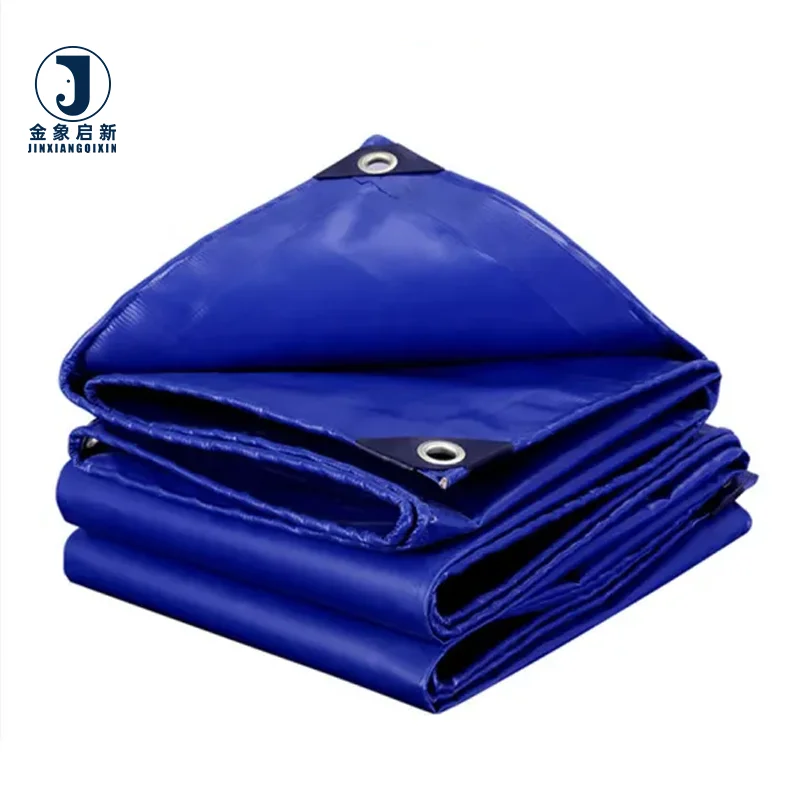
Description
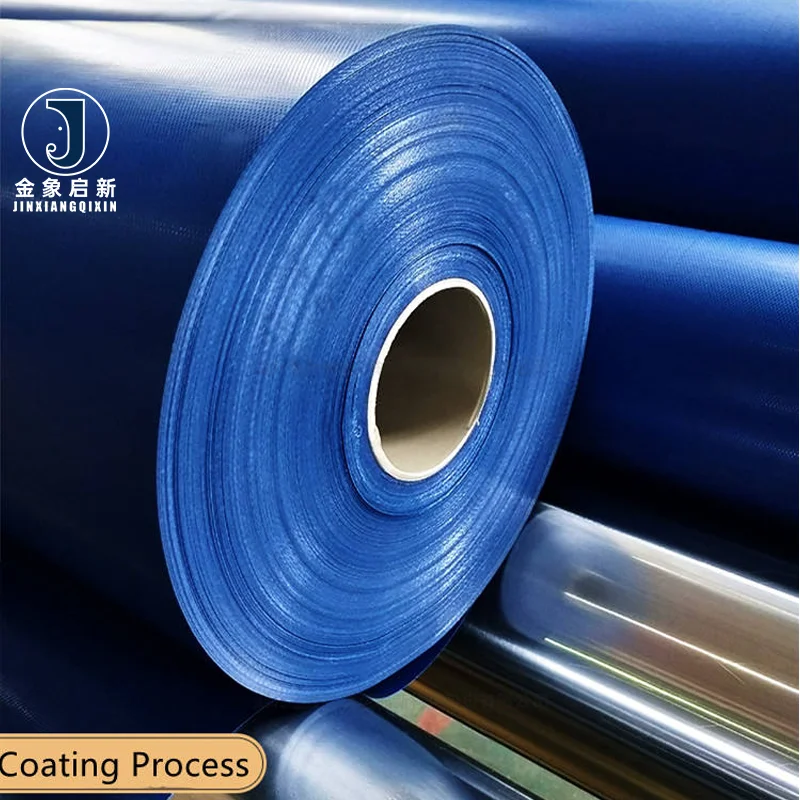
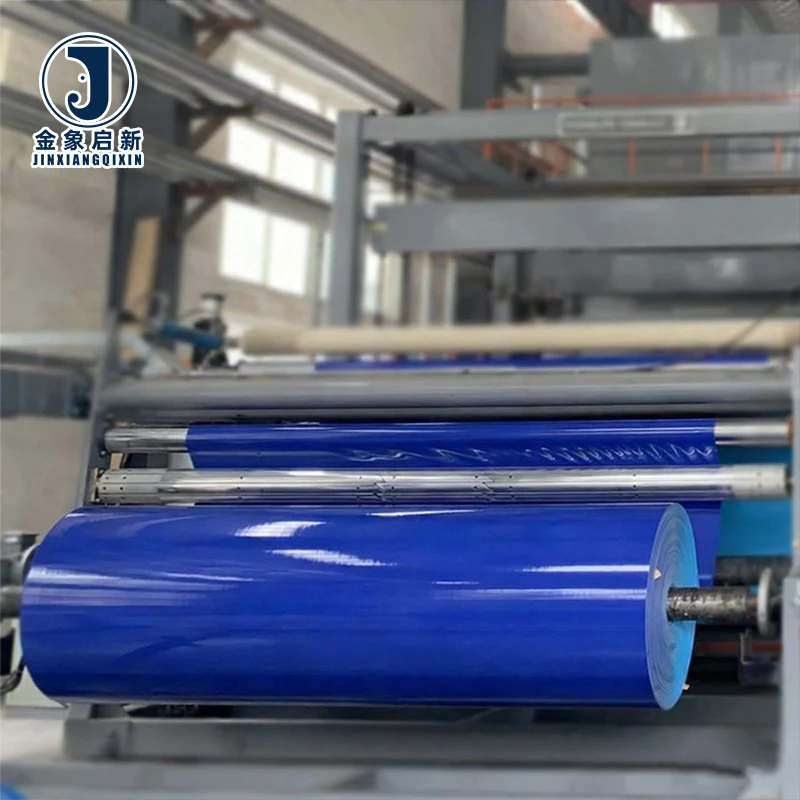
Coating Weight Control — every roll of PE tarpaulin is weighed and verified against the stated GSM before dispatch, ensuring batch consistency across full container loads.
Technical Specifications
| Parameter | Value |
|---|---|
| Product Type | PVC Tarpaulin Roll |
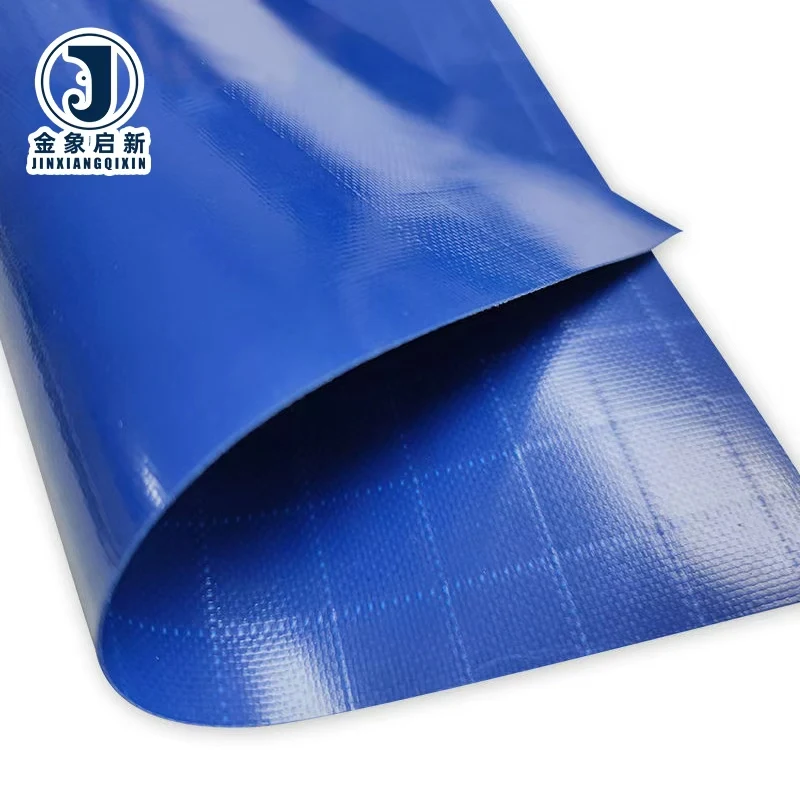
| Material | HDPE weaving with LDPE lamination on both sides |
| Weight (GSM) | 50 g/m² ~ 220 g/m² available (confirm the grade for your order) |
| Total Thickness | 0.2–0.4 mm / 8 mil–16 mil / Custom |
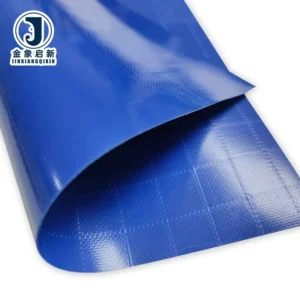
| Mesh Count | 6×6, 6×7, 7×7, 7×8, 8×8, 9×9, 8×10, 10×10, 12×12, 14×14, 14×16 |
| Roll Width | 6 ft, 8 ft, 10 ft, 12 ft or 2 m, 4 m, 6 m |
| Roll Length | 100 yards, 100 meters, or custom |
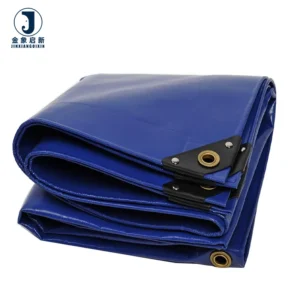
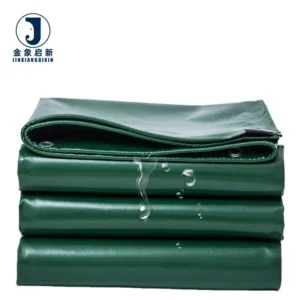
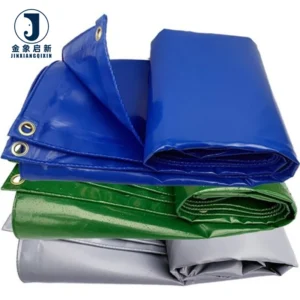
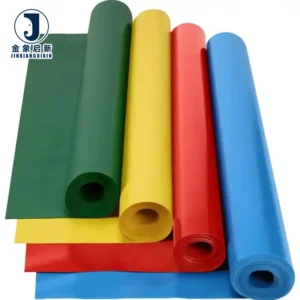
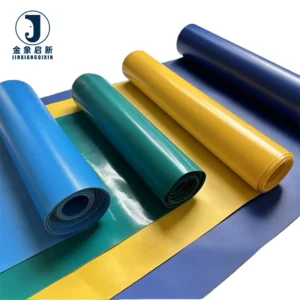
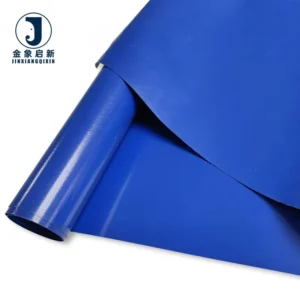
| Color Options | Blue, Blue/Orange, Green, Grey, Black, Clear, Grey/Green, Orange, or custom |
| Waterproof | Yes |
| UV Treatment | Available (test basis not stated — confirm standard required for your market) |
| Anti-Static | Claimed (surface resistance or standard not stated — verify with test report) |
| Anti-Mildew | Yes |
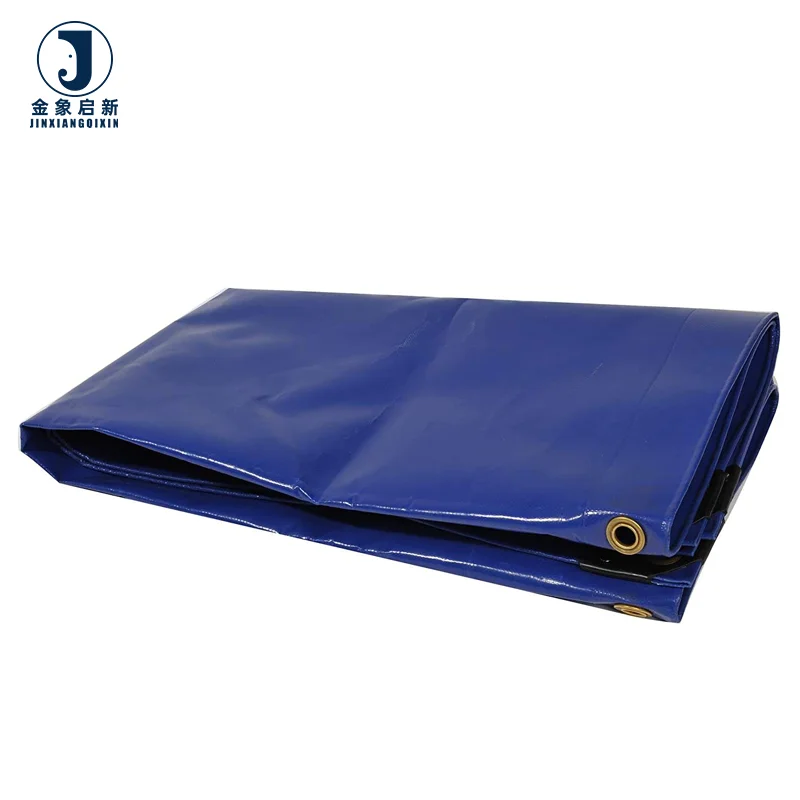
| Edge Reinforcement | PP rope reinforced hem on all four edges (finished tarpaulin only) |
| Eyelets | Galvanized, every 3 ft or 1 meter interval (finished tarpaulin only) |
| Corners | Reinforced plastic (finished tarpaulin only) |
| Printing | Custom brand printing available |
| Container Loading (20’GP) | By Roll 17 Tons / By Bale 12 Tons / By Carton 9 Tons |
| Container Loading (40’HQ) | By Bale 28 Tons / By Carton 20 Tons |
| Standards | ISO, CE |
Application Suitability
| Application | Exposure & Requirement |
|---|---|
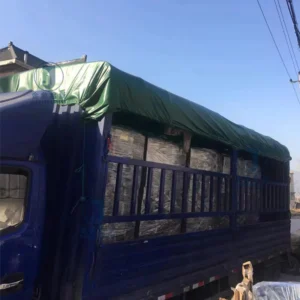
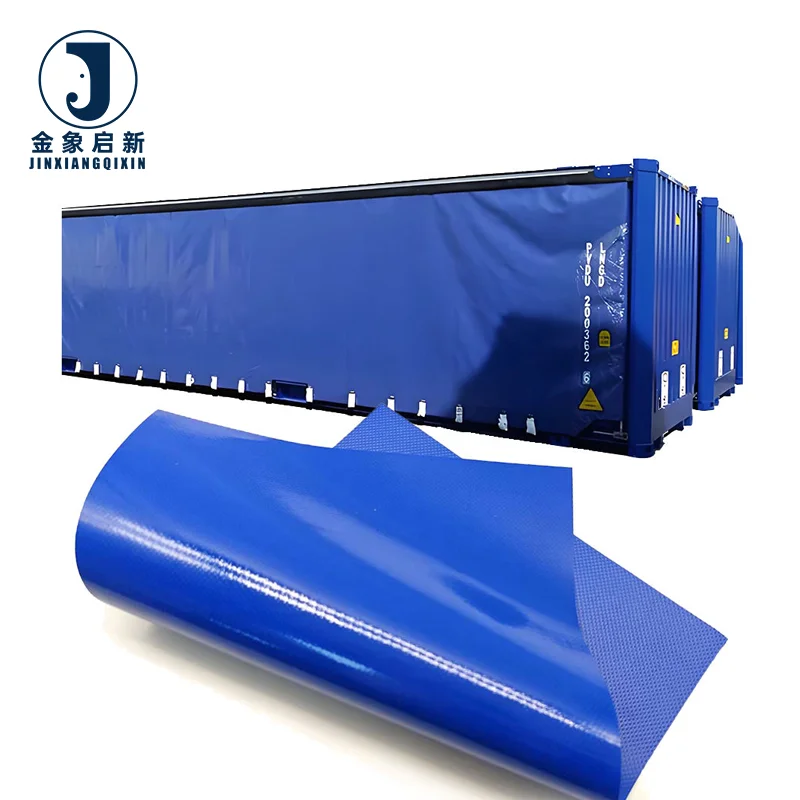
| Truck and trailer load covers | Road abrasion, wind flex, UV exposure, rain ingress at seams |
| Agricultural stockpile covers | Moisture protection, fungal growth risk, prolonged sun exposure on hay and grain |
| Construction site sheeting | Scaffold wind loading, dust containment, material protection from weather |
| Pond and reservoir lining | Permanent water contact, soil chemistry, puncture from subgrade |
| Furniture and garden covers | Seasonal UV exposure, mildew in humid storage, repeated folding |
| Timber and cotton wrapping | Moisture barrier during transit, handling abrasion at tie-down points |
Why Roll-to-Roll Consistency Matters More Than Quoted GSM for PE Tarpaulin Roll Wholesale Bulk Buyers
A stated GSM on paper means nothing if the rolls arriving at your warehouse do not match.
Tarpaulin importers regularly face the problem of receiving material lighter than what the quotation promised. A 50 g/m² grade might arrive closer to 45 g/m² across an entire container, reducing coverage area and weakening tensile performance at every tie-down point. When you are cutting and reselling to downstream fabricators, this drift compounds across hundreds of finished tarps. Consistency from the first roll to the last in a 40-foot container is what separates usable stock from a batch that generates claims. [NEED_CITE: typical GSM variance tolerance for woven PE laminated fabrics]
Stock Grades Mapped to Weave Density for Predictable Ordering
When you order PE tarpaulin roll wholesale bulk quantities, the weave density directly determines the weight class and the mechanical behaviour of the fabric. A 6×6 mesh produces a lighter, more flexible sheet suited to short-term agricultural covers, while a 14×16 mesh delivers the density needed for construction sheeting that must resist wind tearing. Having the full range from 50 g/m² to 220 g/m² mapped to specific weave options means you can specify by application rather than guessing at a weight number. This lets distributors stock a tiered product line — economy, mid-range and heavy-duty — from a single supplier without cross-referencing multiple mills.
Container Loading Efficiency Across Packing Methods
Bulk buyers plan purchases around container payload, not just unit price. The PE tarpaulin roll stock described here ships in three packing configurations, each with different tonnage outcomes per container. Roll packing on hard paper tubes yields the highest density in a 20-foot general-purpose container, while bale packing suits buyers who will re-cut downstream and do not need intact tube cores. Cartoned packing protects finished tarpaulins but sacrifices payload weight. Planning your order around these loading figures prevents the common problem of paying for half-empty container space. [NEED_CITE: container loading optimization for flexible packaging materials]
How Weave Density and Lamination Weight Interact to Determine Actual Strength
The GSM of a laminated PE fabric is the sum of the woven HDPE base cloth and the LDPE coating on both faces. A 140 g/m² fabric with a 10×10 weave will behave very differently from a 140 g/m² fabric with a 14×14 weave — the latter uses a tighter base cloth with thinner lamination, producing higher tensile strength but potentially lower puncture resistance. Understanding this relationship prevents the mistake of selecting on weight alone. Thickness readings from 0.2 mm to 0.4 mm correspond to the total laminated cross-section, not just the coating layer, and must be read alongside mesh count to predict real-world behaviour. Buyers specifying material for construction scaffolding wraps should prioritise tighter weave counts, while agricultural drying covers benefit from lighter weaves with higher coating ratios for better moisture sealing.
The Hidden Cost of Colour Variance Between Rolls in a Single Shipment
When a distributor unpacks a container and finds that three rolls of blue tarpaulin are visibly different shades from the remaining seven, the entire batch becomes difficult to sell to end users who install sheets side by side. This problem originates at the masterbatch mixing stage — if the colourant is not dosed with precision across each extrusion run, the shift becomes visible once the material is unrolled in daylight. For wholesale buyers supplying retail chains or construction projects with uniform appearance requirements, batch colour matching is not cosmetic. It determines whether an order gets accepted or triggers a costly return. [NEED_CITE: colour consistency standards for batch-dyed polyethylene fabrics]
Why This Source Supports High-Volume Roll Stock Procurement
Three full production lines and 36 sets of professional equipment provide the throughput needed to fill container orders without extending lead times into months. The 10-person R&D team develops custom width and colour samples within days, allowing buyers to confirm appearance and hand-feel before committing to a production run. Dedicated QA and QC inspection at every production stage, including 100 percent pre-shipment checking, catches GSM drift and colour deviation before rolls are loaded. Nearly 30 years of coated fabric experience means the production team understands how LDPE lamination temperature and line speed interact to control final weight. ISO and CE certification supports customs clearance in regulated markets without requiring additional third-party audits.
Documentation & Verification
- Material specification sheet listing GSM, HDPE weave count and LDPE coating weight for each roll grade
- Pre-shipment inspection record with weight verification measured per roll batch
- Roll packing list detailing roll count, net weight and container loading plan by packing method
- ISO and CE certificates included in the shipping documentation package
- Certificate of origin prepared to match destination country customs requirements
Fabrication, Handling & Storage
- Heat-seal LDPE laminated rolls using moderate temperature settings to avoid melt-through on lighter GSM grades
- Store rolls upright on their tube cores to prevent flat-spot creasing on the 2 m to 6 m widths
- Cut with sharp blades to avoid fraying the HDPE weave at edges, especially on tighter 14×16 mesh counts
- Galvanized eyelets on finished tarps require reinforced plastic corners to distribute tie-down loads
- Avoid prolonged direct sun exposure on clear rolls during storage to prevent premature UV degradation
What to Include in Your Enquiry for Roll Stock
Provide the GSM grade, weave density and colour you need, along with your target roll width and the number of containers you plan to order annually. If your market requires UV or anti-static treatment, specify the test standard your end users demand so the correct additive package can be confirmed before sampling. State whether you need rolls on tube cores for conversion, or baled and cartoned finished tarps for direct resale.
Frequently Asked Questions
Q: How do I choose the right GSM grade and weave density for my market?
A: Lighter grades from 50 g/m² with 6×6 mesh suit short-term agricultural covers and disposable sheeting. Mid-range grades around 10×10 mesh serve construction wrapping and general-purpose tarpaulins. Heavier grades up to 220 g/m² with 14×14 or 14×16 mesh are specified for truck covers and industrial applications where tensile and tear resistance are critical. Request a sample roll to evaluate before committing.
Q: How is colour consistency maintained across multiple rolls in one container?
A: Colour matching is controlled at the masterbatch dosing stage during LDPE extrusion. Each production run is checked against the approved colour reference, and rolls from the same batch are grouped together during packing. If your order requires strict shade uniformity, request a pre-production colour approval sample before the full run proceeds.
Q: What roll widths and lengths are available, and can I order custom sizes?
A: Standard stock widths include 2 m, 4 m, 6 m and imperial equivalents from 6 ft to 12 ft. Roll lengths ship at 100 yards or 100 meters as standard. Custom widths and lengths are available with sample approval before production. Minimum order quantities for custom dimensions depend on the grade and colour selected.
Q: How does packing method affect container loading capacity?
A: Roll packing on hard paper tubes maximises weight in a 20-foot container at approximately 17 tons. Bale packing suits buyers who re-cut material downstream and achieves around 12 tons in the same container. Cartoned packing for finished tarps yields roughly 9 tons per 20-foot unit. A 40-foot high-cube container approximately doubles bale and carton capacity.
Q: What is the process for ordering custom brand printing on rolls?
A: Provide your artwork and specify the print location and repeat interval on the roll. A printed sample is produced for approval before the full order runs. Minimum order quantities for printed rolls are higher than plain stock grades, and lead times include artwork confirmation and cylinder setup. Request a sample to verify registration and ink adhesion on the LDPE surface.