Description
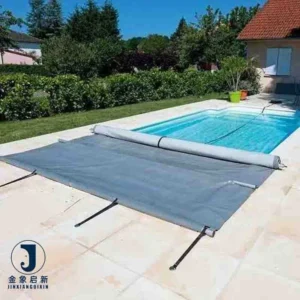
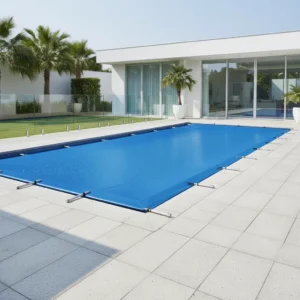
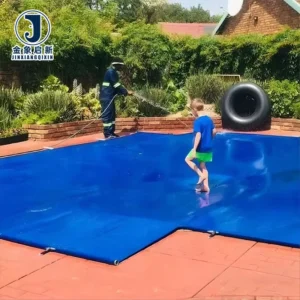
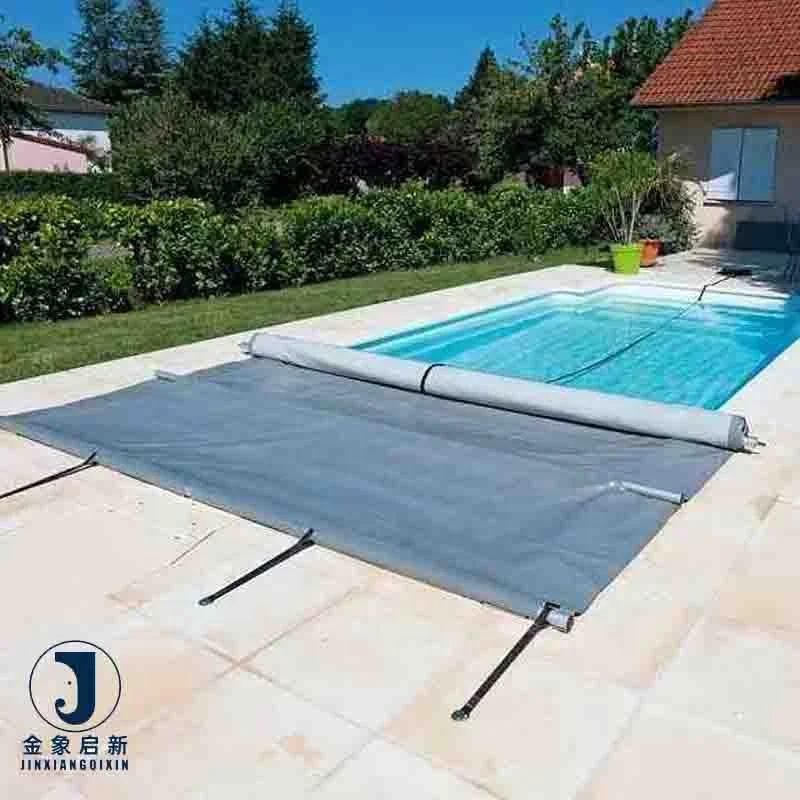
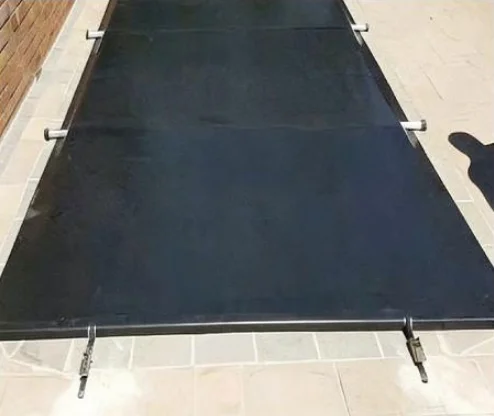
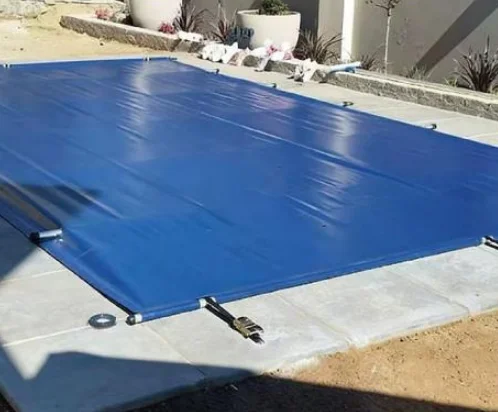
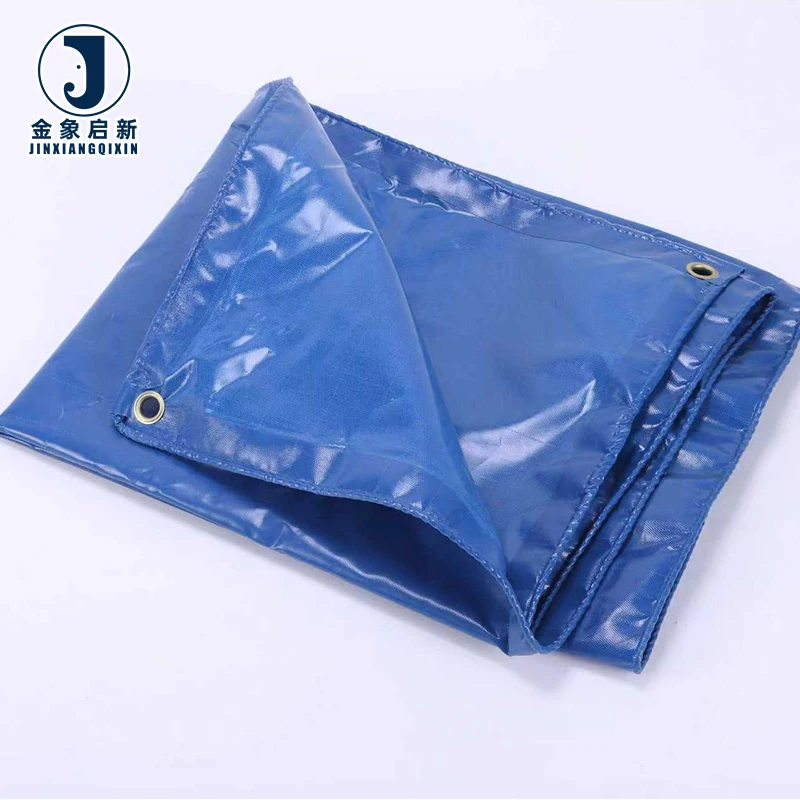
PVC Pool Cover Tarpaulin for Swimming Pools – Roll Stock
Bulk-Grade Consistency — Every roll of PVC laminated tarpaulin leaving the warehouse is checked for weight and colour against the order specification, so fabricators receive uniform material from first roll to last.
Technical Specifications
| Parameter | Value |
|---|---|
| Product Type | PVC Laminated Tarpaulin |
| Base Material | High-strength polyester mesh fabric with PVC coating |
| Coating Method | Laminated Technology & Hot-melt Coating Technology |
| Weight (GSM) | 350gsm / 420gsm / 500gsm / 550gsm / 600gsm / 750gsm |
| Total Thickness | 0.32mm / 0.35mm / 0.4mm / 0.45mm / 0.5mm / 0.65mm |
| Roll Width | 2m / 2.1m |
| Roll Length | 75m / 50m |
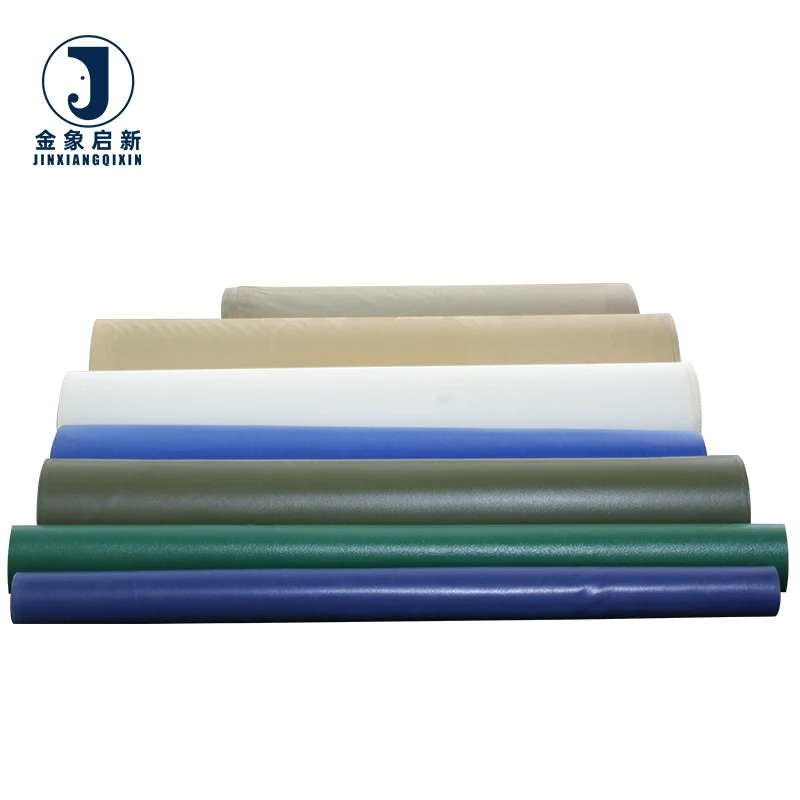
| Available Colours | Blue, Red, Yellow, Light blue, Grey (custom colours available) |
| Key Features | Waterproof, Cold Crack Resistance, Anti-Mildew, Anti-Static treatment (grade not stated) |
| Special Treatments | Flame retardant grades available — confirm the grade required for your market |
| Custom Sizing | Available per customer requirements or sold from inventory stock |
Application Suitability
| Application | Exposure & Requirement |
|---|---|
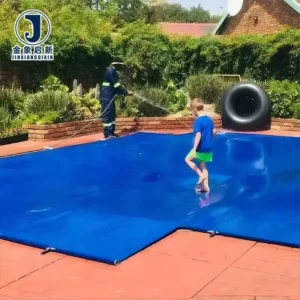
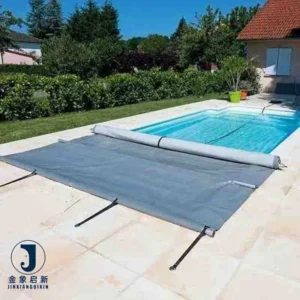
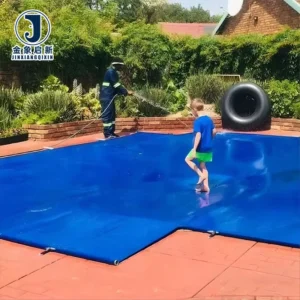
| Swimming pool covers | Continuous water contact, UV exposure, debris load, seasonal folding and unfolding |
| Fish tank and pond liners | Permanent water immersion, algae resistance, puncture from substrate |
| Tent and awning fabric by the roll | Tensioned spans, wind load, rain shedding, repeated assembly and teardown |
| Truck awning and side curtain | Road abrasion, flex at mounting rails, weather exposure during transit |
| Cargo ship covers | Salt-laden air, heavy wind, UV exposure on open decks |
Why GSM Alone Does Not Tell You How Strong the Pool Cover Fabric Is
A 500gsm roll with loose weave and thin coating will tear before a 420gsm roll with dense yarn and balanced lamination.
Purchasing managers often compare quotations on a single number — grams per square metre — assuming higher GSM means a stronger PVC laminated tarpaulin roll. In practice, the base fabric denier, the yarn count per inch, and the coating adhesion method together determine how the material behaves when a pool cover is pulled taut across a frame or when a tent panel catches a gust. [NEED_CITE: tensile and tear test methods for coated fabrics per ISO 1421] Two rolls can share the same stated GSM yet differ markedly in real-world tearing resistance. That gap shows up at the weld line first, where flex concentrates. Buyers sourcing by the roll need verified GSM on arrival plus a full material data sheet, not just a number on the quotation.
How Roll Width and Length Affect Container Loading Efficiency
The two standard widths — 2m and 2.1m — are dimensioned to fit standard shipping container floor space with minimal wasted area. Roll lengths of 75m and 50m correspond to those widths so that total roll weight stays within handling limits for forklift and pallet jack operations at the receiving warehouse. For wholesale buyers planning container loads, knowing the exact roll count per container and the weight per roll allows precise freight costing before the order ships. PVC Laminated Tarpaulin roll stock in these dimensions reduces the need for on-site re-slitting, keeping fabrication costs predictable.
Batch Colour Control Across Consecutive Rolls
Colour drift between rolls in the same shipment is a recurring complaint among fabricators who install panels side by side on residential pool enclosures or commercial tent structures. Consistent colour requires tight control of pigment dosing during the coating stage and uniform curing temperature across the production line. [NEED_CITE: colour fastness testing standards for PVC coated textiles] Our QA process checks colour reference against the order sample at multiple production stages, and a 100% pre-shipment inspection confirms that every roll in a batch matches the approved standard. Buyers ordering custom colours receive a sample swatch for sign-off before bulk production begins.
Reading the Specification Sheet Beyond the GSM Number
GSM tells you how much material exists per square metre but not how that material is distributed. A roll with heavier coating and lighter base fabric will feel thick yet tear easily along the warp, while a roll with more yarn and less PVC will resist tearing but may lack waterproofing at the seams. Laminated technology bonds a pre-formed PVC film to the polyester mesh under heat and pressure, producing strong adhesion between layers that matters when the fabric is heat-welded during fabrication. Hot-melt coating, by contrast, forces liquid PVC into the weave, filling gaps but sometimes leaving a stiffer hand. Total thickness — ranging from 0.32mm to 0.65mm across the available grades — correlates with coating build rather than base fabric density, so two rolls with identical thickness can carry different GSM values depending on yarn weight. Width also influences fabrication: a 2.1m roll may allow a pool cover to be made from a single panel where a 2m roll would require a welded seam, and each seam is a potential failure point under tension.
The Cost of Specifying the Wrong Grade for the Application
Choosing a lightweight grade for a commercial pool cover that spans a wide opening leads to sagging under water pooling, accelerated stretch, and early seam failure at the anchor points. Conversely, specifying a heavy 750gsm roll for a simple truck awning that rolls and unrolls daily adds unnecessary weight and stiffness, making the cover difficult for drivers to handle and increasing wear at the folding lines. [NEED_CITE: coated fabric selection guidelines for tensioned and flexible applications] Flame retardant grades, when required by local building codes for pool enclosures or public tent structures, must be confirmed with a test report — ordering standard stock and discovering the material fails a fire inspection on site means scrapping the entire installation. Colour inconsistency across rolls in a single order can force a fabricator to reject an entire shipment when panels installed side by side show visible shade differences.
Why Wholesale Buyers Source PVC Laminated Tarpaulin Rolls Here
Three full production lines running dedicated coating and laminating processes give the capacity to fill bulk roll orders without splitting production across unrelated product runs. A 10-person R&D team develops custom colour matches and widths with sample turnaround in days, not weeks. In-process QA at each stage — base fabric inspection, coating weight check, colour measurement, adhesion test — catches deviations before they compound through later rolls. The 100% pre-shipment inspection record that accompanies each order documents roll-by-roll GSM verification, colour confirmation, and coating integrity. Roll packing lists detail roll count, individual roll weight, and dimensions for container loading planning, eliminating guesswork at the freight forwarder. ISO and CE certification underpin the quality system, and customs documentation including certificates of origin support smooth import clearance across markets.
Documentation & Verification
- Material specification sheet stating exact GSM, base fabric type, and coating method per roll
- Weight verification per roll against the stated GSM before dispatch, documented on inspection record
- Colour reference check log confirming batch consistency across all rolls in the order
- Roll packing list with roll count, weight, and dimensions for container loading planning
- Certificate of origin and customs documentation for import clearance support
- Flame retardant test report supplied where applicable — confirm grade required for your market
Fabrication, Handling & Storage
- Heat-weld laminated PVC rolls using temperature and speed settings matched to the selected GSM grade to ensure seam strength matches the fabric body
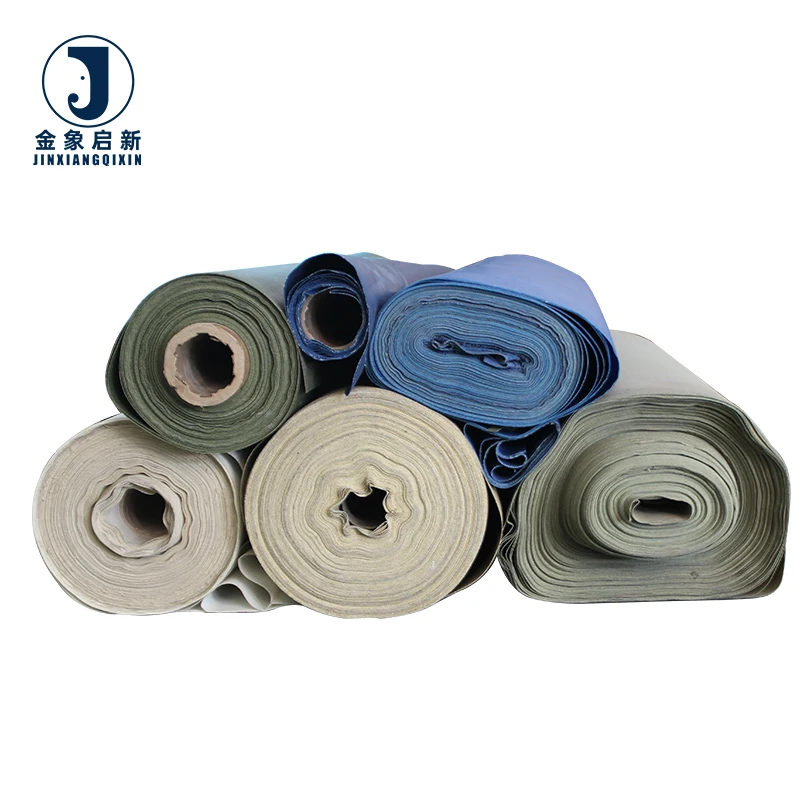
- Store rolls upright on pallets in covered, dry conditions to prevent edge crushing and surface marking on the PVC coating
- Unroll and allow material to relax at ambient temperature before cutting, especially for heavier grades above 550gsm in cold weather
- Plan cut patterns across the 2m or 2.1m roll width to minimise offcuts and reduce the number of welded seams in the finished pool cover
- Use compatible PVC-based adhesives for patch repairs, testing bond strength on a scrap piece of the same GSM grade first
- Avoid dragging rolls on unprotected floors to prevent abrasion damage to the outer coating surface
What to Include in Your Inquiry
To recommend the correct GSM grade and roll configuration, we need your end-use application, the exposure conditions the pool cover or awning will face, and any fire safety or compliance requirements for your target market. Specify whether you need standard inventory rolls or custom width, colour, or length, along with your estimated annual volume. If finished cut-to-size panels are required rather than roll stock, provide the panel dimensions and any eyelet or reinforcement specifications.
Frequently Asked Questions
Q: How is GSM verified on arrival and what documentation accompanies each roll?
A: Every roll is weighed and measured before dispatch, and the actual GSM is recorded on the pre-shipment inspection document that ships with your order. A material specification sheet stating the exact GSM, base fabric details, and coating method accompanies the shipment, so you can cross-check the received material against your original quotation without relying on stated values alone.
Q: How do you control colour consistency across rolls within the same order?
A: Pigment dosing is controlled at the coating stage and checked against the approved colour reference at multiple points during production. The 100% pre-shipment inspection includes a visual colour comparison of all rolls in the batch under standardised lighting. For custom colours, a sample swatch is produced for your approval before bulk manufacturing begins, ensuring the entire order matches.
Q: What roll widths and lengths are stocked, and what are the minimums for custom sizes?
A: Standard inventory rolls are available in 2m × 75m and 2.1m × 50m configurations across multiple GSM grades. Custom widths and lengths are produced to order with minimums that depend on the selected grade and colour. Contact us with your required dimensions and volume so we can confirm production feasibility and provide a lead time estimate.
Q: How are rolls packed for container loading and what is the loading plan by roll count?
A: Rolls are packed upright on pallets with protective wrapping to prevent edge damage during transit. A detailed roll packing list accompanies each shipment, listing roll count, individual roll weight, and pallet dimensions. This allows freight forwarders to plan container loading efficiently and helps you verify the received quantity against the dispatch record at your warehouse.
Q: What is the lead time for stock grades versus custom colour or width orders?
A: Standard grades in stocked widths and colours ship from inventory, typically allowing faster dispatch than custom production runs. Custom colour, width, or special treatment orders require a production run that includes sample development and approval before bulk coating begins. Provide your specific requirements so we can confirm the applicable lead time for your order configuration.