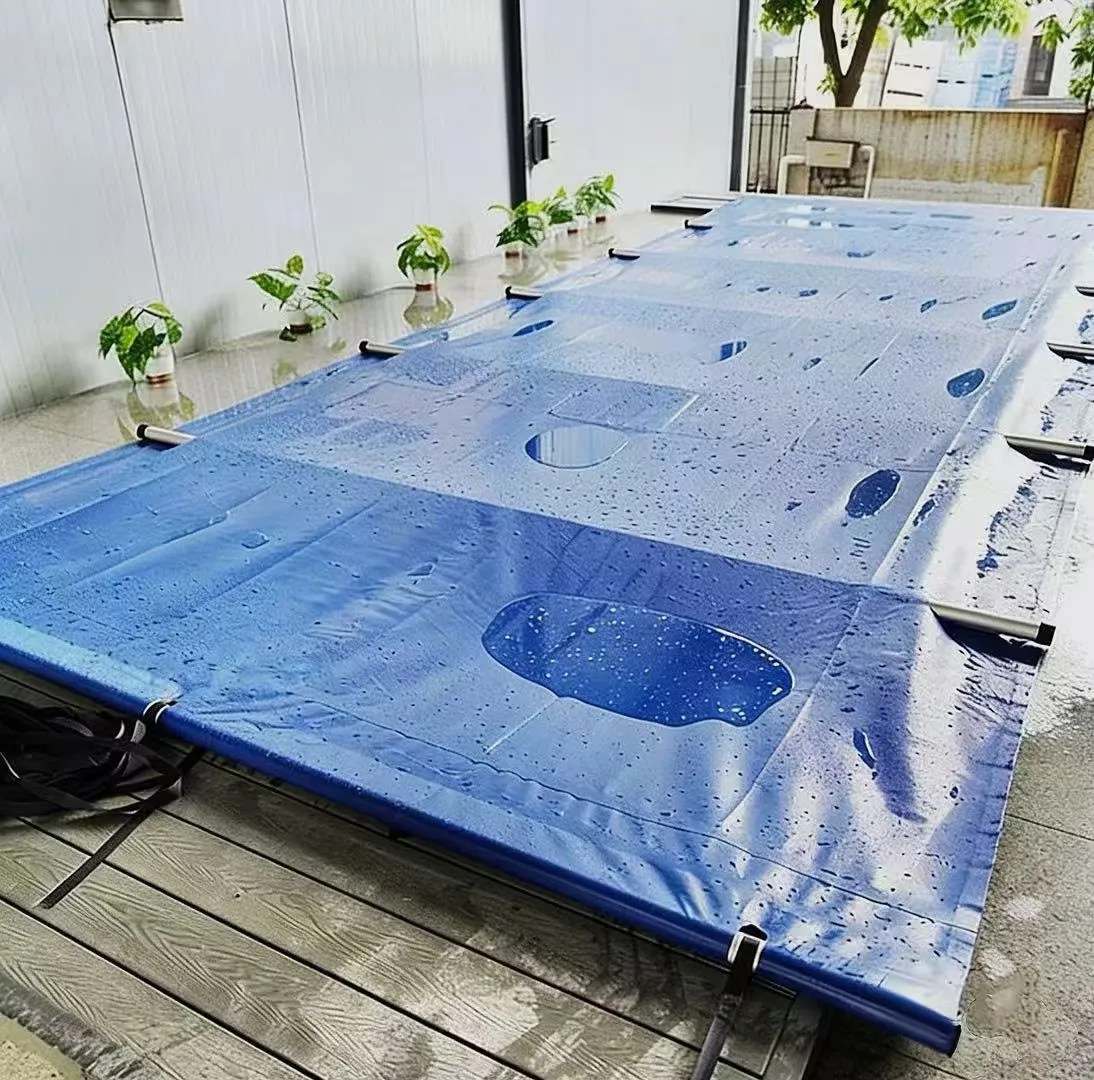
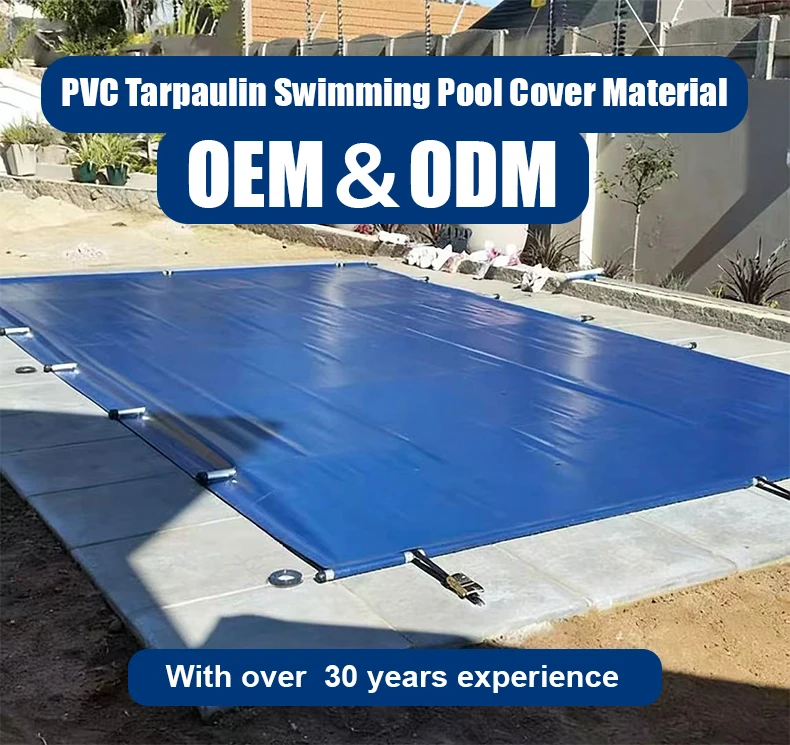
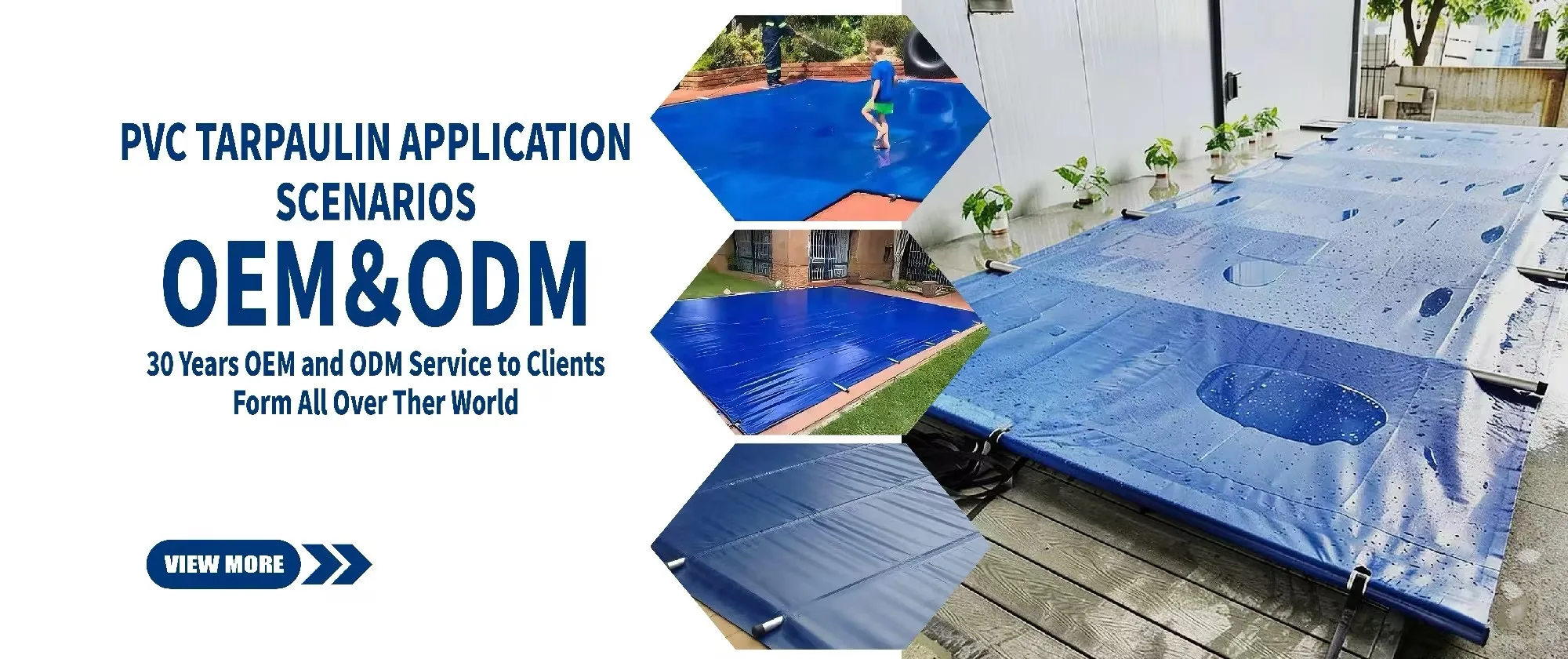
Description
Roll-stock consistency at scale — Three full production lines and 36 sets of professional equipment ensure uniform coating weight, colour matching, and adhesion across every roll in your bulk PVC pool cover order.
Technical Specifications
| Parameter | Value |
|---|---|
| Product Type | PVC Tarpaulin Pool Cover Fabric |
| Material | PVC coated polyester fabric |
| Coating Method | Knife coated |
| Waterproof Performance | Fully waterproof coated construction |
| UV Resistance | UV resistant and anti-aging treatment (test basis not stated in source — confirm UV hours or standard for your market) |
| Weather Resistance | Rain, wind, snow, and extreme temperature exposure |
| Tear Resistance | High strength and tear resistant structure |
| Mildew Resistance | Anti-mildew surface treatment |
| Surface Finish | Easy clean surface |
| Color | Custom colour runs available |
| Size | Custom width and length per roll |
Application Suitability
| Application | Exposure & Requirement |
|---|---|
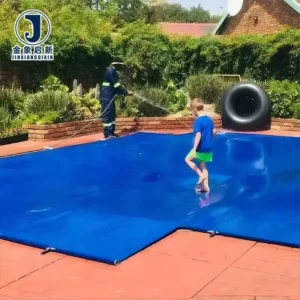
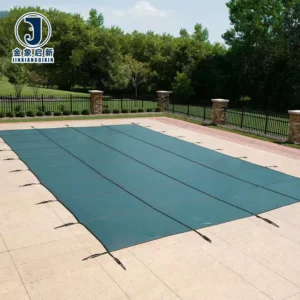
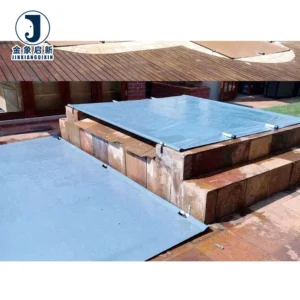
| Residential swimming pool covers | Year-round UV and rain exposure, leaf and debris accumulation, standing moisture on cover surface |
| Hotel and commercial pool covers | High foot traffic around pool deck, frequent cover removal and refitting, chemical splash from pool treatment |
| Outdoor pool enclosures | Wind uplift on large unsupported spans, snow load in winter months, thermal cycling between seasons |
| Agricultural pond and reservoir covers | Permanent water contact, algae and biological growth, wide span requiring welded seams |
Why Batch Colour Drift Ruins Pool Cover Installations
Colour must be locked at the coating stage, not corrected after the rolls ship.
Pool cover fabricators cutting material from multiple rolls quickly spot the problem: one roll reads slightly warmer, the next slightly cooler, and once welded panels sit side by side on a hotel pool deck the mismatch is visible to every guest. This is not a surface printing issue — it originates in pigment dispersion during the PVC compounding and coating phase. When a PVC pool cover tarpaulin order spans several production batches, even small formulation variances compound across rolls. Fabricators then face the choice of rejecting material mid-job or delivering covers that look pieced together from different dye lots. [NEED_CITE: colour consistency standards for coated textile batches]
Coating Uniformity Across the Full Roll Width
Knife coating applies PVC paste directly onto the polyester base fabric under controlled blade pressure, producing a consistent coating thickness from edge to edge. For pool cover fabricators, this means the material cuts and welds predictably whether you are working from the centre or the selvedge of the roll. Uniform coating weight also ensures that heat-welded seams bond with equal strength across the full width, reducing the risk of seam failure where the cover flexes most under wind or snow load. When sourcing PVC pool cover tarpaulin by the roll, this coating consistency is what separates usable stock from material that generates waste at the cutting table.
Anti-Mildew Treatment for Persistent Poolside Humidity
Pool environments never fully dry. Condensation forms under the cover overnight, and splashed chlorinated or salt water sits in folds until the cover is next removed. The anti-mildew surface treatment on this PVC pool cover tarpaulin addresses this persistent moisture exposure by inhibiting mould and fungal growth on the coated surface. Without this treatment, dark spotting appears within weeks in humid climates, degrading appearance and eventually weakening the coating layer. [NEED_CITE: mildew resistance testing methods for PVC coated fabrics]
Reading the Specs That Actually Matter for Pool Covers
GSM alone does not predict how well a pool cover fabric will perform in service. A 650 GSM material with a loose base fabric weave may tear more easily than a lighter fabric with a tighter denier count and higher yarn density. The knife coating process used here forces PVC into the weave interstices, creating mechanical adhesion rather than a surface film — this is what gives the material its peel strength and determines whether a welded seam holds or delaminates under load. The easy clean surface finish means that dirt and pool chemical residue rinse off without aggressive scrubbing, which preserves the coating integrity over repeated cleaning cycles. Custom width options let fabricators order rolls that match their most common pool dimensions, reducing off-cuts and weld seams on large commercial installations.
The Hidden Cost of Ordering Pool Cover Fabric Without Roll-to-Roll Verification
When a distributor receives a container of pool cover rolls and discovers that the GSM on the third roll falls below the quoted specification, the entire shipment becomes suspect. Fabricators who have already cut and welded the first two rolls into finished covers now face customer complaints or warranty claims. Colour variation between rolls in the same order forces sorting and selective cutting, which increases labour and waste. Welded seams that fail before the fabric body does point back to inconsistent coating adhesion — a problem that only shows up under stress, long after the material has left the factory. [NEED_CITE: pre-shipment inspection protocols for coated fabric rolls]
Why Fabricators Source This Material Here
Three dedicated production lines run simultaneously, supporting bulk roll orders without forcing you into extended lead times during peak season. A ten-person R&D team develops custom colour samples within days, allowing you to approve the exact shade before the full production run commits. Every roll undergoes inspection at each production stage, with 100% verification before dispatch — not a sampling protocol that misses defects in the middle of a batch. Knife coating process control maintains adhesion and coating weight within specification from the first roll to the last in your order. Custom width and length runs are supported with dedicated sample development, so you confirm material behaviour on your own welding equipment before bulk commitment.
Documentation & Verification
- Material specification sheet stating GSM, base fabric denier, and coating weight for every roll
- Pre-shipment inspection record confirming 100% roll-by-roll verification before dispatch
- Roll packing list with individual roll count, net weight, and container loading plan
- UV and anti-mildew test reports provided where applicable to your market requirements
- ISO and CE certificates on file for customs clearance and buyer compliance
- Certificate of origin and customs documentation prepared per destination country
Fabrication, Handling & Storage
- Heat weld at temperatures matched to the knife-coated PVC layer — test on off-cuts first
- Store rolls horizontally on pallets to prevent permanent creasing in the coating
- Allow cold-stored rolls to reach ambient temperature before unrolling to avoid coating cracks
- Cut panels with allowance for thermal expansion on large outdoor pool cover spans
- Use mild detergent for cleaning — avoid solvents that attack the PVC surface finish
- Reinforce tie-down points with additional PVC patches welded over high-stress areas
What to Include in Your Inquiry
Provide the pool dimensions you most commonly fabricate for, along with your target roll width and preferred roll length. Specify any colour requirements with RAL or Pantone references so we can develop a sample for your approval before bulk production. Indicate whether you need the material as roll stock only or require pre-cut sheets, and confirm any UV or mildew resistance test standards required in your destination market.
Frequently Asked Questions
Q: How do I verify the stated GSM matches the rolls I receive?
A: Every roll is inspected before dispatch and documented on the pre-shipment inspection record. You can also conduct a simple cut-and-weigh test on arrival — cut a measured square from each roll, weigh it, and compare against the stated GSM on your material specification sheet. We provide the specification sheet with every shipment.
Q: What controls prevent colour variation across rolls in one order?
A: Colour is matched during PVC compounding before coating begins, and pigment dispersion is checked against the approved sample. All rolls in a single order are coated from the same batch compound wherever possible. A batch colour reference is maintained so that repeat orders can be matched to your original specification.
Q: What standard widths and roll lengths are available?
A: Rolls are produced in custom widths and lengths to match your fabrication requirements. Standard widths are available from stock grades. For custom widths or colours, a sample is developed for your approval before the full production run, and minimum quantities apply per custom run.
Q: How are rolls packed and loaded to prevent transit damage?
A: Each roll is wrapped and labelled individually, then loaded according to a container loading plan that prevents crushing and shifting. The roll packing list included with your shipment documents the position and count of every roll in the container for verification on arrival.
Q: What welding methods work best with this PVC pool cover fabric?
A: Hot air welding and high-frequency welding both bond well with knife-coated PVC construction. We recommend running test welds on off-cuts to dial in temperature and speed settings for your specific equipment. The coating adhesion is designed to produce seam strength that matches the fabric body rather than failing at the weld line.