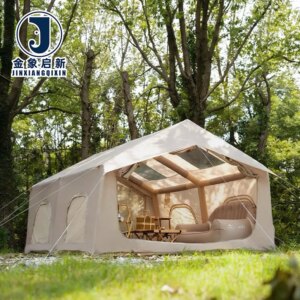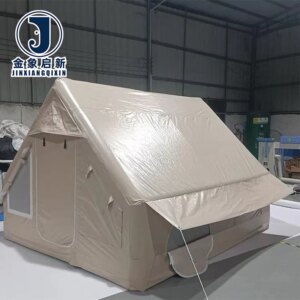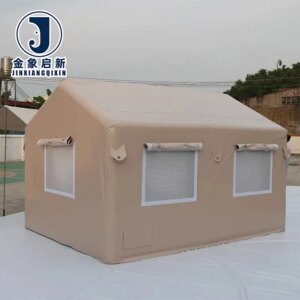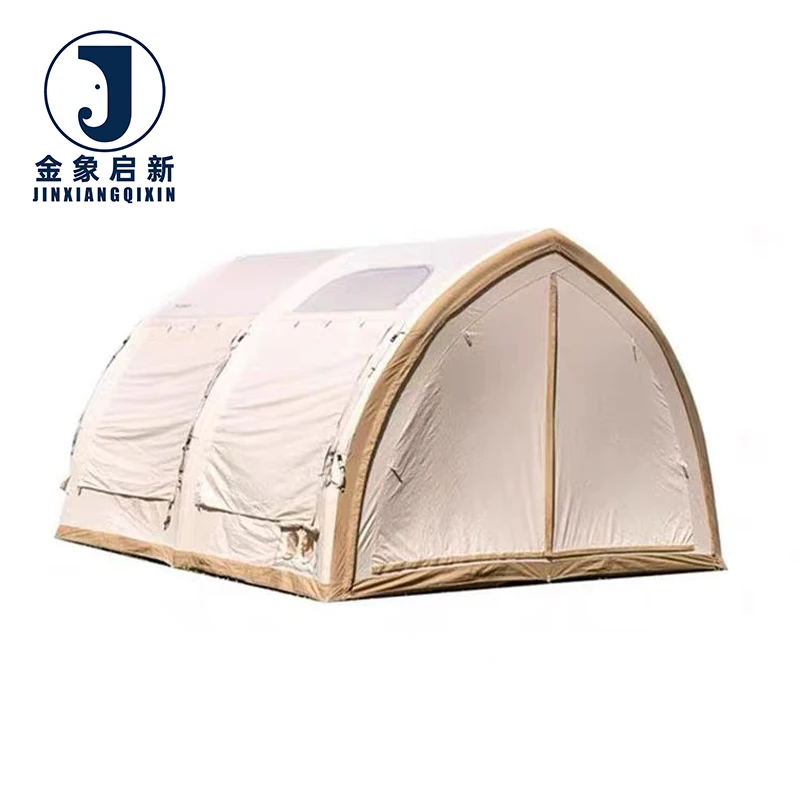
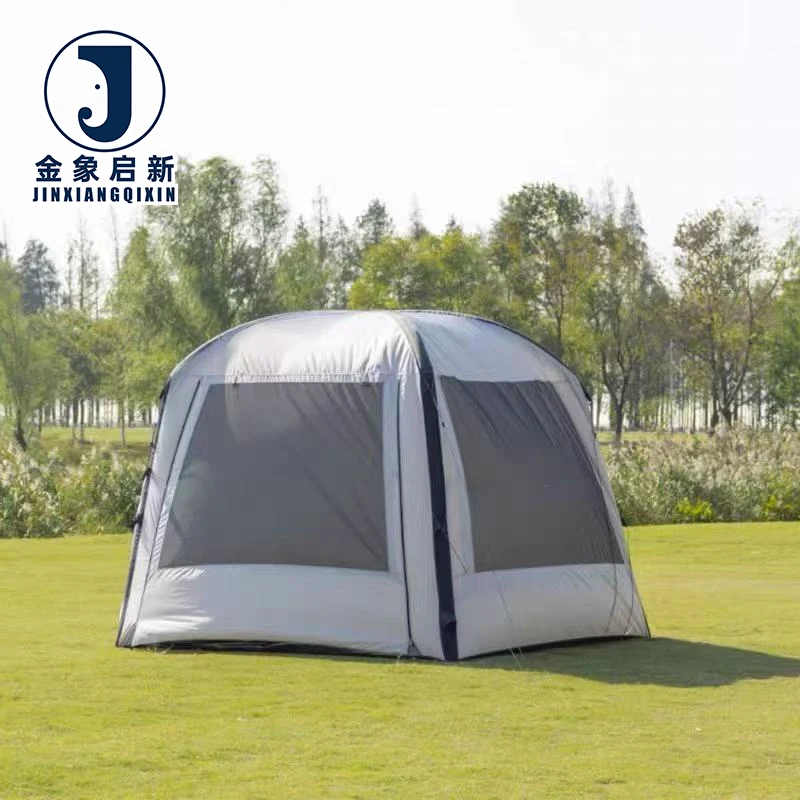
Description
Process-Controlled Roll Stock — Every roll of PVC inflatable tent fabric roll is inspected for coating weight, adhesion and base fabric denier before leaving our three full production lines, so batch-to-batch consistency is verified, not promised.
Technical Specifications
| Parameter | Value |
|---|---|
| Product Type | Inflatable Tent |
| Core Material | PVC tarpaulin (knife-coated fabric) |
| Coating Method | Knife coated |
| Key Features | Waterproof, UV-resistant, tear-resistant, fire-retardant, anti-static |
| UV Treatment | Anti-UV (test basis not stated in source — confirm test standard required) |
| Flame Retardant Grade | Grade not stated — available in flame retardant grades, confirm the grade required for your market |
| Anti-Static | Standard not stated — confirm compliance standard for your application |
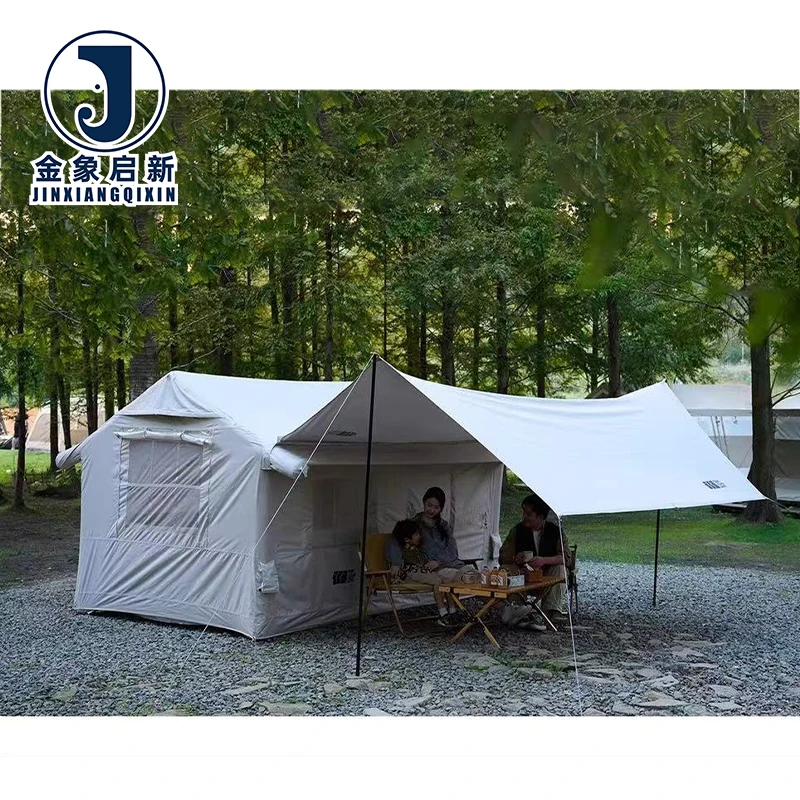
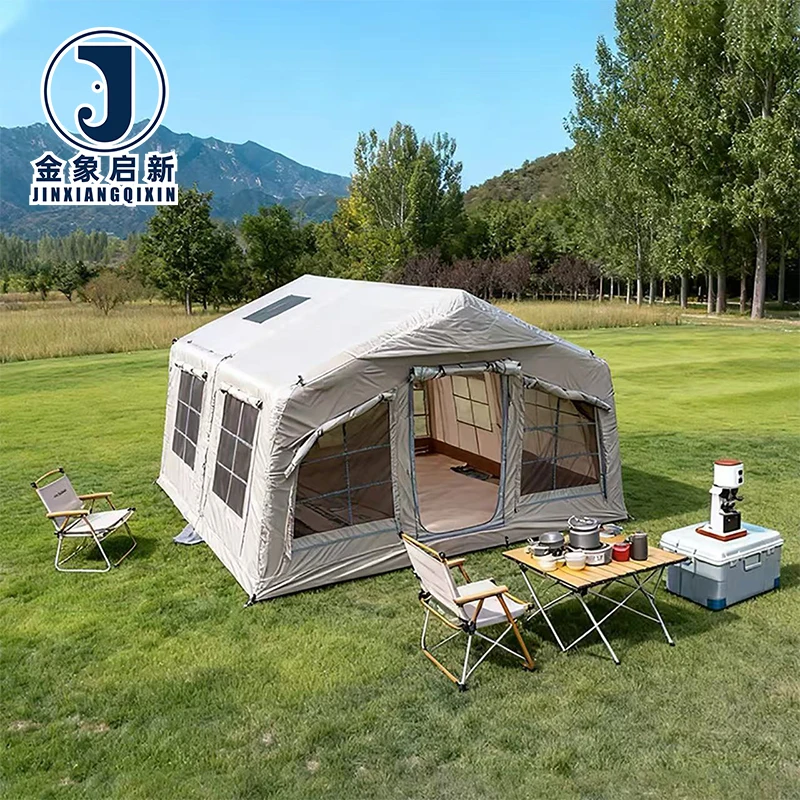
| Construction | Single layer, extended type design |
| Season Rating | Four-season |
| Customization | OEM & ODM (sample development, pattern printing, material selection, product design) |
| Standards | ISO9001, ISO14001, ISO45001, CE |
Application Suitability
| Application | Exposure & Requirement |
|---|---|
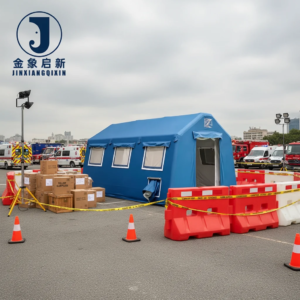
| Emergency disaster relief command posts | Rapid deployment, prolonged weather exposure, fire safety compliance on site |
| Temporary industrial workshops and equipment shelters | Mechanical handling abrasion, wind load on inflated structure, UV degradation risk |
| Mobile maintenance staging areas | Frequent inflation and deflation cycles, ground contact abrasion, chemical splash exposure |
| Air-supported membrane structures | Sustained internal air pressure, seam integrity under continuous tensile load, long-term UV exposure |
Why Roll-Stock Consistency Matters More Than Quoted GSM for Inflatable Fabric
GSM alone does not predict how a PVC inflatable tent fabric roll will behave at the weld line or under sustained air pressure.
Inflatable structure fabricators frequently discover after delivery that the coating weight varies between rolls in the same shipment. A roll that measures within tolerance at the centre may be lighter at the edges, causing uneven heat-seal penetration. When the structure inflates, the under-coated zones become the first points of failure. [NEED_CITE: tensile and tear test methods for coated fabrics per ISO 1421] Sourcing a PVC inflatable tent fabric roll with verified coating weight across the full width and length eliminates this risk before it reaches your welding table.
What Knife Coating Delivers for Air-Supported Structures
The knife-coated construction of this PVC inflatable tent fabric roll produces a direct bond between the PVC paste and the base fabric without an intermediate adhesive layer. This method allows the coating to penetrate the weave, creating mechanical interlocking that supports higher peel strength at welded seams. For inflatable tent and awning manufacturers, this means the seam can be heat-welded to approach the tear strength of the parent fabric, rather than failing at the joint under inflation pressure.
Batch-to-Batch Colour and Coating Consistency Across Roll Orders
When you order multiple rolls of PVC inflatable tent fabric roll for a production run, colour drift between rolls becomes visible once the panels are welded side by side on a finished shelter. Our production process controls coating weight and pigment dispersion at each stage, and pre-shipment inspection checks colour reference against the approved sample. [NEED_CITE: colour fastness evaluation methods for coated technical textiles] This consistency matters especially for emergency shelter lines where every unit in a fleet must match for project acceptance.
How Base Fabric and Coating Weight Interact to Define Structural Performance
The tear resistance of a knife-coated PVC fabric depends on two variables working together: the denier and weave density of the base fabric, and the mass of PVC coating applied per square metre. A heavier base fabric with a lighter coating may show high tensile strength but poor abrasion resistance at flex points. Conversely, a thick coating on a low-denier base adds weight without proportional tear improvement. For inflatable structures that sustain continuous internal pressure, the balance between base fabric count and coating thickness determines whether the material holds at the stress concentration points where panels meet. Flame retardant and anti-static treatments, where specified, are incorporated into the coating formulation to maintain these properties through the full thickness of the coated layer rather than as a surface finish that wears off.
The Hidden Cost of Unverified Coating Weight on Inflatable Seams
When coating weight is lighter than quoted, heat-weld parameters that worked on the sample will burn through the production material, or the weld will not penetrate fully and delaminates under inflation. Fabricators then face rework costs, delayed shipment of finished shelters, and reputation damage with end users. [NEED_CITE: heat welding parameters and peel strength correlation for PVC coated fabrics] Specifying a PVC inflatable tent fabric roll with documented pre-shipment coating weight verification prevents these downstream failures.
Why Fabricators Source Inflatable Structure Fabric Here
Our three full production lines and 36 sets of processing equipment handle bulk roll orders with consistent lead times, so your production schedule does not stall waiting for material. The 10-person R&D team develops custom samples within days when you need a specific width, colour or coating weight for a new inflatable tent design. Dedicated QA and QC inspection at every production stage — from base fabric incoming check to final roll winding — means each PVC inflatable tent fabric roll ships with a recorded inspection result, not just a batch number. Full OEM and ODM support covers material selection, pattern printing and custom sizing from sample through container loading.
Documentation & Verification
- Material specification sheet stating base fabric denier, coating method and confirmed weight per square metre for each roll
- UV and flame retardant test reports matched to production batch number where applicable grades are specified
- Pre-shipment inspection record covering coating weight, adhesion and colour reference verification per roll
- ISO9001, ISO14001, ISO45001 and CE certificates included with every shipment documentation set
- Roll packing list with individual roll weights and dimensions for container loading verification
Fabrication, Handling & Storage
- Set heat-weld temperature and dwell time based on the knife-coated PVC layer thickness to achieve full seam penetration without burn-through
- Store rolls upright on pallets in a shaded, ventilated area to prevent flat-spot deformation on the PVC coated surface
- Avoid dragging roll ends across concrete floors during unloading to protect the outer coating layer from abrasion scoring
- Use compatible PVC-based repair patches and solvent cement for field repairs on inflated structures to maintain coating bond integrity
- Plan panel cutting layout to maximise roll width utilisation and minimise the number of welded seams on high-stress zones
What We Need to Quote Your Roll Order Accurately
Provide your target roll width, annual volume estimate and the flame retardant or anti-static compliance standard your market requires. If you need custom colour matching or pattern printing on the PVC inflatable tent fabric roll, send a physical or digital colour reference and the print artwork file. Let us know whether you require sample rolls for weld testing before committing to full production volume, and specify any width or length constraints imposed by your cutting table or container loading plan.
Frequently Asked Questions
Q: How is coating weight verified on each roll before shipment?
A: Every roll undergoes a sampling check at multiple points along its length and across its width. The measured weight per square metre is recorded on the pre-shipment inspection report and compared against the quoted specification. Rolls that fall outside the agreed tolerance are flagged and excluded from your shipment, so the PVC inflatable tent fabric roll you receive matches the documented value.
Q: What flame retardant grades are available and which test standards apply?
A: Flame retardant treatments are available in multiple grades to meet different market requirements. The specific grade and test standard — such as DIN 4102 or NFPA 701 — must be confirmed at the inquiry stage so the correct formulation is applied during coating. Test reports corresponding to the selected grade are provided with shipment documentation for your compliance records.
Q: How do you ensure batch-to-batch colour consistency across roll orders?
A: Pigment formulation is locked after sample approval, and each production batch is checked against the approved colour reference during the coating process and again at final inspection. This control prevents visible colour variation when multiple rolls of PVC inflatable tent fabric roll are welded side by side on a finished inflatable structure.
Q: What custom widths and roll lengths can be produced for inflatable tent fabric?
A: Roll width and length are configurable based on your cutting table dimensions and container loading requirements. Our production lines accommodate a range of widths, and the R&D team will develop a sample roll at your specified dimensions for weld testing and pattern layout verification before full production begins.
Q: What seam and welding recommendations apply to this knife-coated PVC fabric?
A: Knife-coated PVC fabric requires heat welding parameters matched to the specific coating thickness and base fabric density. We recommend conducting test welds on sample material to establish optimal temperature, pressure and dwell time settings. This ensures the welded seam achieves peel strength comparable to the parent fabric, which is critical for maintaining inflation pressure in air-supported structures.