Description
Verified coating weight and batch consistency — every roll of PVC inflatable tent fabric undergoes in-process QA with GSM checked against the stated specification before dispatch.
Technical Specifications
| Parameter | Value |
|---|---|
| Product Type | Inflatable Tent |
| Core Material | PVC Tarpaulin (PVC knife-coated fabric) |
| Waterproof Rating | ≥8000mm H₂O (source value — verify against manufacturer catalog) |
| Tear Strength | ≥300N (test standard not stated in source) |
| Flame Retardant | Available in flame retardant grades — confirm the grade required for your market |
| UV Treatment | Available with UV treatment — test basis to be confirmed per order |
| Anti-Static | Available in anti-static grades — surface resistance or standard to be confirmed |
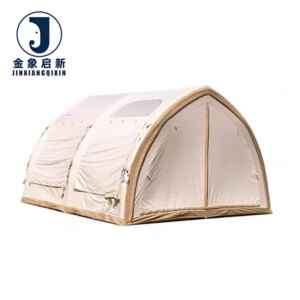
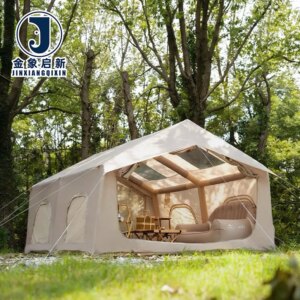
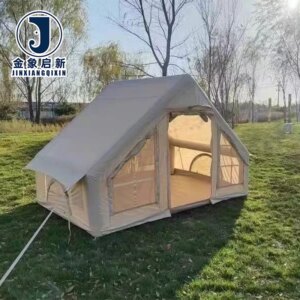
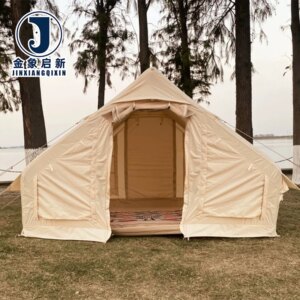
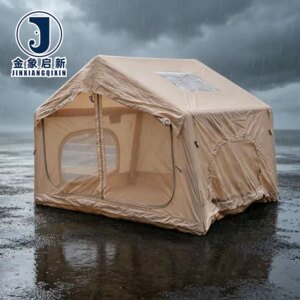
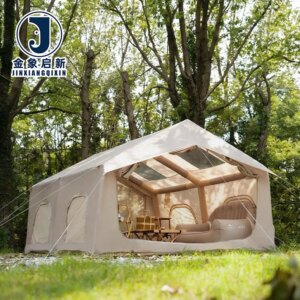
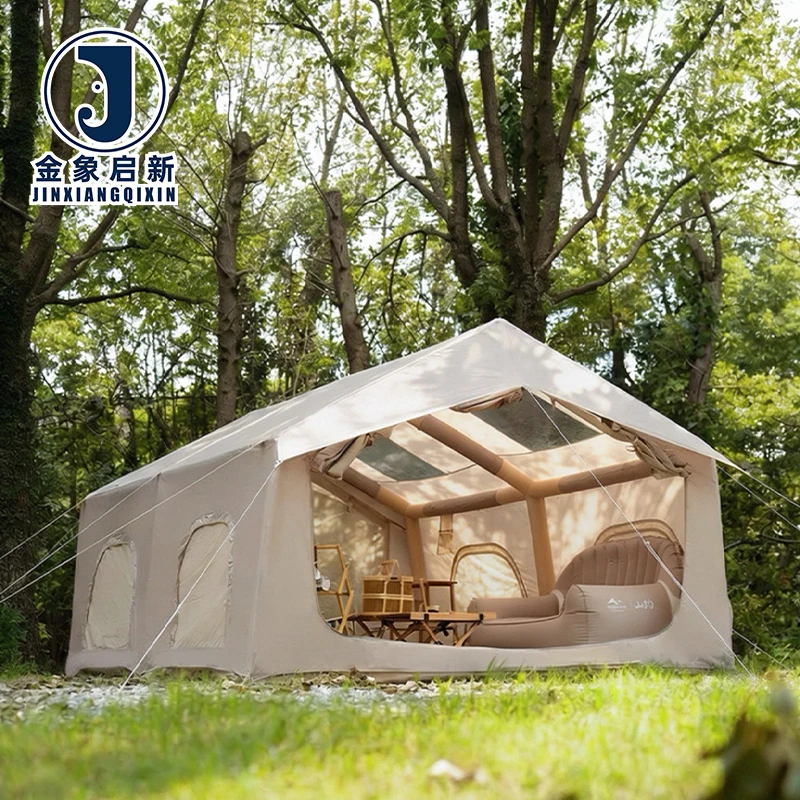
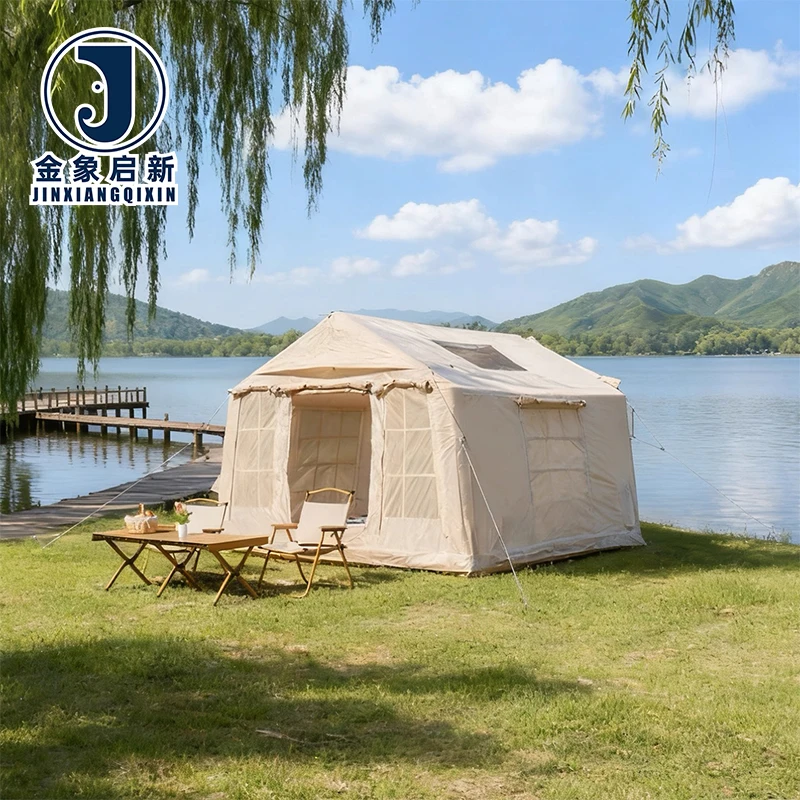
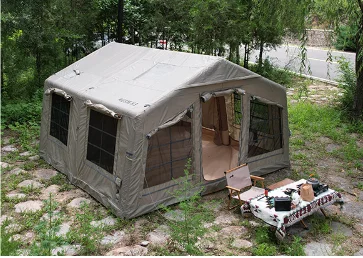
| Product Form | Inflatable structure with quick automatic opening |
| Design Configuration | Extended type, single-layer PVC construction, four-season |
| Dimensional Tolerance | ±2% |
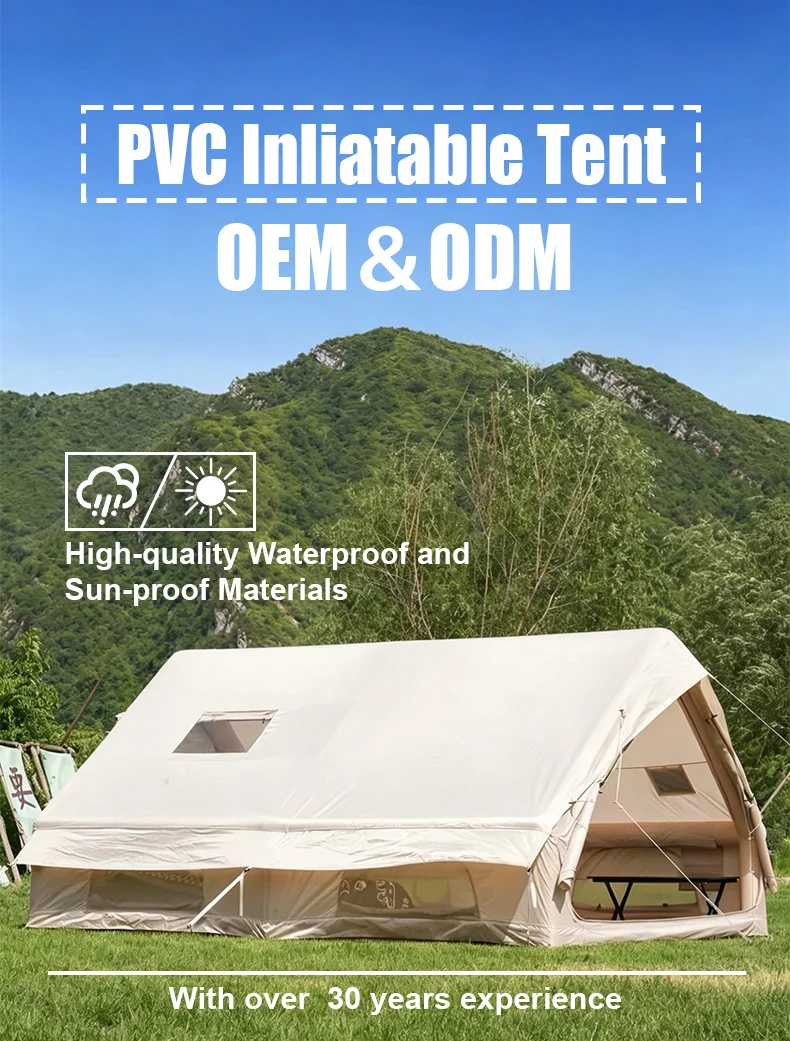
| Customization | OEM & ODM (size adjustment, color customization, pattern printing, specialized access points, ventilation systems) |
| Pressure Retention Test | 24-hour before shipment |
| Standards | ISO 9001, ISO 14001, ISO 45001, CE |
Application Suitability
| Application | Exposure & Requirement |
|---|---|
| Temporary site housing for construction crews | Wind loading, rain ingress, repeated inflation cycles, ground abrasion at base |
| Emergency equipment storage during infrastructure projects | UV exposure, dust and moisture protection, rapid deployment on unprepared ground |
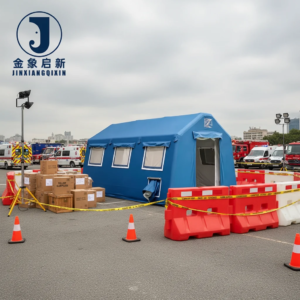
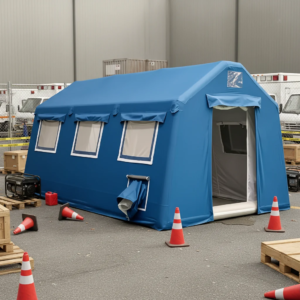
| Mobile shelter for disaster response operations | Extreme weather exposure, transport vibration, rapid setup without tools |
| Industrial emergency response staging | Chemical splash resistance, flame retardant compliance, high-visibility color requirements |
| Commercial temporary shelter installations | Public safety fire codes, aesthetic presentation, repeated assembly and teardown |
Why Inconsistent Material Quality Undermines Inflatable Shelter Reliability
Verified GSM and batch colour consistency are the foundation of dependable inflatable tent deployments.
When rolls arrive lighter than the stated GSM, the structural integrity of every welded seam and inflation chamber becomes unpredictable. Colour variation between batches means that tents deployed side by side at a disaster response site or commercial event look mismatched, damaging credibility with end users. Buyers specifying PVC inflatable tent fabric for emergency and commercial shelter applications need material that performs exactly as quoted — not approximately. [NEED_CITE: tensile and tear test methods for coated fabrics per ISO 1421]
Knife-Coated Fabric as the Structural Core of Inflatable Shelters
The PVC knife-coated fabric used in this inflatable tent delivers the tear resistance and waterproof performance required for structures that must hold air pressure under field conditions. Knife coating produces a uniform PVC layer bonded to the base fabric, creating a composite that resists delamination during repeated inflation and deflation cycles. This construction method is critical for inflatable tent manufacturers who need predictable material behaviour during high-frequency welding and seam fabrication.
Full Customization from Fabric Roll to Finished Inflatable Structure
This Inflatable Tent Fabric manufacturer supports OEM and ODM programs covering size adjustment, colour matching, pattern printing, and integration of ventilation systems or specialized access points. The dedicated 10-technician R&D team develops samples within days for custom requirements, allowing buyers to validate material selection and construction details before committing to full production runs. Whether sourcing PVC fabric by the roll or ordering finished inflatable structures, buyers receive pre-production samples for approval.
Understanding How GSM, Base Fabric, and Coating Weight Interact
The relationship between stated GSM and actual performance depends on how that weight is distributed between base fabric denier, weave density, and PVC coating thickness. A heavier coating does not automatically mean higher tear strength if the base fabric uses lower-denier yarns or a looser weave. Knife-coated PVC construction allows precise control over coating weight, which directly influences weld strength during fabrication — the point where most inflatable structure failures originate. Buyers evaluating custom inflatable structure PVC should request the material specification sheet that breaks down base fabric weight and coating weight separately, rather than relying on total GSM alone. [NEED_CITE: coating adhesion and peel strength testing for PVC tarpaulin]
The flame retardant and UV treatment options available for this fabric must be matched to the target market’s fire safety codes and expected sun exposure levels. Anti-static grades are relevant for inflatable structures deployed in environments with combustible dust or sensitive electronic equipment. Each treatment alters the surface chemistry of the PVC, which can affect welding temperature parameters and ink adhesion for printed branding.
The Hidden Cost of Specifying Material on GSM Alone
When procurement decisions are made on quoted GSM without verifying coating adhesion, base fabric density, or treatment certification, the consequences surface during deployment. Welded seams on inflatable structures fail at flex points when the coating separates from the base fabric under pressure, even if total GSM meets the specification. Batches with inconsistent coating weight produce visible colour variation once multiple units are inflated side by side, forcing costly replacements or rejected shipments. Flame retardant claims unsupported by test reports create compliance risk at the project inspection stage. [NEED_CITE: DIN 4102 fire classification for building materials]
Procurement Confidence Through Process Control
Nearly 30 years of focused coated fabric production provides the process control necessary to maintain GSM accuracy and colour consistency across production runs. Three full production lines and 36 sets of processing equipment support bulk capacity for large-volume inflatable tent fabric orders with reliable on-time delivery. The 10-person R&D team handles material selection, pattern printing specifications, custom sizing, and sample development directly with buyers. Dedicated QA/QC at every production stage with 100% pre-shipment inspection ensures that what leaves the factory matches what was specified on the purchase order.
Documentation & Verification
- Material specification sheet stating GSM, base fabric denier, coating type, and colour reference for every inflatable tent order
- Weight verification per roll checked against the stated GSM before dispatch
- Test reports for UV resistance and flame retardancy provided where applicable to support compliance documentation
- 24-hour pressure retention test record included with each finished inflatable structure shipment
- Roll packing list and certificate of origin prepared for customs clearance support
- Pre-shipment inspection record documenting colour consistency across rolls in the same order
Fabrication, Handling & Storage
- High-frequency welding parameters must account for the PVC knife-coated layer thickness to achieve full seam penetration
- Store rolls upright in climate-controlled conditions to prevent permanent creasing in the PVC coating
- Allow cold-stored PVC inflatable tent fabric to reach ambient temperature before unrolling to avoid coating cracking
- Use PVC-compatible cleaners that do not degrade the surface treatment or printed pattern layers
- Cut patterns should account for the ±2% dimensional tolerance when planning chamber dimensions for inflation structures
- Repair kits using matching PVC knife-coated fabric and compatible adhesive should be specified at order stage
Preparing Your Inquiry for Inflatable Tent Fabric Sourcing
Provide your target deployment environment, expected inflation cycle frequency, and any fire safety or anti-static compliance requirements for your market. Specify whether you need PVC fabric supplied by the roll for your own fabrication, or finished inflatable structures with OEM sizing and branding. Include required widths, annual volume estimates, and colour references so the R&D team can develop accurate samples before bulk production.
Frequently Asked Questions
Q: How do I verify that the GSM on received inflatable tent fabric matches the quotation?
A: Every shipment includes a material specification sheet stating the exact GSM, base fabric weight, and coating weight. We conduct weight verification per roll during the pre-shipment inspection, and buyers can perform independent GSM checks on arrival using standard coated fabric sampling methods against the documented specification.
Q: How is colour consistency maintained across multiple rolls in a large inflatable structure order?
A: Colour consistency is controlled through in-process QA at each production stage. Rolls within the same order are inspected side by side during the 100% pre-shipment inspection to confirm visual match. Any batch showing variation outside the approved tolerance range is held and re-processed before dispatch.
Q: What customization options exist for pattern printing and branding on inflatable tent fabric?
A: The R&D team supports pattern printing, colour customization, and branding integration during the OEM and ODM sample development phase. Buyers approve a pre-production sample with the specified print method and colour references before the full manufacturing run begins, ensuring the final product matches design intent.
Q: Which flame retardant grades are available for inflatable structures, and how do I match my market requirements?
A: Flame retardant treatment is available in multiple grades to meet different regional fire safety codes. Buyers should specify the required standard for their target market during inquiry, and the relevant test report is included in the documentation package to support compliance verification at project inspection.
Q: What is the sample development process and lead time for custom inflatable structure designs?
A: The 10-technician R&D team develops samples covering material selection, sizing, and customization details. Sample lead time is confirmed during the specification recommendation phase based on design complexity. Buyers review and approve samples before full-scale production is scheduled.