Description
Roll-to-Roll Consistency — HDPE woven PE tarpaulin roll stock produced across three full lines with in-process coating weight QA, ensuring every roll in a container order matches the stated GSM and colour reference without deviation.
Technical Specifications
| Parameter | Value |
|---|---|
| Product Type | PE Tarpaulin |
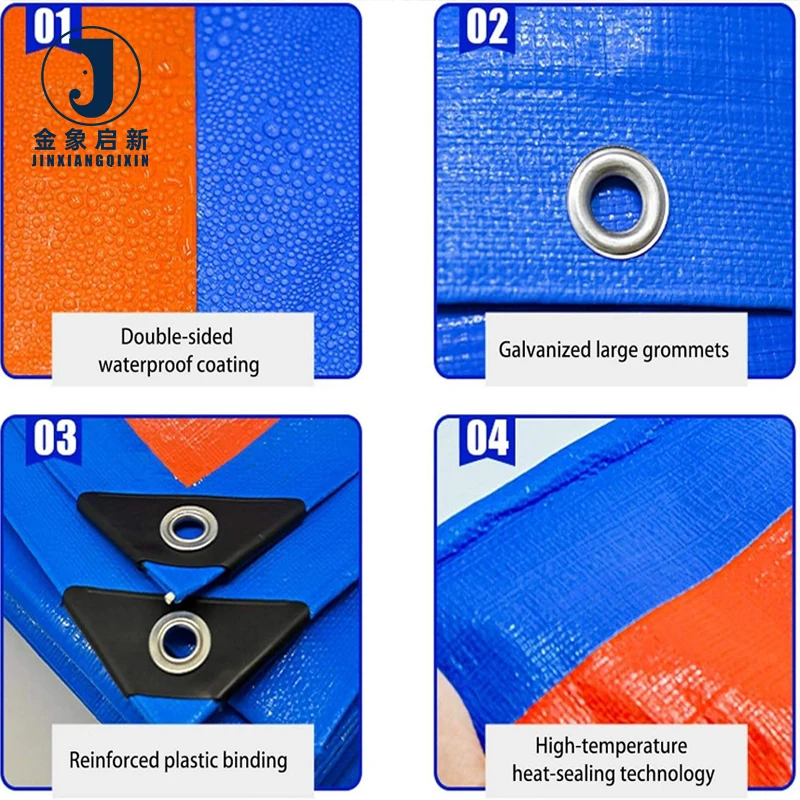
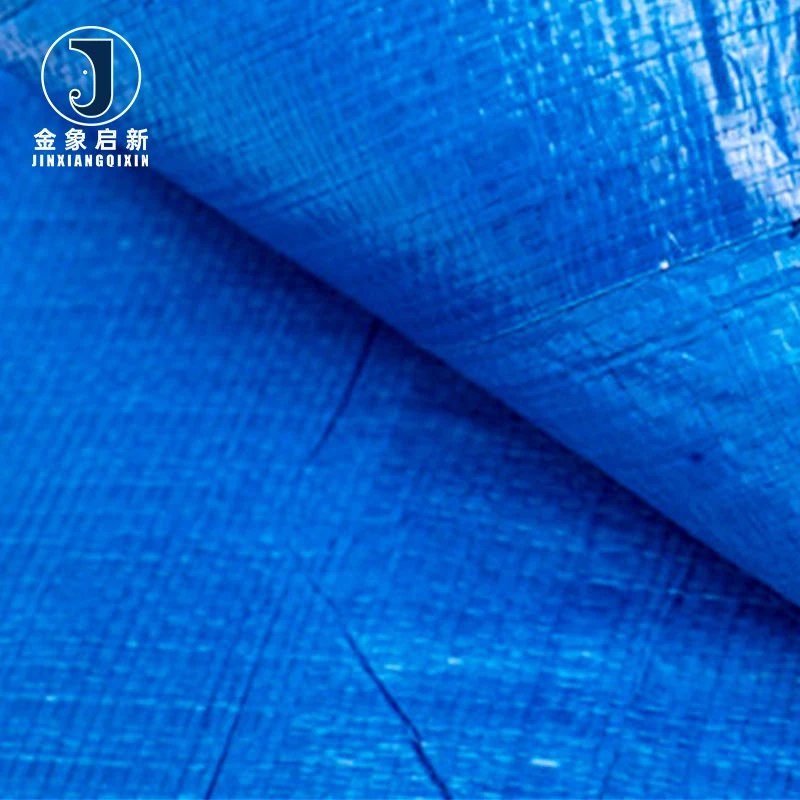
| Coating Material | HDPE weaving with LDPE lamination on both sides |
| Weight Range | 50 g/m² – 220 g/m² |
| Total Thickness | 0.2 mm – 0.4 mm (8 mil – 16 mil) |
| Knitting Density (Lightweight) | 8×8 |
| Knitting Density (Medium) | 10×10 |
| Knitting Density (Heavy-duty) | 12×12 |
| Tensile Strength (Lightweight) | Warp 300–500 / Weft 250–450 N/5cm |
| Tensile Strength (Medium) | Warp 500–800 / Weft 400–700 N/5cm |
| Tensile Strength (Heavy-duty) | Warp 900–1200 / Weft 700–1000 N/5cm |
| Roll Width Options | 6 ft, 8 ft, 10 ft, 12 ft / 2 m, 4 m, 6 m |
| Roll Length Options | 100 yards, 100 meters, or custom |
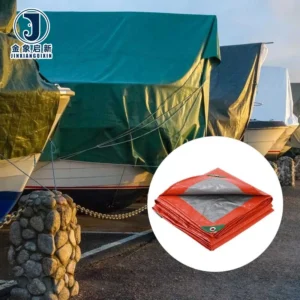
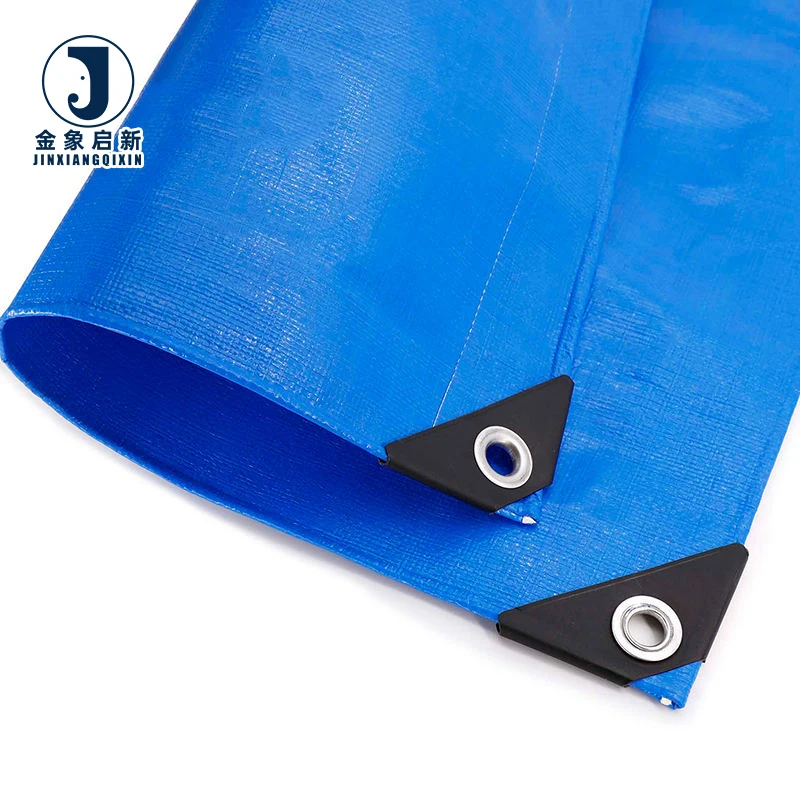
| Finished Edge | All four edges reinforced with PP rope in hem |
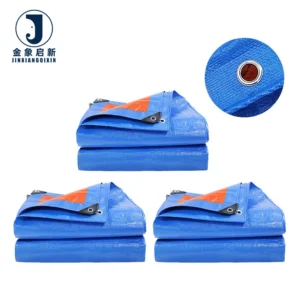
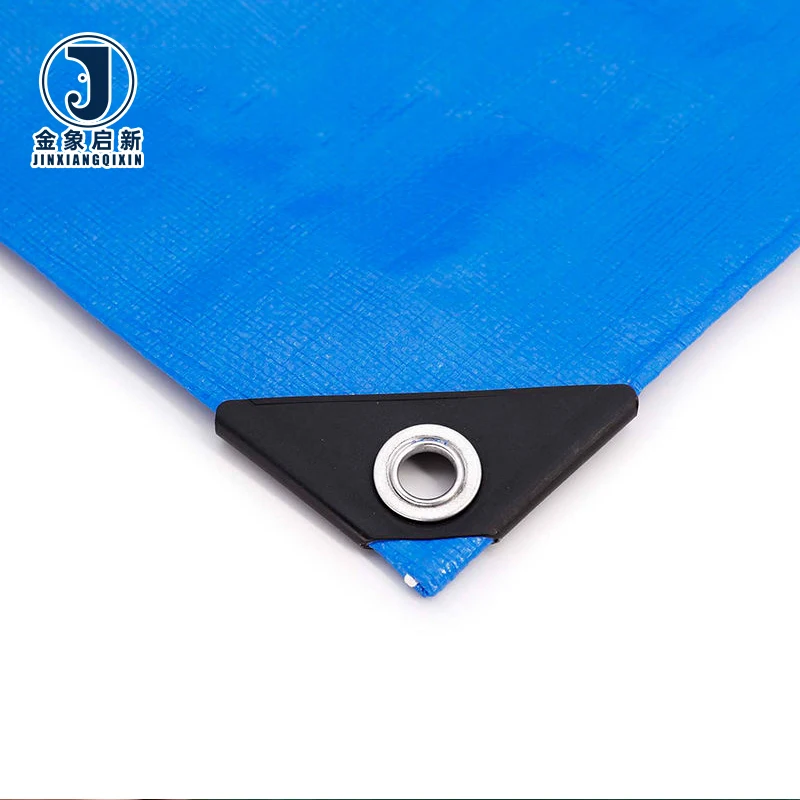
| Eyelets | Galvanized, spaced every 3 ft or 1 m interval |
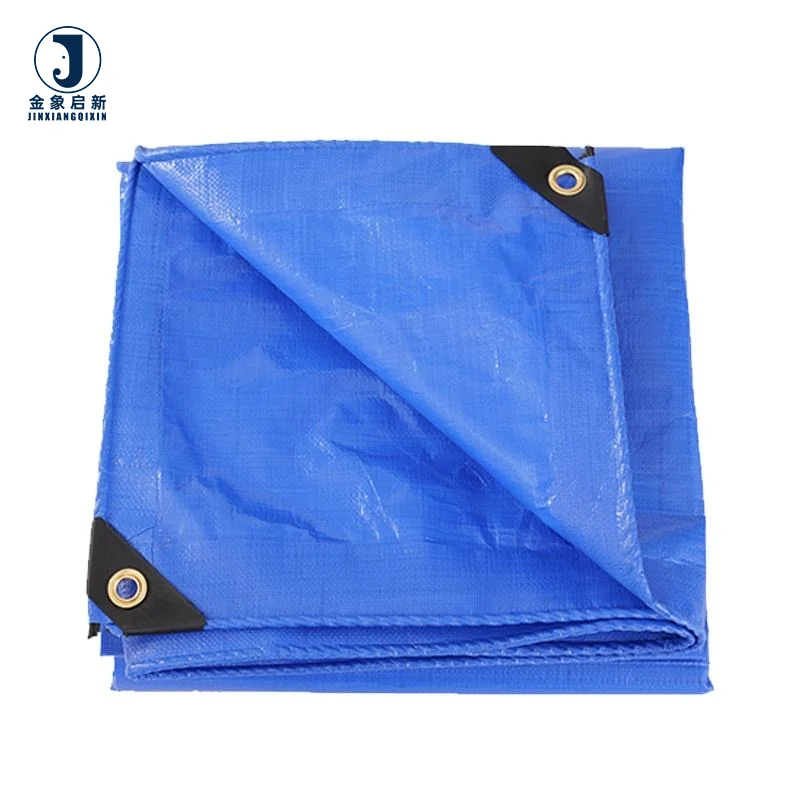
| Corners | Reinforced plastic corners |
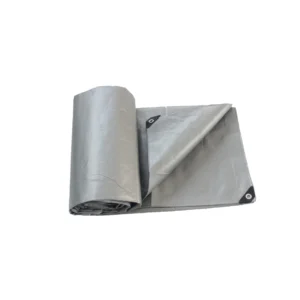
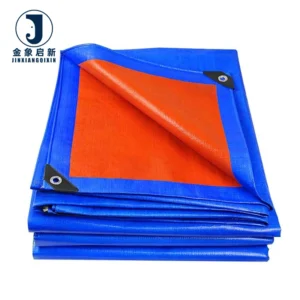
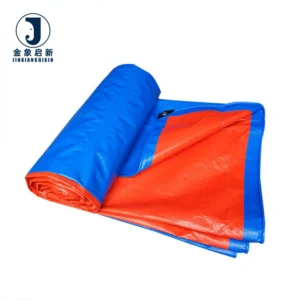
| Colours | Blue, Blue/Orange, Green, Grey, Black, Clear, Grey/Green, Orange, or custom |
| UV Treatment | Available (test basis not stated — confirm the standard required for your market) |
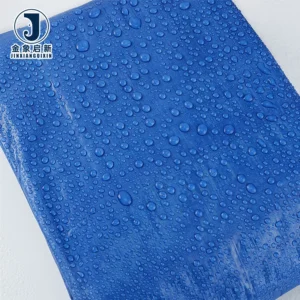
| Key Features | Waterproof, washable, tear resistant, mildew proof, anti-aging |
| Certifications | ISO, CE |
Application Suitability
| Application | Exposure & Requirement |
|---|---|
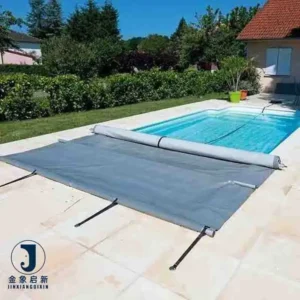
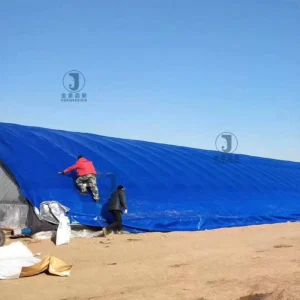
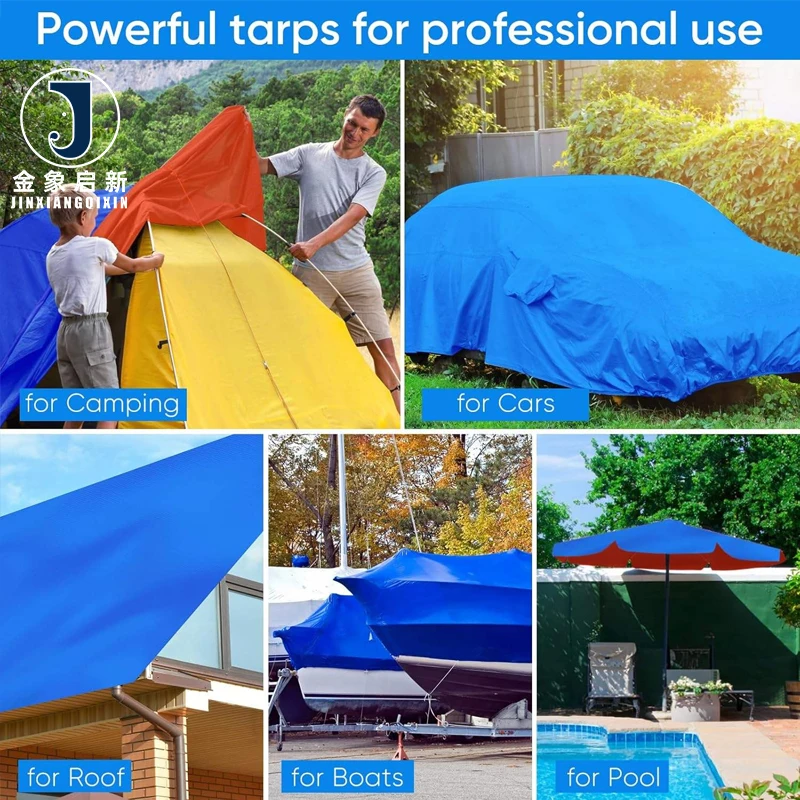
| Agricultural covering | Prolonged sun exposure, moisture contact, lightweight handling for seasonal crop protection |
| Warehouse coverage | Dust and rain ingress prevention, repeated deployment and folding across pallets and equipment |
| Truck tarpaulin | Road debris abrasion, wind uplift, tie-down tension at eyelet points, constant flexing during transit |
| Industrial protective covering | Chemical splash, machinery dust, repeated drag across concrete and steel surfaces |
| Construction site covering | UV exposure over multi-month projects, wind load on scaffolding wraps, puncture from sharp materials |
Why Batch Weight Variance Matters More Than Stated GSM
A PE tarpaulin roll is only as reliable as its lightest square metre.
When sourcing PE tarpaulin roll stock wholesale, the number on the quotation is not the number that arrives. Importers regularly open containers and find rolls that weigh measurably less than the agreed specification — sometimes an entire grade lighter. The consequence is not a rounding error in the accounts department; it is a tarp that tears under the first wind load on a construction site, or a truck cover that fails mid-winter on a fleet route. GSM verification at the coating stage, not just at the weighbridge before packing, is what separates a reliable PE tarpaulin roll stock wholesale supplier from one that ships optimistic invoices. [NEED_CITE: coated fabric weight tolerance standards per ISO test methods]
Roll Width Strategy for Container Loading Efficiency
Choosing the right roll width directly affects how many linear metres fit inside a standard container and how much trimming waste your end customers absorb. Our PE tarpaulin roll stock is supplied in widths from 2 m to 6 m, allowing distributors to stock a narrow range of wide rolls and slit locally, or order pre-cut widths that match regional demand. Wider rolls reduce the number of welded seams when fabricating large covers, which is where most field failures originate.
Colour Consistency Across Multi-Roll Orders
Colour variation between rolls in the same shipment is one of the most common reasons tarpaulin importers face rejection from their own customers. When two rolls of blue PE tarpaulin are unrolled side by side on a truck trailer and one is visibly different, the entire batch is questioned. Colour control in LDPE lamination depends on masterbatch dispersion consistency and coating temperature stability — variables that require monitoring at the lamination head, not just at the pigment mixing stage. [NEED_CITE: colour fastness testing methods for laminated polyethylene fabrics]
Reading the Tensile and Density Matrix
The relationship between knitting density and tensile strength in HDPE woven PE tarpaulin is not linear. A lightweight 8×8 mesh at 80–110 g/m² delivers warp tensile values of 300–500 N/5cm, which suits agricultural covers and temporary sheeting where the load is primarily gravity and light wind. Moving to a 10×10 mesh at 120–150 g/m² nearly doubles the warp strength to 500–800 N/5cm — this is the threshold where the fabric can handle tie-down tension on truck loads without eyelet pull-through. The heavy-duty 12×12 construction at 160–240 g/m² reaches 900–1200 N/5cm warp, providing the reserve strength needed for construction site enclosures and industrial equipment wraps where the fabric is dragged, folded, and re-deployed across rough surfaces.
GSM alone does not determine this performance. Two rolls at the same weight can have very different tear behaviour depending on whether the mass comes from thicker yarns or heavier coating. The LDPE lamination on both sides of the HDPE weave contributes to waterproofing and surface durability, but the woven base fabric carries the mechanical load. Specifying by knitting density alongside GSM gives a more accurate picture of how the PE tarpaulin roll stock will perform in the field than weight alone.
The Hidden Cost of Specifying Below the Application Threshold
A construction contractor orders a lightweight grade to cover scaffolding and materials for a multi-month project. The material arrives within tolerance, the colour is correct, and the eyelets are properly spaced. Within weeks, wind gusts catch the sheeting and the fabric tears at the hem line because the 8×8 mesh does not have the tear propagation resistance that a 10×10 or 12×12 construction would provide. The replacement cost, including labour to re-install, exceeds the savings from choosing the lighter grade. [NEED_CITE: field failure analysis of under-specified tarpaulin in construction applications]
Similarly, a logistics fleet operator who sources truck covers at the minimum GSM that a supplier will quote may find that the LDPE lamination wears through at abrasion points where the cover contacts the trailer bed. The woven HDPE base remains intact, but without the coating, water penetrates and the load is compromised. Specifying the correct grade tier for the actual exposure conditions prevents these failures before the first roll is shipped.
Why Source PE Tarpaulin Roll Stock From This Facility
Three full production lines and 36 sets of professional equipment support the volume required for full-container orders, with the capacity to run multiple roll widths and grades simultaneously without cross-contamination of colour runs.
A 10-person R&D team handles custom width requests, non-standard roll lengths, and colour matching from physical swatches — samples are developed within days rather than weeks, keeping the approval cycle short.
Dedicated QA/QC personnel operate at every production stage, from incoming HDPE yarn inspection through lamination weight checks to final roll weighing, with 100% pre-shipment inspection documented per batch.
Nearly 30 years of focused coated fabric production means the coating weight and adhesion processes are controlled through accumulated parameter knowledge, not trial and error on each production run.
ISO and CE certified production with full customs documentation support reduces clearance delays at destination ports for international importers.
Documentation & Verification
- Material specification sheet listing exact GSM, base fabric knit density, and LDPE coating weight per roll grade
- Pre-shipment inspection record with weighed GSM sample per production batch
- Roll packing list detailing width, length, net weight, and roll count for customs and warehouse receiving
- Colour reference confirmation against approved physical swatch before production run begins
- Certificate of origin and export documentation prepared per destination country requirements
Fabrication, Handling & Storage
- Heat sealing temperature should match the LDPE lamination thickness — test on a sample section before full production to avoid burn-through on lightweight 80–110 g/m² grades
- Galvanized eyelets at 1 m or 3 ft intervals distribute tie-down load; reinforce corners with plastic patches where concentrated stress occurs
- Store rolls horizontally on pallets to prevent permanent creasing at the core, which weakens the HDPE weave along the fold line
- Unroll and allow the PE tarpaulin to relax at ambient temperature before cutting, especially after cold transport, to prevent dimensional shift
- Clean with mild detergent and soft brush; avoid solvent-based cleaners that can degrade the LDPE lamination surface
What to Include in Your Enquiry
To provide an accurate specification and lead time, share the end-use application and the environmental conditions the PE tarpaulin roll stock will face — whether it is agricultural covering, truck tarpaulins, or construction site sheeting. Indicate the roll widths and lengths you need, your target GSM range, and whether you require finished cut sizes with eyelets or roll stock only. If colour consistency across multiple containers is critical, provide a physical or Pantone reference so the lamination colour can be matched before production starts.
Frequently Asked Questions
Q: What GSM tolerance do you hold across a full container order?
A: Every roll undergoes in-process coating weight verification during production, and a documented pre-shipment inspection records the actual weight per batch. We supply a material specification sheet and roll packing list that allow you to verify the GSM on arrival against the stated value. Tolerance limits are confirmed during the quotation stage based on the grade tier you specify.
Q: Can I mix different GSM grades and colours in one container?
A: Yes. Mixed-grade and mixed-colour orders are loaded into the same container with a detailed roll packing list identifying each roll by width, length, GSM, and colour code. This allows distributors to receive a full product range in a single shipment and sort directly into warehouse inventory without opening and re-labelling rolls.
Q: What are the standard roll widths and lengths stocked for fast dispatch?
A: Standard widths include 2 m, 4 m, and 6 m in metric, and 6 ft, 8 ft, 10 ft, and 12 ft in imperial. Standard roll lengths are 100 yards or 100 metres. Custom widths and lengths are available with standard minimum order quantities and no surcharge for non-stock lengths — confirm your required dimensions at the enquiry stage.
Q: How do you ensure colour consistency if I reorder the same specification months later?
A: Colour is controlled at the LDPE lamination stage using masterbatch references matched against approved physical swatches. When you place a reorder, we reference the original colour confirmation record and produce a new sample for your approval before the full production run begins, ensuring the new batch matches your existing stock.
Q: Do you supply finished cut-size tarps from roll stock, or only full rolls?
A: Both. Finished tarps are cut to specified sizes with all four edges reinforced by PP rope in the hem, galvanized eyelets at 1 m or 3 ft intervals, and reinforced plastic corners. These can be included in the same container as roll stock, allowing distributors to serve both fabrication customers and end-users from one shipment.