Description
Consistent Roll-to-Roll Output — every PE tarpaulin roll verified for GSM and colour match before dispatch, ensuring distributors receive uniform stock across the full order.
Technical Specifications
| Parameter | Value |
|---|---|
| Product Type | PE Tarpaulin |
| Material | HDPE weaving with LDPE lamination on both sides |
| Thickness | 0.18–0.35 mm (8–16 mil) depending on grade |
| GSM | 80–240 g/m² (lightweight 80–110, medium 120–150, heavy-duty 160–240) |
| Knitting Density | 8×8 / 10×10 / 12×12 depending on grade |
| Tensile Strength | Meridian 300–1200 N/5cm, Latitude 250–1000 N/5cm depending on grade (test basis not stated in source) |
| Roll Width | 6 ft / 8 ft / 10 ft / 12 ft or 2 m / 4 m / 6 m |
| Roll Length | 100 yards / 100 meters or as per buyer requirement |
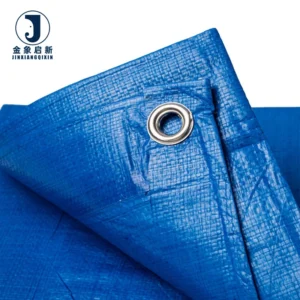
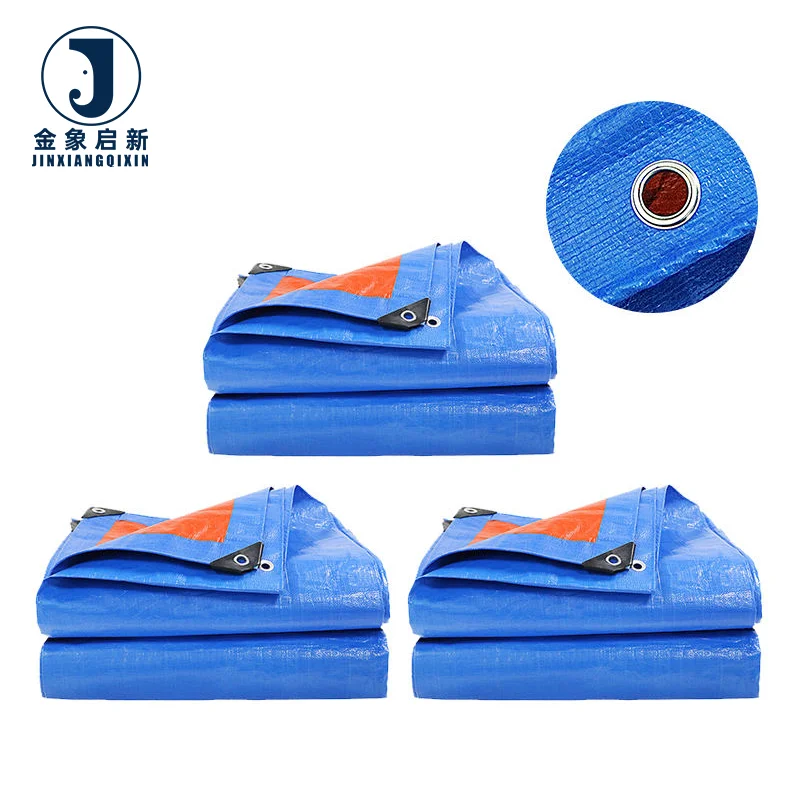
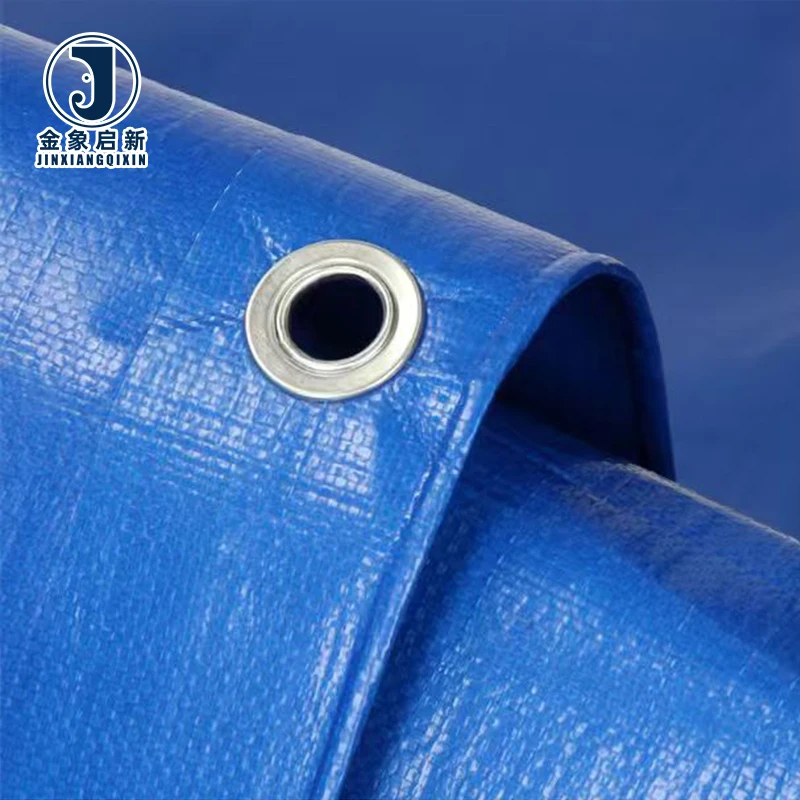
| Finished Sheet Reinforcement | PP rope hem on all four edges, galvanized eyelets every 3 ft or 1 m, reinforced plastic corners |
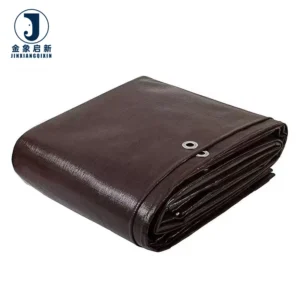
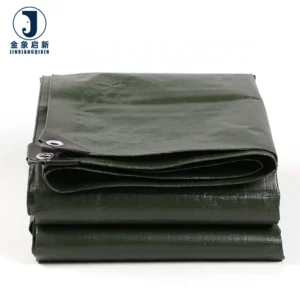
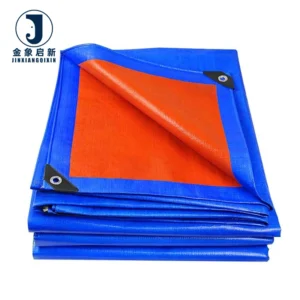
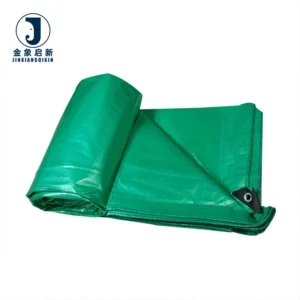
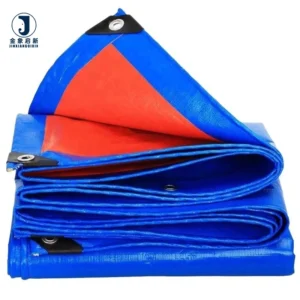
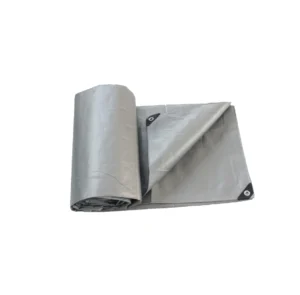
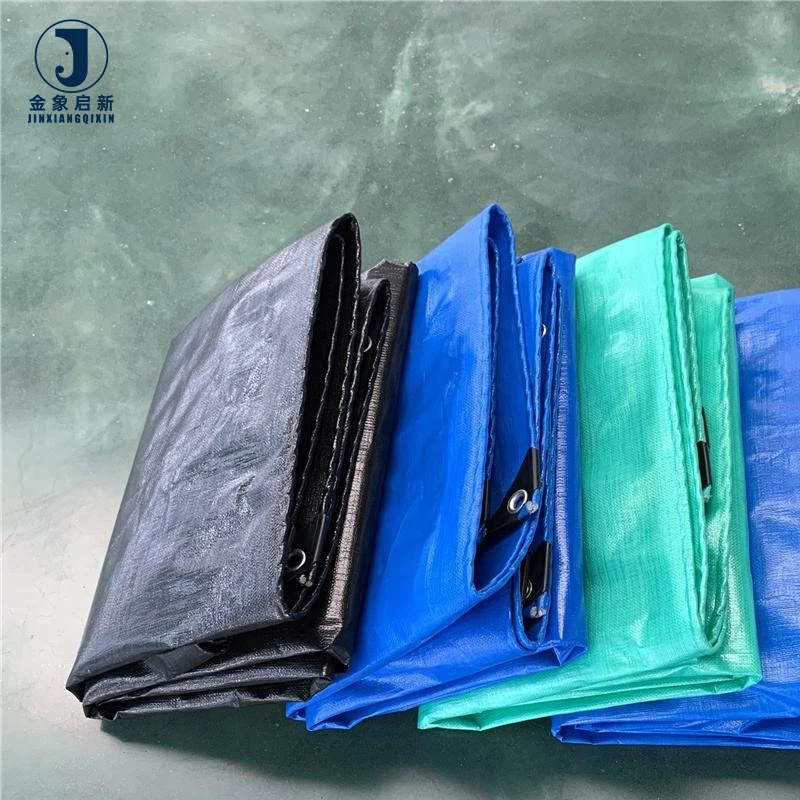
| Colour Options | Blue, Blue/Orange, Green, Grey, Black, Clear, Grey/Green, Orange or custom |
| Treatment | UV treatment available, mildew proof, anti-aging |
| Waterproof | Yes |
| Key Features | Tear resistant, waterproof, mildew proof, UV treatment available — confirm grade required for your market |
Application Suitability
| Application | Exposure & Requirement |
|---|---|
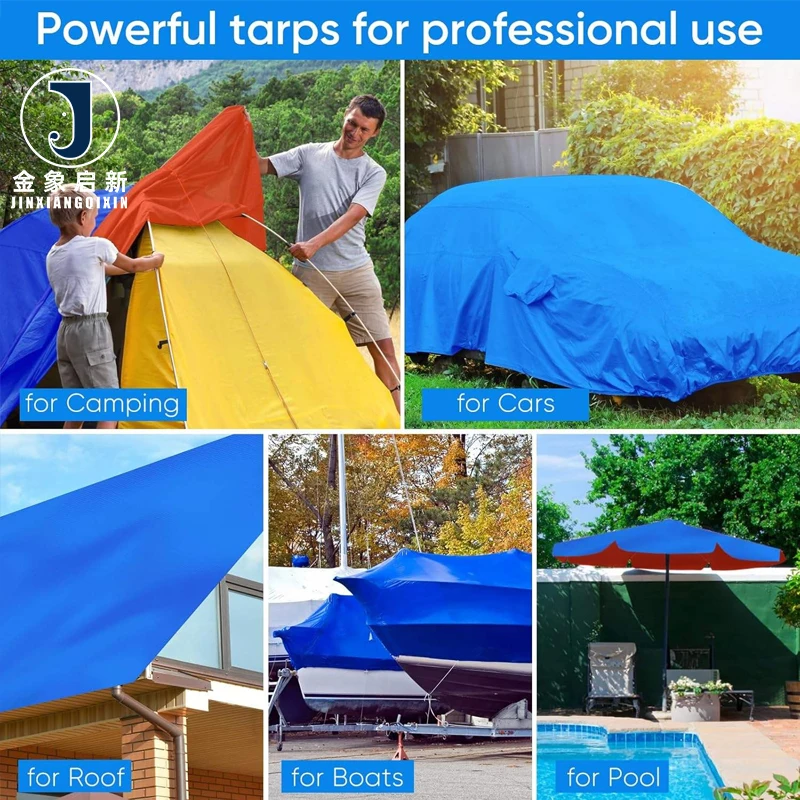
| Agricultural covering | Prolonged sun exposure, wind load, moisture — requires UV treatment and tear resistance |
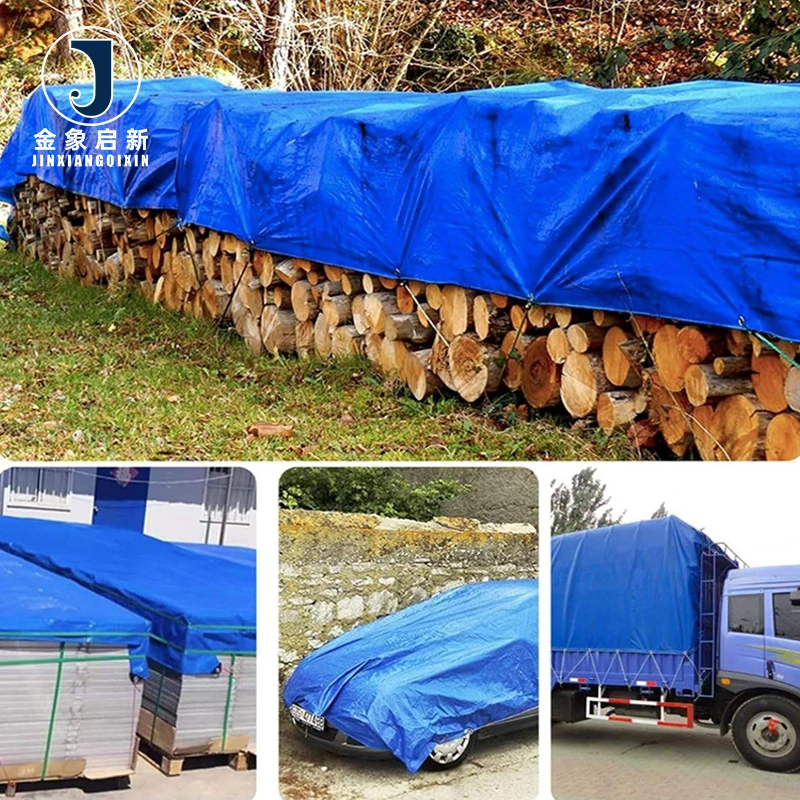
| Warehouse coverage | Dust ingress, rain splash, forklift abrasion — demands waterproof surface and hem strength |
| Truck and trailer tarpaulin | Road vibration, constant flexing, weather and UV — calls for consistent tensile strength and galvanized eyelets at load-bearing points |
| Industrial protective covers | Chemical splash, stacking pressure, repeated handling — needs heavy-duty GSM and reinforced corners |
| Pond and reservoir liners | Permanent water contact, soil pressure, puncture risk from substrate — requires full waterproof integrity and tear resistance |
| Construction site covers | Debris impact, rain, wind uplift, UV exposure — requires adequate GSM and secure tie-down reinforcement |
Why GSM and Knitting Density Together Determine Real Tarpaulin Performance
A roll’s weight alone does not guarantee strength — the weave density and lamination adhesion decide how the fabric behaves under tension.
When a tarpaulin distributor orders by the tonne, the stated GSM is the first number checked at receiving. Yet two PE tarpaulin rolls at the same GSM can differ substantially in tear resistance if one uses a looser weave with heavier coating to compensate. The knitting density — 8×8, 10×10, or 12×12 — defines how many HDPE tapes per square inch carry the mechanical load, while the LDPE lamination adds weight but limited structural contribution. [NEED_CITE: relationship between knitting density and tensile strength in woven PE fabrics]. Buyers who specify GSM without confirming mesh count risk receiving material that is heavier but weaker than expected, and failures typically surface only after the rolls are cut and deployed on site.
Stock Widths and Roll Lengths for Efficient Container Loading
PE tarpaulin roll stock moves in volume, and the dimensions of each roll directly affect how many fit per container and how much dead freight the buyer absorbs. Standard roll widths of 2 m, 4 m, and 6 m — alongside imperial equivalents — let distributors match local market preferences without re-slitting. Roll lengths of 100 yards or 100 meters keep individual roll weights manageable for manual offloading while keeping the total linear meters per shipment high. Custom roll lengths are supported on full production runs, letting high-volume buyers reduce the number of splices their downstream converters must manage.
Colour Matching Across a Full Container Order
Colour shifts between rolls become visible the moment tarps are unrolled side by side at a retail warehouse or construction site. Maintaining consistent colour across a container order requires pigment batching at the LDPE lamination stage, where the colour masterbatch is mixed into the coating resin before it is applied to the HDPE woven base. Every roll in a batch should be matched against the approved sample reference before winding. Distributors stocking multiple grades and colours need assurance that a Blue/Orange reorder will match the Blue/Orange already on the shelf, without visible variation once displayed next to each other.
How Weave Density, Coating, and GSM Interact in PE Tarpaulin
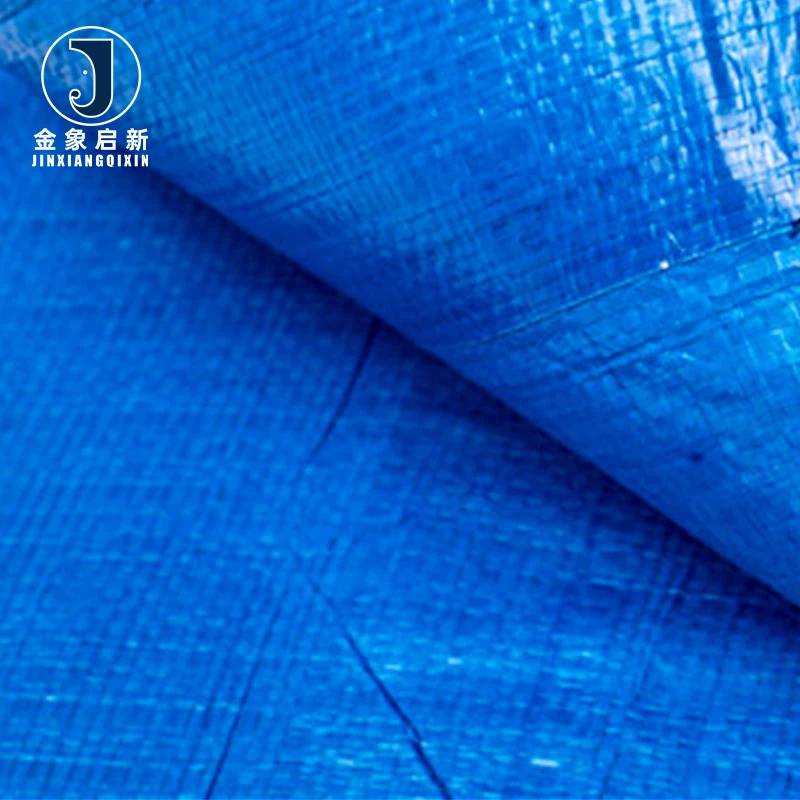
The structural contribution of a PE tarpaulin comes primarily from the HDPE woven base fabric. The knitting density — the number of warp and weft tapes per unit area — determines how evenly tensile loads are distributed across the fabric plane. A 12×12 weave spreads stress across more tapes than an 8×8, resulting in higher resistance to tear propagation even when both grades use the same tape denier. The LDPE lamination on both sides serves to waterproof the fabric and lock the weave in place, but the coating itself adds GSM without adding proportional strength. This is why a heavy-duty 240 g/m² grade with a 12×12 knit will outperform a medium 150 g/m² grade not simply because it is heavier, but because the denser weave resists tear initiation and the thicker lamination provides additional abrasion protection at contact surfaces. Roll width selection also matters: wider rolls reduce the number of field splices needed for large-area coverage, which in turn reduces the number of potential failure points in the final installation.
The Hidden Cost of Underspecified Roll Stock
When a bulk order arrives with GSM lighter than quoted, the distributor absorbs the cost of returns, re-orders, and damaged trade relationships. [NEED_CITE: common causes of tarpaulin specification disputes between buyers and suppliers]. Colour inconsistency across rolls forces retailers to separate batches or face customer complaints when adjacent tarps appear mismatched on display. Rolls with insufficient knitting density may pass a weight check but fail a tensile test, leading to tarps that tear at tie-down points under wind load. These failures do not show up in the container — they surface weeks later at the end-user site, where the real cost of an underspecified PE tarpaulin order is measured in replacements and lost accounts.
What This Production Setup Delivers for Volume Buyers
Three full production lines running HDPE weaving and LDPE lamination simultaneously mean that large container orders can be scheduled without splitting a single batch across different machines, reducing the risk of roll-to-roll variation. The 10-person R&D team develops custom colour samples within days, letting distributors confirm a match before committing to a full production run. Dedicated QA/QC at every stage — from incoming HDPE tape inspection through weaving, lamination, winding, and final packing — ensures that each roll is checked against the specification before it reaches the container. With 36 sets of professional equipment, roll widths from 2 m to 6 m and multiple knitting density grades can be produced in parallel, supporting buyers who stock a range of grades for different customer segments.
Documentation & Verification
- Material specification sheet listing GSM, knitting density, HDPE base fabric details, and LDPE coating weight for every roll batch
- Colour reference matched against approved sample with recorded delta before production release
- Pre-shipment inspection record confirming GSM and dimensional check per roll before dispatch
- Roll packing list with roll count, net weight, gross weight, and roll dimensions for container loading verification
- Certificate of origin and ISO/CE documentation included with every container shipment
- UV treatment test report provided where applicable — confirm the test standard required for your market
Fabrication, Handling & Storage
- Heat-seal PE tarpaulin at lamination melting temperature; adjust dwell time to GSM grade for consistent bond strength
- Galvanized eyelets at 3 ft or 1 m intervals distribute tie-down load; verify spacing matches the wind uplift requirements of the installation
- Store rolls upright on pallets to prevent flat-spot deformation of the HDPE woven core, especially on heavy-duty 240 g/m² grades
- Allow rolls to acclimatise before unrolling in cold climates — LDPE lamination stiffens at low temperatures and may crack if flexed immediately
- Use mild detergent for cleaning; avoid solvents that can soften the LDPE coating layer on both sides
- When cutting finished sheets from 6 m wide roll stock, plan panel layout to minimise off-cuts and maximise yield per roll
Requesting a Quotation for Roll Stock
To receive an accurate specification and lead time, provide the GSM grade, knitting density, and colour you need along with the target roll width and length. If you are stocking multiple grades, share the volume split per colour so that production can be batched for consistent colour matching across the entire order. Indicate whether you require roll stock only or finished sheets with hemming and eyelets, and note any compliance requirements for your destination market.
Frequently Asked Questions
Q: What is the minimum order quantity per colour and grade?
A: Minimums depend on the GSM grade, roll width, and colour selected. Standard colours such as Blue, Green, and Black typically carry lower minimums because the pigment masterbatch is kept in stock. Custom colours require a minimum run to ensure colour consistency across the full batch. Contact us with your target grade and colour for a specific MOQ.
Q: Can you guarantee roll-to-roll colour consistency across a full container order?
A: Yes. All rolls in a single order are produced from the same pigment batch and matched against an approved sample reference before winding. A pre-shipment inspection record confirms the colour match per roll, so distributors receive uniform stock that can be displayed and sold side by side without visible variation.
Q: What roll widths and lengths are available off the shelf versus custom?
A: Standard roll widths of 6 ft, 8 ft, 10 ft, 12 ft, 2 m, 4 m, and 6 m are produced regularly in multiple GSM grades. Roll lengths of 100 yards and 100 meters are standard. Custom widths and lengths are supported on full production runs — confirm the required dimensions and volume so that scheduling and minimums can be quoted.
Q: How is container loading calculated — by roll count, weight or volume?
A: Container loading plans consider roll diameter, roll weight, and the internal dimensions of the container to maximise payload. A detailed packing list is provided before dispatch showing roll count, net and gross weight, and cubic utilisation so buyers can verify freight efficiency and plan receiving logistics.
Q: Do you provide GSM test reports and pre-shipment inspection records with each batch?
A: Every shipment includes a pre-shipment inspection record showing GSM verification and dimensional checks performed on the rolls in that batch. A material specification sheet is provided listing the confirmed GSM, knitting density, and coating details. UV treatment test reports are supplied where applicable — confirm the standard your market requires.