Description
Verified Roll-to-Roll Consistency — every PE tarpaulin roll is weighed and inspected against the specification sheet before container loading, so distributors receive uniform GSM and colour across the entire shipment.
Technical Specifications
| Parameter | Value |
|---|---|
| Product Type | PE Tarpaulin |
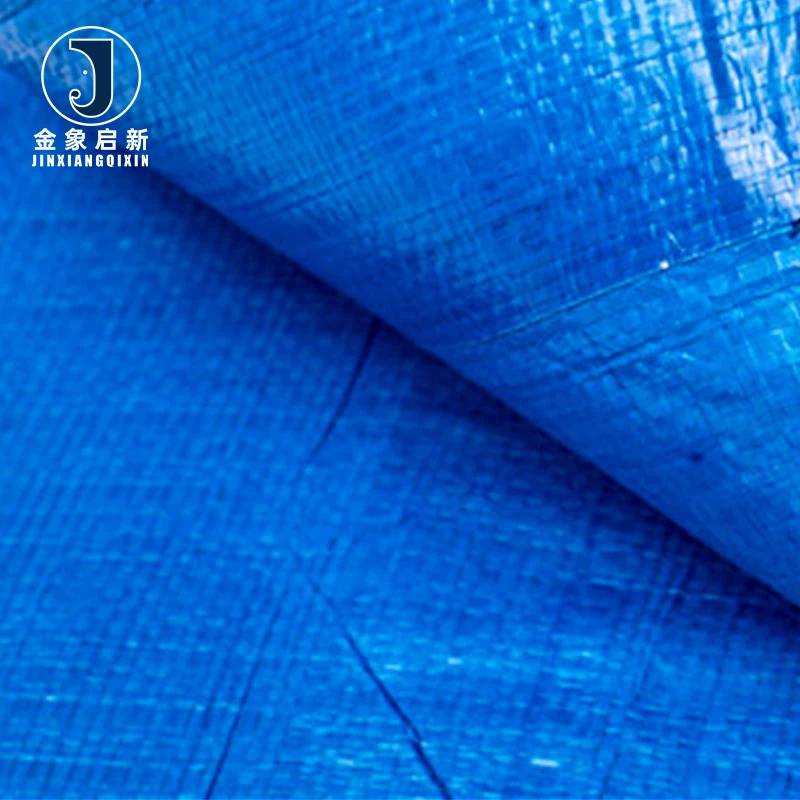
| Material | HDPE woven base with LDPE lamination on both sides |
| Weight Range | 50 g/m² to 220 g/m² (confirm grade per order) |
| Total Thickness | 0.18–0.22 mm (lightweight) / 0.22–0.28 mm (medium) / 0.30–0.35 mm (heavy-duty) |
| Knitting Density | 8×8 (lightweight) / 10×10 (medium) / 12×12 (heavy-duty) |
| Tensile Strength | Meridian 300–500 / Latitude 250–450 N/5cm (lightweight); Meridian 500–800 / Latitude 400–700 N/5cm (medium); Meridian 900–1200 / Latitude 700–1000 N/5cm (heavy-duty) (test basis not stated) |
| Roll Width | 6 ft, 8 ft, 10 ft, 12 ft / 2 m, 4 m, 6 m |
| Roll Length | 100 yards, 100 meters, or custom |
| Finished Sizes | 2×2 m through 8×10 m and imperial equivalents |
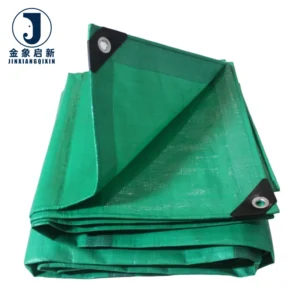
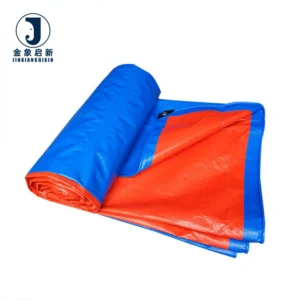
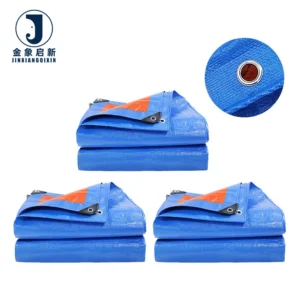
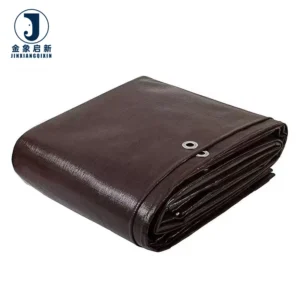
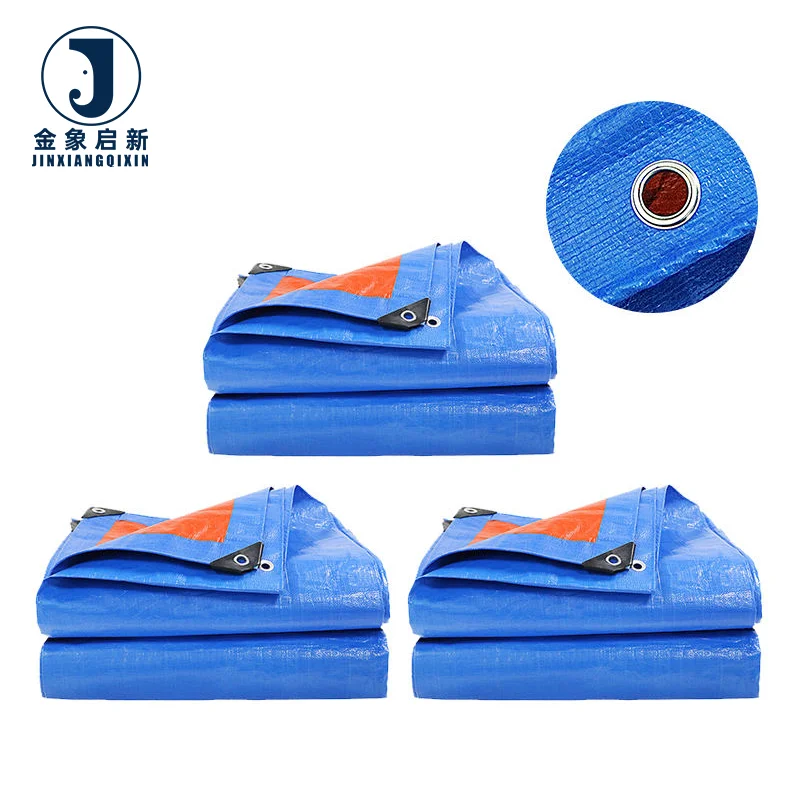
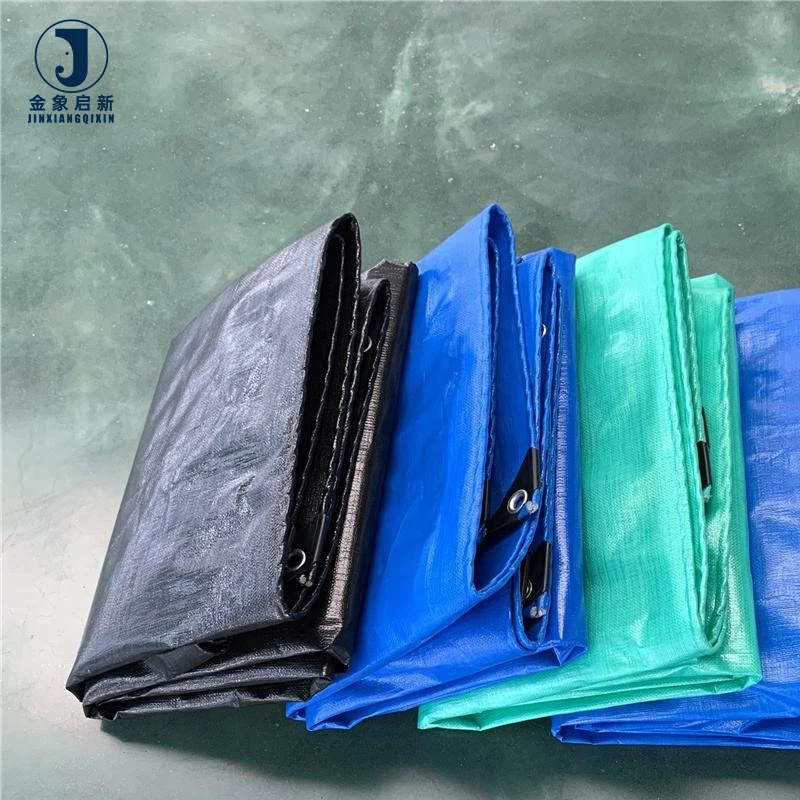
| Colour Options | Blue, Blue/Orange, Green, Grey, Black, Clear, Grey/Green, Orange, or custom |
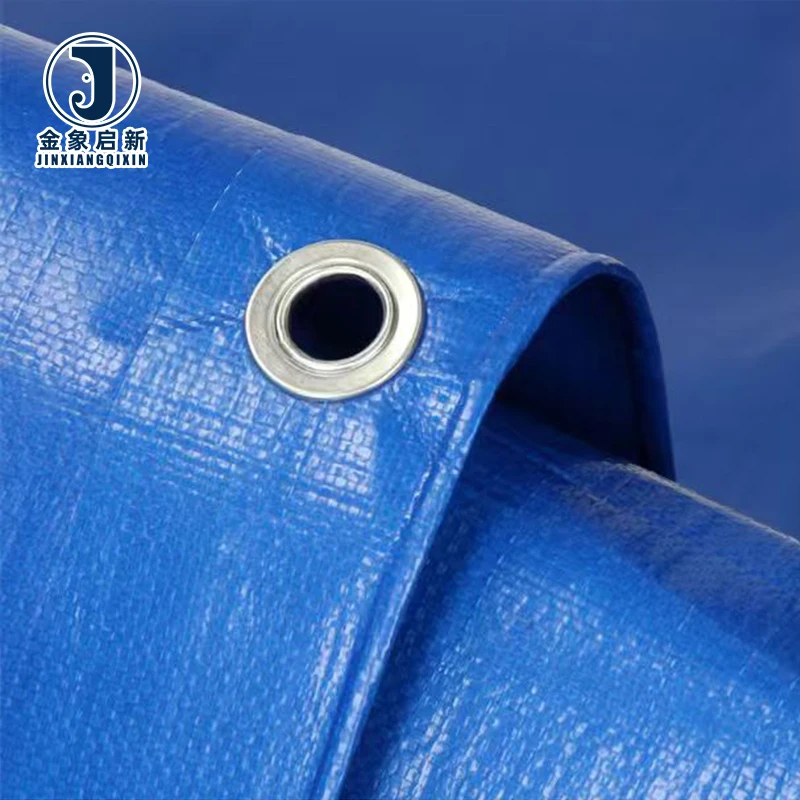
| Edge Reinforcement | PP rope in hem on all four edges (finished tarps) |
| Eyelets | Galvanized, spaced every 3 ft or 1 m (finished tarps) |
| Corners | Reinforced plastic corners (finished tarps) |
| Key Features | Waterproof, anti-mildew, anti-aging, tear resistant, UV treatment available — confirm the grade required for your market |
Application Suitability
| Application | Exposure & Requirement |
|---|---|
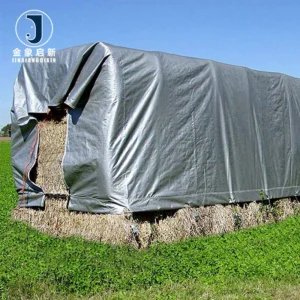
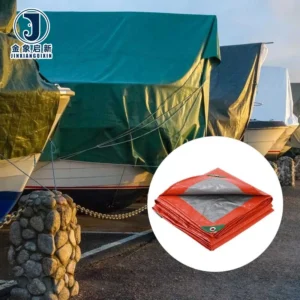
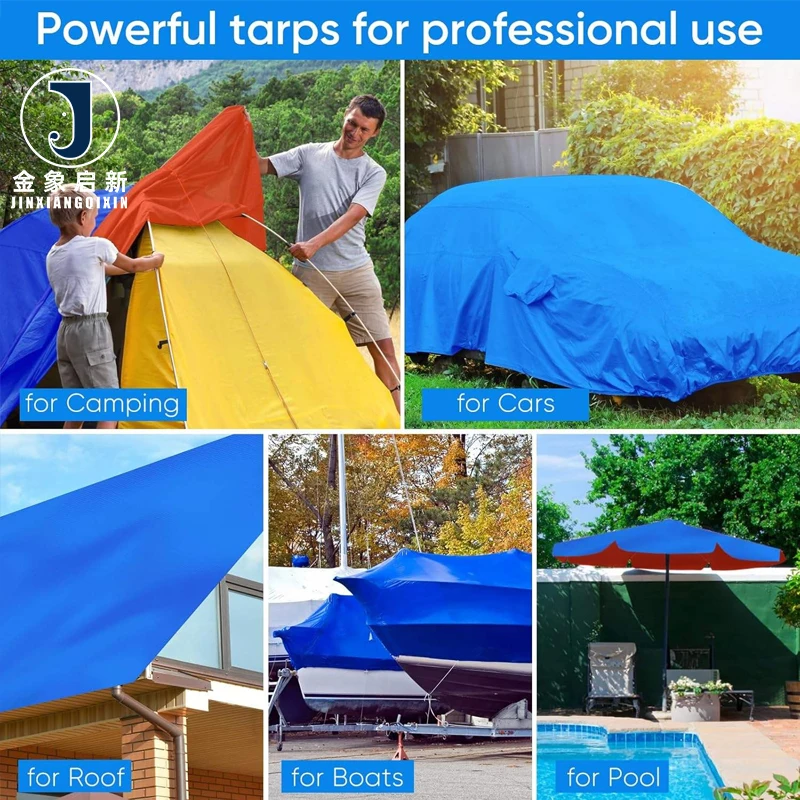
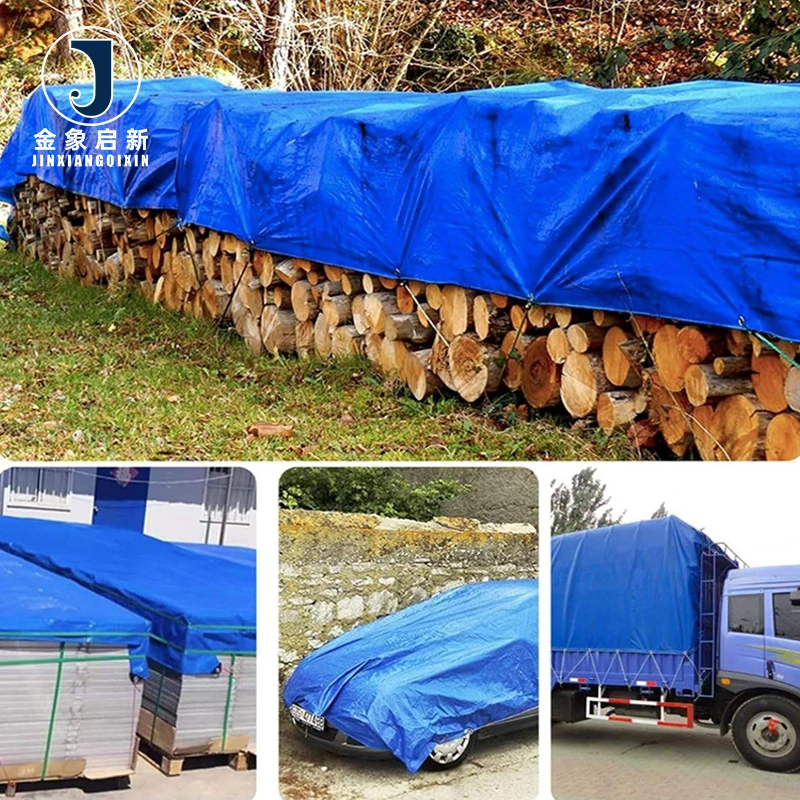
| Agricultural stock covers | Rain splash, sun exposure, daily handling and folding — lightweight to medium GSM for ease of deployment |
| Pond and reservoir lining | Permanent water contact, soil chemistry, puncture from substrate — medium to heavy-duty GSM with full waterproof lamination |
| Truck and trailer tarpaulins | Road abrasion, wind flap, tie-down stress at eyelets — heavy-duty density with reinforced hems and close-spaced grommets |
| Warehouse and yard storage | Dust, moisture, intermittent UV — medium GSM sufficient for static coverage |
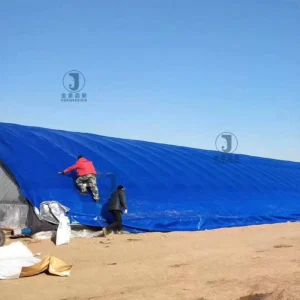
| Construction site barriers | Debris impact, weather, frequent repositioning — heavy-duty weave with tear resistance |
Why Colour Drift Across Rolls Wrecks a Wholesale Shipment
Batch colour matching is controlled at the resin stage, not the cutting table — every roll in your container must come from the same extrusion run.
When a distributor opens a container and finds two visibly different shades of blue sitting side by side on the retail shelf, the entire batch becomes unsellable as matched sets [NEED_CITE: colour consistency standards for PE laminated fabrics in bulk production]. The problem traces back to orders where rolls were pulled from separate production runs to meet a deadline. For PE tarpaulin roll stock purchased at wholesale volume, confirming that all rolls in one order share the same resin batch is as critical as verifying GSM. Our production scheduling holds an order to a single extrusion and lamination run wherever the volume allows.
How Roll Dimensions Drive Container Economics
For wholesale buyers loading full containers, the choice between 2 m, 4 m, and 6 m roll widths directly determines how many linear meters fit in a 40-foot container. Narrower rolls pack more units but increase the number of seams a fabricator must weld on-site. Wider rolls reduce seam count but add weight per unit, which may push the container over the gross weight limit before it reaches full cubic capacity. We provide a container loading plan with roll count and gross weight for each width option so buyers can calculate landed cost per square meter before committing to a PE tarpaulin roll stock order.
Finished Tarps Versus Roll Stock — What Distributors Actually Stock
Distributors serving agricultural and transport end-users often carry both roll stock for custom fabrication and pre-cut finished tarpaulins for immediate resale. Finished sheets arrive with PP rope reinforced hems, galvanized eyelets at 1 m intervals, and reinforced plastic corners — ready to sell without secondary processing [NEED_CITE: standard finishing specifications for retail PE tarpaulin sheets]. Roll stock, by contrast, goes to fabricators who weld, cut, and add hardware to their own specifications. Confirming the mix ratio in a single container order allows buyers to serve both customer segments without splitting shipments.
Reading the Specs Beyond the GSM Number
GSM alone does not predict how a PE tarpaulin will perform under load. A 120 g/m² fabric woven at 12×12 density from fine denier HDPE yarn will resist tearing differently than a 120 g/m² fabric woven at 8×8 from thicker yarn, even though the scale reads the same. The knitting density determines how many yarn intersections exist per square inch, which controls how far a puncture or tear can propagate before meeting the next crossover point. Double-side LDPE lamination adds waterproofing and abrasion protection but contributes its own weight to the GSM figure. When comparing grades, ask for both the GSM and the knitting density together — one without the other is incomplete data. Roll widths from 2 m to 6 m affect fabrication yield: a 4 m roll cut into 3.8 m sheets wastes far less edge trim than a 6 m roll cut to the same size, which matters at container-scale volumes.
What Happens When Roll Stock Fails Inspection at Destination
A container of PE tarpaulin rolls that arrives lighter than the quoted GSM forces the importer into a choice: absorb the margin loss or dispute the shipment, which means weeks of back-and-forth with sample cuts, courier fees, and delayed resale [NEED_CITE: pre-shipment inspection protocols for coated and laminated fabric rolls]. Colour inconsistency is harder to remedy because once rolls reach retail shelves, they cannot be re-dyed. Eyelets that pull out under tie-down load trace back to insufficient hem reinforcement or grommet spacing that exceeds what the fabric weight can support. These failures compound across a wholesale network — one bad container damages trust with multiple downstream customers.
What This Supply Arrangement Provides
Three full production lines with 36 sets of professional equipment support bulk PE tarpaulin roll output while maintaining scheduling flexibility for custom widths and colours. A dedicated QA and QC team inspects every roll against the order specification sheet before packing, catching GSM deviation and surface defects before they reach the container. The 10-person R&D team develops samples within days when a buyer needs to verify colour, weight, or lamination adhesion before placing a full container order. ISO and CE certifications accompany dispatch documentation for customs clearance in regulated markets. In-process quality checks at the weaving, lamination, and winding stages prevent defects from compounding through later production steps.
Documentation & Verification
- Material specification sheet stating HDPE base weave, LDPE coating weight, and colour reference per roll batch
- Pre-shipment inspection record confirming GSM and colour consistency across all rolls in the order
- Roll packing list with container loading plan showing roll count, gross weight, and cubic utilization
- UV treatment test report provided when UV-stabilized grades are specified in the purchase order
- ISO and CE certificates included with dispatch documentation for customs and regulatory compliance
- Certificate of origin prepared per destination country requirement
Fabrication, Handling & Storage
- Heat-seal temperature settings vary by LDPE lamination thickness — confirm weld parameters for the selected GSM grade before full production runs
- Eyelet insertion at 1 m intervals requires sufficient hem overlap; lightweight 50 g/m² grades need double-fold hems to prevent grommet pull-out
- Store rolls vertically on end-caps in shaded, ventilated areas to prevent flat-spot deformation and LDPE surface adhesion in hot climates
- Unroll finished tarps fully before folding for retail packaging to avoid permanent crease marks in heavy-duty 220 g/m² grades
- Cut rolls with heated blades to seal LDPE edges and prevent fraying during downstream fabrication and handling
- Stack finished tarpaulin sheets flat with interleaving paper to prevent blocking between laminated surfaces during transit
Structuring Your Inquiry for Accurate Quotation
Provide the target GSM range, knitting density preference, roll width, and container volume so we can calculate roll count and prepare a loading plan. If your market requires UV treatment or specific colour references, state the grade or Pantone code needed for compliance. Confirm whether you need roll stock only, finished tarpaulins, or a mixed container — this affects both pricing structure and lead time. Request a sample roll or finished sheet if batch colour and lamination adhesion must be verified before committing to a full container order.
Frequently Asked Questions
Q: How do you verify GSM before shipment and what should I check on arrival?
A: Every roll is sample-cut and weighed against the specification sheet during pre-shipment inspection. On arrival, cut a 1 m × 1 m sample from a random roll, weigh it on a calibrated scale, and compare it to the stated GSM on the packing list. Report any deviation immediately with photos of the sample and scale reading.
Q: Can you guarantee colour consistency across all rolls in one container?
A: We schedule each bulk order as a single extrusion and lamination run wherever volume allows. All rolls in one order share the same resin batch, and a colour reference is matched before production begins. We include a pre-shipment inspection record noting colour consistency across the full batch.
Q: Which roll width and length should I choose for container loading?
A: Wider rolls up to 6 m reduce fabrication seams but add weight per unit, which may limit total roll count per container. Narrower rolls pack more units and suit distributors cutting into standard finished sizes. We provide a loading plan showing roll count and gross weight for each width option.
Q: What eyelet spacing and hem reinforcement options are available for finished tarps?
A: Finished tarpaulins come with PP rope reinforced hems on all four edges, galvanized eyelets spaced at 1 m or 3 ft intervals, and reinforced plastic corners. Custom spacing and corner reinforcement options are available — confirm requirements based on the tie-down load your end-users apply.
Q: What is the minimum order for custom colour or width?
A: Custom colours and widths require a minimum that covers a full extrusion run to maintain batch consistency. The exact quantity depends on the selected GSM grade and roll width. Submit your colour reference and width requirement for a specific MOQ and lead time quotation.