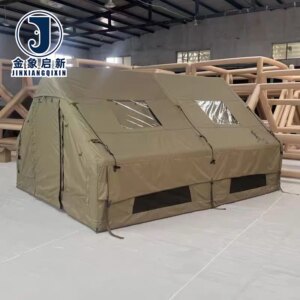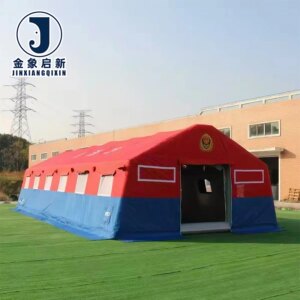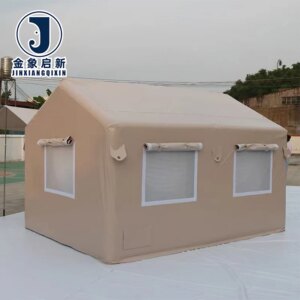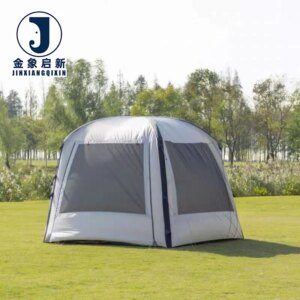




Description
Consistent Roll Quality — Every roll of inflatable tent fabric undergoes 100% pre-shipment inspection with GSM verification, eliminating the colour and weight variance that plagues multi-roll shipments from generic coaters.
Technical Specifications
| Parameter | Value |
|---|---|
| Product Type | Inflatable Tent Fabric |
| Core Material | PVC knife-coated tarpaulin |
| Construction | Single layer inflatable structure |
| Waterproof Performance | Fully waterproof coated construction |
| UV Treatment | UV-resistant (confirm the UV test standard required for your market) |
| Flame Retardant | Fire-retardant grades available — confirm the grade required for your project |
| Anti-Static | Anti-static grades available — verify surface resistance standard needed on site |
| Tear Resistance | Tear-resistant coated fabric (test standard available on request) |
| Customization | OEM and ODM including sample development and pattern printing |
| Certification Coverage | ISO 9001, ISO 14001, ISO 45001, CE |
Application Suitability
| Application | Exposure & Requirement |
|---|---|
| Disaster relief rapid deployment shelters | Extreme weather exposure, immediate waterproof integrity, repeated inflation and deflation cycles |
| Temporary construction site storage | Prolonged UV exposure, wind loading, abrasion from stacked materials and equipment movement |
| Emergency command centers during infrastructure projects | Continuous occupation, fire safety compliance, rapid assembly under time pressure |
| Outdoor industrial weather-protected work areas | Four-season temperature variation, chemical and dust exposure, structural air-pressure retention |
| Equipment storage and material processing enclosures | Heavy object contact, forklift proximity, ground moisture and standing water resistance |
Why Batch Consistency Defines Inflatable Shelter Performance
When sourcing PVC inflatable tent roll stock for rapid-deployment shelters, colour drift and coating weight variation between rolls can halt an entire production run or compromise a field deployment.
Uniform GSM and colour across every roll in a container-load shipment, verified before dispatch rather than promised on paper.
Fabricators producing inflatable disaster relief shelters buy by the roll and cut by the pattern. If roll number four arrives lighter in colour than roll number one, the assembled shelter shows visible panel mismatch — unacceptable for government contracts and NGO procurement audits. Similarly, a roll that measures below quoted GSM will produce air beams that flex and sag under operational pressure, while a heavier roll throws off heat-sealing parameters calibrated for the stated weight. [NEED_CITE: ISO 1421 tensile and tear test methods for coated fabrics used in inflatable structures]
Roll-Stock Purchasing for Inflatable Tent Fabrication
Manufacturers purchasing PVC inflatable tent material by the roll need dimensional accuracy as much as chemical performance. Each roll must arrive at the specified width and length so that nesting software can calculate panel yield without waste surprises. Our production lines maintain width tolerance through continuous edge-guidance systems, and every roll is measured and logged before winding.
Coating Weight and Adhesion in Knife-Coated PVC
The knife-coating process deposits liquid PVC compound directly onto the woven base fabric, creating a mechanical bond that penetrates the yarn structure. This differs fundamentally from lamination, where a pre-formed film sits on the surface and can delaminate under the cyclic pressure loading that inflatable air beams experience. For inflatable tent manufacturers, peel strength between coating and base fabric determines whether the structure survives repeated inflation cycles without bubble formation at stress concentrations. [NEED_CITE: peel strength testing for coated fabrics under cyclic loading per ISO 2411]
Reading Beyond the GSM Number
GSM tells you the total mass per square metre but nothing about how that mass is distributed between base fabric and coating. A 650 GSM roll with a light base and heavy coating may feel substantial yet tear easily along the warp line, while a roll with a denser base yarn structure distributes load across more filaments. For inflatable tent air beams, the base fabric denier and weave density determine burst pressure resistance, while the coating thickness governs waterproof integrity and surface durability. Procurement teams should request both the base fabric specification and the coating weight breakdown rather than relying on a single GSM figure.
The Hidden Cost of Specifying on Price Per Roll Alone
A roll that underperforms on coating adhesion reveals itself not during incoming inspection but at the heat-sealing station, where the seam splits before the fabric reaches operating temperature. Fabricators then either increase dwell time — slowing throughput and risking base fabric damage — or accept weak seams that fail during inflation testing. In disaster relief procurement, a batch of tents that fails field inflation tests due to seam delamination cannot simply be returned; it represents a missed deployment window with real-world consequences. [NEED_CITE: welded seam strength requirements for inflatable fabric structures per industry practice]
Why Volume Buyers Source Inflatable Tent Fabric Here
Three full production lines and 36 sets of professional equipment give us the throughput to fill container-load orders without subcontracting coating runs to external facilities. Batch colour matching is controlled through spectrophotometer measurement at the coating stage, not visual spot-checks at packing. The 10-person R&D team develops custom roll specifications — width, colour, treatment package — with sample turnaround measured in days, not weeks. Every roll undergoes dedicated QA inspection before winding, and pre-shipment verification covers GSM, coating adhesion, and visual consistency across the entire order. ISO 9001 and CE certification underpin the documentation chain that international project audits require.
Documentation & Verification
- Material specification sheet stating base fabric denier, coating method, and treatment type per roll batch
- Pre-shipment inspection record confirming GSM and coating weight against quoted values before container loading
- Test reports for UV and fire-retardant treatments where applicable to the specified grade
- Roll packing list detailing roll count, individual weight, and container loading plan
- Certificate of origin and customs documentation supporting international shipment clearance
Fabrication, Handling & Storage
- Heat-sealing temperature profiles should be calibrated to the specific PVC knife-coated compound on each roll batch
- Store rolls upright on pallets in shaded conditions to prevent surface marking from prolonged horizontal contact
- Allow cold-stored rolls to reach workshop temperature before unrolling to avoid coating micro-cracking
- Pattern nesting software should account for the actual roll width tolerance to maximize panel yield
- Field repairs on single-layer inflatable structures require compatible PVC adhesive matched to the coating formulation
What We Need to Quote Your Roll Order
Provide your target roll width, annual volume, and the end-use application so we can recommend the appropriate base fabric weight and coating formulation. If your destination market mandates a specific fire classification or anti-static standard, share the exact requirement early so the correct treatment package is included in the sample roll. Confirm whether you need plain rolls for your own cutting line or pre-printed rolls with branding or identification markings.
Frequently Asked Questions
Q: How is GSM verified on arrival against the quoted specification?
A: Each roll is weighed and measured during pre-shipment inspection, with results recorded on the inspection report included in your documentation pack. We recommend buyers perform a cutting-weight check on receipt using a calibrated scale and a measured sample area, comparing the result against the specification sheet supplied with the shipment.
Q: How is batch colour consistency maintained across rolls in one order?
A: Coating compound is mixed in a single batch for your order and checked by spectrophotometer before coating begins. Rolls are compared against the approved master sample at winding, and any roll falling outside tolerance is segregated before packing. The inspection record documents colour readings for your quality file.
Q: What roll widths and lengths are available for inflatable tent fabrication?
A: Standard widths cover common inflatable panel dimensions, with custom widths available subject to production line setup. Roll length can be specified to match your cutting table capacity and pattern layout. Provide your required width and preferred roll length at inquiry stage for a lead-time and minimum order confirmation.
Q: What fire-retardant and anti-static certifications are available for site compliance?
A: Fire-retardant and anti-static treatments are available in various grades depending on the destination market and project specification. Share the exact standard required — such as the national building code classification or the mine-safety regulation applicable to your site — so we can supply the matching test report with your shipment documentation.