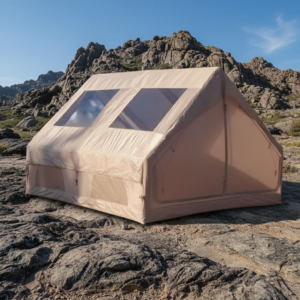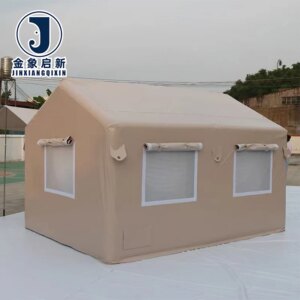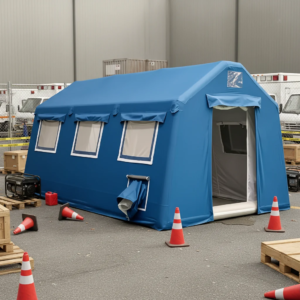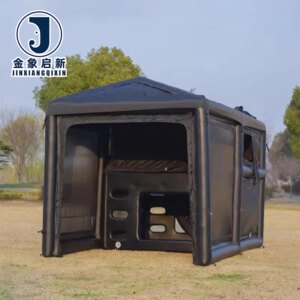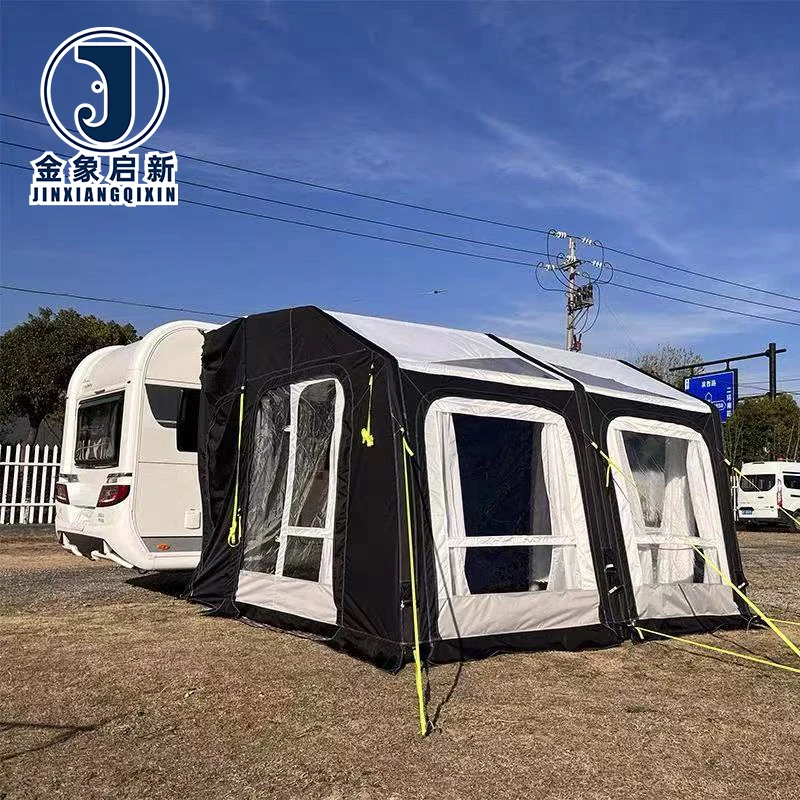

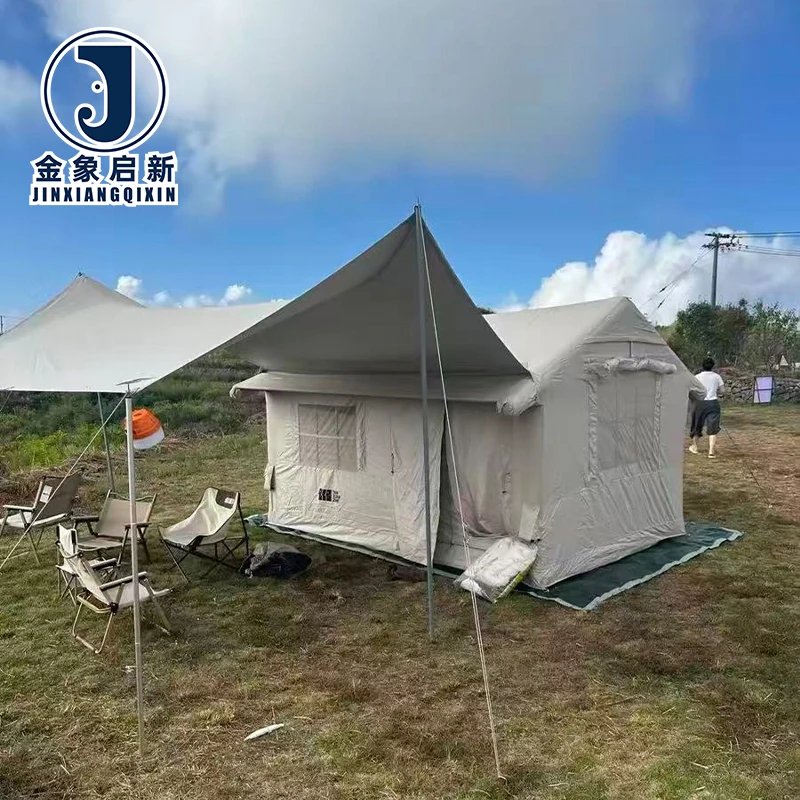
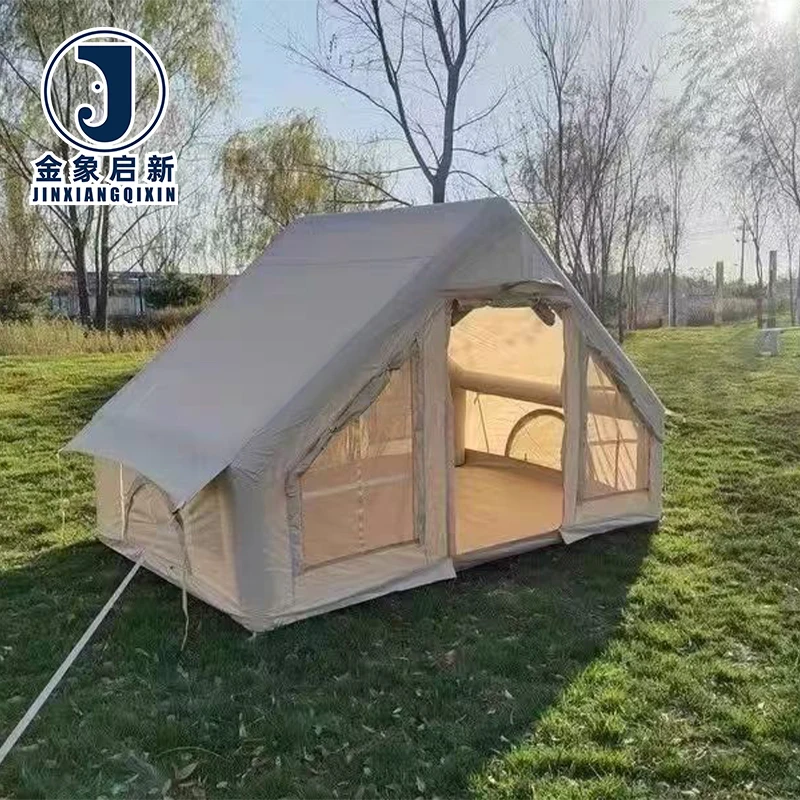
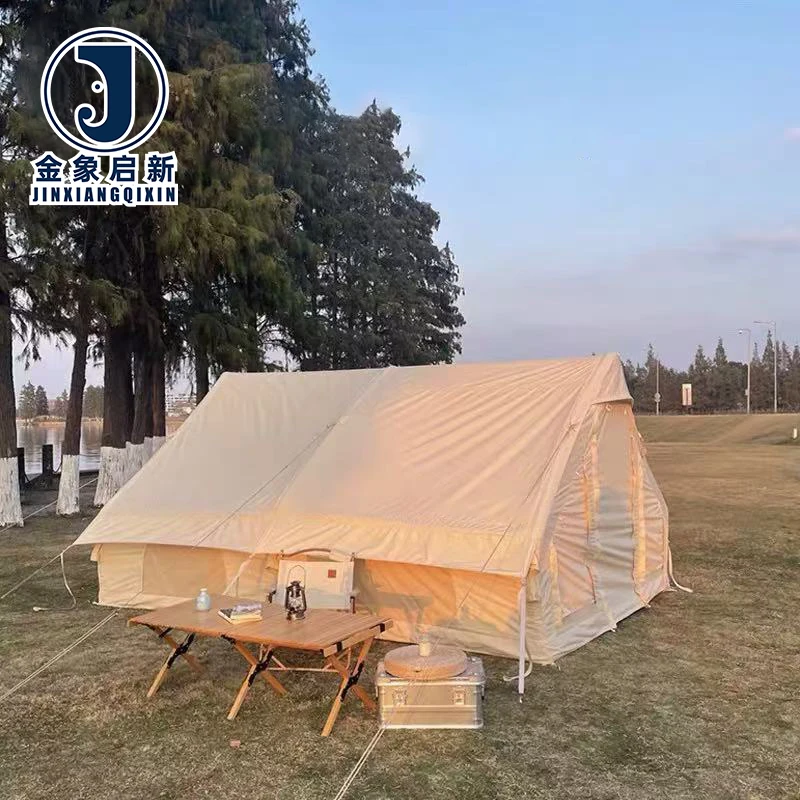
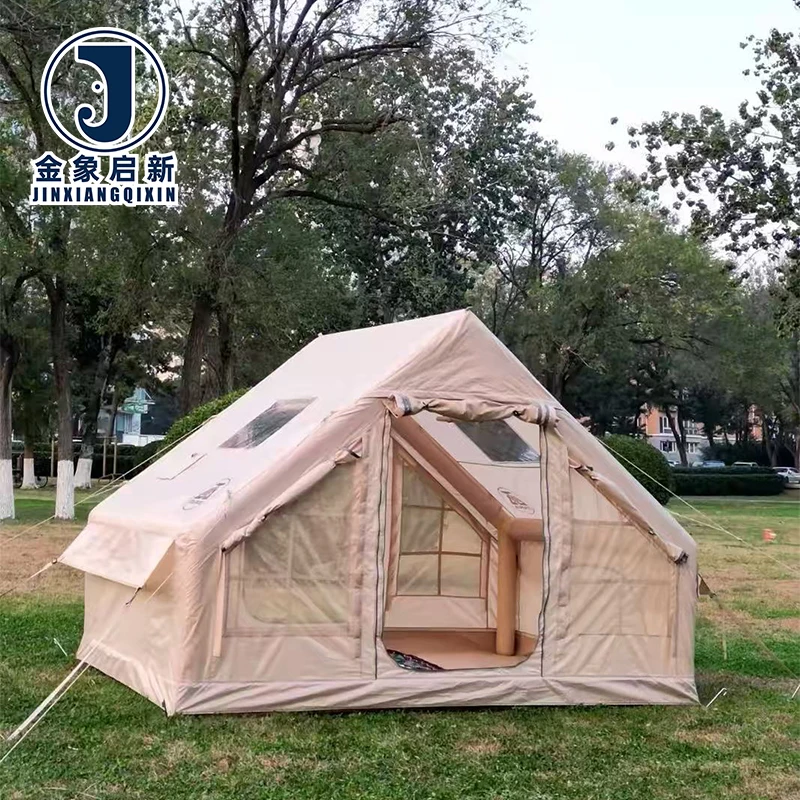
Description
Consistent Batch Output — Every roll of PVC inflatable tent fabric ships with verified coating thickness held within ±0.02mm and batch-level colour matching, so your finished shelters deploy with uniform appearance and inflation performance across the entire container load.
Technical Specifications
| Parameter | Value |
|---|---|
| Product Type | Inflatable Tent Fabric |
| Core Material | PVC Tarpaulin |
| Flame Retardant | DIN 4102 B1 |
| Waterproof Rating | 500mm water column for 24 hours |
| UV Treatment | Service life up to 5 years under outdoor conditions (test basis not stated in source) |
| Anti-Static | Available (surface resistance or standard not stated in source) |
| Coating Thickness Tolerance | ±0.02mm |
| Seam Strength | 150N/cm |
| Custom Size Range | 5㎡ to 100㎡ |
| Color Options | Standard RAL color chart |
| Pre-shipment Inflation Test | 48-hour airtightness test per unit |
| Certifications | ISO9001, ISO14001, ISO45001, CE |
Application Suitability
| Application | Exposure & Requirement |
|---|---|
| Disaster relief emergency shelters | Rapid deployment, repeated inflation cycles, outdoor UV and rain exposure, flame retardant compliance for camp safety |
| Temporary site offices on infrastructure projects | Long-term outdoor standing, wind load on inflated structure, abrasion from site dust and equipment contact |
| Equipment storage shelters in remote areas | Extended weathering, waterproof integrity, resistance to puncture from stored machinery |
| Emergency response stations for industrial incidents | Immediate deployment under time pressure, fire-retardant requirement near hazard zones, high-visibility colour consistency |
Why Colour Drift Across Rolls Can Fail an Entire Relief Shipment
Batch-level coating and pigment control eliminates visible colour variation between units deployed side by side at a single site.
When a government tender or NGO procurement requires dozens of inflatable shelters in one container, even a slight shade difference between rolls becomes obvious once the tents are inflated in a row. Buyers have rejected entire shipments because the PVC inflatable tent wholesale order arrived with panels that looked like they came from different production runs [NEED_CITE: batch colour consistency standards in coated fabric procurement]. The root cause is usually inconsistent pigment dosing or coating weight variation between production batches — problems that surface only after the fabric is cut, welded, and erected.
Roll-to-Roll Consistency as a Procurement Safeguard
For wholesale buyers stocking PVC inflatable tent fabric for emergency shelter programmes, material consistency is as critical as the specification sheet itself. Coating thickness held within ±0.02mm means that every roll in your order inflates at the same rate and holds pressure uniformly, reducing the risk of seam stress at panel junctions. This level of control matters most when you are supplying finished shelters to disaster relief organisations that cannot afford field failures.
Volume Pricing Tiers Without Sacrificing Batch Integrity
Buying PVC inflatable tent wholesale in container-load quantities should not force a trade-off between unit cost and material reliability. Each production batch runs through the same coating line with calibrated thickness control, and colour matching is verified against the agreed RAL reference before the roll leaves the factory. Wholesale procurement teams can specify a single colour across the full order and receive documentation confirming batch-level pigment consistency [NEED_CITE: RAL colour matching verification in PVC coated fabric production].
Reading the Specs Beyond the GSM Number
Inflatable tent fabric performs under continuous internal pressure, which places demands on both the base fabric and the coating bond. The seam strength of 150N/cm indicates how well welded joints resist the peeling forces generated during inflation and deflation cycles. Coating thickness tolerance of ±0.02mm directly affects how uniformly heat distributes during high-frequency welding — a tighter tolerance means fewer rejected seams on the production floor. Flame retardant classification to DIN 4102 B1 addresses the fire safety requirements that most European and Middle Eastern relief procurement specifications mandate for temporary shelters [NEED_CITE: DIN 4102 B1 classification for temporary shelter fabrics]. The 48-hour pre-shipment inflation test on every finished unit catches airtightness defects before they reach the field.
What Happens When Specification Gaps Surface at Delivery
A wholesale order that arrives with inconsistent coating weight across rolls creates cascading problems: some panels weld cleanly while others delaminate at the seam, forcing the fabricator to rework or scrap entire units. Colour variation between rolls in the same PVC inflatable tent wholesale shipment may not be visible until the tents are inflated and placed adjacent to each other at a deployment site, at which point rejection and replacement costs far exceed the original material savings [NEED_CITE: coated fabric batch rejection costs in emergency shelter procurement]. Fire-retardant claims without a verifiable test report can stall customs clearance or cause a shelter deployment to fail site safety inspection.
Why Wholesale Buyers Source This Fabric Here
Three full production lines with 36 sets of professional equipment support container-volume PVC inflatable tent fabric orders with reliable dispatch scheduling. A 10-person R&D team handles custom colour matching, pattern printing, and size specification from 5㎡ to 100㎡, developing samples within days rather than weeks. Dedicated QA/QC at every production stage includes 100% pre-shipment inspection with inflation testing on finished units. Nearly 30 years of coated fabric process control underpins the coating weight and adhesion consistency that wholesale buyers depend on. ISO and CE certification accompanies every shipment with full documentation for international customs clearance.
Documentation & Verification
- Material specification sheet stating PVC base fabric, coating weight, and colour reference per batch
- Fire-retardant test report per DIN 4102 B1 included with each shipment batch
- Pre-shipment inspection record with 48-hour inflation test results per finished unit
- Roll packing list and container loading plan by unit count and gross weight
- Certificate of origin and customs documentation for international wholesale shipments
Fabrication, Handling & Storage
- High-frequency welding parameters should be calibrated to the ±0.02mm coating thickness tolerance for consistent seam formation
- Store rolls upright on pallets in a dry, shaded area to prevent surface creasing that affects weld quality
- Use compatible PVC-based repair adhesive matched to the coating chemistry for field patching of inflated structures
- Allow cold-stored rolls to reach ambient temperature before unrolling to avoid coating surface cracking
- Cut panels with the coated side up to protect the weldable surface from contamination during fabrication
Share Your Deployment Requirements Before Quoting
Specify the intended deployment environment — including expected UV exposure duration, temperature range, and any fire safety codes your destination market enforces — so the correct flame-retardant grade and UV treatment can be confirmed. Indicate whether you need roll stock for your own fabrication line or finished inflatable tent units in custom sizes from 5㎡ to 100㎡. Provide your target RAL colour and estimated annual volume to receive batch-level pricing and lead time.
Frequently Asked Questions
Q: How do you control colour consistency across a full container load of rolls?
A: Every production batch is matched against the agreed RAL colour reference before coating begins, and pigment dosing is calibrated per batch run. A colour verification record accompanies the pre-shipment inspection documentation, so wholesale buyers can confirm shade uniformity before the container is sealed.
Q: What custom sizes and minimum order quantities apply to wholesale buyers?
A: Finished inflatable tents can be produced in custom sizes from 5㎡ to 100㎡. For roll stock supply, minimum order quantities depend on the specified width, colour, and treatment combination. Sample rolls are available for approval before committing to a full container order.
Q: How are finished tents packed and loaded for ocean freight?
A: Each finished unit is folded and individually packed to prevent surface abrasion during transit. A container loading plan is provided showing unit count, gross weight, and stacking arrangement. Roll stock is palletised upright to avoid creasing that would affect downstream welding.
Q: How can I verify the GSM and coating weight when the shipment arrives?
A: Each batch ships with a material specification sheet stating the agreed coating weight and base fabric details. Buyers are encouraged to perform spot-check weighing on arrival using a calibrated scale and compare results against the supplied specification sheet to confirm compliance.
Q: Does DIN 4102 B1 meet the fire safety requirements in my destination market?
A: DIN 4102 B1 is widely accepted across European, Middle Eastern, and several Asian markets for temporary shelter and construction site applications. Buyers should confirm their local fire safety code before ordering, and alternative flame-retardant grades are available in flame retardant grades — confirm the grade required for your market.