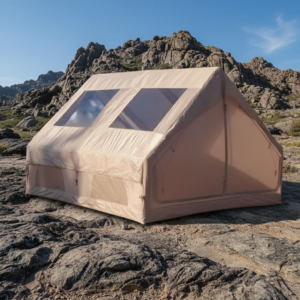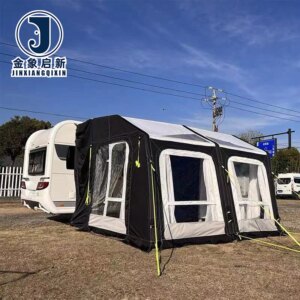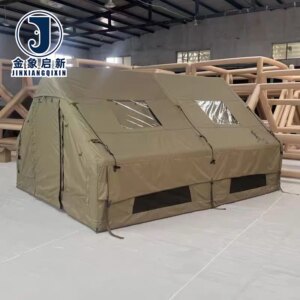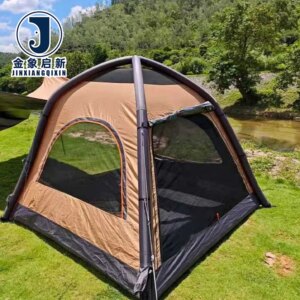

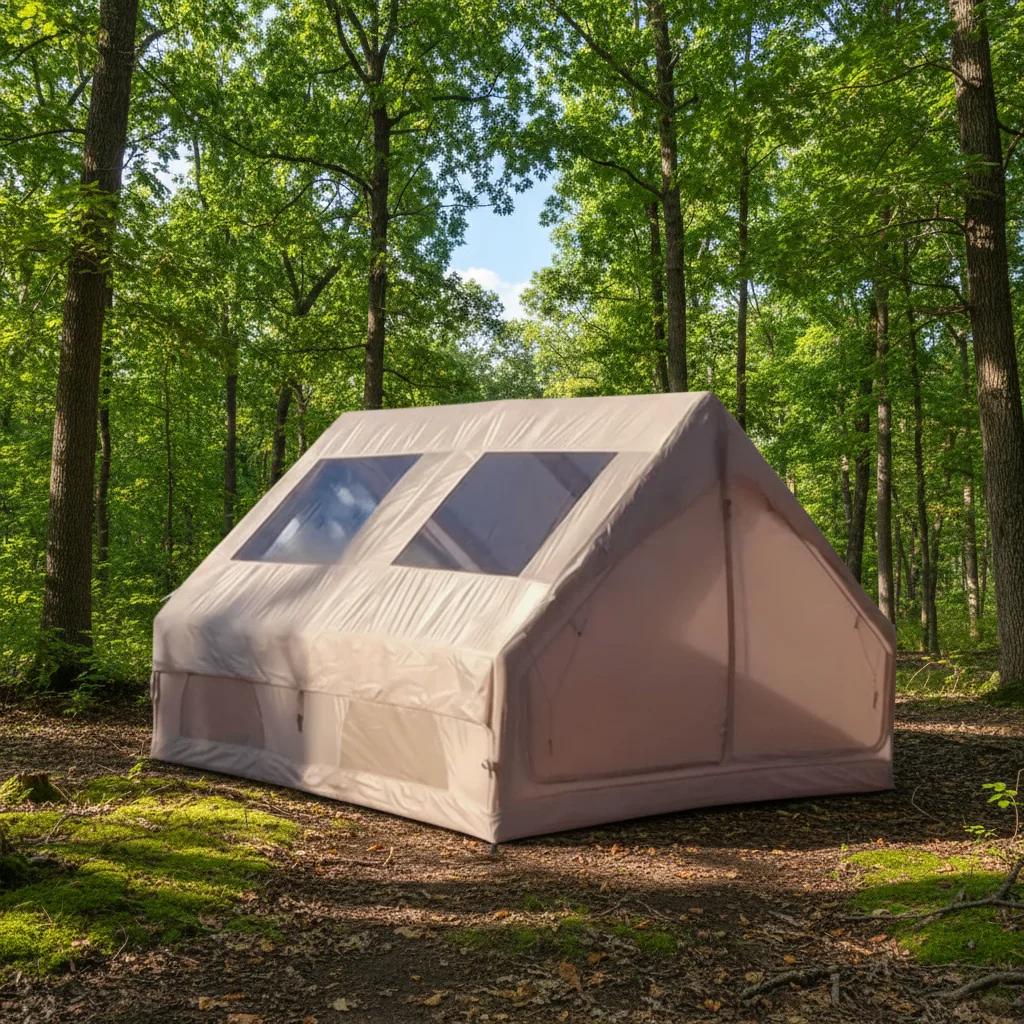

Description
Verified Roll Consistency — three dedicated production lines maintain batch-to-batch colour and GSM uniformity across every roll of inflatable tent fabric shipped.
Technical Specifications
| Parameter | Value |
|---|---|
| Product Type | Inflatable Tent |
| Core Material | PVC Tarpaulin |
| Waterproof | Fully waterproof coated construction |
| UV Resistance | Available in UV-resistant grades — confirm the treatment level required for your market |
| Tear Resistance | Tear-resistant construction — request test data per your applicable standard |
| Flame Retardant | Available in flame retardant grades — confirm the grade required for your market |
| Anti-Static | Available in anti-static grades — confirm the standard required for your project |
| Product Form | Inflatable structure with quick automatic opening |
| Customization | OEM & ODM: sample customization, pattern printing, size adjustment, custom color matching |
| Quality Control | Full-process inspection; inflation testing for pressure retention and seam strength pre-shipment |
| Certifications | ISO9001, ISO14001, ISO45001, CE |
Application Suitability
| Application | Exposure & Requirement |
|---|---|
| Inflatable tent manufacturing | Roll-fed production requiring consistent colour, weight, and weld behaviour across long runs |
| Membrane structure fabrication | Structural air-supported roofs demanding tear resistance, airtight seams, and UV stability |
| Commercial outdoor adventure shelters | Seasonal deployment in rain, wind, and sun with frequent inflation and deflation cycles |
| Temporary industrial site covers | Rapid-deploy enclosures for equipment storage or field operations in all-weather conditions |
| Specialized event infrastructure | Large-format inflatable domes and arches needing visual consistency across multiple panels |
Why Batch Colour Drift Destroys Inflatable Tent Production Runs
Consistent dye lots across every roll eliminate visible panel mismatch on the finished structure.
When an inflatable tent manufacturer buys PVC tarpaulin from multiple batches, even slight hue variation between rolls becomes glaring once the panels are heat-welded together and inflated under sunlight. Buyers often discover the problem only after fabrication is complete, forcing rework or customer rejection. Inflatable tent fabric wholesale orders are especially vulnerable because a single production run can consume dozens of rolls, amplifying any lot-to-lot deviation. Sourcing from a facility that controls coating and pigment dosing on dedicated lines reduces this risk substantially. [NEED_CITE: colour measurement tolerance standards for coated textile production]
How Roll-to-Roll Weight Control Protects Your Weld Parameters
Heat-welding PVC tarpaulin relies on stable material thickness and coating weight to maintain consistent temperature and dwell time settings across the production floor. When the GSM varies from roll to roll, weld operators must constantly adjust, introducing weak seams where settings lag behind actual material behaviour. Our three full production lines run dedicated QA checkpoints that verify coating weight at multiple stages, keeping inflatable tent fabric wholesale shipments within tight tolerance so your welding protocol remains valid from the first roll to the last.
Matching Fabric Width to Panel Layout for Minimal Waste
Inflatable tent panels are typically cut in long, curved sections that demand wide fabric to avoid mid-panel splice seams. Splice seams on an air-holding structure introduce failure points that must be reinforced, adding weight and labour. By offering custom width options, we help manufacturers align roll dimensions to their cutting patterns, reducing off-cuts and keeping inflatable tent fabric wholesale orders cost-efficient. Our R&D team reviews your nesting layout before production to recommend the roll width that maximizes yield.
Understanding What the Specification Sheet Actually Tells You
PVC tarpaulin performance depends on the interplay between base fabric denier, weave density, and coating weight rather than any single figure. A heavier GSM achieved through excessive coating with a light base fabric may resist puncture but will lack the tensile strength needed to withstand inflation pressure cycles. Conversely, a high-denier base with minimal coating produces strong fabric that may not hold air at the seams. The coating method — whether knife-over-roll, dip, or calender — directly affects peel strength, which governs how well the PVC layers bond to the polyester scrim and, in turn, how reliably heat-welded seams perform under internal air pressure. [NEED_CITE: peel strength test methods for coated fabrics per ISO 1421] Surface finish, glossy or matte, influences both print adhesion for branding and resistance to dirt accumulation in outdoor environments. Flame retardant grades must be matched to the fire classification code of the destination market, as requirements differ between temporary event structures and semi-permanent installations.
The Hidden Cost of Specifying Without Test Data
Purchasing PVC tarpaulin based on supplier claims alone creates downstream liability when the fabric fails to meet the compliance standards required by the project specification. A tent installed at a public event may face inspection against local fire codes; if the flame retardant grade cannot be documented, the entire structure may be ordered removed. Similarly, UV treatment stated without a test basis offers no assurance that the fabric will retain tensile strength after a season of direct sun exposure. Buyers who receive material without batch-specific inspection records have no recourse when weld failures or colour inconsistency appear mid-run. [NEED_CITE: fire safety compliance requirements for temporary event structures] These problems compound because inflatable structures concentrate stress at seam intersections, making material defects more costly than in flat-cover applications.
Why Manufacturers Source This Fabric Here
Deep process control over coating weight and adhesion comes from nearly 30 years of focused PVC tarpaulin production, giving roll-stock buyers predictable material behaviour on their own welding lines. Three full production lines and 36 sets of professional equipment support bulk inflatable tent fabric wholesale orders with reliable on-time dispatch, even during peak demand periods. A 10-person R&D team handles custom width development, colour matching, and pattern printing, returning samples within days so buyers can validate on their own cutting and welding tables before committing volume. Dedicated QA and QC staff inspect every roll against the stated specification before shipment, producing batch-specific records rather than generic certificates. Full documentation accompanies each container, including material specification sheets, pre-shipment inspection records, and packing lists organized by roll count and weight for straightforward logistics planning.
Documentation & Verification
- Material specification sheet stating GSM, base fabric, and coating details for each roll
- Batch-specific quality report with waterproof and tear-resistance test results
- Roll packing list with container loading plan by count and weight
- Pre-shipment inspection record covering colour, weight, and surface quality per roll
- Certificate of origin and customs documentation for international shipment
- Test reports for UV and flame-retardant grades supplied where applicable
Fabrication, Handling & Storage
- Adjust heat-weld temperature to the specific PVC coating formulation stated on the roll ticket
- Store rolls horizontally on racking to prevent permanent creasing of the PVC surface
- Allow cold-weather rolls to acclimate to workshop temperature before unrolling to avoid coating crack
- Use solvent-based cleaners compatible with PVC to preserve surface finish and print adhesion
- Plan cutting layout to minimize cross-grain seams on panels under highest inflation stress
- Keep anti-static treated rolls separated from standard stock to maintain treatment integrity
Before You Request a Quote
To recommend the right roll specification, we need your target panel width, annual volume, and the fire or safety classification required by your destination market. If your inflatable structures carry printed branding, share your artwork and colour references so our R&D team can produce a matched sample. Specify whether you need raw roll stock for your own fabrication line or if you require pre-cut panels with welded seams tested to your inflation pressure standard.
Frequently Asked Questions
Q: How is roll-to-roll batch colour consistency controlled and verified before shipment?
A: Pigment dosing is managed on dedicated coating lines with in-process colour checks at every production stage. Each roll is compared against the master colour standard under controlled lighting before it is released. A batch-specific inspection record documents the results, and rolls within the same order are drawn from a single production run to eliminate lot variation.
Q: What custom width and roll length options are available for inflatable tent fabric wholesale orders?
A: Widths can be adjusted to match your panel cutting layout, reducing splice seams on finished structures. Roll lengths are set to your nesting plan so that each roll yields an efficient number of panels. The R&D team develops a sample roll for approval before full production runs begin.
Q: How many rolls fit per container and what weight limits apply?
A: Loading plans are calculated by roll diameter, width, and weight to maximize container utilization while preventing compression damage. A detailed packing list accompanies each shipment showing roll count, individual weight, and total payload for your logistics planning and customs clearance.
Q: How does volume affect unit cost on roll-stock orders?
A: Bulk pricing tiers are structured around container-load quantities, with cost per roll decreasing as order volume increases. Custom widths and colours may carry separate minimums tied to production-line setup. Contact our team with your annual forecast to receive a tiered pricing schedule.
Q: Can I receive a sample roll to test on my welding and cutting equipment before committing?
A: Sample rolls are developed within days based on your width, colour, and treatment requirements. We recommend running the sample through your standard welding and cutting process to verify compatibility. Once approved, bulk production follows the identical formulation and parameters validated on the sample.