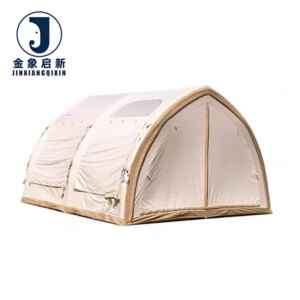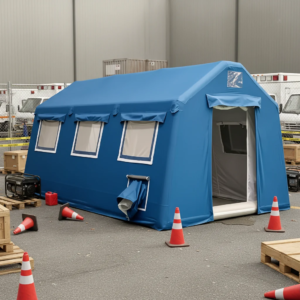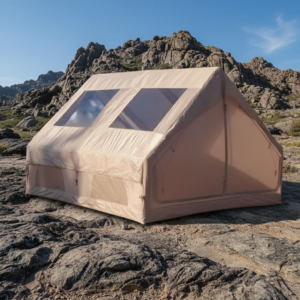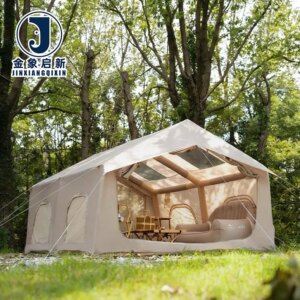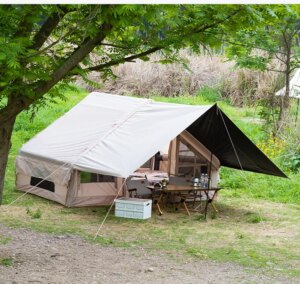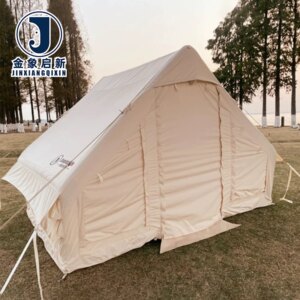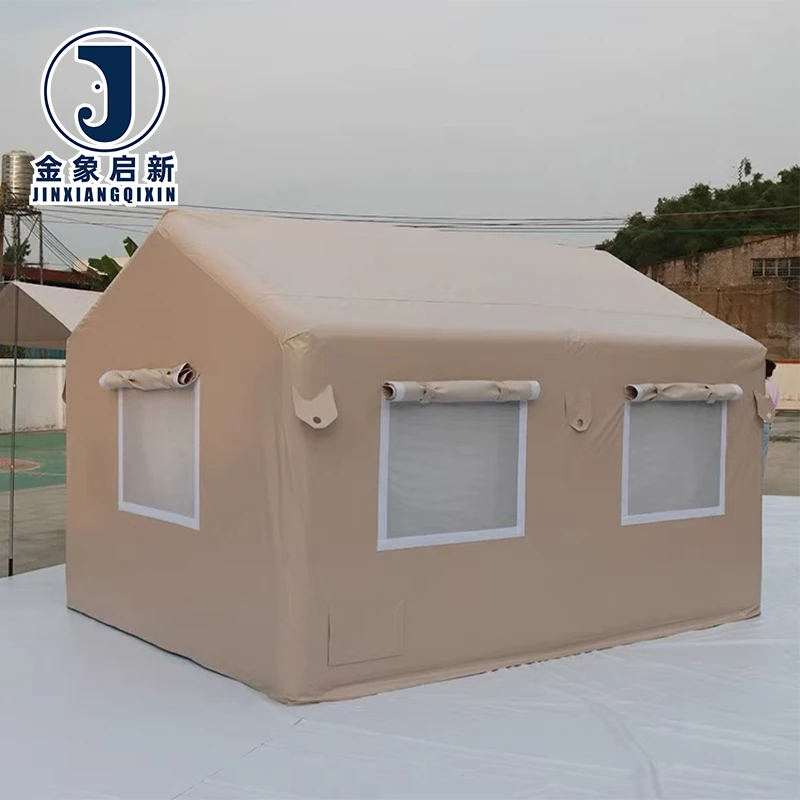
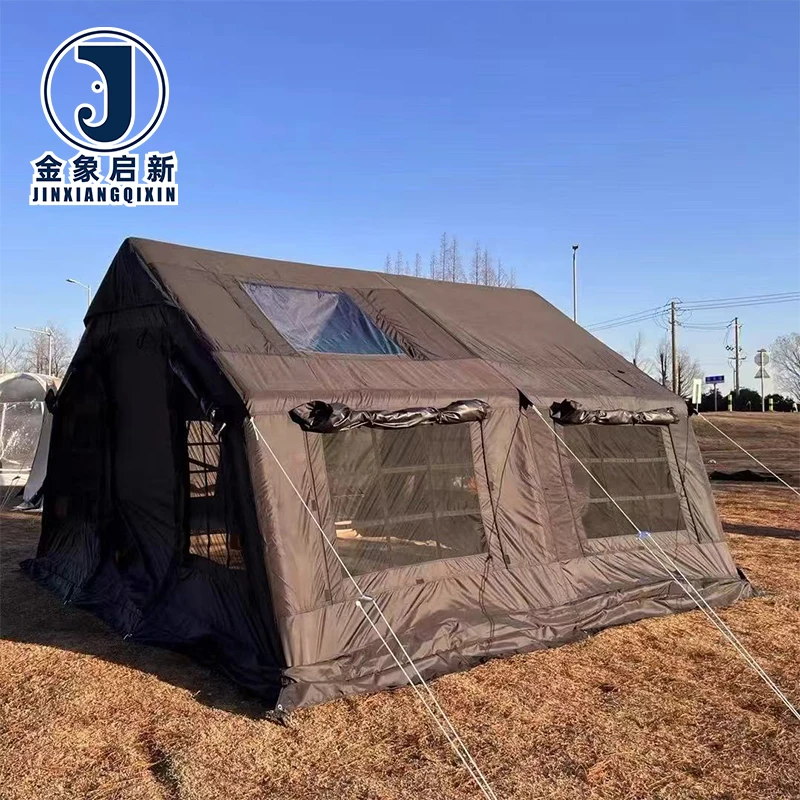
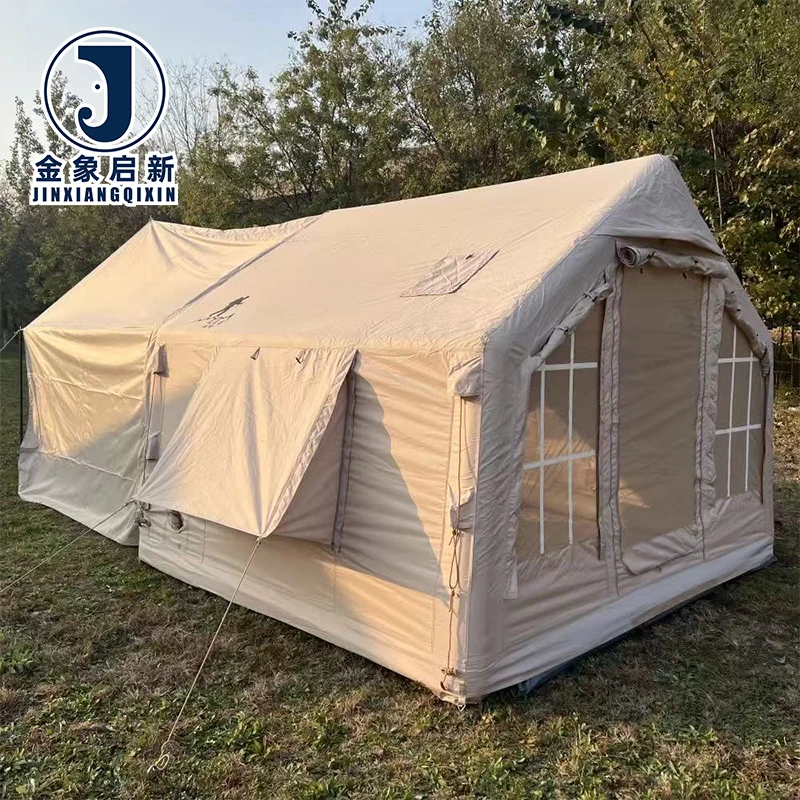
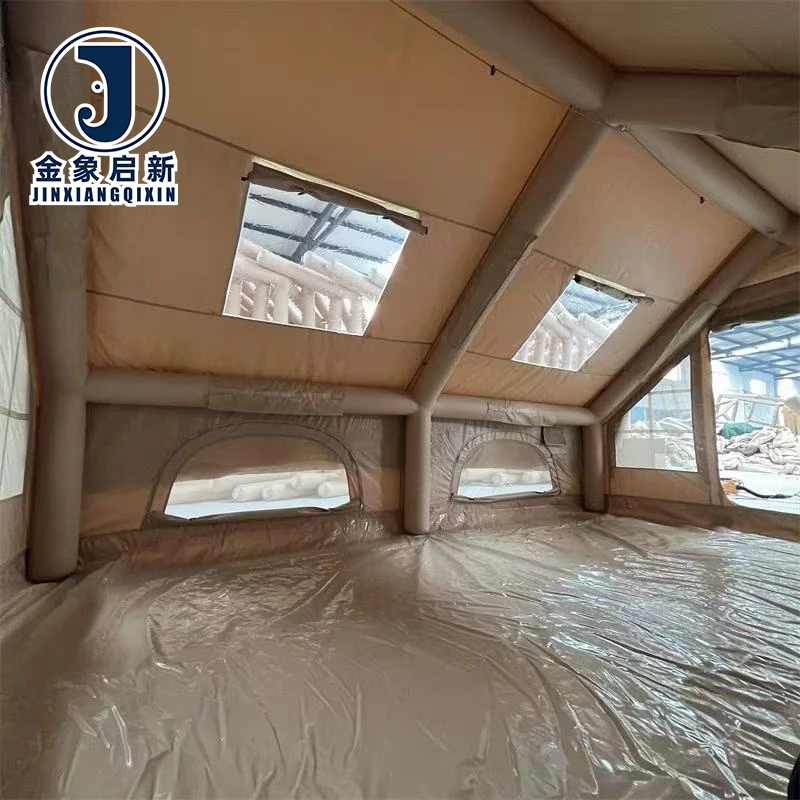
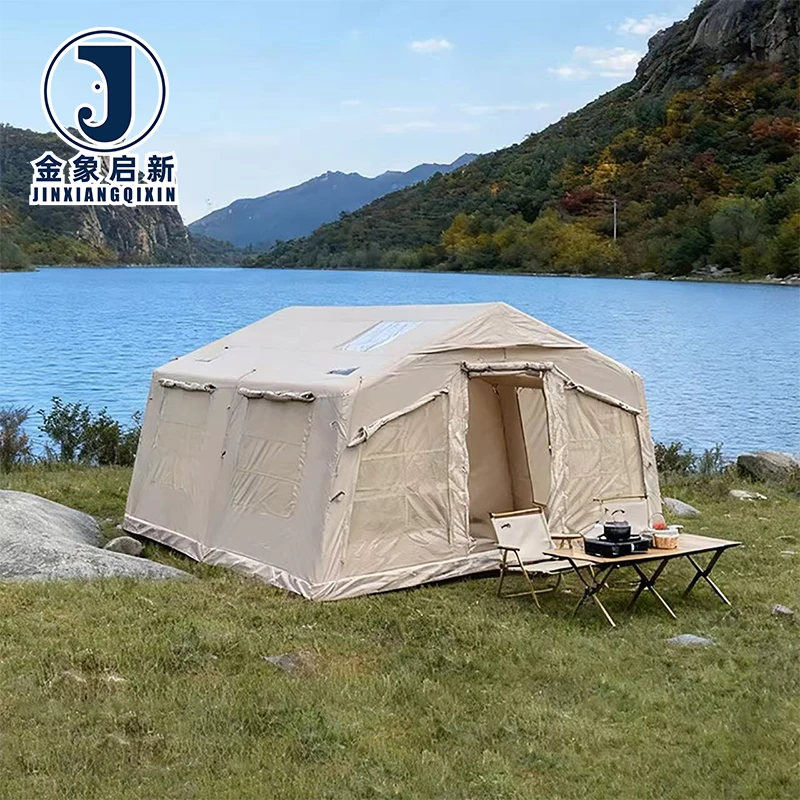
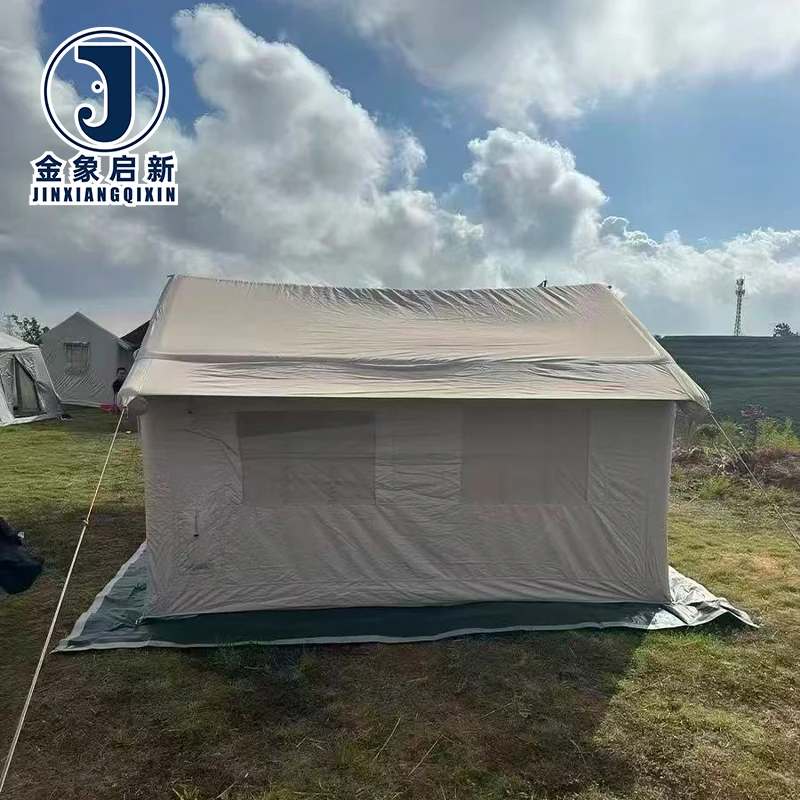
Description
Deep Process Control — Every roll of PVC inflatable tent fabric undergoes hourly in-process inspections and 12 raw material performance checks per batch before reaching the finishing stage.
Technical Specifications
| Parameter | Value |
|---|---|
| Product Type | Inflatable Tent Fabric |
| Core Material | PVC Tarpaulin |
| Waterproof Rating | ≥10,000mm (verify against batch test report) |
| Tear Strength | ≥300N (test basis not stated — confirm standard per order) |
| Wind Resistance | up to 60km/h (verify against manufacturer catalog) |
| UV Treatment | Integrated UV stabilizers (test basis not stated — confirm per order) |
| Flame Retardant | Inherent flame-retardant properties (grade not stated — available in certified grades on request) |
| Anti-Static | Anti-static treatment (surface resistance or standard not stated — confirm per order) |
| Season Rating | Four-season |
| Opening Mechanism | Quick automatic air inflation |
| Construction | Single layer |
| Customization | OEM & ODM — custom dimensions, color matching, logo printing, modified opening mechanisms |
| Certifications | ISO 9001, ISO 14001, ISO 45001, CE |
Application Suitability
| Application | Exposure & Requirement |
|---|---|
| Commercial camping ground facilities | Continuous UV and rain exposure, repeated inflation cycles, guest abrasion on interior surfaces |
| Outdoor event management shelters | Rapid deployment and teardown, wind shear on large unsupported panels, branding print adhesion |
| Mobile field operations accommodation | Dust-laden environments, temperature fluctuation, anti-static requirement in dry or arid zones |
| Temporary site accommodation for mining and construction | Flame-retardant compliance for regulated sites, heavy equipment proximity, prolonged weathering |
Why Inflatable Tent Fabric Fails at the Weld Line Before the Fabric Does
Weld integrity depends on coating formulation compatibility, not just base fabric strength.
When sourcing PVC inflatable tent fabric for multi-unit production runs, buyers often focus on GSM and tensile values while overlooking how the coating chemistry behaves under hot-air or high-frequency welding. A roll that tests well for tear resistance may still produce brittle seams if the plasticiser balance is wrong for the welding method used. I have seen heavy-grade coated rolls fail at the weld line while the surrounding fabric remained intact — the load flexes most at the seam, and that is where the first failure appears. [NEED_CITE: tensile and tear test methods for coated fabrics per ISO 1421]
Coating Formulation and Weld Behaviour in Air Tent Panels
Inflatable tent structures place unusual demands on PVC coated fabric. Unlike static covers, air tent panels must hold internal pressure continuously while flexing under wind load. The PVC inflatable tent fabric manufacturer must balance plasticiser content so that the coating remains flexible at low temperatures yet stable enough for clean hot-air or RF welds. Too much plasticiser migration weakens the seam over repeated inflation cycles; too little makes the panel stiff and prone to cracking at fold points during storage.
Colour Consistency Across Rolls for Multi-Tent Orders
Batch-to-batch colour drift is one of the most visible defects once inflatable tents are installed side by side at a commercial camping site or event venue. When ordering multiple rolls of custom inflatable tent material, the coating line’s pigment dosing accuracy and the base fabric’s absorbency both affect the final shade. Consistent colour requires that the same raw material lot feeds the coating head throughout the production run, and that in-process colour checks are taken at the start, middle, and end of each roll.
Reading Beyond the GSM Number on the Quotation
GSM alone tells you how much material is on the roll, but it does not tell you how that weight is distributed between base fabric and coating. A PVC tarpaulin with a heavy coating over a light base fabric may match the quoted GSM yet deliver lower tear strength than a balanced construction with a lighter coating on a denser weave. For inflatable tent panels that must resist wind shear and internal air pressure, the relationship between base fabric denier, weave density, and coating weight determines how the material performs under load. The coating method — whether knife-over-edge, dip, or calender — also affects peel strength, which directly influences how well welded seams hold under sustained inflation pressure. [NEED_CITE: coating weight and adhesion standards for PVC tarpaulin]
The Hidden Cost of Specifying Without Test Reports
A quotation that claims flame-retardant or anti-UV treatment without attaching a test report creates risk at two stages. First, the finished tent may fail a site fire inspection or a UV degradation audit, forcing replacement at the buyer’s expense. Second, customs clearance in regulated markets can stall if the shipment lacks documentation matching the declared performance grade. I have seen orders held at port because the flame-retardant classification on the certificate did not match the destination country’s building code for temporary structures. Sourcing custom inflatable tent material without verified test data is a cost that only appears after the container arrives. [NEED_CITE: DIN 4102 fire classification for building materials]
Why Procurement Teams Consolidate Inflatable Tent Fabric Here
Three full production lines and 36 sets of processing equipment support bulk roll output with controlled lead times, reducing the gap between sample approval and container dispatch. A 10-person R&D team handles material selection, custom colour matching, and pattern printing development, producing samples within days rather than weeks. Every production stage includes dedicated QA/QC, with 100% pre-shipment inspection covering weld test strips and pressure retention checks. The facility’s coating process control ensures that GSM and coating adhesion values on arrival match the specification sheet agreed at order confirmation.
Documentation & Verification
- Material specification sheet stating base fabric denier, coating method, and waterproof rating per production batch
- UV resistance and flame-retardant test reports matched to the specific grade ordered
- Pre-shipment inspection record including 48-hour pressure retention test results for finished panels
- Roll packing list with net weight and GSM verification per roll before container loading
- Certificate of origin and CE documentation for customs clearance in regulated export markets
Fabrication, Handling & Storage
- Hot-air weld temperature and speed must match the PVC plasticiser balance to prevent seam delamination under inflation pressure
- Store rolls upright on pallets in a shaded, ventilated area to prevent flat-spot creasing that weakens the coating
- Cut panels with allowance for seam overlap; welded seams carry the highest stress in pressurised air tent structures
- Clean finished tent panels with mild detergent only — solvent-based cleaners can strip the anti-static surface treatment
- Deploy inflation test within 48 hours of fabrication to verify seam integrity before long-term storage
What to Include in Your Next Enquiry
Provide the target deployment environment, including expected wind exposure and whether the site requires a specific flame-retardant classification. State the finished panel dimensions, colour references, and any logo or pattern printing requirements so that the sample stage covers the full visual specification. Confirm the annual roll volume and whether you need raw fabric supply or finished cut-and-welded panels, as this determines the production line assignment.
Frequently Asked Questions
Q: What flame-retardant grade can you certify, and does it meet my target market’s fire safety requirements?
A: We supply PVC inflatable tent fabric with inherent flame-retardant properties, and the specific grade is confirmed against your market’s regulations during the enquiry stage. We provide the matching test report with each shipment. Share your destination country’s fire code so we can recommend the correct classification and include the appropriate documentation.
Q: How do you verify UV stabilizer performance before I commit to a bulk order?
A: UV stabilizer performance is verified through test reports that we issue per production batch when the grade is specified at order confirmation. We recommend requesting a sample with the intended UV treatment and reviewing the test data before scaling to full roll volume. The specific test basis is confirmed during the quotation stage.
Q: Can you customise panel dimensions, colour, and logo printing in one order?
A: Yes. Our R&D team handles custom dimensions, Pantone colour matching, and pattern printing within the same production run. We develop samples within days so you can validate colour accuracy, print sharpness, and panel fit before bulk production begins. Minimum quantities are confirmed based on the specific customisation combination.
Q: How is colour consistency maintained across multiple rolls in a single order?
A: We run the same raw material lot through the coating line for the entire order and perform in-process colour checks at the start, middle, and end of each roll. This ensures that when panels from different rolls are installed side by side, no visible shade variation appears. A pre-shipment colour comparison record is available on request.
Q: What documentation accompanies each shipment for customs and compliance?
A: Each dispatch includes a material specification sheet, applicable UV and flame-retardant test reports, a pre-shipment inspection record with pressure retention data, a roll packing list, certificate of origin, ISO 9001, ISO 14001, ISO 45001, and CE certificates. We prepare the full documentation package to match the import requirements of your destination market.