Description
[Batch Consistency Across Rolls] — Every roll in a container shipment is weighed and inspected to confirm it matches the stated GSM, preventing lightweight substitution that only becomes visible after customs clearance.
Technical Specifications
| Parameter | Value |
|---|---|
| Product Type | PVC Coated Tarpaulin |
| Base Fabric Denier | 500D×840D, 500D×1000D, 1000D×1000D, 1000D×1300D, 1300D×1300D, 1000D×2000D |
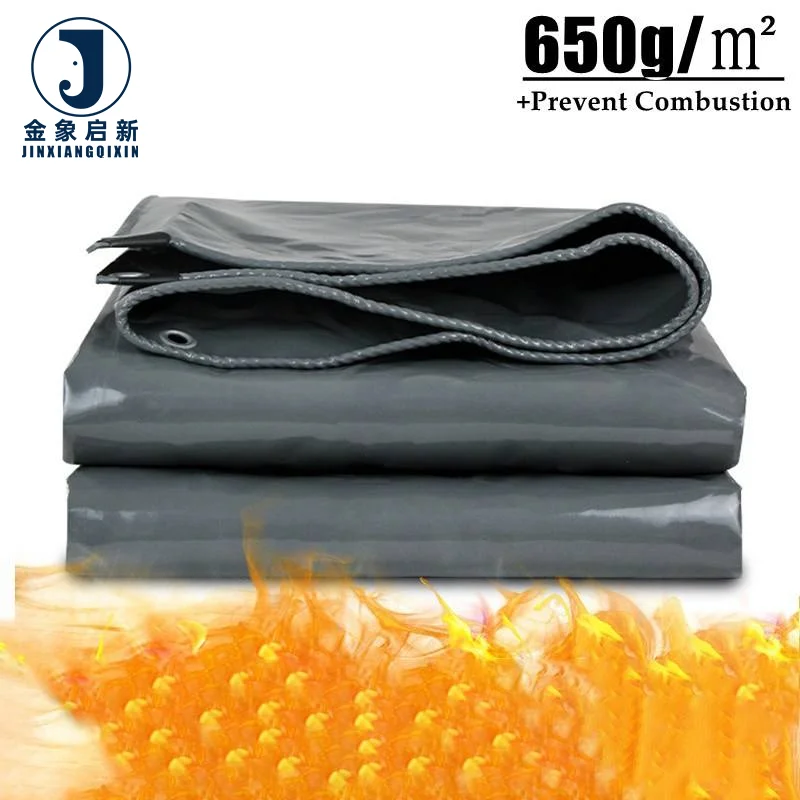
| Weight (GSM) | 350, 400, 420, 500, 600, 650, 750, 900 g/m² |
| Total Thickness | 0.29 mm, 0.32 mm, 0.38 mm, 0.44 mm, 0.46 mm, 0.55 mm, 0.65 mm |
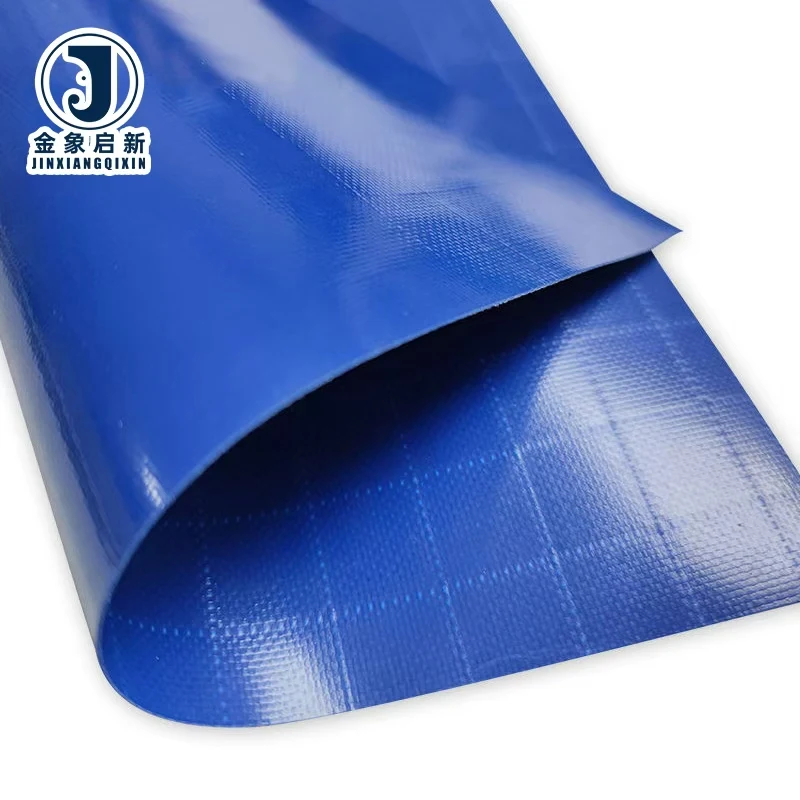
| Mesh Count | 30×19, 20×20, 30×15 |
| Tensile Strength (Warp) | 1650 N – 3900 N depending on grade |
| Tensile Strength (Weft) | 1600 N – 3500 N depending on grade |
| Coating Material | PVC on polyester base fabric |
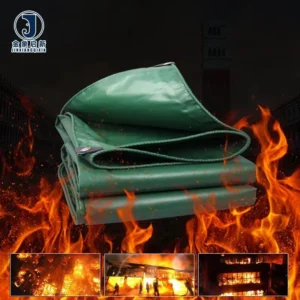
| Key Features | Water resistant, waterproof, available in flame retardant grades — confirm the grade required for your market, available with Anti-UV treatment — confirm test basis for your application |
| Edge Finish | High temperature heat sealed seamless edge wrapping |
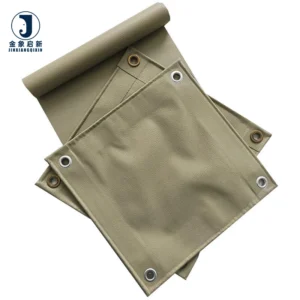
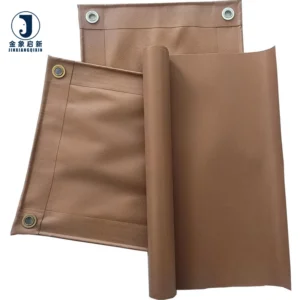
| Eyelet Options | 3 cm enlarged aluminum alloy buttonhole |
| Corner Reinforcement | Reinforced corners on all sides |
| Rope | 5 mm thick rope without splicing |
| Brittle Temperature | ≤ -50 to -60 ℃ |
| Softening Temperature | ≥ 80 ℃ |
| Melting Point | 212 ℃ |
Application Suitability
| Application | Exposure & Requirement |
|---|---|
| Truck and trailer side curtains | Continuous flexing at load points, road debris abrasion, UV and rain exposure, must weld cleanly at seams |
| Awning and tent fabrication | Long-term sun exposure, wind-driven rain, requires colour consistency across panels cut from different rolls |
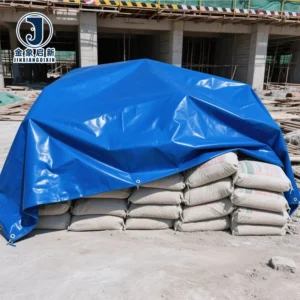
| Machine and equipment covers | Outdoor storage, dust and moisture ingress, puncture risk from sharp edges during fitting |
| Wood and lumber wraps | Moisture and fungal exposure, stacking pressure, requires high tear resistance at tie-down points |
| Garden and pergola canopies | Seasonal UV, rainfall, occasional hail impact, aesthetic colour match across adjoining panels |
| Balcony and window rain screens | Permanent outdoor mounting, wind load, must remain flexible in cold weather without cracking |
Why Roll-to-Roll Colour Variation Costs Distributors More Than They Budget
Colour drift between rolls in the same order forces converters to reject entire panels after fabrication.
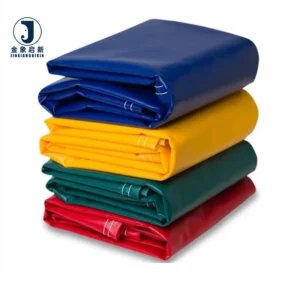
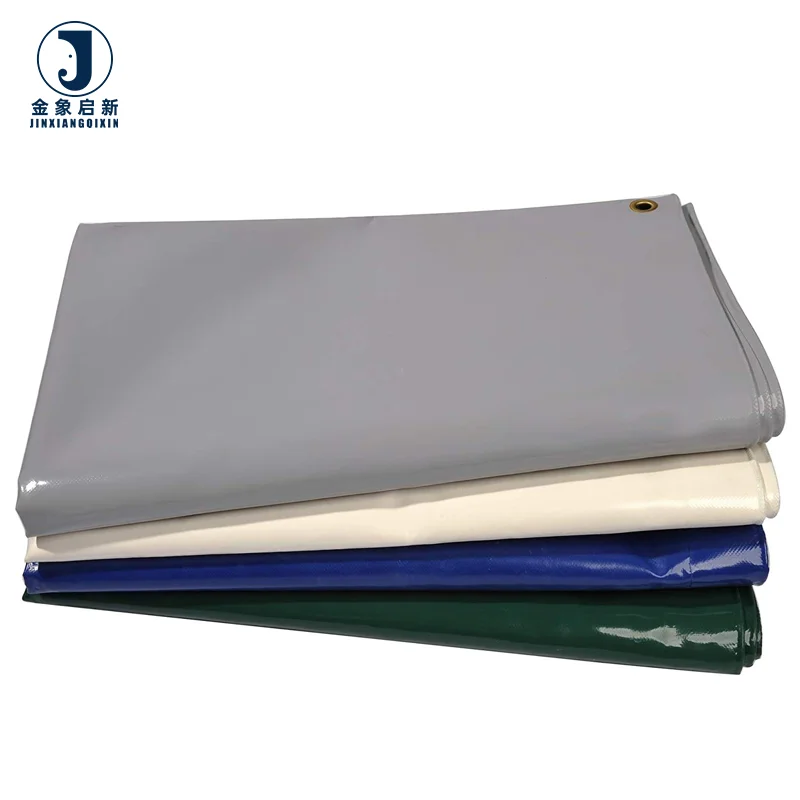
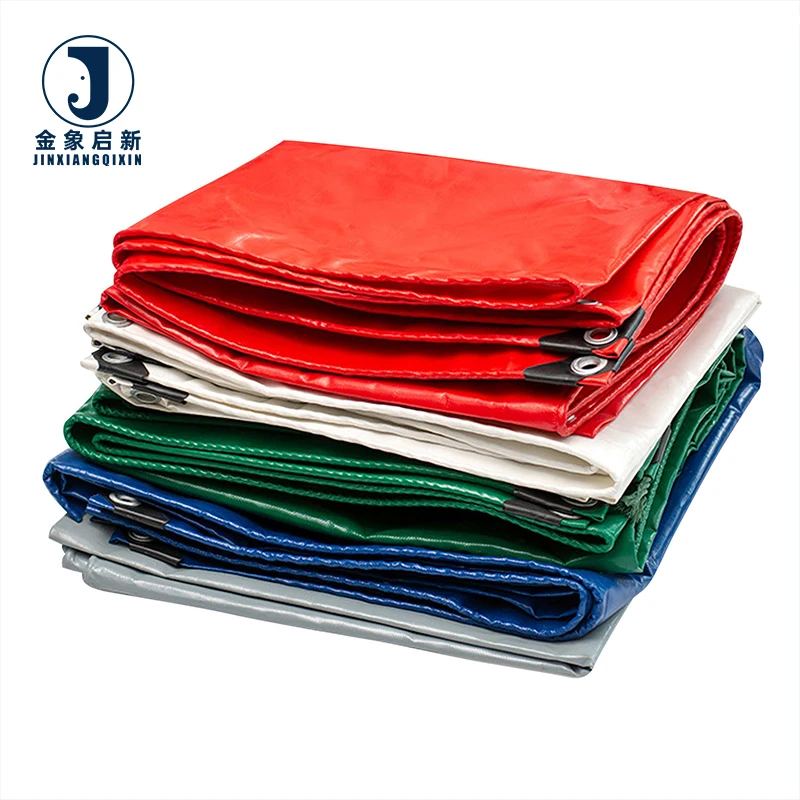
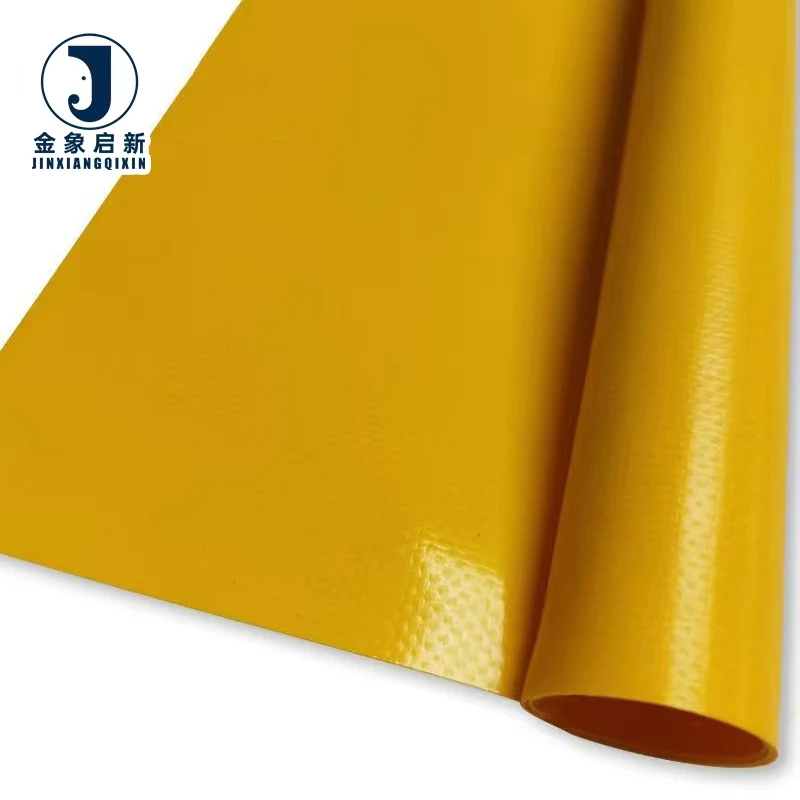
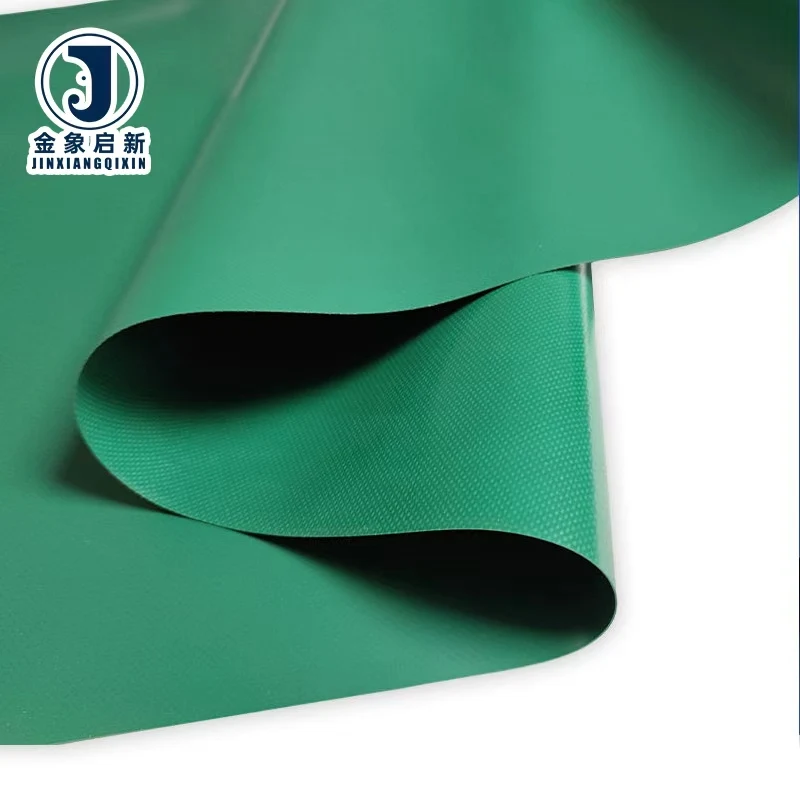
When a distributor buys PVC coated tarpaulin in bulk, the expectation is that every roll from a single batch will produce identical panels once cut and installed side by side. In practice, slight variations in pigment dispersion or coating temperature can shift the hue enough to become visible after fabrication. [NEED_CITE: batch colour tolerance standards for PVC coated fabrics in distribution]. For a converter cutting truck side curtains or awning panels, a visible shade difference between two panels means re-cutting from a new roll, wasting labour and material. The PVC coated tarpaulin roll stock supplied here is inspected side by side under standard lighting before dispatch, with a roll packing list that records colour reference per batch so you can trace any issue back to the production run.
How Denier Selection Maps to End-Use Load Requirements
The yarn count matrix spanning 500D×840D through 1000D×2000D allows wholesale buyers to source multiple grades of PVC coated tarpaulin from a single supplier, simplifying container consolidation. Lighter denier constructions suit awning and garden cover applications where flexibility and handling weight matter more than extreme tensile values.
Heavier constructions such as 1000D×1300D and 1300D×1300D deliver the warp and weft tensile figures needed for truck side curtains and trailer covers that face constant tie-down tension and road vibration. Stocking this range lets a distributor serve both the light-duty retail segment and the heavy transport segment without managing separate supply chains.
Container Loading, Packing Formats and Freight Efficiency
Roll packing, bale packing and carton options are available depending on how the buyer intends to re-distribute or fabricate. Roll packing preserves the material flatness and is preferred by converters who feed the fabric directly onto cutting tables. Bale packing compresses volume for long-haul ocean freight, reducing per-roll shipping cost on high-volume orders. [NEED_CITE: typical container loading plans for PVC coated tarpaulin rolls by packing format].
Carton packing suits smaller wholesale lots destined for retail re-sale where the end customer expects individual packaging. Each packing format affects the container load plan differently, and the dispatch documentation includes a roll count, net weight and loading diagram so the buyer can verify the shipment against the bill of lading on arrival.
Reading GSM, Denier and Tensile Together — Why One Number Is Never Enough
A common mistake in bulk purchasing is selecting a PVC coated tarpaulin grade based on GSM alone, assuming a higher number automatically means a stronger fabric. In reality, GSM reflects the combined weight of base fabric and coating, and a heavy coating on a loosely woven base can inflate the weight without improving tensile or tear performance. The denier of the yarn and the mesh count together determine how much load the base fabric carries before the coating transfers stress to the yarn junctions.
For example, a 650 g/m² fabric woven at 20×20 mesh from 1000D×1000D yarn will resist tearing differently than a 650 g/m² fabric at 30×19 mesh from 500D×840D yarn, even though the scale reads the same. The coating method also matters: knife-coated fabrics typically achieve higher peel strength at the weld line compared to laminated constructions, which directly affects how well a heat-welded seam holds under repeated flexing. Buyers specifying roll stock for fabrication should request the material specification sheet that breaks down base fabric denier, mesh count and coating weight separately, rather than relying on the headline GSM figure. [NEED_CITE: ISO 1421 tensile test methods for coated fabrics].
Thickness values from 0.29 mm through 0.65 mm across the range give converters a proxy for coating build, which influences both abrasion resistance and the heat-seal parameter window — thicker coatings generally tolerate a wider temperature range during welding before the base fabric is affected.
The Hidden Cost of Unverified Weight on Arrival
A quotation states 650 g/m², but the rolls arriving at the port weigh closer to 580 g/m² once the coating is stripped and the base fabric is measured separately. The buyer has already committed the container to a customer who specified that weight grade for a transport fleet contract. [NEED_CITE: pre-shipment weight verification practices for imported coated fabrics]. Downgrading the rolls means breaching the end-user specification; re-ordering means weeks of delay and a second freight charge. This scenario is the single most common dispute in cross-border PVC coated tarpaulin roll trade, and it is preventable through documented pre-shipment inspection that records the actual GSM per roll before the container is sealed.
What This Supply Chain Delivers to Bulk Buyers
Three full production lines and 36 sets of professional equipment support the volume needed to fill multi-container orders with consistent lead times, so distributors can plan inventory around confirmed shipping dates rather than estimates.
A 10-person R&D team handles custom width, colour matching and sample development within days, enabling wholesale buyers to test a new GSM or shade before committing to a full container load.
Dedicated QA/QC runs at every production stage with 100% inspection before shipment, meaning each roll is weighed and visually checked — not just a random sample from the batch.
Nearly 30 years of focused coated fabric production provides process control over coating adhesion and weight accuracy that directly reduces the rate of returns and disputes on arrival.
Full export documentation is prepared per shipment, including certificates and customs paperwork that smooth the import clearance process in North American, European and Asian markets.
Documentation & Verification
- Weight verification per roll against the stated GSM recorded on the pre-shipment inspection record
- Material specification sheet stating base fabric denier, coating weight and colour reference per batch
- Roll packing list with individual roll count, net weight and container loading diagram
- Certificate of origin prepared per destination country requirement for customs clearance
- Test report for flame retardant and Anti-UV grades supplied where applicable to the ordered SKU
Fabrication, Handling & Storage
- Heat-seal temperature window varies by thickness grade — confirm weld parameters for the specific GSM ordered before production runs
- High temperature heat sealed edge wrapping prevents fraying at cut edges during downstream fabrication
- Store rolls horizontally on pallets to avoid permanent creases that show through the PVC coating surface
- 3 cm enlarged aluminum alloy eyelets distribute tie-down load across the reinforced corner patches
- Cold-weather handling below the brittle temperature threshold risks coating micro-cracks — allow rolls to acclimatise before unrolling
- Cut panels with a sharp blade to avoid pulling polyester yarns out of the weave at the edge
What to Include in Your Inquiry
To get an accurate quotation and sample, specify the GSM grade and denier construction you need, the roll width and length that suits your cutting table or re-distribution format, and the colour reference (Pantone or RAL) if a specific shade is required. If your end market mandates a particular flame retardant or Anti-UV standard, state the grade so the correct test report can be included with your shipment.
Frequently Asked Questions
Q: How is GSM verified on every roll before the container ships?
A: Each roll is individually weighed on calibrated scales during the pre-shipment inspection. The actual weight is recorded against the quoted GSM on the inspection report, which accompanies the shipping documents. Any roll falling outside tolerance is replaced before dispatch, so the distributor receives only verified stock.
Q: What is the minimum order for a custom width or colour?
A: Minimum quantities depend on the specific denier and GSM grade requested. Custom widths and Pantone-matched colours are available on roll orders, and a sample is produced for approval before the full batch runs. Confirm the exact minimum for your specification during the inquiry stage.
Q: Can rolls be matched to a Pantone or RAL colour reference across a full container?
A: Yes. The dye batch is prepared against the submitted reference, and rolls are inspected side by side under standard lighting before packing. A colour reference code is recorded on the roll packing list so re-orders can be matched to the same shade in future shipments.
Q: How are rolls packed for ocean freight and what paperwork arrives with them?
A: Roll packing, bale packing or carton packing is selected based on your logistics preference. Each shipment includes a roll packing list with count and weight, material specification sheet, certificate of origin and customs documentation required by the destination country.
Q: Are test reports included for flame retardant and UV-treated grades?
A: Test reports are supplied for flame retardant and Anti-UV grades where the ordered SKU carries those treatments. Confirm the specific grade or standard your market requires during the inquiry so the correct documentation is prepared with the shipment.