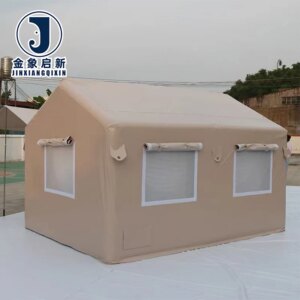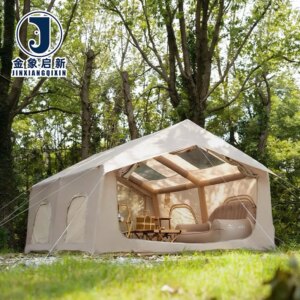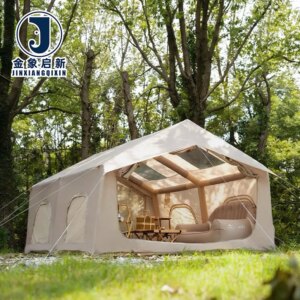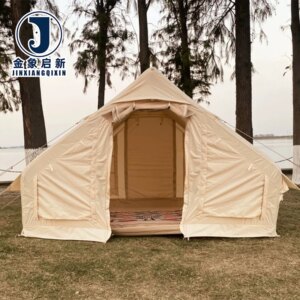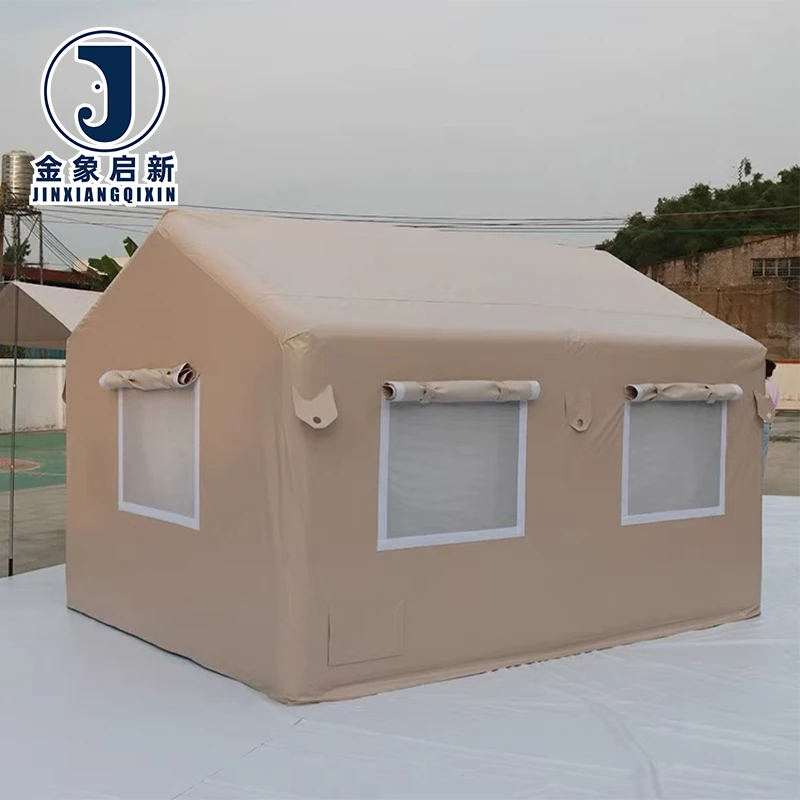
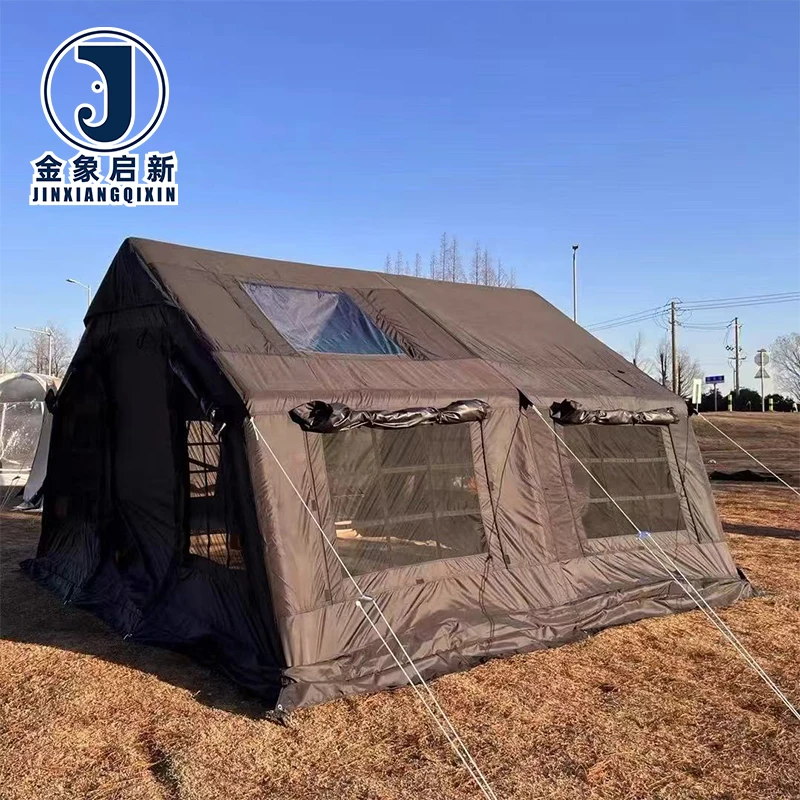
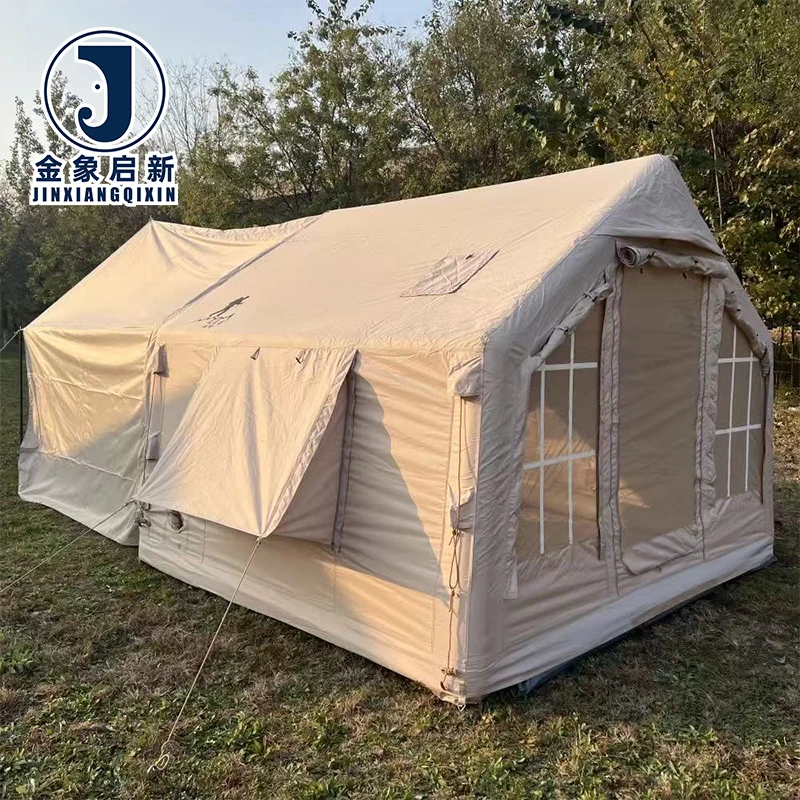
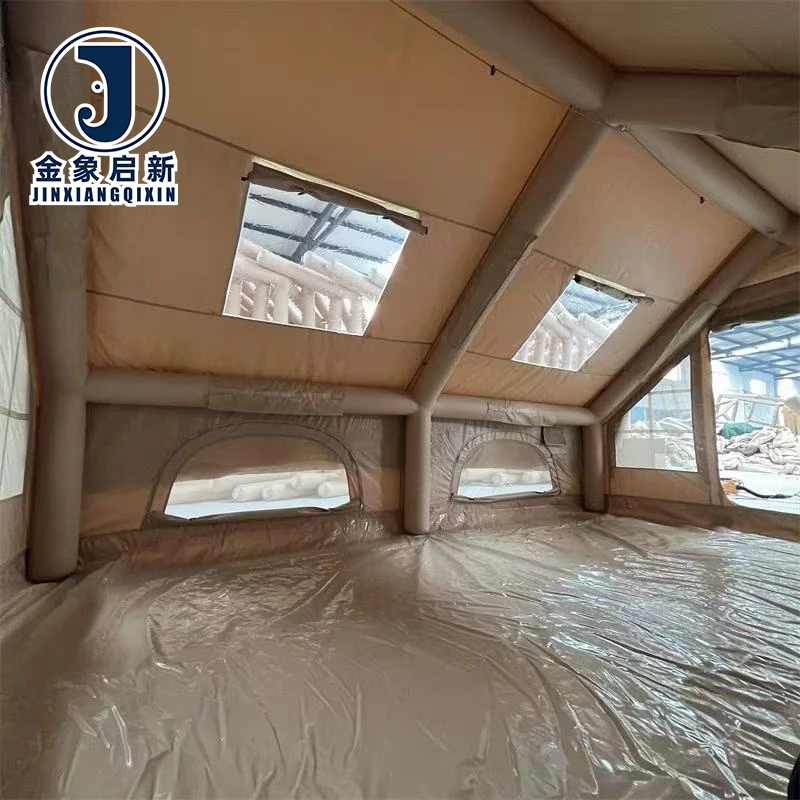
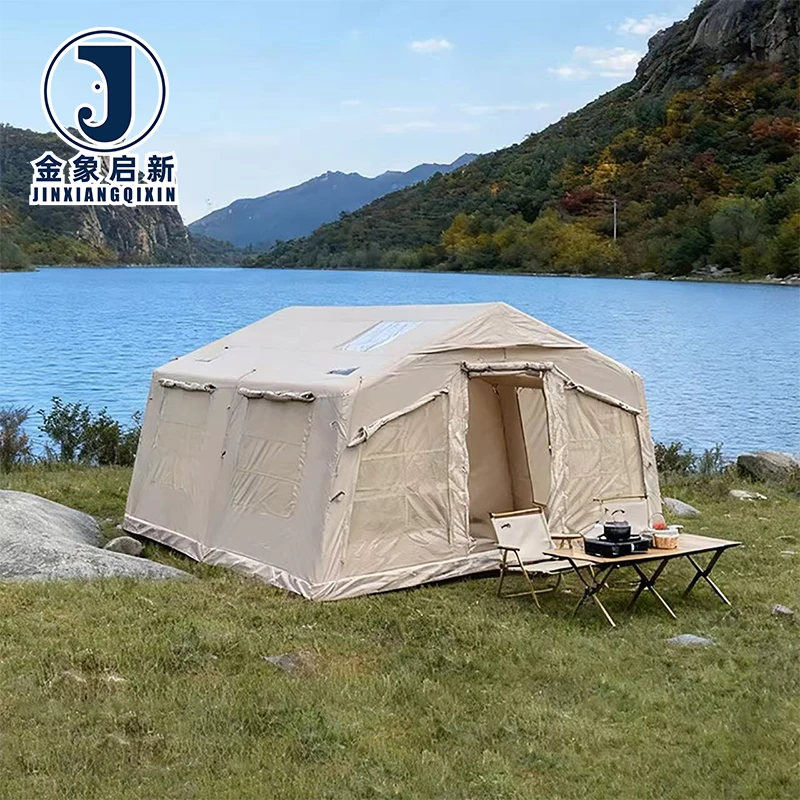
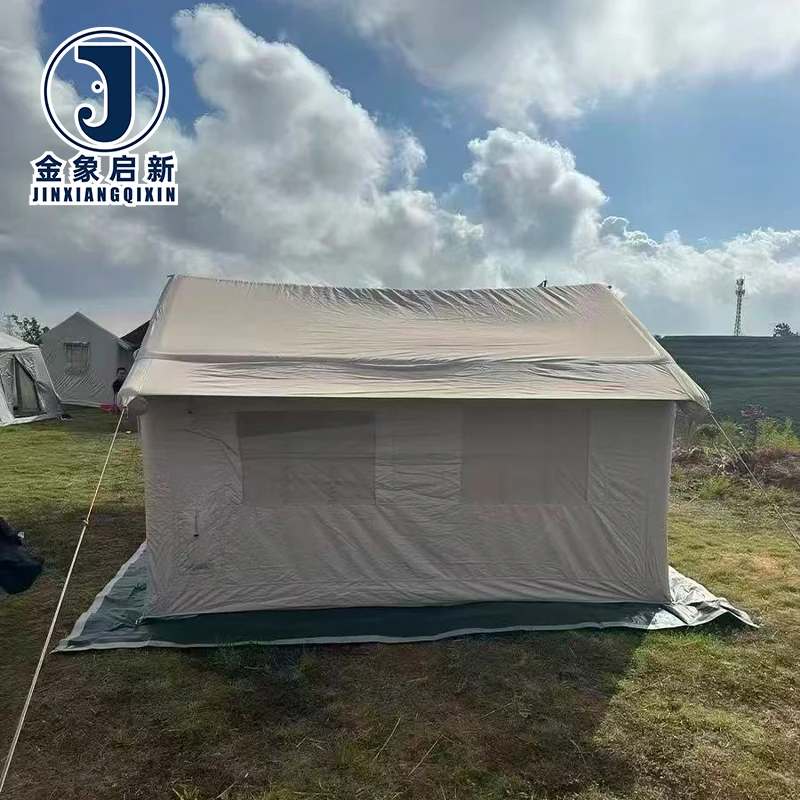
Description
Consistent Batch Quality — Every roll of PVC inflatable tent fabric is verified against the material specification sheet before dispatch, ensuring GSM and coating weight match the quotation across your entire order.
Technical Specifications
| Parameter | Value |
|---|---|
| Product Type | Inflatable Tent Fabric |
| Core Material | PVC Tarpaulin |
| Key Features | Waterproof, Tear-resistant, UV-resistant (test basis not stated), Fire-retardant (grade not stated), Anti-static (standard not stated) |
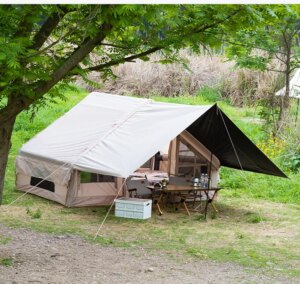
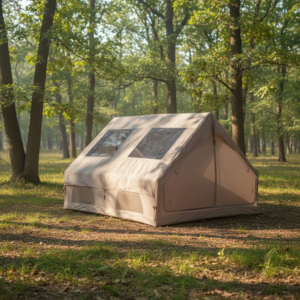
| Capacity (Finished Tent Reference) | 8-10 Person |
| Wind Resistance (Finished Tent Reference) | up to 60 km/h |
| Production Standards | ISO 9001, ISO 14001, ISO 45001, CE |
Application Suitability
| Application | Exposure & Requirement |
|---|---|
| Commercial camping grounds | Four-season deployment, continuous inflation pressure, repeated folding and transport |
| Outdoor event infrastructure | Rapid inflation cycles, wind shear during assembly, high-visibility branding surface |
| Membrane structure fabrication | Heat-weld seam integrity under constant air pressure, UV exposure across large spans |
| Mobile field operations | Quick deployment, abrasion from ground contact, tear resistance at anchor points |
Why Inflatable Tent Fabric Fails Before the Finished Structure Does
The weakest point is rarely the centre of the fabric — it is where the weld meets the parent material under sustained inflation pressure.
Sourcing PVC inflatable tent fabric often means the data sheet promises a certain coating weight and tensile performance, but the finished inflatable fails at a seam long before the membrane itself degrades. When the base fabric denier or weave density shifts between rolls, heat-weld parameters that worked on the sample no longer hold. Fabricators then face field returns on structures that passed initial pressure tests but could not sustain repeated inflation cycles. [NEED_CITE: tensile and tear test methods for coated fabrics per ISO 1421]
Coating Weight and Air-Holding Performance
The airtightness of any inflatable structure depends entirely on the continuity and density of the PVC coating across the base fabric. Rolls supplied for membrane and inflatable tent applications must maintain uniform coating thickness so that no micro-channel allows gradual pressure loss. Each batch of PVC inflatable tent fabric is inspected for coating adhesion and surface consistency before it leaves the production line, because even minor variation translates directly into differential air retention across a large fabricated structure.
Weld Behaviour at Flex and Stress Points
An inflatable tent is essentially a series of heat-welded joints holding air under constant pressure. If the welded seam fails before the parent fabric does, the entire structure deflates — and the failure always occurs at the point the load flexes most. We engineer weld and seam behaviour so that the joint strength matches the body of the coated fabric, which means controlling coating formulation and base fabric surface characteristics to support reliable thermal bonding. [NEED_CITE: heat-weld seam strength testing for PVC coated fabrics]
How Base Fabric Density Governs Tear Propagation
GSM alone does not predict how a tear will spread once it starts. The denier of the yarn and the density of the warp and weft determine whether a puncture at an anchor point remains a localised repair or propagates across an entire air beam. For inflatable tent fabric, the weave structure is selected to arrest tear propagation, giving the operator time to deflate, patch, and reinflate rather than replace an entire structural member. Heavier base fabrics with tighter weaves resist tear spread more effectively, but at the cost of increased roll weight and fabrication stiffness.
The Cost of Overlooking Batch Consistency
Colour variation between rolls in the same order becomes visible the moment two panels are welded side by side on a branded event tent. Similarly, GSM stated on the quotation but not verified on arrival means the fabric is lighter than agreed, reducing tear strength and compromising the inflation pressure rating the end customer specified. These are not cosmetic complaints — they result in rejected shipments, re-fabrication at the converter’s cost, and delayed project handover. [NEED_CITE: batch colour consistency standards for coated textile production]
Why Fabricators Source Roll Stock Here
Deep process control over coating weight and adhesion is the result of nearly 30 years focused exclusively on coated fabric, applied directly to every roll of inflatable tent material we produce. Three full production lines and 36 sets of processing equipment support bulk roll orders with reliable scheduling, so fabricators can plan downstream production without uncertainty. A 10-person R&D team handles material selection, custom width requests, colour matching, and pattern printing from initial sample development through to bulk approval. Dedicated QA and QC staff inspect every roll at each production stage, with 100% pre-shipment inspection ensuring the specification sheet you received at quotation matches the material you receive on the dock.
Documentation & Verification
- Material specification sheet stating GSM, base fabric denier, coating type, and colour reference for every roll
- UV and flame-retardant test reports included with shipment documentation where applicable grades are specified
- Pre-shipment inspection record confirming coating adhesion, surface consistency, and colour match
- Certificate of origin and customs documentation prepared per destination market requirements
- Roll packing list detailing net weight, gross weight, and linear metres per roll
Fabrication, Handling & Storage
- Heat-weld parameters must be validated on a sample piece from each new roll before production welding begins
- Store rolls upright on pallets in a dry, shaded warehouse to prevent coating compression marks and edge damage
- Avoid folding PVC inflatable tent fabric at sharp angles during transport to the fabrication floor to prevent crease whitening
- Use compatible PVC-based adhesive and patch material for field repairs, matching the coating formulation of the parent fabric
- Plan cutting layouts to minimise transverse welds across air beam panels, aligning seams with low-stress zones
- Clean fabricated structures with mild detergent only — solvents degrade the PVC coating surface and reduce UV treatment effectiveness
Planning Your Inflatable Fabric Specification
To move forward, share the target market for your finished inflatables so we can confirm which fire-retardant and anti-static grades apply. Specify the roll width and linear metres you need per colour, and whether pattern printing or logo application is required. We will prepare a material sample for your weld testing and inflation validation before any bulk commitment.
Frequently Asked Questions
Q: Can you supply test reports for UV and flame-retardant treatment with the fabric rolls?
A: Yes. Where UV or flame-retardant grades are specified in your order, the corresponding test reports accompany the shipment documentation. Confirm the grade required for your destination market — such as DIN 4102, NFPA 701, or local building code classifications — so we match the correct treatment to your compliance obligation.
Q: What custom widths and printing options do you support for inflatable tent fabric?
A: Custom widths are available to suit your fabrication layout, reducing off-cuts and transverse welds. Pattern printing and logo application are handled in-house, with sample approval before bulk production. Share your width requirement, print file, and colour references to begin sample development.
Q: How do you ensure colour consistency across multiple rolls in the same order?
A: Every roll is produced within the same batch run and inspected against the approved colour reference under controlled lighting. Pre-shipment inspection records confirm colour match roll by roll, so panels welded side by side on a finished inflatable present a uniform appearance.
Q: Can we receive a sample roll to test heat-weld seam strength before placing a bulk order?
A: Samples are developed within days for custom requirements. We recommend testing your standard heat-weld parameters on the sample to confirm seam integrity and inflation behaviour before committing to full production volume.
Q: What GSM and coating weight options are available for inflatable membrane applications?
A: Available GSM grades range from lightweight to heavy-duty, selected based on your inflation pressure requirement, structural span, and expected wind load. Share your target performance specification and we will recommend the appropriate coating weight and base fabric combination, supported by a material specification sheet per roll.