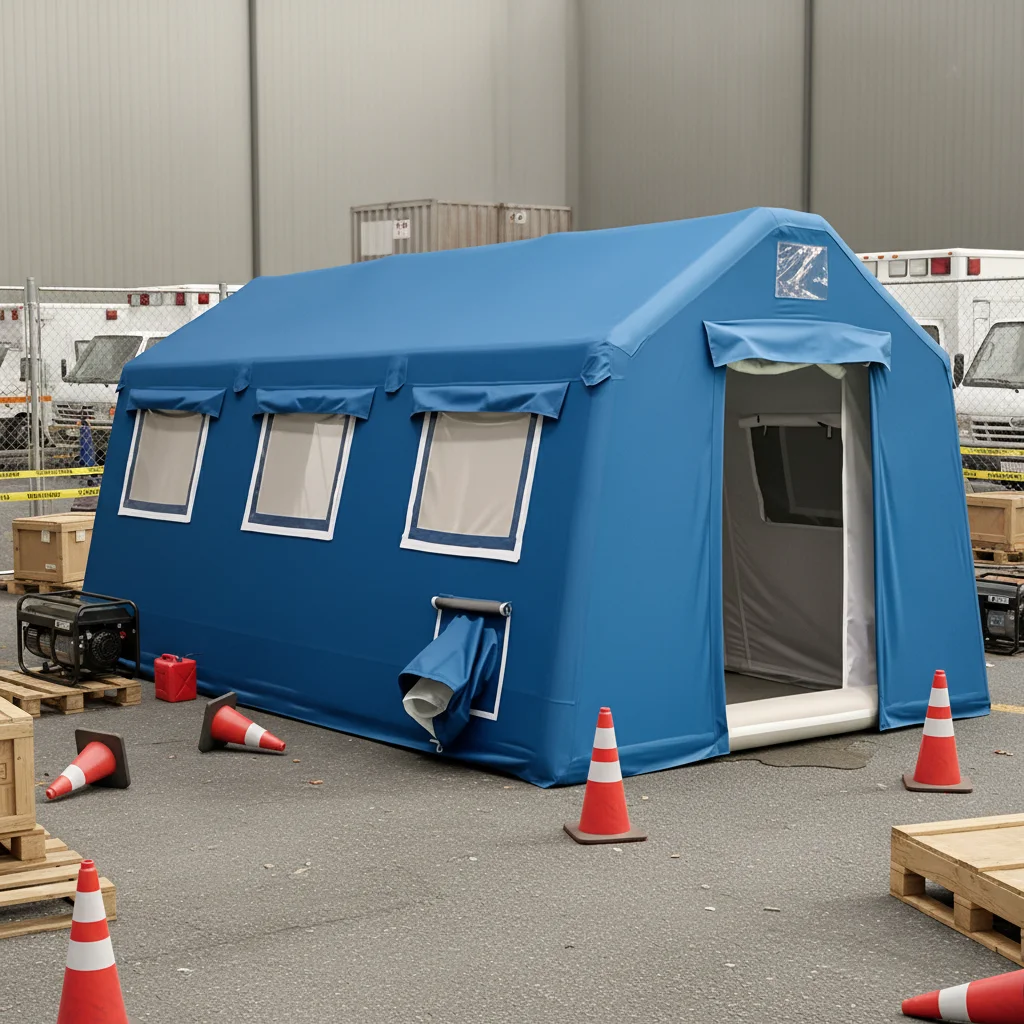
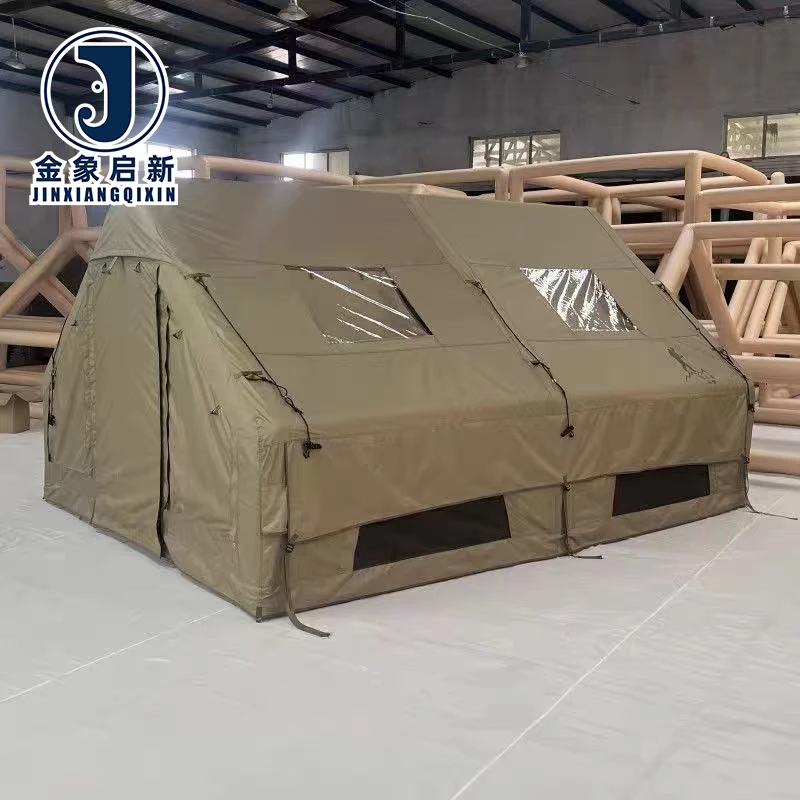
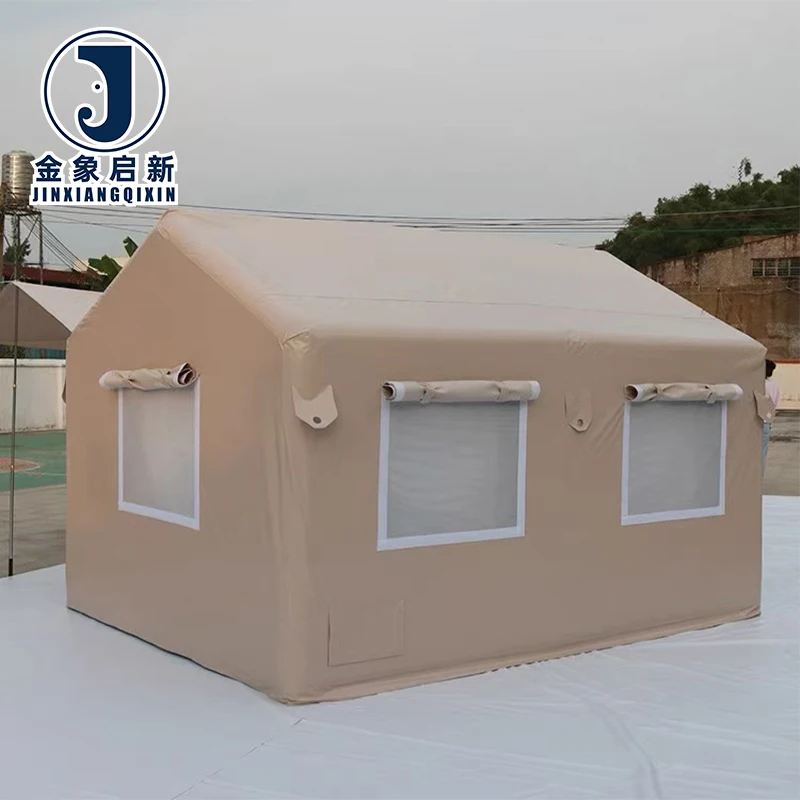
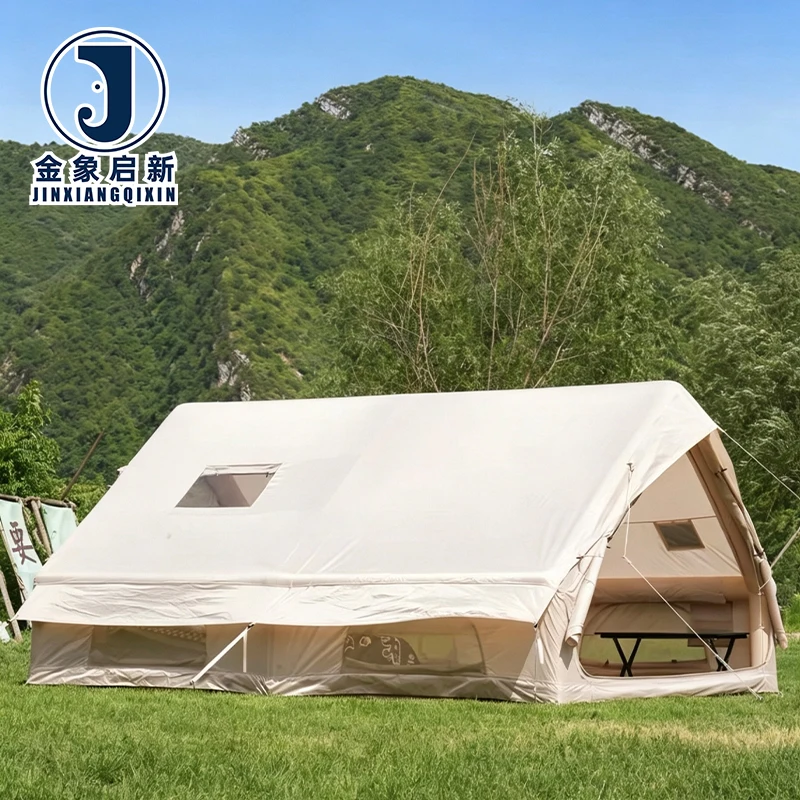
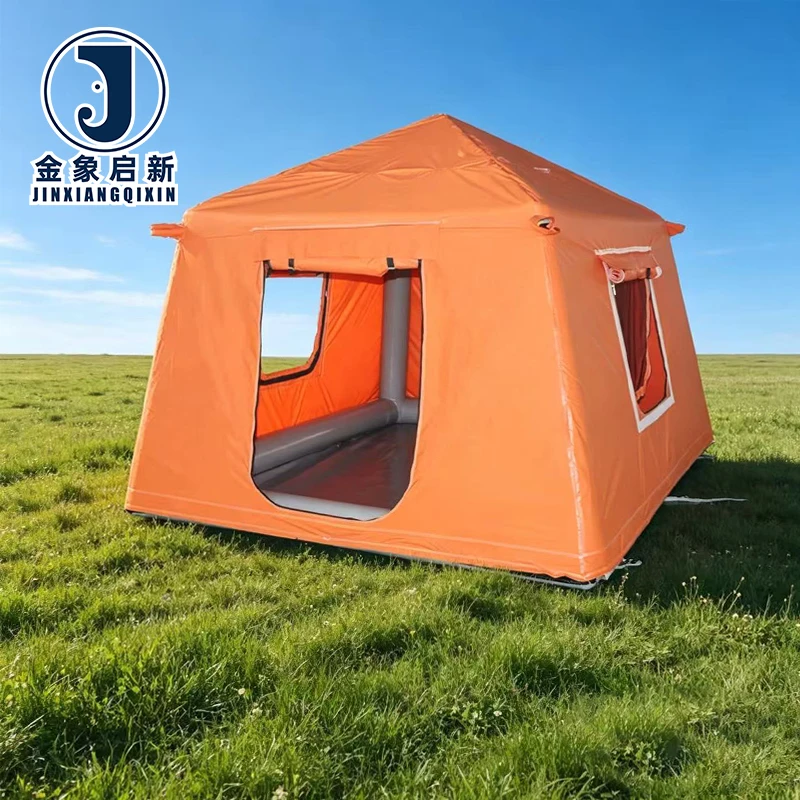
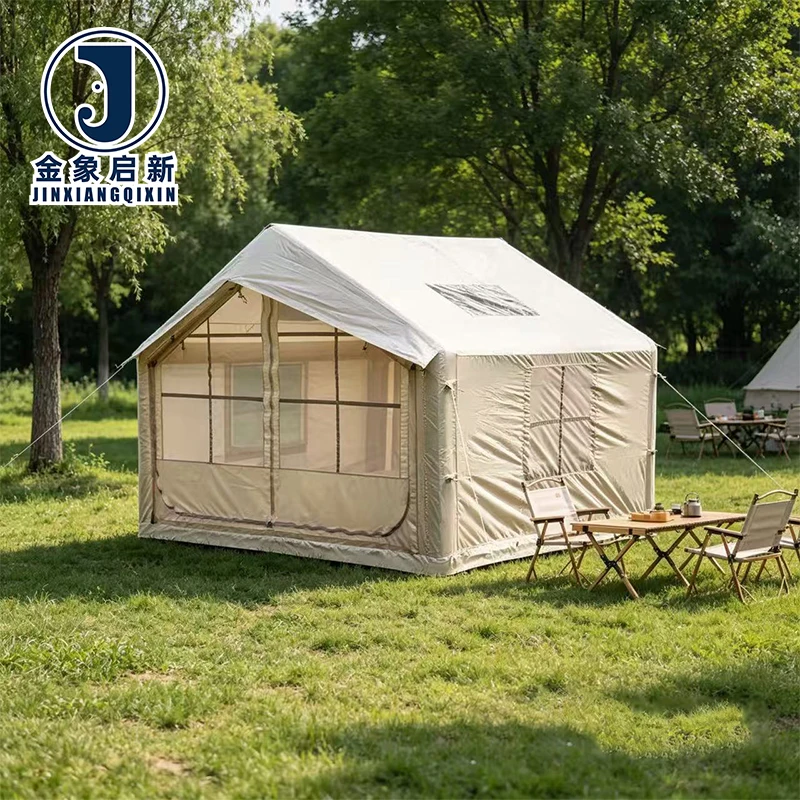
Description
Proven Coating Expertise — nearly 30 years focused on coated fabric production, delivering roll-to-roll consistency for inflatable tent manufacturers sourcing PVC tarpaulin in bulk.
Technical Specifications
| Parameter | Value |
|---|---|
| Product Type | Inflatable Tent Fabric / Outdoor Shelter Tent |
| Core Material | PVC tarpaulin |
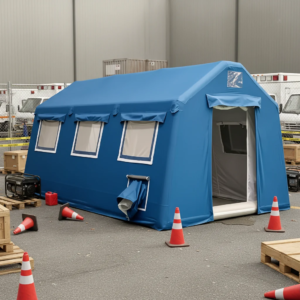
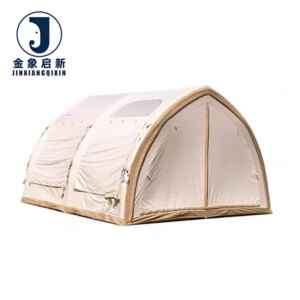
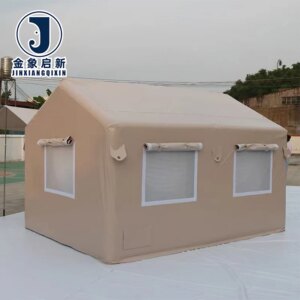
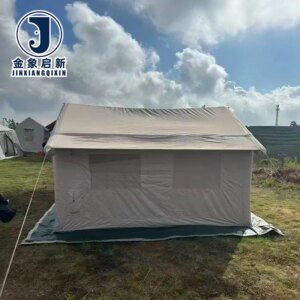
| Product Forms | Outdoor shelter tent |
| Construction | Single-layer, extended design |
| Design Feature | Four-season design |
| Key Features | Waterproof, UV-resistant (test basis not stated in source), quick automatic opening |
| Customization | OEM & ODM, sample customization, pattern printing |
| Certifications | ISO9001, ISO14001, ISO45001, CE |
Application Suitability
| Application | Exposure & Requirement |
|---|---|
| Temporary storage facilities at construction sites | Prolonged weather exposure, dust ingress, mechanical abrasion from equipment movement |
| Mobile workshops for industrial events | Rapid deployment, high visibility, resistance to foot traffic and ground contact |
| Covered areas for outdoor equipment maintenance | Protection from rain and UV degradation, clearance for machinery, ventilation requirements |
| Commercial outdoor shelter projects | Consistent colour across multiple units, durability under repeated inflation cycles, branded appearance |
Why Colour Drift Between Rolls Derails Inflatable Tent Production
Batch-to-batch colour variance is the single most common reason inflatable tent manufacturers reject entire container loads.
When a buyer orders ten rolls of PVC inflatable tent wholesale stock for a single project, any visible shade difference between adjacent panels becomes obvious once the structure is inflated and viewed in daylight. This is not a cosmetic complaint — it triggers full rejection, re-work, or forced discounting on the finished product [NEED_CITE: colour tolerance standards for coated fabrics in commercial tent production]. Manufacturers who have received inconsistent batches report losing entire production runs because re-dyeing or re-coating PVC tarpaulin after lamination is not commercially viable. The root cause is typically insufficient pigment dosing control or variations in base fabric whiteness between production runs.
Roll-to-Roll Consistency Across High-Volume Inflatable Tent Orders
Maintaining identical shade across a PVC inflatable tent wholesale order requires tight control over pigment dispersion at the compounding stage and uniform coating thickness across the full web width. Our three full production lines process PVC tarpaulin with dedicated mixing stations that calibrate pigment ratios before each run, reducing the colour shift that occurs when batches are mixed from different compounding cycles. For buyers procuring inflatable shelter tent bulk volumes, this means panels cut from different rolls within the same purchase order will align visually once the tent is erected.
How Production Line Capacity Supports Bulk PVC Inflatable Tent Procurement
Running three full production lines and 36 sets of professional processing equipment allows us to allocate a single line to a dedicated inflatable tent fabric order without interrupting other commitments. For tent and inflatable manufacturers buying fabric by the roll, this translates into container-load quantities produced within a single, continuous run — the most effective way to eliminate inter-batch variation. Orders that would otherwise be split across multiple production dates stay unified, preserving both colour consistency and GSM uniformity [NEED_CITE: impact of continuous production runs on coating weight consistency].
Decoding the Specs That Matter for Inflatable Tent Fabric
GSM alone does not determine how an inflatable tent panel will behave under inflation pressure. The base fabric denier and weave density define the tensile and tear baseline; the PVC coating weight then adds waterproofing, UV shielding, and weldability. A lighter base fabric with a heavy coating may reach the same total GSM as a heavier base with a thinner coat, yet the two will perform very differently at the seam line where heat welding concentrates stress. The single-layer, extended design of this PVC tarpaulin is engineered for inflation structures where the entire panel shares load evenly, reducing point-stress concentrations that plague multi-piece assemblies.
The four-season design specification means the formulation maintains flexibility in cold deployment and resists softening in high-heat environments, which matters when inflatable shelters are erected across varying climates. Waterproof performance is inherent to the fully coated PVC construction, eliminating the needle-hole leakage paths associated with sewn-only fabrics. UV-resistant treatment is available — confirm the specific grade and test standard required for your target market before placing a bulk order.
The Hidden Cost of Specifying the Wrong Inflatable Tent Fabric
A fabric that is too light for the intended inflation pressure will stretch at the seams before it tears in the field, causing the welded joints to delaminate under cyclic loading. Manufacturers who switch to a cheaper, lower-GSM roll to reduce unit cost frequently find that weld failures during quality testing force them to scrap entire production batches. Colour inconsistency between rolls means that even if the material performs mechanically, the finished inflatable tent cannot be sold at full price to commercial clients who expect a uniform appearance [NEED_CITE: commercial rejection rates for colour-mismatched tent panels]. Ordering inflatable shelter tent bulk without verifying GSM against a certified pre-shipment inspection record leaves the buyer absorbing the loss when the material arrives underweight.
Why Manufacturers Source Inflatable Tent Fabric Here
Our 10-person R&D team develops custom samples within days, allowing inflatable tent manufacturers to validate colour, hand feel, and weld compatibility before committing to a full production run. Dedicated QA/QC inspection at every production stage catches GSM deviation and surface defects before the roll leaves the line, not after it arrives at your facility. Full OEM and ODM capability covers custom widths, pattern printing, and colour matching — all managed in-house rather than outsourced to a third-party converter. ISO9001, ISO14001, ISO45001, and CE certifications provide the compliance documentation that commercial and institutional buyers require. Pre-shipment inspection records accompany every roll order, giving procurement teams verifiable proof of specification adherence before the container is sealed.
Documentation & Verification
- Material specification sheet stating GSM, base fabric denier, and PVC coating weight for every roll
- Colour reference matched to the approved sample with batch-specific pigment formulation record
- Pre-shipment inspection record confirming weight, width, and surface quality per roll
- Certificate of origin and customs documentation for international container shipments
- Test reports for UV-resistant and flame-retardant grades where applicable to the order
Fabrication, Handling & Storage
- Heat weld parameters must be adjusted to the specific PVC coating weight to avoid seam delamination at inflation pressure points
- Rolls should be stored upright on pallets to prevent flat-spot deformation of the PVC tarpaulin surface
- Unroll and allow the fabric to acclimatise before fabrication in cold conditions to restore full flexibility
- Pattern printing requires surface tension verification on the PVC coating for durable ink adhesion
- Single-layer construction allows clean cutting with standard industrial fabric knives without fraying at the edges
Preparing Your Inflatable Tent Fabric Enquiry
To move from specification to sample, provide your target panel dimensions, required roll width, annual volume estimate, and any colour or pattern printing requirements. Specify the environmental exposure conditions — particularly temperature extremes and UV intensity — so the correct formulation can be recommended. Confirm whether you require finished cut panels or full rolls for in-house fabrication, and indicate the compliance standards your end market mandates.
Frequently Asked Questions
Q: How is batch colour consistency maintained across multiple rolls in one inflatable tent order?
A: Each bulk order is allocated to a single production run using pre-calibrated pigment dosing. Rolls are compared against the approved master sample under standardised lighting before packing. If your order spans more than one run, we notify you and provide inter-batch comparison samples for approval before shipping the second batch.
Q: What is the container loading plan for roll stock inflatable shelter tent bulk orders?
A: Rolls are packed vertically on pallets to prevent surface creasing and loaded according to a pre-confirmed packing list that states roll count, net weight, and cubic volume. We provide the loading plan before dispatch so your warehouse team can prepare handling equipment for the container arrival.
Q: How do I verify the GSM of inflatable tent fabric when it arrives at my facility?
A: Every shipment includes a pre-shipment inspection record with per-roll weight data. On arrival, we recommend cutting a measured sample from the outer layer of each roll and weighing it against the specification sheet. Any discrepancy outside the stated tolerance should be reported immediately with photographs and sample cuttings retained.
Q: What custom widths and minimum order quantities apply to PVC inflatable tent wholesale purchases?
A: Custom widths are available subject to our production line capacity and the base fabric loom width. Minimum order quantities vary depending on whether you require a standard stock grade or a custom colour and treatment combination. Submit your width and volume requirements so we can confirm feasibility and provide a lead time.
Q: How does pattern printing colour matching work for inflatable tent branding orders?
A: We develop a print sample on the exact PVC tarpaulin formulation ordered, using your supplied artwork files. The sample is shipped for your approval before the full production run begins. Ink formulation is recorded per job so that reorders match the original print without requiring a new sample cycle.