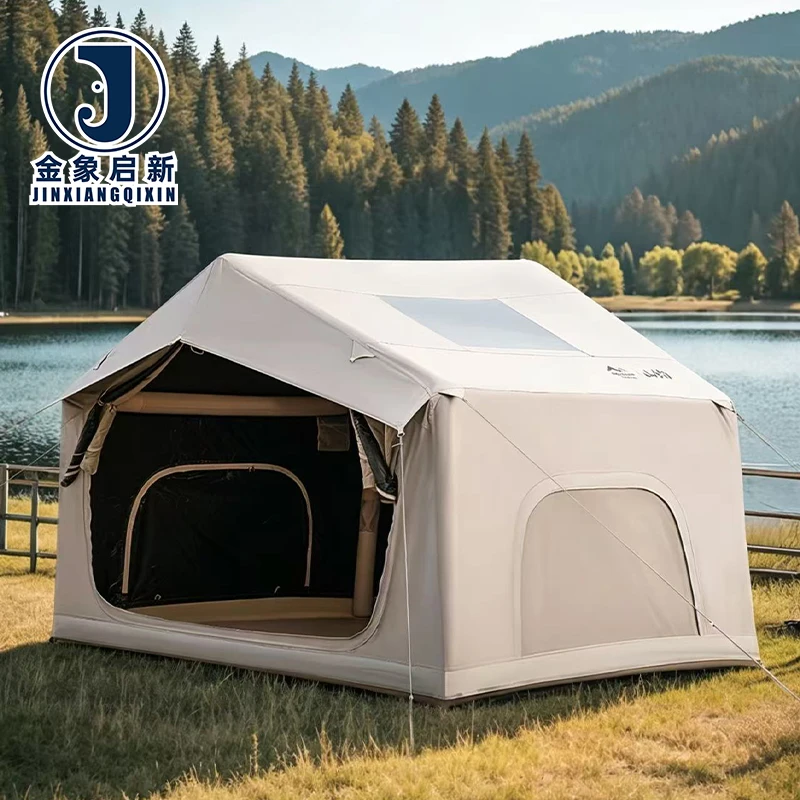
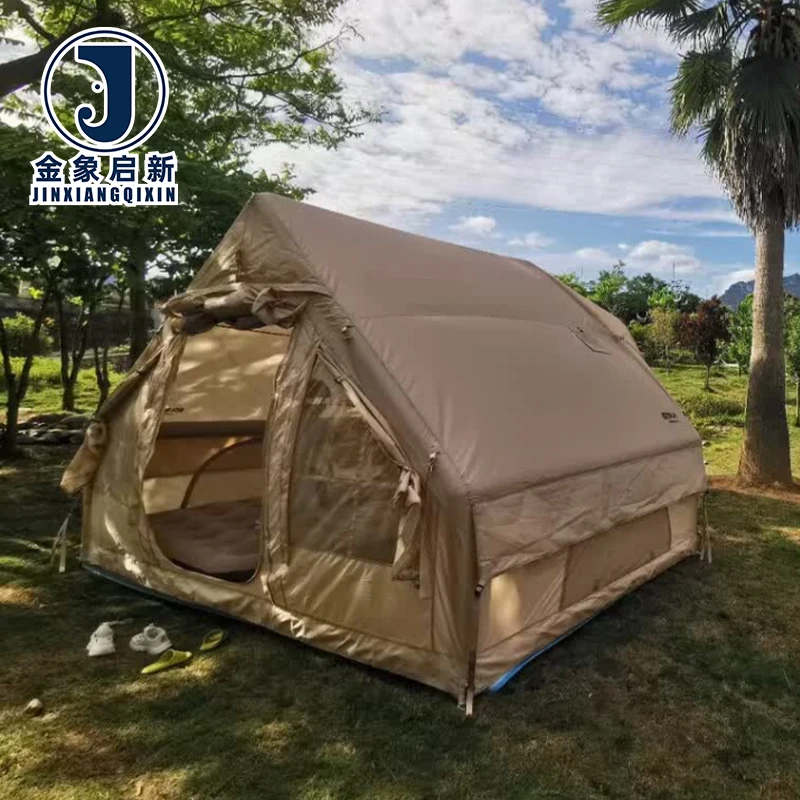
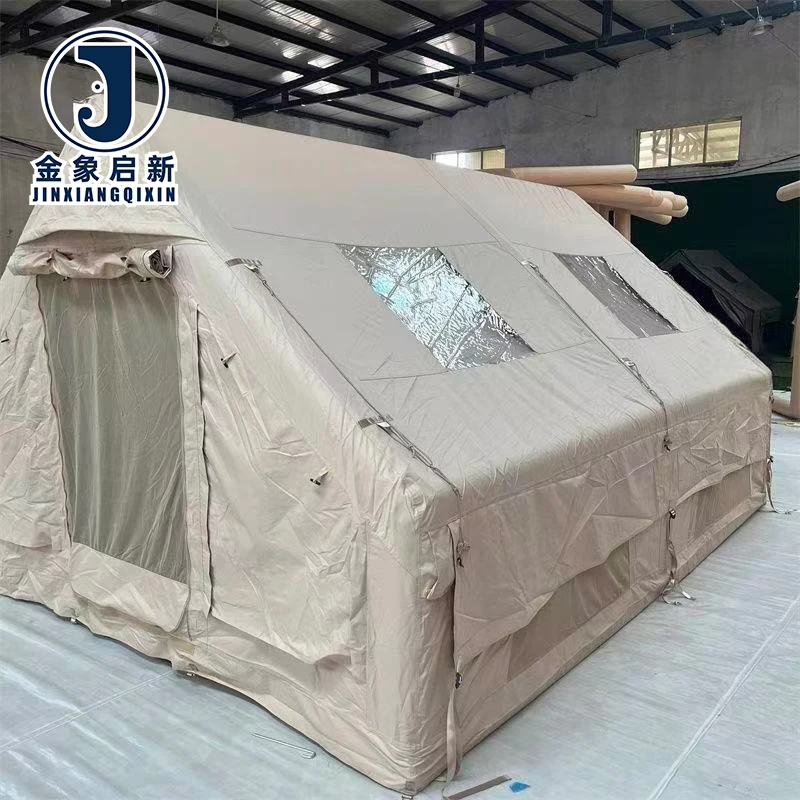
Description
Consistent Coating Weight — Verified GSM across every roll in a shipment, ensuring fabricators receive the same material properties batch after batch for inflatable tent production.
Technical Specifications
| Parameter | Value |
|---|---|
| Product Type | Inflatable Tent Fabric |
| Core Material | PVC Tarpaulin |
| Waterproof Rating | >3000mm |
| Season Rating | 4-Season Design |
| Construction | Single Layer |
| UV Treatment | UV-resistant PVC material (test basis available on request) |
| Customization | OEM & ODM, sample customization, pattern printing |
| Standards | ISO9001, ISO14001, ISO45001, CE |
Application Suitability
| Application | Exposure & Requirement |
|---|---|
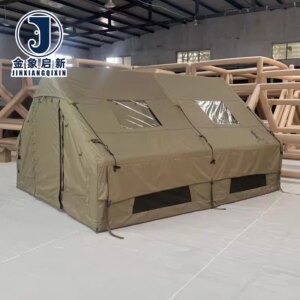
| Inflatable and membrane structure manufacturing | Fabric must endure continuous air pressure, repeated inflation cycles, and flex stress at seam junctions |
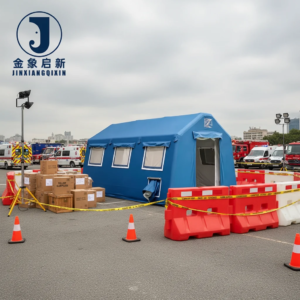
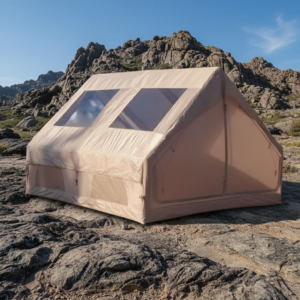
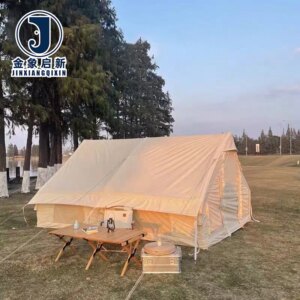
| Commercial shelter fabrication for outdoor events | Prolonged UV exposure, wind-driven rain, and frequent assembly and teardown handling |
| Temporary site offices and mobile command centers | All-weather protection, rapid deployment, and resistance to abrasion from ground contact |
| Equipment storage and logistics staging covers | Water ingress prevention, dust barrier, and material stability across seasonal temperature swings |
Why Batch Consistency Matters More Than Quoted GSM for PVC Inflatable Tent Fabric Wholesale
Roll-to-roll coating weight variation is the silent failure point in inflatable tent manufacturing.
When fabricators order PVC inflatable tent fabric wholesale, the stated GSM on the quotation often differs from the material that arrives at the dock. A roll that measures lighter than agreed compromises tensile performance at the seams, where inflation pressure concentrates stress. Coating weight inconsistency also shifts the thermal properties of the fabric, forcing fabricators to recalibrate welding parameters mid-run. The result is wasted material, rejected panels, and delayed production schedules that cascade through project timelines [NEED_CITE: tensile and tear test methods for coated fabrics per ISO 1421].
Coating Adhesion and Weld Integrity for Inflatable Structures
Inflatable tents place unusual demands on coated fabric because the material must hold airtight seams under continuous positive pressure. The PVC inflatable tent fabric supplied here undergoes controlled coating processes that maintain adhesion strength between the base fabric and the PVC layer. When welds are applied during fabrication, consistent coating thickness ensures the heat penetrates evenly across the seam, producing a bond that matches or exceeds the fabric’s tear strength rather than failing at the interface.
Single-Layer Construction and Container Loading Efficiency
The single-layer construction of this PVC inflatable tent fabric balances durability requirements with roll weight efficiency. For manufacturers ordering by the container, lighter rolls mean more linear meters of fabric per shipment, reducing per-unit freight cost. The 4-season design specification ensures the material performs across varying climatic conditions without requiring a heavier double-layer construction that would increase both material cost and shipping expense [NEED_CITE: ISO 1421 test methods for coated fabric physical properties].
Waterproof Rating Verification and Documentation
The >3000mm waterproof rating is verified per production batch with corresponding test documentation. For inflatable tent manufacturers, this means each roll shipment includes records confirming the hydrostatic head resistance meets the stated threshold. This documentation becomes critical when end users deploy shelters in heavy rainfall environments where water ingress through the fabric membrane would compromise occupant safety and equipment protection.
Reading Beyond the GSM Number on the Quotation
Coating weight alone does not determine how inflatable tent fabric will perform under inflation stress. The base fabric denier and weave density work together with the PVC coating to produce the final tensile and tear characteristics. A fabric with higher GSM but loosely woven base yarns may tear more easily than a lighter fabric with tightly packed denier yarns, because the coating bridges gaps rather than reinforcing the yarn structure. Fabricators specifying PVC inflatable tent fabric should request both GSM and base fabric construction data to evaluate performance accurately.
What Happens When Coating Weight Varies Across Rolls
Fabricators who have received inconsistent coating weights within a single order report two recurring problems. First, welding parameters that work on one roll produce weak bonds or burn-through on the next, generating scrap and requiring operator intervention. Second, color shifts become visible when panels from different rolls are joined side by side on a finished structure, forcing rework or rejection at the customer site. These issues compound when production runs are large, because the cost of stopping to recalibrate or replace panels scales with order volume [NEED_CITE: coating weight consistency impact on heat welding performance].
Production Capability Aligned with Bulk Roll Orders
Three full production lines with 36 sets of processing equipment support bulk roll orders with reliable scheduling. The 10-person R&D team handles pattern printing, custom width specifications, and sample development before production commitment. Pre-shipment inspection covers coating weight verification and color consistency roll-to-roll, catching deviations before the container is sealed. ISO9001, ISO14001, and ISO45001 certifications underpin the quality management system, and CE marking supports market access across regulated regions.
Documentation & Verification
- Material specification sheet stating base fabric construction, PVC coating type, and verified GSM per roll
- Waterproof test results documenting >3000mm hydrostatic head rating per production batch
- Roll packing list with batch-specific coating weight verification records for traceability
- Pre-shipment inspection report covering color consistency measurement across all rolls in the order
- Certificate of origin and customs documentation supporting international bulk shipment clearance
Fabrication, Handling & Storage
- Calibrate heat welding temperature and dwell time per roll batch to account for PVC coating thickness variation
- Store rolls horizontally on padded racks to prevent permanent creasing in the single-layer PVC construction
- Allow fabric to acclimate to workshop temperature before unrolling to avoid cold-cracking in UV-treated PVC material
- Use PVC-compatible cleaners on finished inflatable structures to preserve the coating surface and waterproof integrity
- Plan panel cutting layout to minimize offcuts and maximize yield from each roll width ordered
- Seal welded seams with compatible PVC sealant at high-stress junctions where inflation pressure concentrates force
Before You Request a Quote
Specify the roll widths and lengths your production line requires, along with annual volume estimates to support pricing tier discussions. Indicate whether UV-resistant formulation or specific color references are needed for your market, and confirm if pattern printing or custom branding must be applied across the full order. Let us know if sample approval is required before bulk production commitment, and share any fire-retardant grade requirements your end-use market mandates so we can verify availability against your compliance needs.
Frequently Asked Questions
Q: How is batch-to-batch color consistency verified before shipment?
A: Each production batch undergoes color measurement against the approved reference standard. The pre-shipment inspection report documents these readings across all rolls in the order, flagging any deviation that would be visible when panels are installed side by side. Rolls failing the consistency check are held back before dispatch.
Q: What roll widths and lengths are available for inflatable tent fabric?
A: Custom widths are available based on your fabrication equipment and panel cutting requirements. Standard stock widths support common inflatable tent panel dimensions. Roll lengths can be specified to match your production run size, optimizing container loading by linear meter count and total shipment weight.
Q: How is the >3000mm waterproof rating tested and documented per batch?
A: Hydrostatic head testing is performed on samples drawn from each production batch. The test measures water column pressure the fabric withstands before penetration occurs. Results are recorded in the batch inspection documentation that accompanies the shipment, providing traceable verification for your quality records.
Q: What is the container loading plan by roll count and weight?
A: Loading plans are calculated based on the roll dimensions and weights specified in your order. Single-layer construction reduces per-roll weight, allowing more linear meters per container compared to heavier double-layer fabrics. We provide a detailed loading schedule showing roll count, weight distribution, and cubic meter utilization.
Q: Can pattern printing and custom branding be applied across a full bulk order?
A: The 10-person R&D team develops print samples for approval before production begins. Pattern printing and branding are applied consistently across all rolls in the order, with color matching verified during pre-shipment inspection. This ensures the finished inflatable structures display uniform branding regardless of which roll the panel was cut from.