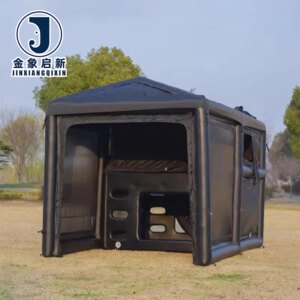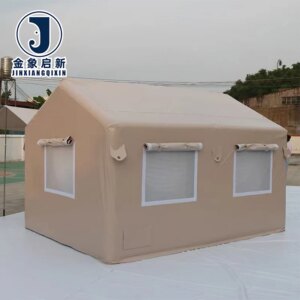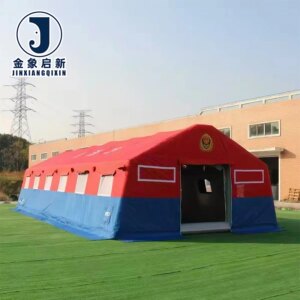
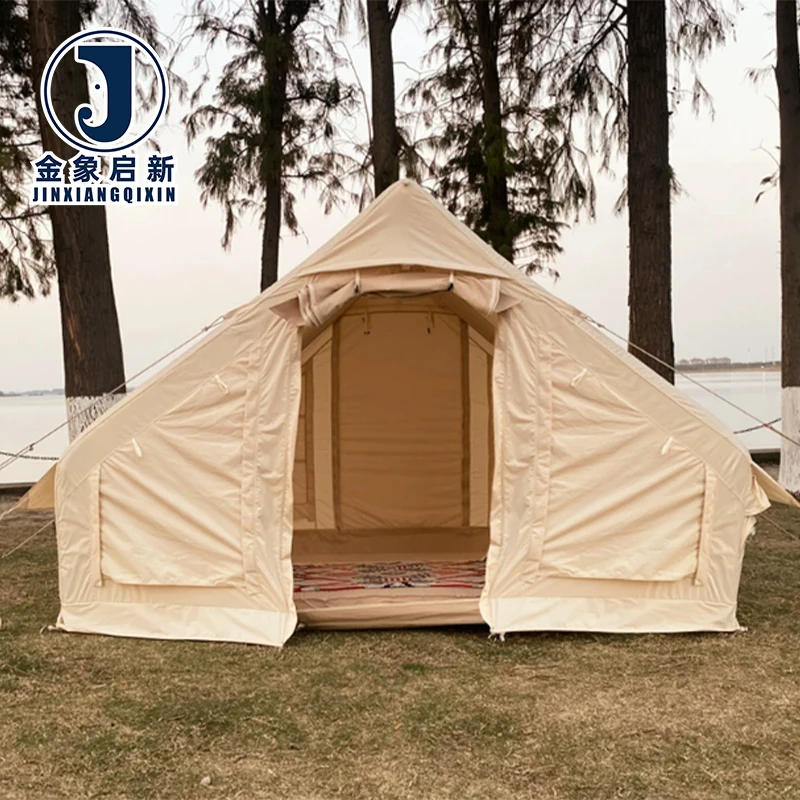
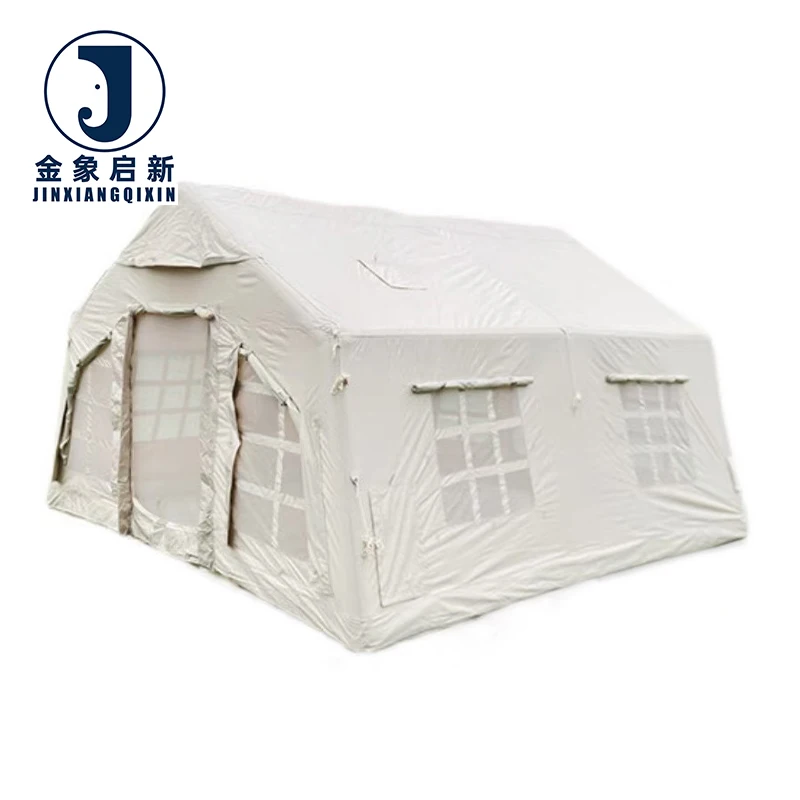
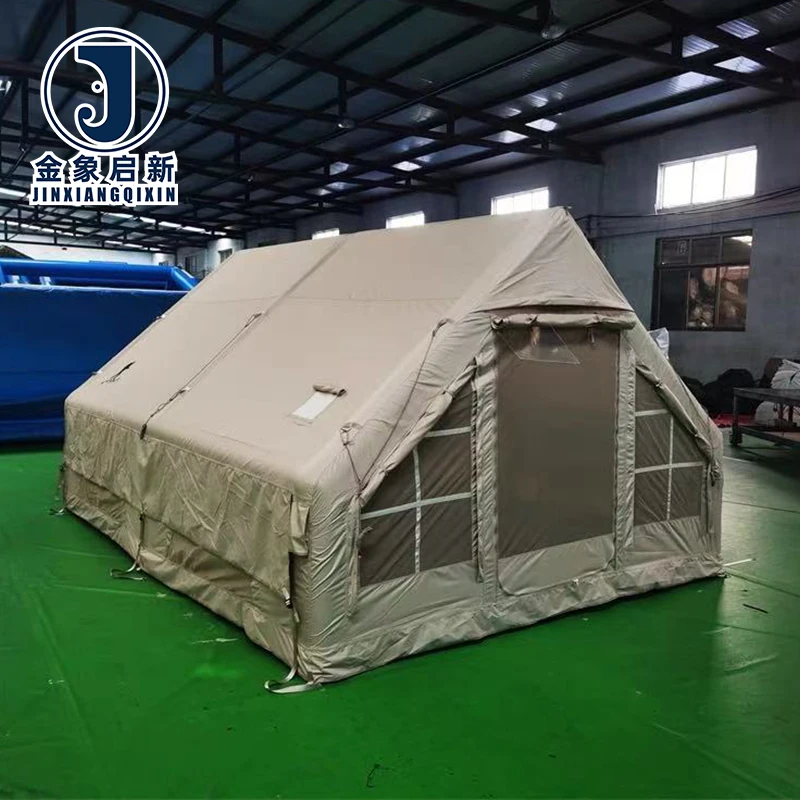
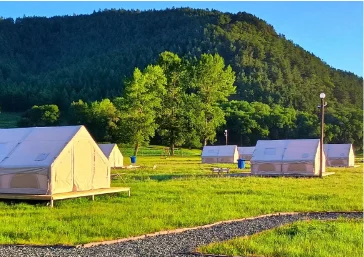
Description
Batch Consistency Controls — Dedicated QA staff verify colour uniformity across every roll before dispatch, ensuring your inflatable tent production line never halts for mismatched batches.
Technical Specifications
| Parameter | Value |
|---|---|
| Product Type | Inflatable Tent |
| Core Material | PVC tarpaulin |
| Waterproof | Fully waterproof coated construction |
| UV Resistance | UV-resistant treatment available — confirm the grade required for your market |
| Fire Retardancy | Fire-retardant options available — confirm the grade required for your market |
| Anti-Static | Anti-static treatment available — confirm the standard required for your market |
| Key Features | Tear-resistant, quick automatic opening, all-season weather resistance |
| Customization | OEM & ODM including sample customization and pattern printing |
| Certifications | ISO9001, ISO14001, ISO45001, CE |
Application Suitability
| Application | Exposure & Requirement |
|---|---|
| Outdoor adventure equipment manufacturing | Repeated inflation cycles, field abrasion, prolonged sun and rain exposure requiring durable coated fabric |
| Event logistics temporary shelters | Rapid deployment demands, crowd safety visibility, wind loading on inflated structures |
| Industrial site accommodation | Dust and chemical exposure, temperature fluctuations, fire safety compliance on active work sites |
| Commercial product line integration | Brand consistency across production runs, custom print adhesion, repeatable cut-and-sew dimensions |
Why Colour Variation Between Rolls Derails Tent Production Runs
Batch uniformity depends on controlled coating formulation and pre-production colour approval, not supplier promises alone.
When multiple rolls arrive for a single inflatable tent order and the shade shifts visibly between them, the entire production batch faces rework or rejection. Buyers consistently report that colour variance becomes apparent only after panels are heat-welded side by side on the factory floor [NEED_CITE: colour measurement standards for coated fabric batches per ISO 105 series]. Sourcing an Inflatable Tent aftermarket supplier that documents colour reference and coating formulation for each production lot eliminates this failure point before material reaches the cutting table.
PVC Coated Fabric Construction for Inflatable Structures
Inflatable tent fabric demands a coating that bonds securely to the base fabric and withstands repeated pressurisation cycles without delaminating. PVC tarpaulin provides the structural membrane that holds air pressure while resisting puncture from ground contact and field debris. As an Inflatable Tent aftermarket supplier, we supply the membrane material in roll form so fabricators can cut panels to their specific tent geometry and weld seams using hot air or wedge welding techniques suited to PVC coating chemistry.
Coating Adhesion and Weld Integrity Under Pressure
The seam on an inflatable tent carries the full internal air pressure, making coating adhesion to the base fabric the critical factor in structural reliability. When coating weight and formulation remain consistent across the roll, heat-welded seams achieve uniform peel strength along their entire length [NEED_CITE: peel strength test methods for coated fabrics per ISO 2411]. Inconsistent coating thickness causes weld failure at the thinnest points, typically where the inflated structure flexes under wind load or occupant movement.
Reading Beyond the Spec Sheet for Tent Fabric Selection
Base fabric denier and weave density determine how the material resists tear propagation once punctured, independent of the PVC coating that provides waterproofing. A higher denier yarn in the warp and weft distributes stress across multiple fibres rather than concentrating it at the tear point. Coating application method — whether knife-over-roll or calender — controls how deeply the PVC penetrates the weave, which directly affects both adhesion strength and the fabric’s flexibility during inflation. Surface finish, whether glossy or matte, influences print adhesion for branded tent panels and affects how readily the surface sheds dirt during field use.
The Hidden Cost of Underspecified Inflatable Tent Fabric
Selecting tent fabric based on price per kilogram without verifying coating adhesion leads to seam failures that surface only after the tent is inflated in the field. Fire-retardant claims without supporting test documentation create compliance risk when event organisers or site managers request certification at installation [NEED_CITE: fire safety classification requirements for temporary structures]. Colour drift between rolls forces fabricators to sort and match panels manually, adding labour cost and delaying shipment of finished tents to end customers.
What We Deliver for Inflatable Tent Fabric Buyers
Three full production lines and thirty-six sets of professional processing equipment support volume roll orders with consistent delivery schedules. A ten-technician R&D team handles material selection, sample development, and pattern printing specifications before your order enters production. QA and QC staff inspect every roll at each production stage, completing full pre-shipment inspection before dispatch rather than relying on spot checks. Custom width, length, and printing requirements receive sample approval before mass production begins, preventing specification disputes after material ships.
Documentation & Verification
- Material specification sheet confirming PVC coating type, base fabric construction, and colour reference for your order
- Test reports for fire-retardant and anti-static grades where applicable to your market compliance requirements
- Pre-shipment inspection record documenting roll-by-roll verification before container loading
- Roll packing list with individual roll identifiers for traceability through your fabrication process
- Certificate of origin and customs documentation supporting international shipment clearance
Fabrication, Handling & Storage
- Hot air welding temperature must match the PVC coating formulation — request our recommended heat settings for this tent fabric grade
- Store rolls horizontally on pallets to prevent permanent creasing that shows through the coated surface after unrolling
- Allow cold-transported rolls to reach workshop temperature before unrolling to avoid coating crack on the PVC surface
- Use PVC-compatible cleaners only; solvents degrade the coating bond and reduce waterproof performance on the inflatable tent membrane
- Plan panel nesting to minimise off-cuts from standard roll widths, reducing material waste per tent unit
Request a Fabric Proposal for Your Tent Line
Provide your target inflation pressure range, panel dimensions, and annual roll volume so we can recommend the appropriate base fabric and coating specification. Confirm the fire safety classification and any anti-static standards your end market requires before sample development begins. Specify colour references, custom width needs, and whether pattern printing is required so our R&D team prepares accurate samples for your approval.
Frequently Asked Questions
Q: How do you ensure colour consistency across multiple rolls for the same inflatable tent order?
A: We control coating formulation from batch mixing through application, and we verify colour reference against the approved sample before each roll ships. Pre-production samples are produced and approved before mass production begins, establishing the baseline that every subsequent roll must match.
Q: What fire-retardant and anti-static certifications are available for inflatable tent fabric?
A: Fire-retardant and anti-static treatments are available as options, and the specific grade depends on your market’s regulatory requirements. We provide test reports for the applicable standard once you confirm which classification your end-use application demands.
Q: What is the sample development process for custom sizes and pattern printing requirements?
A: Our R&D team prepares samples based on your width, length, colour, and printing specifications. Samples are produced within days for evaluation, and your written approval triggers mass production — ensuring the final rolls match your exact requirements.
Q: How do you handle custom width and length orders with minimum quantity requirements?
A: Custom widths and lengths are available across our production lines, with minimums that vary by specification complexity. We confirm the minimum order quantity during the quotation stage after reviewing your specific dimensions and treatment requirements.
Q: What documentation do you provide to support our quality control and compliance verification processes?
A: Each shipment includes a material specification sheet, applicable test reports, pre-shipment inspection records, roll packing lists, and certificates of origin. These documents support your internal quality audits and provide traceability from our production line through your fabrication process.