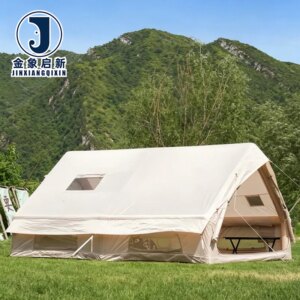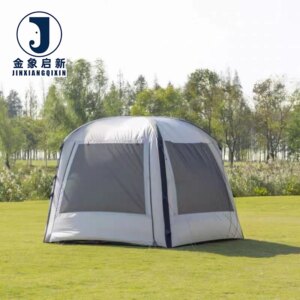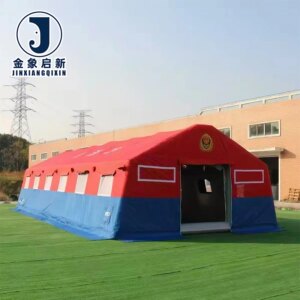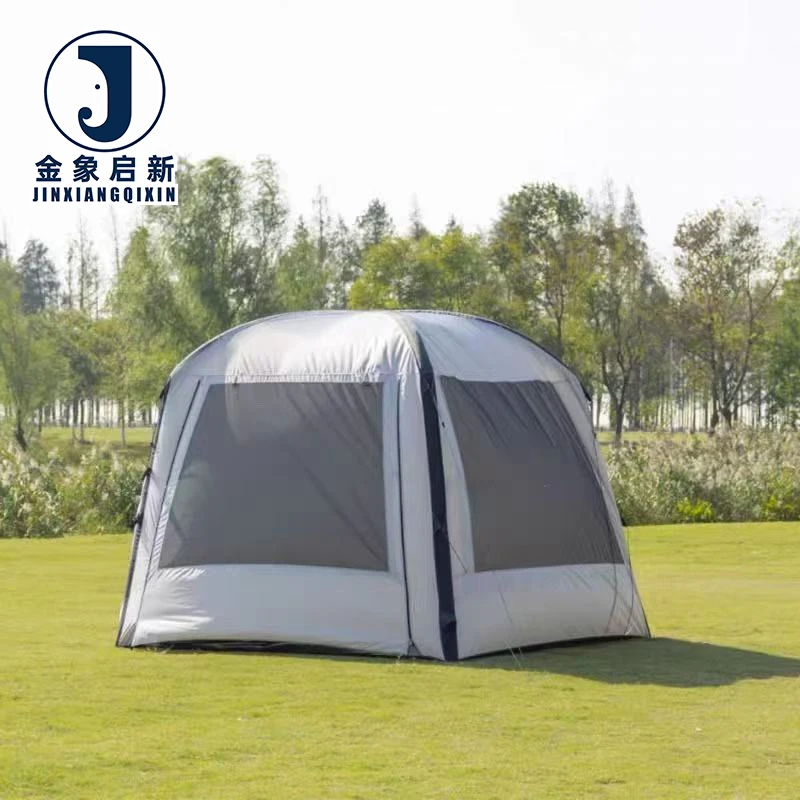

Description
Proven Process Control — Our dedicated QA/QC at every production stage ensures roll-to-roll batch consistency with 100% inspection before shipment, verified by pre-shipment inspection records for every inflatable tent fabric order.
Technical Specifications
| Parameter | Value |
|---|---|
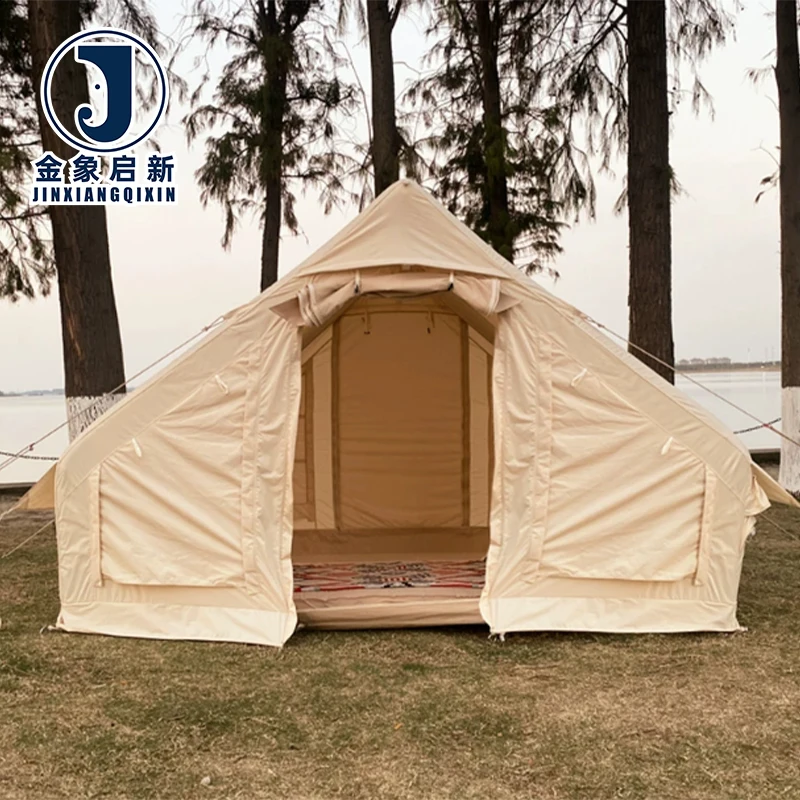
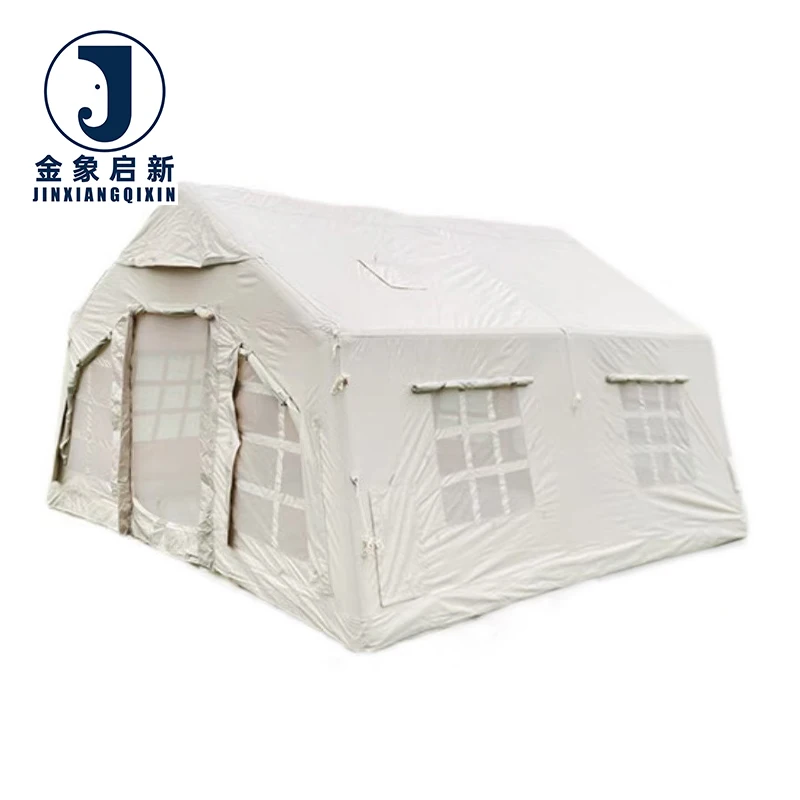
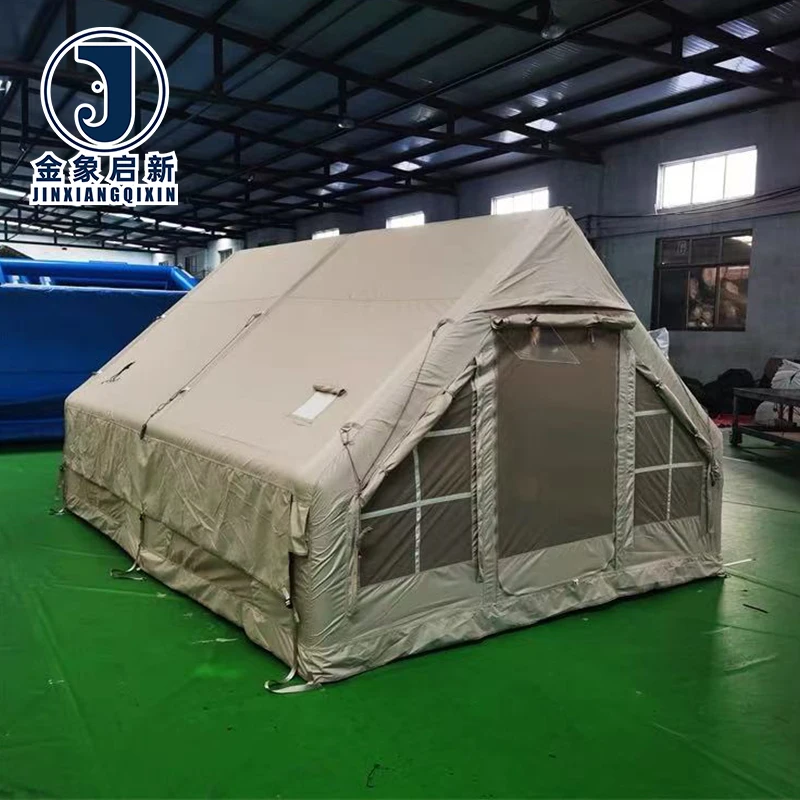
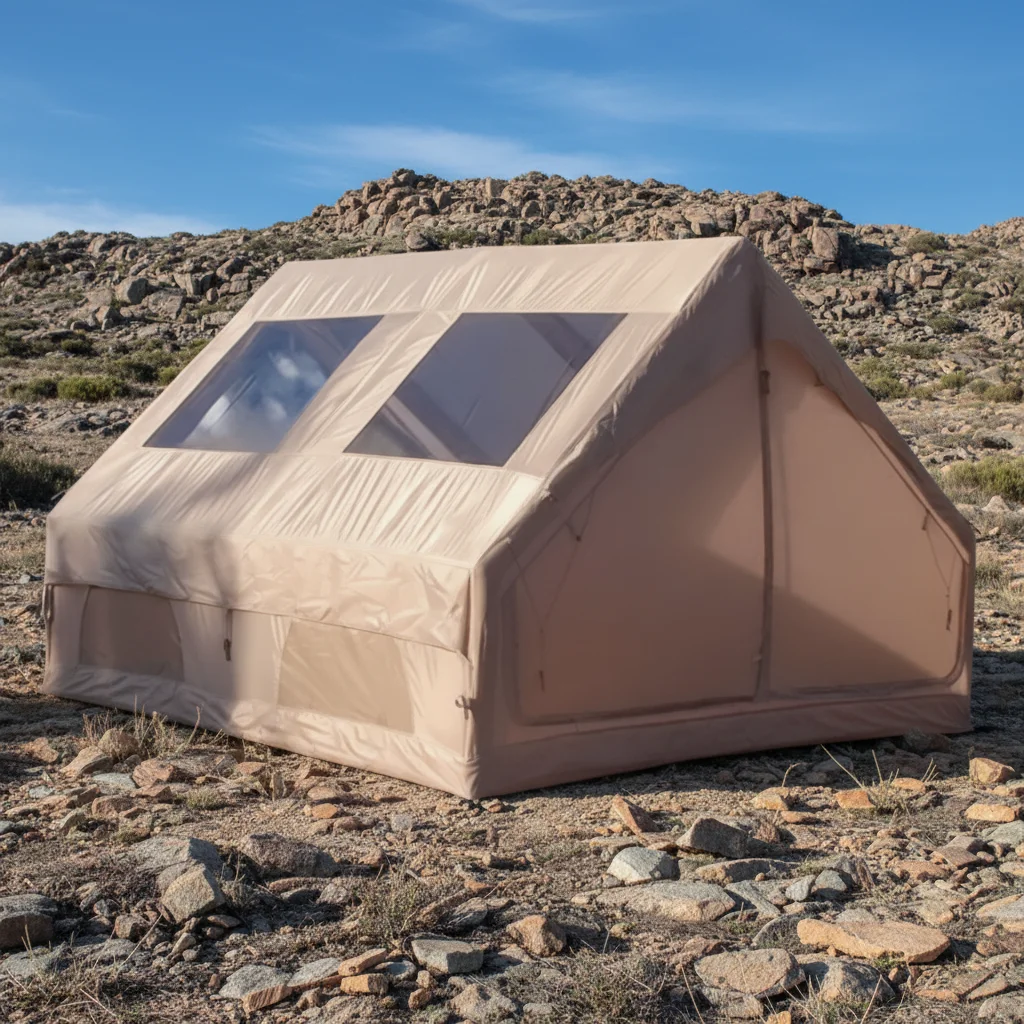
| Product Type | Inflatable tent |
| Core Material | PVC tarpaulin (PVC knife-coated fabric) |
| Key Performance | Waterproof, UV-resistant, tear-resistant, fire-retardant, anti-static |
| Fire Retardancy Standard | DIN 4102 B1 |
| Product Form | Inflatable structure with quick automatic opening |
| Customization Service | OEM & ODM (sample customization, pattern printing) |
| Wind Load Resistance | up to 12m/s |
| Pressure Retention | 72 hours without top-up |
| Material Thickness Tolerance | ±0.1mm |
| Seam Strength | 250N minimum |
| Air Leakage Rate | <0.5% per hour |
| Waterproof Rating | 1000mm water column |
| Hardware Durability | 500-cycle operation |
| Standards | ISO9001, ISO14001, ISO45001, CE, DIN 4102 B1 |
Application Suitability
| Application | Exposure & Requirement |
|---|---|
| Commercial camping ground operations | Continuous outdoor exposure, UV radiation, wind loads, frequent inflation cycles |
| Outdoor event facilities | Rapid deployment, high visibility, branding integration, temporary structural loads |
| Industrial temporary shelters | Harsh environments, fire safety compliance, heavy-duty abrasion resistance |
| Construction site accommodations | Dust, debris, moisture, mechanical impact, strict site safety regulations |
| Mobile exhibition spaces | Frequent transport, setup/teardown cycles, aesthetic finish requirements |
Why Inflatable Tent Fabric Consistency Matters More Than You Think
Batch-to-batch colour variation is the silent killer of large-scale inflatable tent projects.
When sourcing wholesale inflatable tent material for a commercial glamping site or a multi-unit event deployment, receiving rolls that look slightly different in the warehouse is one thing. Seeing that variation once the structures are inflated and standing side-by-side is a completely different, and far more expensive, problem. The human eye is exceptionally good at detecting subtle shifts in hue and saturation when large panels of PVC inflatable tent fabric roll are installed adjacent to one another. This is not a cosmetic issue that can be ignored; it directly impacts the perceived quality of the final installation and can lead to client rejection of an entire batch. I have seen projects where the fabricator had to re-order specific sections because the colour shift was visible from a distance, turning a profitable contract into a loss-making exercise [NEED_CITE: visual perception of colour variation in large-format PVC installations].
Controlling Roll-to-Roll Uniformity in PVC Inflatable Tent Fabric
Maintaining consistency across a bulk order of PVC inflatable tent fabric roll requires control at the raw material stage. The PVC knife-coated fabric used for inflatable structures must have uniform coating weight and adhesion across every linear meter produced. Any fluctuation in the plastisol viscosity or the coating head pressure will manifest as visible bands or streaks once the material is under tension in an inflated state. Our production process monitors these variables continuously, ensuring that the wholesale inflatable tent material you receive meets the visual and physical specifications agreed upon at the sampling stage.
The Role of Fire Safety in Material Selection
For any commercial or industrial application, the fire-retardant properties of the membrane are non-negotiable. The PVC inflatable tent fabric roll we supply is formulated to meet DIN 4102 B1, a standard widely recognized for building materials and temporary structures in many international markets. This is not just a marketing claim; it is a verifiable grade that affects how the material behaves when exposed to an ignition source, slowing flame spread and reducing smoke generation. Specifying material without a clear, test-backed grade like DIN 4102 B1 leaves the end-user exposed to liability and potential site shutdowns [NEED_CITE: DIN 4102 fire classification for temporary membrane structures].
Understanding the Air Retention Mechanics
The defining characteristic of an inflatable structure is its ability to hold pressure. The PVC knife-coated fabric must not only be strong but also dimensionally stable and have exceptionally low air permeability. Our material is engineered to support an airtight inflation system that maintains pressure for 72 hours without top-up, with an air leakage rate of less than 0.5% per hour. This performance is a direct result of the coating density and the integrity of the base fabric weave, which together prevent micro-leakage through the material body. When you buy PVC inflatable tent fabric roll for manufacturing, this inherent airtightness reduces the workload on blowers and improves the overall reliability of the final product.
Interpreting the Specifications for Inflatable Applications
The stated material thickness tolerance of ±0.1mm is critical for inflatable tent manufacturing because it directly influences the heat-welding parameters. If the thickness varies beyond this tight band, the welder will either burn through thinner sections or fail to achieve a full bond on thicker ones, leading to seam failures under pressure. The seam strength of 250N minimum is the benchmark that ensures the welded joints can withstand the internal pressure and external wind loads without peeling apart. Furthermore, the knife-coating process, as opposed to lamination, provides superior peel strength, meaning the PVC layer will not delaminate from the polyester base fabric even after repeated inflation cycles and exposure to temperature fluctuations. The base fabric denier and weave density work in concert with the coating to resist tear propagation; a small puncture will not rapidly unzip across the panel, which is vital for safety in occupied structures [NEED_CITE: tensile and tear test methods for coated fabrics per ISO 1421].
The Hidden Cost of Ignoring Seam and Weld Integrity
A common failure point in inflatable structures is not the fabric itself, but the welded seams. When the PVC inflatable tent fabric roll is not optimized for high-frequency or hot-air welding, the seams can become brittle or fail to fuse completely. This is often the result of incorrect plasticizer migration or incompatible coating formulations. If a seam fails while the structure is inflated, the resulting rapid deflation can cause the structure to collapse, posing a significant safety risk and leading to costly emergency repairs or replacements. Ensuring the wholesale inflatable tent material you procure is specifically designed for the welding method used on your production line is a critical step that is often overlooked until a failure occurs in the field.
Why Procure Your Inflatable Fabric Here
Our approach to manufacturing PVC inflatable tent fabric roll is built on nearly 30 years of focused experience with coated fabrics. The deep process control over coating weight and adhesion means you receive material that performs consistently in your welding and fabrication processes. Our three full production lines and 36 sets of professional equipment provide the capacity to handle bulk orders while maintaining the tight thickness tolerance of ±0.1mm. The 10-person R&D team is available to handle custom Pantone colour matching and pattern printing, developing samples within days to ensure the wholesale inflatable tent material meets your exact visual and technical requirements before full production begins. Every roll undergoes dedicated QA/QC at every production stage, culminating in a 100% pre-shipment inspection, so you can be confident in the batch consistency and certification compliance of your order.
Documentation & Verification
- Material specification sheet stating GSM, base fabric denier, and PVC coating weight per roll.
- DIN 4102 B1 fire-retardant test report accompanying the shipment for customs and site compliance.
- Roll packing list with unique batch numbers for full traceability and colour consistency checks.
- Pre-shipment inspection record detailing thickness, seam strength, and visual quality audit results.
- ISO9001 and CE certificates confirming the quality management system behind the production.
Fabrication, Handling & Storage
- Calibrate hot-air welders to the specific ±0.1mm thickness tolerance of this PVC knife-coated fabric.
- Store rolls vertically on pallets to prevent permanent creasing of the PVC inflatable tent fabric roll.
- Allow material to acclimatize to room temperature before unrolling to avoid cracking in cold conditions.
- Use compatible PVC-based adhesives and patches for field repairs on the knife-coated surface.
- Plan cutting layouts to maximize yield from the roll width and minimize waste at the weld seams.
Planning Your Inflatable Fabric Procurement
To ensure we supply the correct PVC inflatable tent fabric roll for your production needs, please provide details on your intended application and the specific environmental exposure the final structures will face. Let us know your target market’s fire safety or compliance requirements, such as the need for DIN 4102 B1 certification, and your required roll width and estimated annual volume. If you have specific Pantone colour references or require custom pattern printing, sharing these early allows our R&D team to prepare accurate samples for your approval before we proceed with the bulk order.
Frequently Asked Questions
Q: What customization options are available for the PVC inflatable tent fabric roll?
A: We offer full OEM and ODM services, including custom roll widths, Pantone colour matching, and logo or pattern printing. Our R&D team develops samples within days to confirm the visual and physical properties of the wholesale inflatable tent material before full-scale production begins.
Q: Does the material come with verifiable fire-retardant test reports?
A: Yes, the PVC inflatable tent fabric roll is formulated to meet DIN 4102 B1. We provide the corresponding test report with each shipment, which is essential for customs clearance and proving compliance with site safety regulations in your target market.
Q: How do you ensure colour consistency across a large bulk order?
A: Our dedicated QA/QC process monitors coating and colour parameters at every production stage. We conduct 100% inspection before shipment and provide a roll packing list with batch numbers, allowing you to verify the consistency of the PVC inflatable tent fabric roll upon arrival.
Q: Can you provide samples before I commit to a bulk order?
A: Absolutely. We strongly recommend sampling, especially for custom colours or specific welding requirements. Our team can produce samples of the PVC knife-coated fabric within days, allowing you to test heat-weld parameters and confirm the material suits your fabrication process.