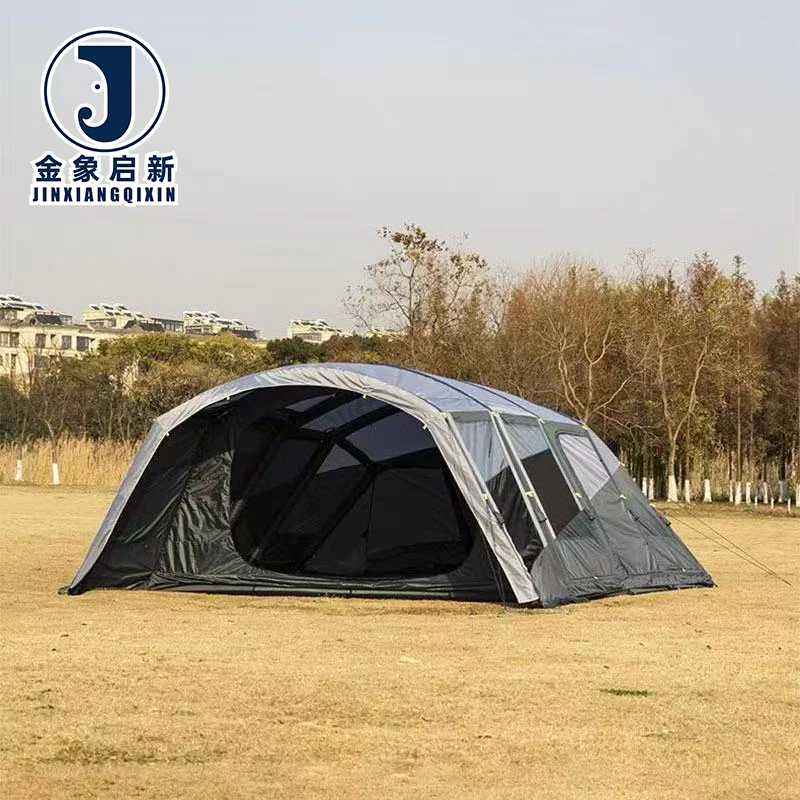
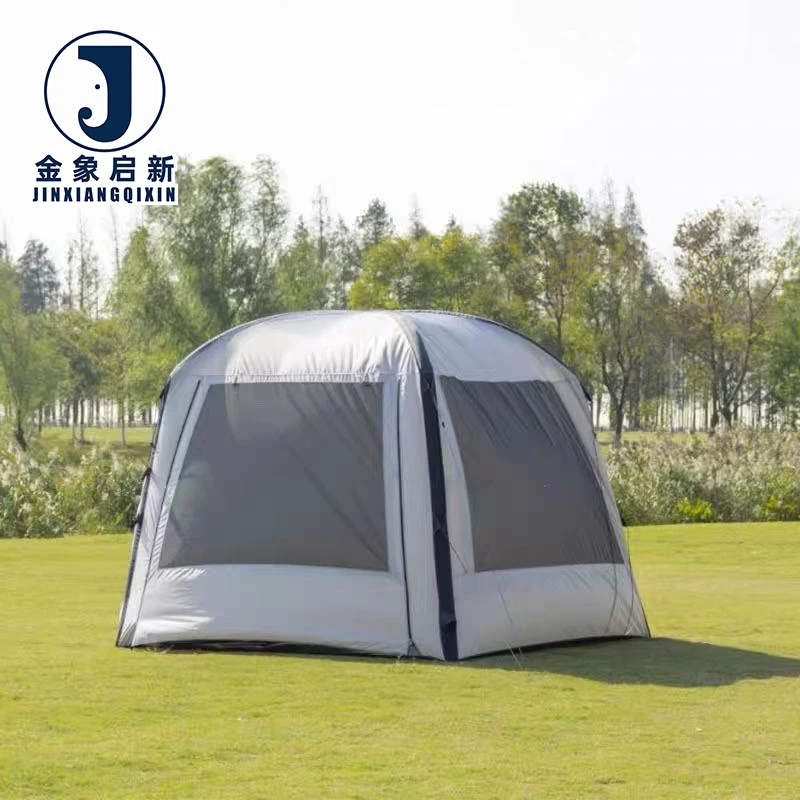
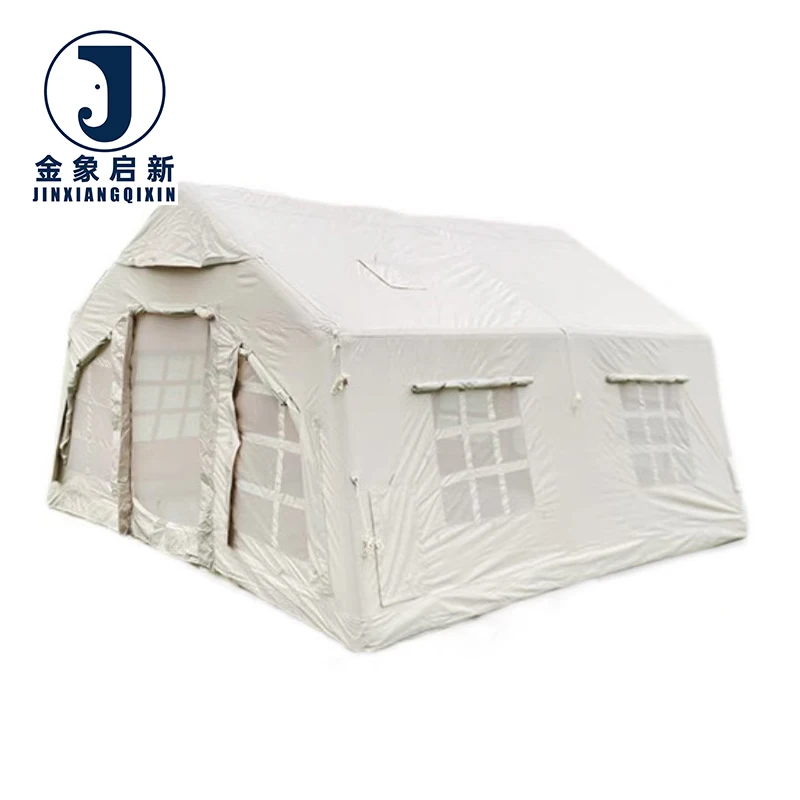
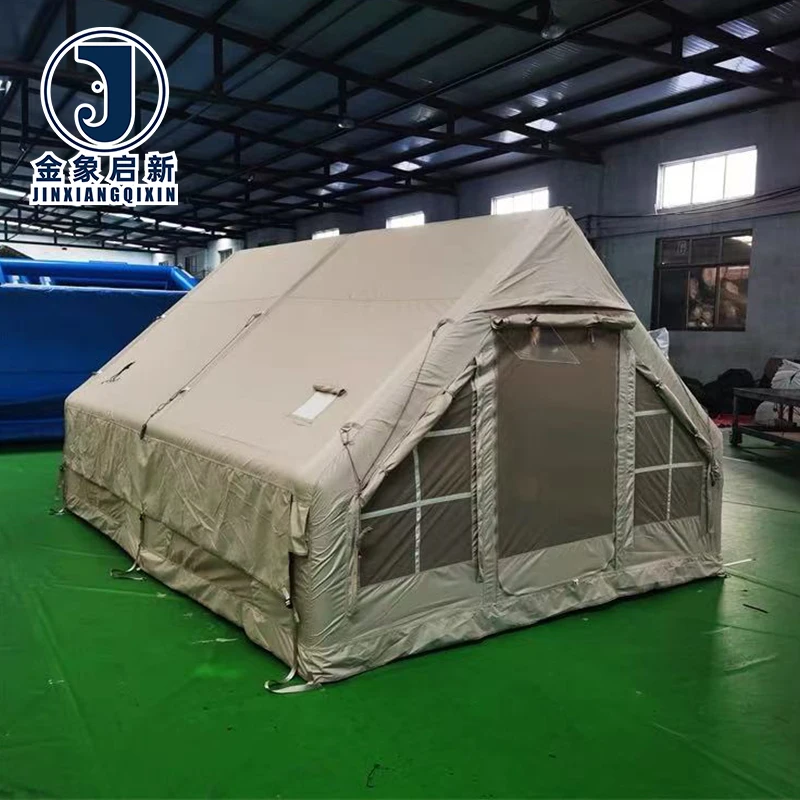
Description
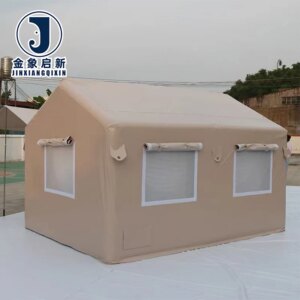
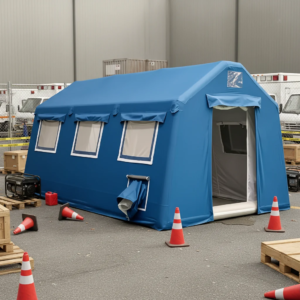
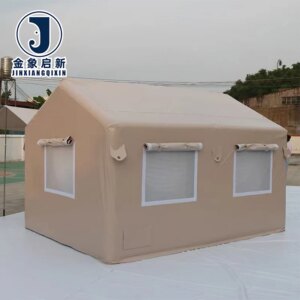
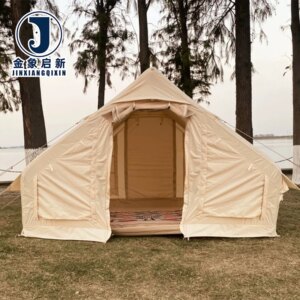
Batch Colour & Weight Integrity — Every roll undergoes weight verification and colour inspection at multiple production stages, ensuring inflatable tent units cut from the same batch deploy with uniform appearance across industrial staging areas.
Technical Specifications
| Parameter | Value |
|---|---|
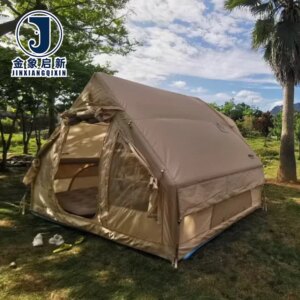
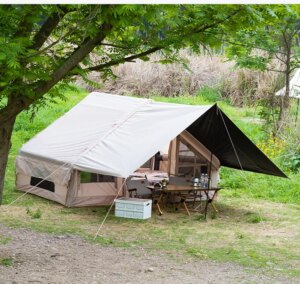
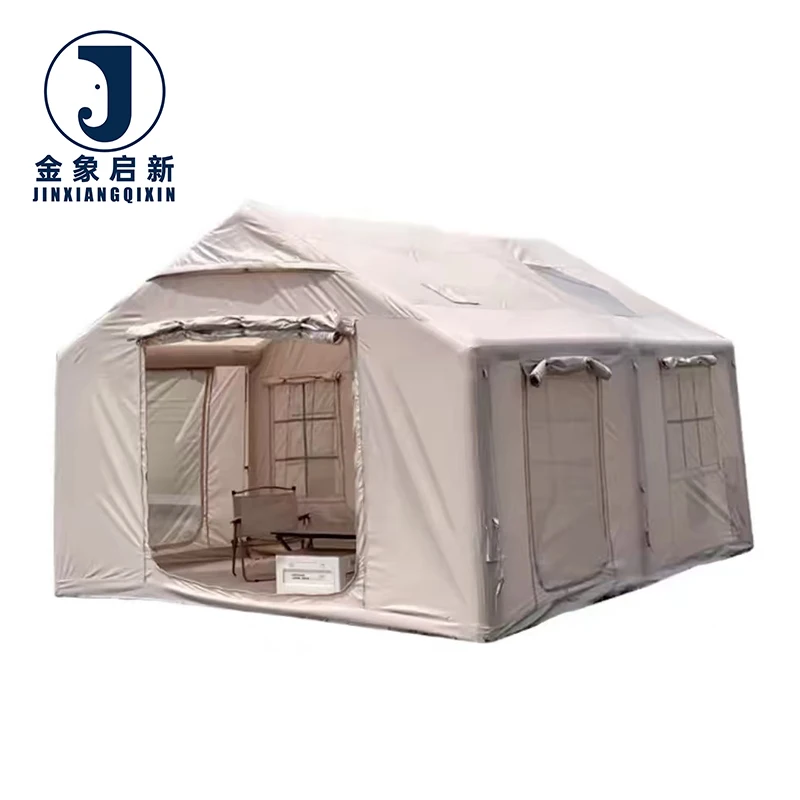
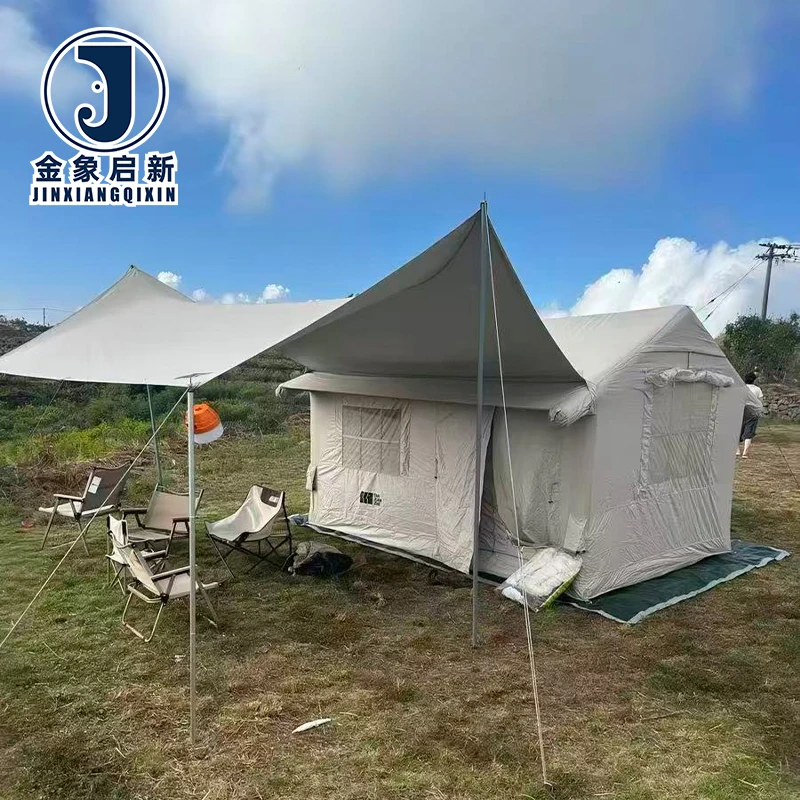
| Product Type | Inflatable Tent |
| Core Material | PVC tarpaulin |
| Capacity | 3–5 person |
| Construction | Single layer |
| UV Protection | Available — confirm test basis required for your market |
| Inflatable System | Automatic inflation mechanism |
| Seasonal Rating | Four-season |
| Customization | OEM & ODM, sample development, pattern printing |
| Certifications | ISO9001, ISO14001, ISO45001, CE |
Application Suitability
| Application | Exposure & Requirement |
|---|---|
| Disaster relief staging | Rapid deployment, wind loading, repeated inflation cycles, UV exposure across seasons |
| Construction site temporary shelters | Dust and debris impact, site chemical contact, ground moisture, temperature fluctuation |
| Logistics hub emergency storage | Forklift and pallet contact, sustained roof loading, weather exposure during distribution |
| Industrial mobile command centers | Generator proximity heat, electrical cabling pass-throughs, extended occupancy comfort |
Why Batch Inconsistency Destroys Multi-Unit Inflatable Tent Deployments
Colour variation and unverified weight across an order force on-site sorting and partial rejection — problems that surface only after tents are inflated and placed side by side.
When a procurement team orders twenty inflatable tents for a regional disaster relief network, the specification sheet states one colour and one GSM. If rolls feeding the production run were coated in separate batches without inter-batch colour reconciliation, the finished tents reveal banding and shade shifts the moment they are lined up at a staging ground. Weight deviation between rolls also changes inflation behaviour: lighter units pressurise faster but stretch more at seam junctions, heavier units resist deformation yet stress the blower motor. [NEED_CITE: ISO 1421 tensile and tear test methods for coated fabrics] These inconsistencies are invisible in a single sample tent approved weeks before bulk production.
Colour Matching and Roll-to-Roll Traceability
Each roll feeding the inflatable tent production line is assigned a coating batch number tied to the dye lot. The 10-technician R&D team reviews spectrophotometer readings before rolls enter the cutting zone. When an order spans multiple coating runs, cross-batch panels are cut and compared under standardised illumination before full release. This discipline prevents the visible banding that appears when adjacent tent walls originate from different dye lots.
Structural Integrity Under Inflation Pressure
Automatic inflation subjects every welded seam to sustained internal pressure, concentrating stress at corners and valve attachment points. The single-layer PVC tarpaulin construction relies on coating adhesion and base fabric tensile balance to distribute that load evenly. Rolls with inconsistent coating weight produce seams that behave differently from one tent to the next, creating unpredictable failure patterns under wind gusts or snow accumulation. Dedicated QA and QC staff inspect seam peel strength at defined intervals throughout each production run. [NEED_CITE: peel strength test methods for coated fabric seams per ISO 2411]
Coating Weight and Base Fabric Balance
Inflatable tent fabric must balance coating mass against base fabric denier to maintain both air-holding integrity and pack weight. A heavier coating improves abrasion resistance during ground contact but adds dead weight that increases blower cycle duration. The base fabric weave density determines how well the coating locks into the yarn structure — a loose weave allows coating migration during thermal welding, weakening the bond at seam lines. Understanding this relationship lets fabricators select the correct specification rather than defaulting to the highest GSM available.
Thermal Welding Behaviour Across Production Runs
Single-layer PVC tarpaulin is joined primarily by high-frequency or hot-air welding. Coating formulation and plasticiser content dictate the temperature window where the coating melts and fuses without degrading the base yarn. Rolls produced with slight formulation drift require weld parameter adjustment; if the operator runs a fixed temperature, some panels develop brittle welds while others remain under-fused. Pre-production weld trials on each incoming roll eliminate this variable before tent panels are cut. [NEED_CITE: high-frequency welding parameters for PVC coated polyester]
Specification Gaps That Surface After Deployment
Procurement specifications often state a target GSM and a colour reference but omit coating adhesion minimums and weld peel-strength acceptance criteria. The result is a tent that passes incoming inspection on weight and shade yet fails in the field when seams delaminate under sustained inflation pressure. Batch weight records that show roll-level deviation from the stated specification allow buyers to reject outlier rolls before they enter production, avoiding costly field replacements and emergency re-orders during active deployment.
The Cost of Undocumented Batch Variation
When an order ships without roll-level weight records or dye-lot traceability, any field failure triggers a full-order investigation. Sorting tents by shade after delivery delays deployment, and replacing units with mismatched colour disrupts the visual uniformity required at high-visibility staging sites. Weld failures linked to unrecorded coating formulation shifts force the buyer to absorb return freight and re-certification costs. Documenting every roll before production begins eliminates these downstream expenses. [NEED_CITE: supply chain traceability requirements for technical textiles in emergency procurement]
Why Jinxiang Supports Reliable Inflatable Tent Procurement
Three full production lines and 36 sets of processing equipment enable simultaneous cutting, welding, and inspection across multiple tent orders without queuing delays. The 10-technician R&D team develops material samples within days, allowing buyers to verify colour, weight, and weld behaviour before committing to bulk. A dedicated QA and QC presence at every production stage — from incoming roll inspection through pre-shipment verification — ensures the specification on the quotation matches the fabric in the container. ISO9001, ISO14001, ISO45001, and CE certifications underpin the quality system, and all supporting documentation ships with each dispatch.
Documentation & Verification
- Material specification sheet confirming PVC base fabric, coating weight, and colour reference per roll
- UV and flame-retardant test reports supplied where applicable to the specified grade
- Pre-shipment inspection record documenting weight and visual checks on every finished tent unit
- ISO9001, ISO14001, ISO45001, and CE certificates included in the dispatch documentation package
- Roll packing list with dye-lot traceability linking each tent to its source coating batch
- Certificate of origin and customs documentation prepared for destination-country clearance
Fabrication, Handling & Storage
- Weld temperature must be matched to the specific PVC coating formulation of each roll batch
- Store rolled PVC tarpaulin vertically in climate-controlled areas to prevent flat-spot compression marks
- Avoid folding single-layer construction at the same crease line repeatedly to prevent coating fracture
- Use PVC-compatible cleaners only; solvent-based agents may soften the coating and reduce weld strength
- Inflate and inspect each tent within a short window after delivery to verify seam and valve integrity
- Pattern-printed panels require protected stacking to prevent ink transfer between adjacent surfaces
Preparing Your Inflatable Tent Specification Request
To move from inquiry to sample approval efficiently, share the deployment environment — including expected temperature range, wind loading, and ground conditions — along with your target market’s fire-safety or compliance requirements. Indicate whether you need finished tent units or PVC tarpaulin roll stock for your own fabrication line, and specify any pattern printing, dimension adjustments, or colour references required. Requesting a pre-production sample lets your team validate material feel, weld behaviour, and inflation characteristics before bulk commitment.
Frequently Asked Questions
Q: How is batch colour consistency controlled across multiple inflatable tent units in a single order?
A: Each roll is assigned a dye-lot number, and cross-batch panels are compared under standardised lighting before cutting proceeds. Spectrophotometer readings are recorded at the coating stage and again at pre-shipment inspection. This traceability ensures that every tent in the order originates from matched batches, eliminating visible shade variation when units are deployed side by side at a staging site.
Q: What UV protection test basis supports the outdoor durability claim?
A: UV protection is available in multiple grades depending on market requirements. The specific test standard and exposure duration must be confirmed at the inquiry stage so the correct additive package is incorporated during coating. We supply the corresponding test report with the shipment when a graded treatment is specified on the purchase order.
Q: What customization options are available for dimensions, printing, and material selection?
A: OEM and ODM services cover dimension adjustment, PVC formulation selection, and pattern printing on tent panels. The 10-technician R&D team develops a physical sample within days for approval before bulk production begins. Buyers can specify exact panel sizes, colour references, and printed graphics to match branding or site-identification requirements.
Q: What documentation is provided for customs clearance and compliance verification at destination?
A: Each shipment includes a material specification sheet, roll packing list with dye-lot traceability, pre-shipment inspection record, certificate of origin, and copies of ISO9001, ISO14001, ISO45001, and CE certificates. Where fire-retardant or UV test reports apply, they are appended to the documentation package to satisfy destination-country regulatory review.
Q: How are welded seams tested to ensure they withstand inflation stress and load flexing?
A: Seam peel strength is measured at defined intervals during each production run using standardised test methods. Weld parameters are adjusted per roll batch to account for coating formulation variation, and finished seams undergo visual and mechanical inspection before the tent is packed. Any unit with seam readings below the acceptance threshold is segregated and reworked before dispatch.