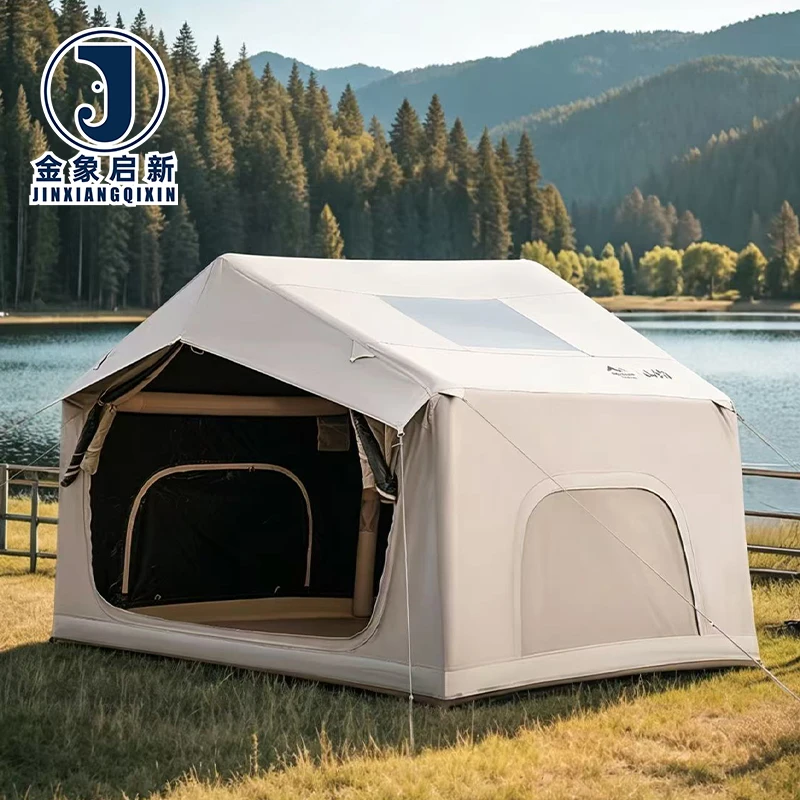
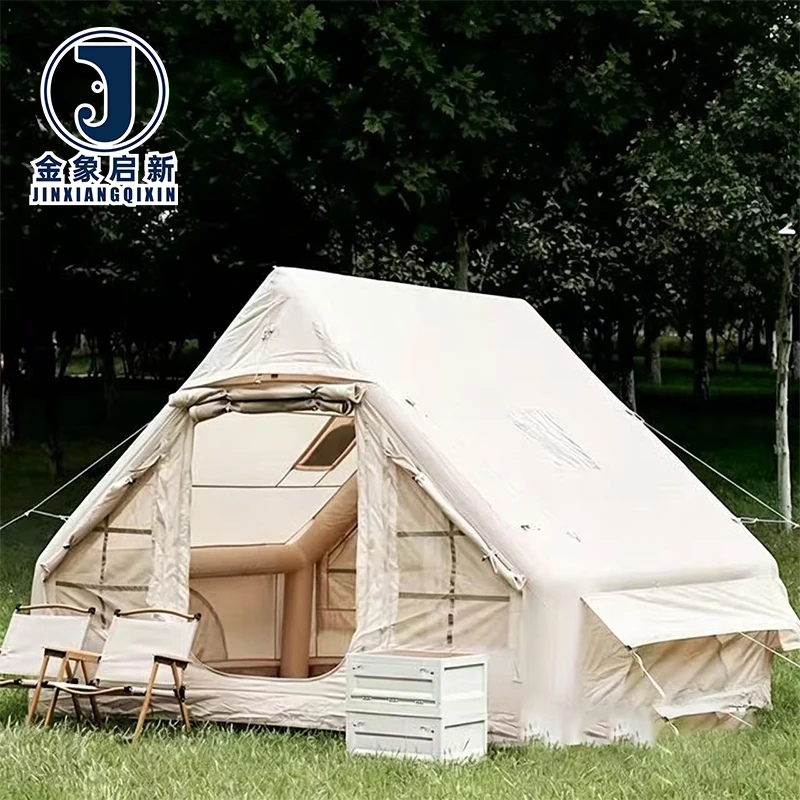
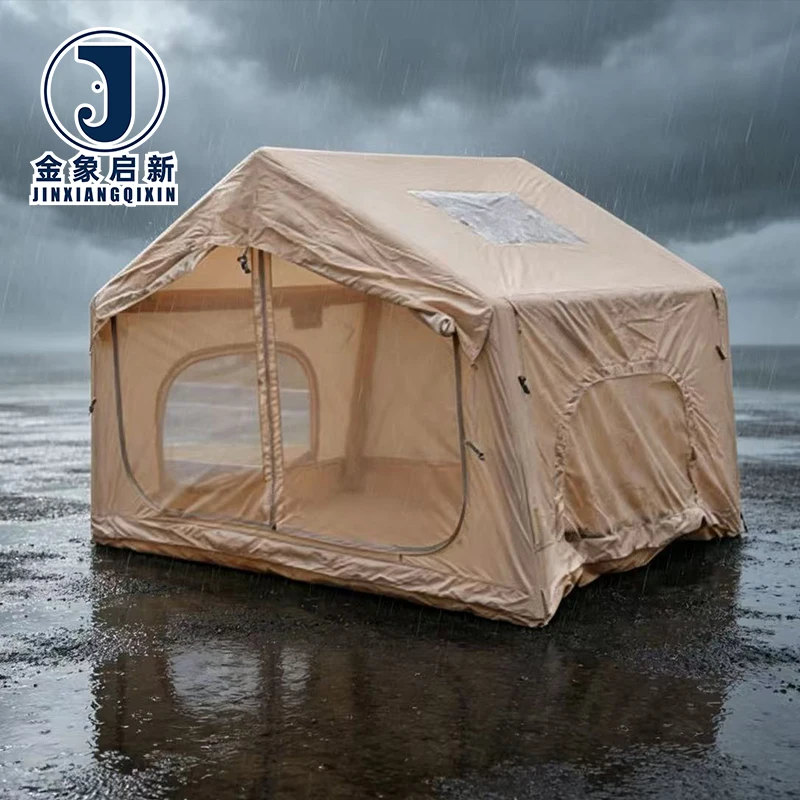
Description
Consistent Roll Output — Strict in-process QA and colour control across production runs keep inflatable tent fabric uniform from the first roll to the last in a container order.
Technical Specifications
| Parameter | Value |
|---|---|
| Product Type | Inflatable Tent |
| Core Material | PVC tarpaulin |
| Waterproof Construction | Fully coated, impermeable barrier |
| UV Resistance | UV-resistant treatment available — confirm grade required for your market |
| Tear Resistance | High tear-resistant PVC coated fabric |
| Fire Retardancy | Fire-retardant grades available — confirm certification required for destination market |
| Anti-Static Property | Anti-static options available — confirm standard required for your application |
| Season Rating | 4 Season |
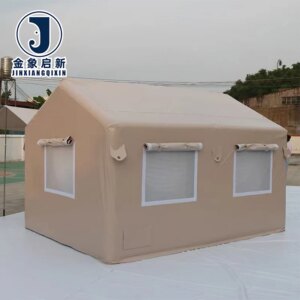
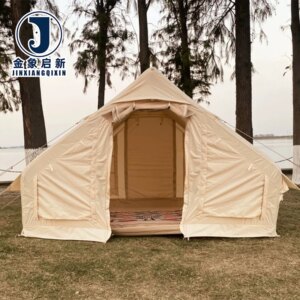
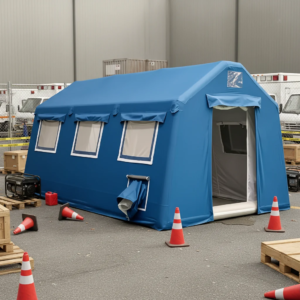
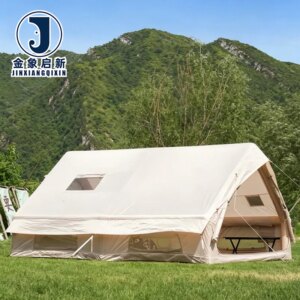
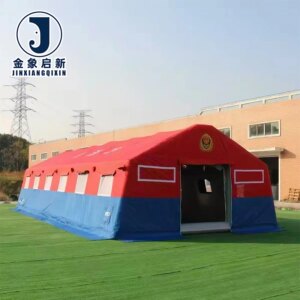
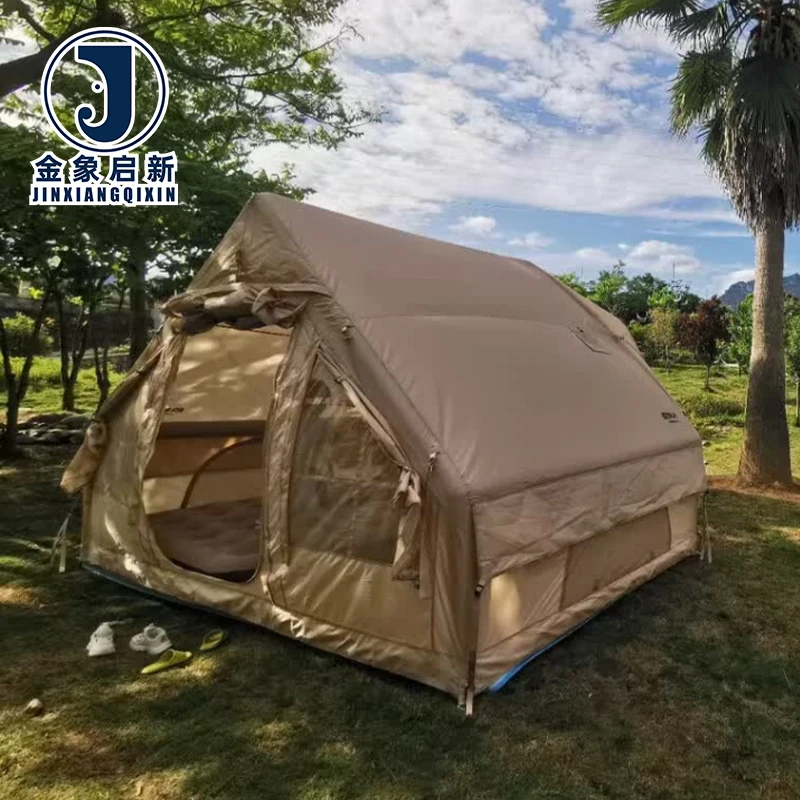
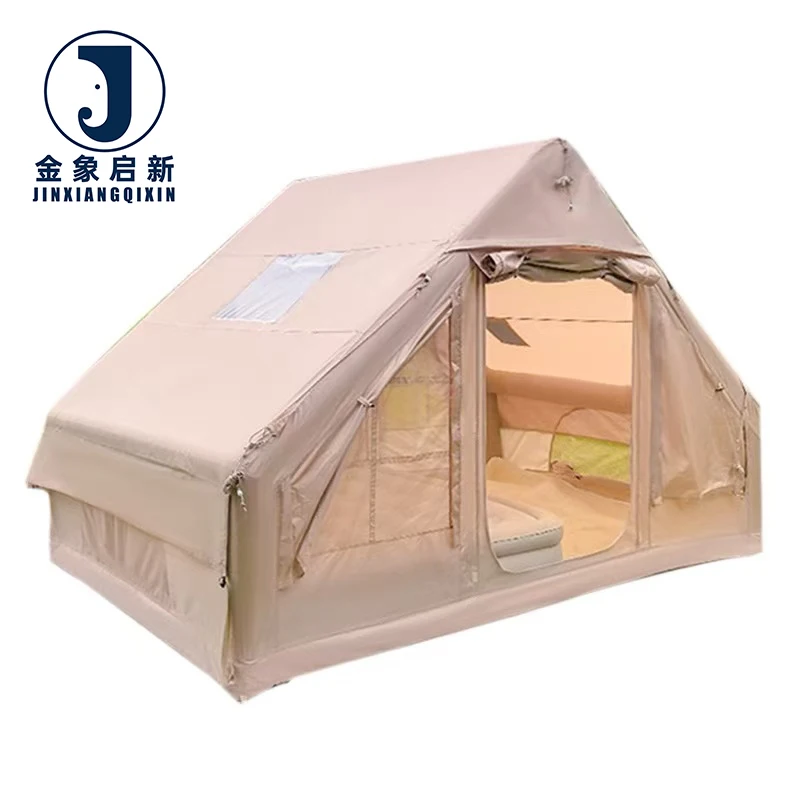
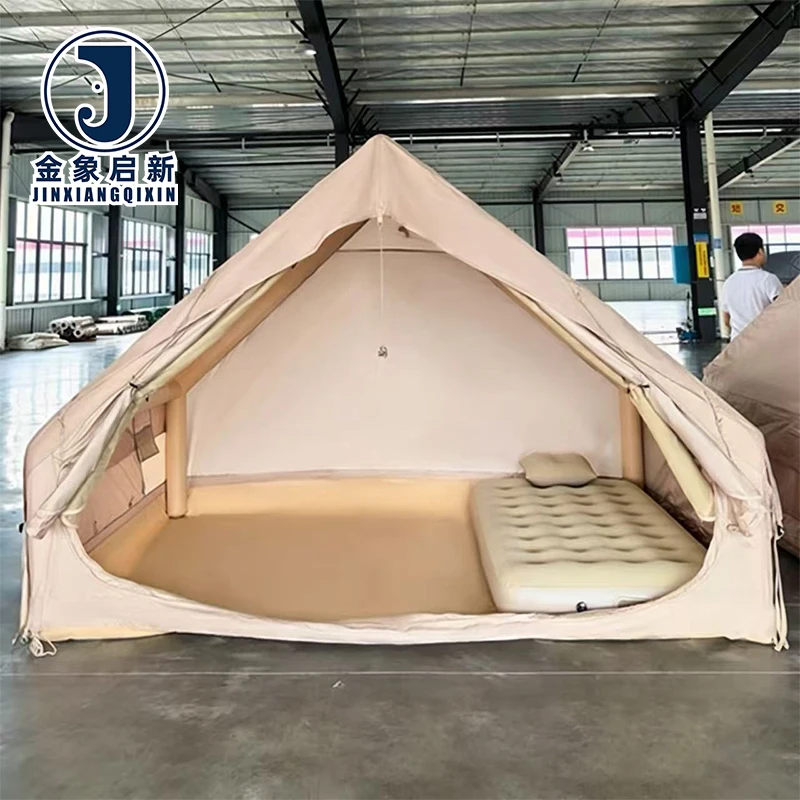
| Capacity Reference | 8-10 Person inflatable tent structures |
| Customisation | OEM & ODM, sample customisation, pattern printing |
| Quality System | ISO 9001, ISO 14001, ISO 45001, CE |
| Production Support | 3 full production lines, 36 sets of processing equipment |
Application Suitability
| Application | Exposure & Requirement |
|---|---|
| Commercial inflatable camping tent manufacturing | Repeated inflation cycles, internal air pressure stress, multi-season weather exposure |
| Outdoor event shelter production | High wind load on inflated beams, UV exposure during extended setups, crowd proximity fire safety |
| Temporary site accommodation units | Abrasion from ground contact, temperature swings, requirement for rapid deployment and deflation |
| Large-scale outdoor gear components | Panel cutting from roll stock, heat-welded seam integrity, batch colour matching across production runs |
| Inflatable structure fabric for distributors | Container-volume procurement, roll-to-roll consistency, reliable reordering of identical grades |
Why Roll-to-Roll Colour Drift Matters in Inflatable Tent Fabric
Batch colour variation is a cutting-room problem, not a shelf problem — it only shows once panels from different rolls are welded side by side on the factory floor.
When a tent manufacturer sources inflatable tent fabric roll stock from suppliers without tight in-process colour control, the defect stays invisible through receiving inspection. Rolls look similar in the warehouse. The problem surfaces during panel cutting and welding, where a lighter roll placed next to a darker one creates a visible seam line on the finished inflatable beam or roof panel. [NEED_CITE: colour measurement standards for coated textiles per ISO 105 series] The entire batch may need re-sorting or the affected panels scrapped, delaying production schedules and eroding margin on what should have been a straightforward container order.
Maintaining Colour and Weight Consistency Across Bulk Orders
Colour consistency in PVC coated fabric starts at the compounding stage, where pigment dispersion and plasticiser ratios must remain stable from one mix to the next. For inflatable tent fabric roll orders filling a full container, even minor formulation drift between batches produces visible shade differences under natural light. Our production protocol locks the colour reference at the sampling stage and monitors it against approved standards at each coating pass, so that the first roll and the last roll in a batch match when unrolled side by side.
Stock Grades, Widths, and Container Loading for Volume Buyers
Inflatable tent fabric wholesale buyers need to plan container loads around roll dimensions, weight per roll, and usable width for their panel-cutting patterns. Wider rolls reduce the number of welded seams on large tent panels, improving both production speed and structural integrity of the inflated beams. We supply standard stock grades in widths suited to tent manufacturing cutting plans, with roll lengths optimised for container loading efficiency. [NEED_CITE: container load planning parameters for coated fabric rolls]
Reading the Specification Sheet Beyond the GSM Number
GSM alone tells you what the fabric weighs, not how it will behave under the cyclic stress of inflation and deflation. The base fabric denier and weave density determine how the material resists tear propagation once a puncture occurs — a critical factor for inflatable beam structures that carry internal air pressure. The PVC coating method, whether knife-over-roll, laminating, or calendering, directly affects the bond strength between coating and base fabric, which governs how well heat-welded seams hold up at flex points. A heavier coating applied over a loosely woven base may give a high GSM reading but poor peel strength at the weld line, while a lighter coating on a tight high-denier weave can outperform it in both tensile and tear tests. Surface finish selection — glossy or matte — influences how well printed branding adheres and how the fabric sheds dirt during outdoor use. For markets with fire safety regulations, the flame-retardant grade must align with local building or temporary structure codes, as different regions specify different test standards. [NEED_CITE: flame retardant classification systems for temporary structures and tents]
The Hidden Cost of Specifying on Price Per Roll Alone
A fabric that arrives below the quoted GSM may pass visual inspection but fail when the inflatable tent is pressurised for the first time in cold weather, where the thinner coating becomes brittle at the weld seam. Rolls that lack verifiable fire-retardant test documentation can halt a project at the site inspection stage, leaving finished tents stranded in the warehouse. [NEED_CITE: site compliance failures linked to missing material certification] Colour mismatch discovered mid-production forces manufacturers to either re-cut from matching rolls at a material loss or ship tents with visible panel variation that triggers buyer rejection at the retail level.
What This Supply Base Delivers for Roll Buyers
Coating weight and adhesion are controlled through nearly 30 years of focused PVC coated fabric production, giving volume buyers confidence that the GSM on the quotation matches the fabric on the pallet. Three full production lines and 36 sets of professional equipment support the output volume needed to fill container orders within agreed lead times. A 10-person R&D team handles custom width, colour matching, and pattern printing requests, developing samples in days rather than weeks. Dedicated QA and QC personnel inspect every roll before shipment, catching weight deviation and surface defects before they leave the factory. Production runs are tracked with batch-specific records, so reorders match the original supply without specification drift.
Documentation & Verification
- Material specification sheet confirming PVC base fabric denier, coating weight, and colour reference for each roll batch
- Test reports for UV stability and fire-retardant grades supplied with the relevant order documentation
- Pre-shipment inspection record verifying roll-by-roll GSM and surface quality before container loading
- Roll packing list detailing roll count, individual weight, and dimensions for logistics planning
- Certificate of origin and customs documentation supporting smooth import clearance at destination
Fabrication, Handling & Storage
- Heat welding parameters must be calibrated to the PVC coating thickness to achieve full peel strength at beam seams
- Store rolls upright on pallets in covered areas to prevent flat-spot deformation of the coated surface
- Allow cold-stored rolls to acclimatise before unrolling to avoid cracking the PVC coating at low temperatures
- Use compatible PVC adhesive for field repairs on inflated structures to maintain bond integrity
- Plan panel nesting on roll width to minimise offcut waste during tent beam and roof panel cutting
- Clean with mild detergent only; solvent-based cleaners may degrade the PVC surface finish
Planning Your Inflatable Tent Fabric Order
Tell us the target tent capacity, the climate conditions the finished product will face, and any fire-retardant or anti-static standards your destination market requires. Specify the roll width that matches your cutting table and the annual volume you plan to source, so we can align production scheduling and pricing tiers accordingly. If custom colour or printed branding is needed, request a sample roll section first to confirm the shade and print adhesion before committing to a full container order.
Frequently Asked Questions
Q: How is roll-to-roll colour consistency controlled across a container order?
A: Colour reference is locked at the sampling stage using approved standards. Pigment dispersion and coating formulation are monitored at every production pass. Pre-shipment inspection includes visual comparison of rolls from the beginning, middle, and end of the batch under controlled lighting before container loading is approved.
Q: What width and roll length options are available for inflatable tent panel cutting?
A: Standard stock grades are supplied in widths suited to commercial tent manufacturing cutting patterns, with roll lengths configured for efficient container loading. Custom widths can be developed through our R&D team. Contact us with your panel dimensions to determine the most material-efficient roll specification for your production line.
Q: How is GSM verified when the fabric arrives?
A: Each roll batch is accompanied by a material specification sheet stating the confirmed GSM, base fabric denier, and coating type. Pre-shipment inspection records document weight verification per roll before dispatch, providing traceable evidence that the fabric delivered matches the specification quoted.
Q: What are the lead times and minimums for custom printed inflatable tent fabric?
A: Sample development for custom patterns and colours is typically completed within days. Minimum order quantities and lead times depend on the print complexity and roll volume required. Provide your artwork and target quantity for a specific production schedule and sample timeline.
Q: How do you plan container loading for bulk roll orders?
A: Each order ships with a detailed roll packing list specifying roll count, individual roll weight, and overall dimensions. Container loading plans are prepared in advance so buyers can verify that the roll configuration matches their warehouse handling equipment and storage capacity at destination.