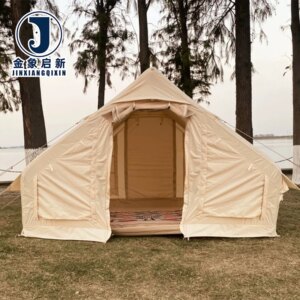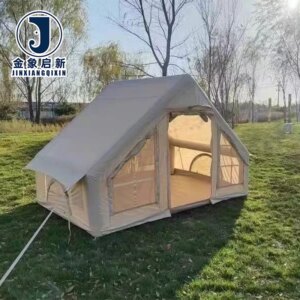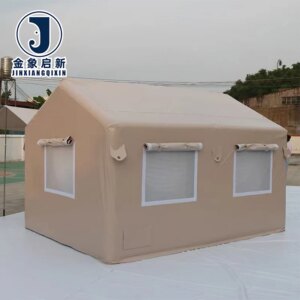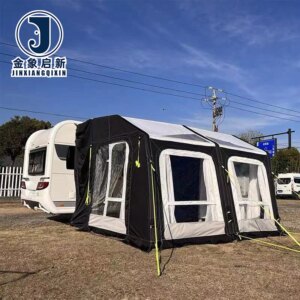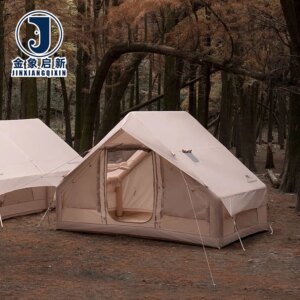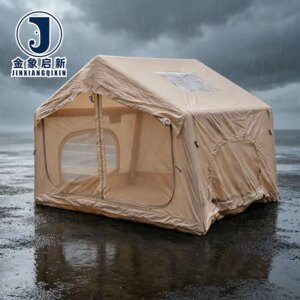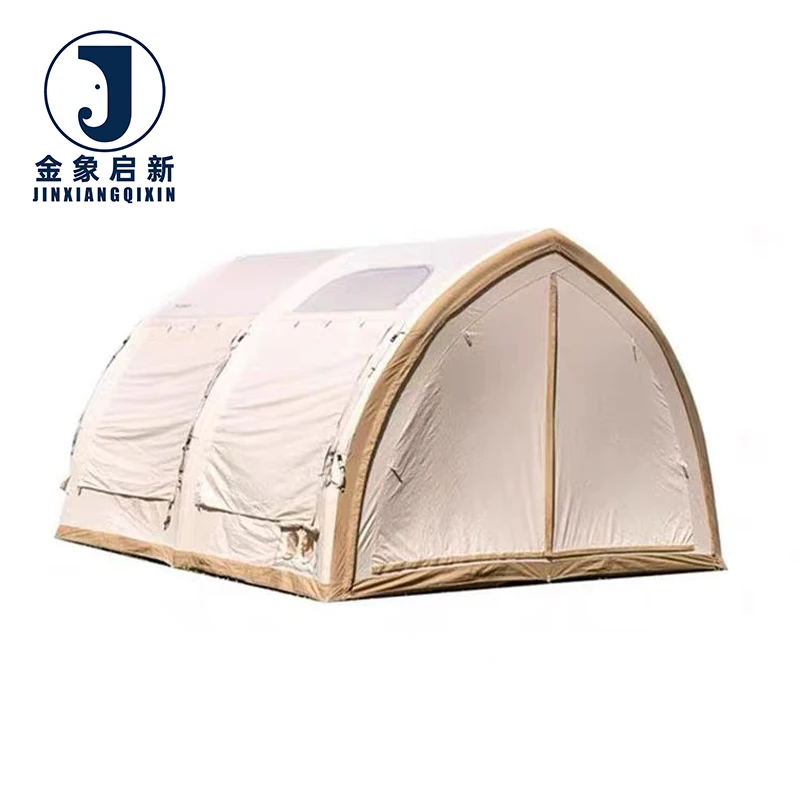
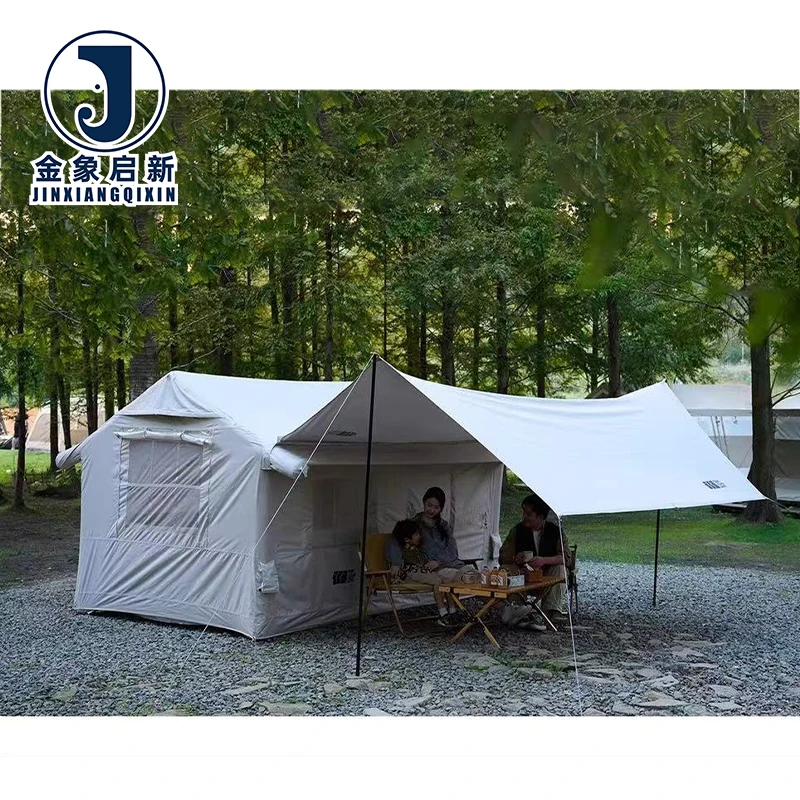
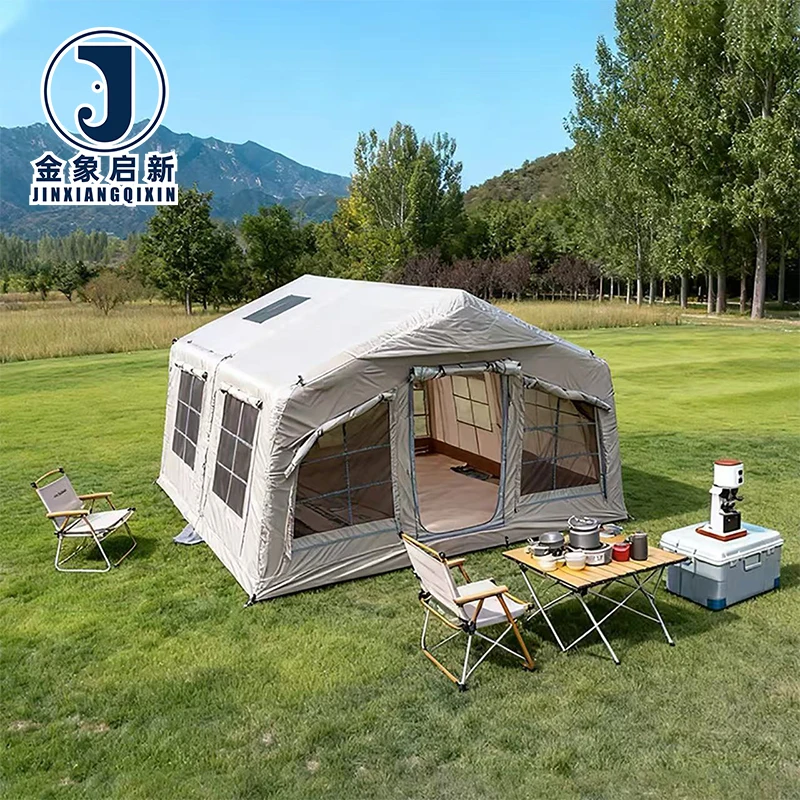
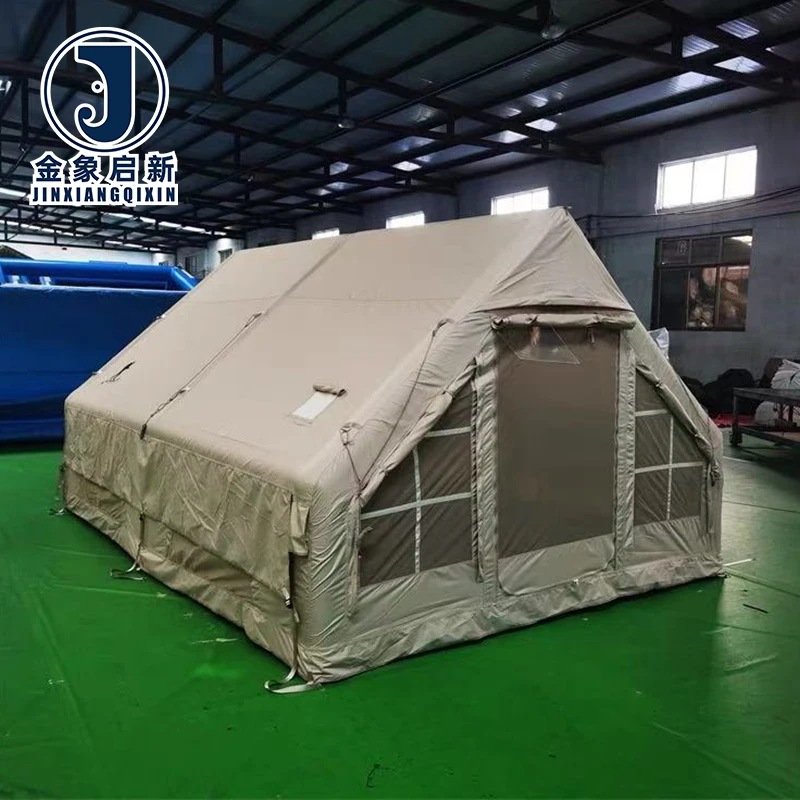
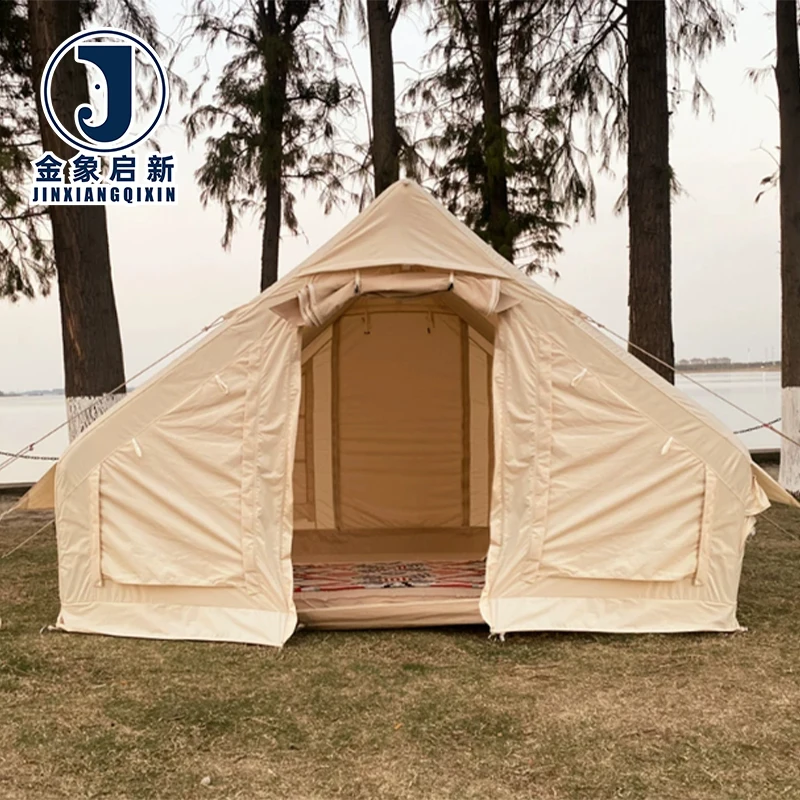
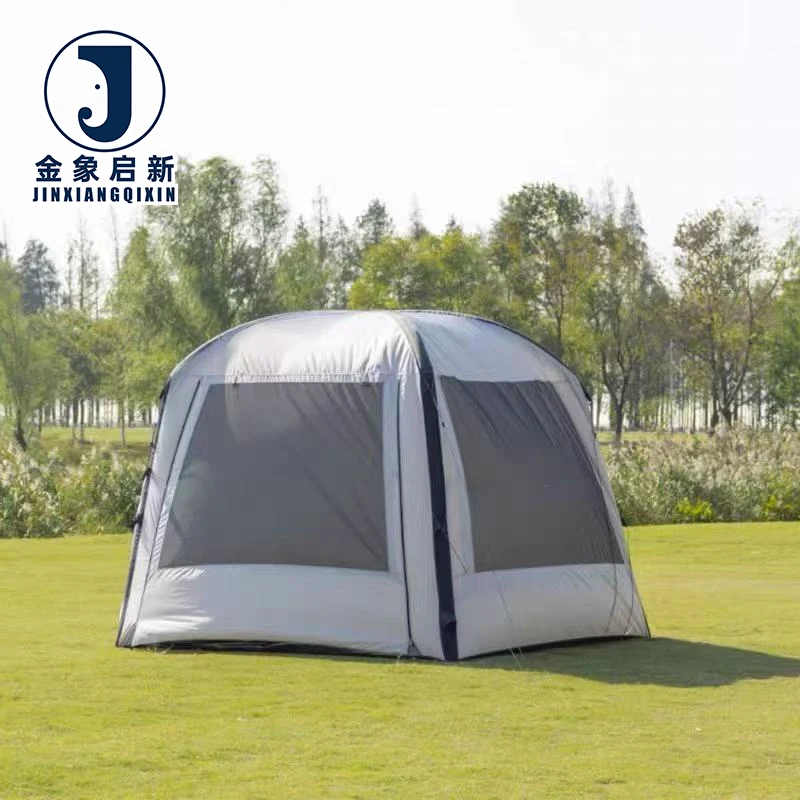
Description
Roll-to-Roll Consistency — every batch of PVC knife-coated inflatable tent fabric is inspected for GSM, colour and coating adhesion before container loading, eliminating the variance that causes visible mismatches on installed structures.
Technical Specifications
| Parameter | Value |
|---|---|
| Product Type | Inflatable tent |
| Core Material | PVC tarpaulin (PVC knife-coated fabric) |
| Product Forms | Inflatable structure with automatic opening mechanism |
| Waterproof | Fully waterproof coated construction |
| UV Treatment | UV-resistant (test basis not stated in source — confirm the UV grade required for your market) |
| Flame Retardant | Fire-retardant (grade not stated in source — confirm the grade required for your market) |
| Anti-Static | Anti-static (standard/resistance not stated in source — confirm certification required for your site) |
| Tear Resistance | Tear-resistant (test standard not stated in source — request specific test report) |
| Construction | Single layer |
| Design | Extended type |
| Customization | OEM & ODM (sample, pattern printing, material selection, product design) |
| Standards | ISO9001, ISO14001, ISO45001, CE |
Application Suitability
| Application | Exposure & Requirement |
|---|---|
| Temporary site command centers | Rapid deployment, all-weather exposure, repeated inflation cycles |
| Equipment storage shelters during disaster recovery | Prolonged outdoor UV exposure, wind loading, moisture ingress risk |
| Mobile maintenance workshops | Interior workspace lighting, chemical splash contact, floor abrasion |
| Emergency logistics hubs | High-frequency assembly and teardown, forklift and pallet contact |
| Four-season emergency disaster relief | Temperature cycling, snow load, sustained inflation pressure |
Why Colour Drift Across Rolls Wrecks an Inflatable Shelter Deployment
Batch-matched production runs ensure inflatable tent fabric roll stock arrives with uniform colour and weight across every unit in the order.
When a disaster relief agency orders PVC inflatable structure fabric wholesale for a regional deployment, even a slight shade difference between rolls becomes obvious once the tents stand side by side in the field. The procurement team then faces a choice: accept the mismatch and field complaints, or reject the batch and delay the entire operation. This problem originates at the coating stage — pigment dosing, mixer residence time and oven temperature all shift from run to run if process controls are loose. [NEED_CITE: colour measurement standards for coated textiles per ISO 105 series]
Controlling Shade Variance at the Coating Line
PVC inflatable structure fabric wholesale orders demand that every roll leaving the line falls within a tight Delta-E window. Achieving this requires locked-in pigment formulations and real-time spectrophotometer checks at the coating head, not just a visual comparison at the packing station. Manufacturers who rely on batch-level sampling after the fact often catch the deviation too late, meaning entire rolls must be scrapped or — worse — shipped to the buyer.
Fire-Retardant and Anti-Static Grades for Field Compliance
Inflatable tent fabric roll stock destined for mining camps, aviation hangars or disaster relief staging areas often must carry documented fire-retardant or anti-static credentials. The buyer’s site safety officer needs a test certificate naming the standard and the result — a generic claim on a data sheet will not satisfy an audit. Confirm the specific grade required for your market before committing to volume, and request the corresponding test report with the shipment documentation. [NEED_CITE: fire classification standards for temporary structures in different jurisdictions]
How Knife Coating Delivers Structural Integrity for Air Beams
PVC knife-coated fabric is the preferred base for inflatable tent air beams because the coating penetrates the base yarn interstices, locking warp and weft in place. This bond resists the cyclic stress of repeated inflation and deflation, where peel-type coatings can delaminate at the beam joints. The single-layer construction keeps the overall weight manageable for rapid-deploy scenarios while still providing the tear resistance needed when the structure flexes under wind load.
Extended Type Design and Automatic Opening Mechanism
The extended type configuration gives the inflatable tent a larger enclosed volume without requiring additional beam segments, which simplifies both the manufacturing process and field setup. The automatic opening mechanism relies on the fabric’s ability to hold shape under low-pressure inflation — a property that depends on consistent coating weight and base fabric stability across the entire roll. Any local thin spot in the coating can become a leak path that compromises the opening cycle.
Reading the Specification Sheet Beyond the GSM Number
GSM tells you the total mass per square metre but says nothing about how that mass is distributed between base fabric and coating. A PVC knife-coated fabric can carry the same GSM as a lighter-denier base with a thicker coating skin, yet behave very differently under tensile and tear loading. For inflatable tent fabric roll stock, the base fabric denier and weave density determine how well the air beam resists burst pressure, while the coating weight governs abrasion resistance and weldability. Always request the base fabric specification alongside the GSM to understand the true performance envelope. [NEED_CITE: tensile and tear test methods for coated fabrics per ISO 1421]
The Hidden Cost of Specifying on Price per Kilogram Alone
When a buyer sources PVC inflatable structure fabric wholesale on a price-per-kilogram basis, the supplier has an incentive to shift mass from the base fabric into cheaper filler-loaded coating. The roll arrives at the stated GSM, but the fabric tears more easily at the weld lines and along the beam seams — the exact points where an inflatable structure flexes most. The failure does not show up in a pre-shipment GSM check; it surfaces in the field when the first strong wind hits the deployed shelter. [NEED_CITE: weld strength testing for PVC coated fabrics under cyclic loading]
Why Sourcing Here Reduces Procurement Risk
Three full production lines dedicated to coated fabric give this operation the throughput to fill container-load orders of PVC inflatable structure fabric wholesale without splitting batches across subcontractors. A 10-person R&D team handles material selection, pattern printing and custom sizing in-house, so sample development does not depend on an external lab schedule. Every roll passes through stage-by-stage QA, and the pre-shipment inspection record accompanies the packing list — meaning the buyer can verify roll count, weight and batch identity before the container leaves the yard.
Documentation & Verification
- Material specification sheet stating GSM, base fabric denier and coating weight for each roll batch
- Test report for UV and fire-retardant grades where applicable to the destination market
- Pre-shipment inspection record with roll packing list for container-load verification
- ISO9001, ISO14001, ISO45001 and CE certificates supporting cross-border compliance
- Certificate of origin and customs documentation prepared per destination country requirements
Fabrication, Handling & Storage
- Hot-air weld temperature must be calibrated to the specific PVC coating weight to avoid seam delamination at air beam joints
- Store rolls upright on pallets in a shaded area to prevent flat-spot deformation of the knife-coated surface
- Allow cold-weather rolls to reach ambient temperature before unrolling to avoid coating micro-cracking
- Use compatible PVC-based repair patches and solvent cement for field repairs on the single-layer construction
- Nest cutting patterns to maximise yield from the available roll width and minimise offcut waste at beam seams
What to Include in Your Inquiry
Provide your target deployment climate and any fire-retardant or anti-static standards your site requires, so the correct treatment grade can be specified from the start. State the roll width, roll length and annual volume you need, along with any pattern printing or colour matching requirements, to receive an accurate lead-time estimate. Confirm whether you need raw roll stock for your own fabrication line or finished cut-and-welded panels.
Frequently Asked Questions
Q: How is GSM verified per roll and what documentation accompanies each batch?
A: Each roll is weighed and measured against the stated GSM before dispatch. A material specification sheet listing GSM, base fabric denier and coating weight is issued per batch, and the pre-shipment inspection record confirms roll count and weight for the entire container load.
Q: Which fire-retardant grades are available for inflatable tent fabric and how are they tested?
A: Fire-retardant grades are available — confirm the specific standard required for your market, such as a local building code or mining regulation. Test reports naming the standard and result are provided with the shipment documentation when a graded product is ordered.
Q: How do you control colour consistency across multiple rolls in a single bulk order?
A: Pigment formulations are locked per production run, and spectrophotometer checks at the coating head catch shade drift before it progresses. Rolls within the same order are grouped from matched batches so that inflatable structures installed side by side show no visible colour difference.
Q: What custom widths, roll lengths and printing options are available for inflatable structure fabric?
A: Roll width and length can be adjusted to your cutting pattern, and pattern printing or branding is available through the in-house R&D team. Provide your target dimensions and artwork early so that a sample roll can be produced for approval before the full production run.
Q: What is the container loading plan by roll count and weight for wholesale orders?
A: Container loading is calculated by roll count, roll diameter and gross weight to maximise utilisation while preventing roll deformation during transit. A detailed packing list with roll-level weight and batch identity is provided before dispatch for your logistics planning.