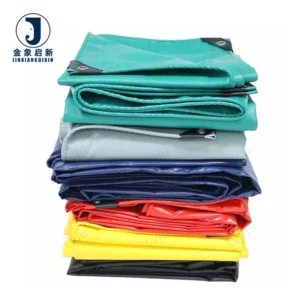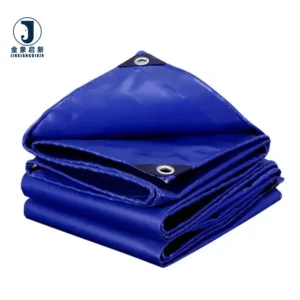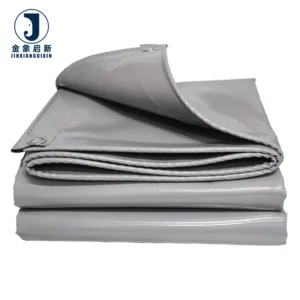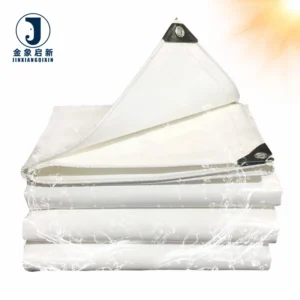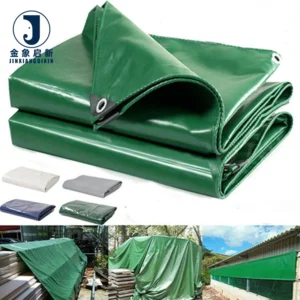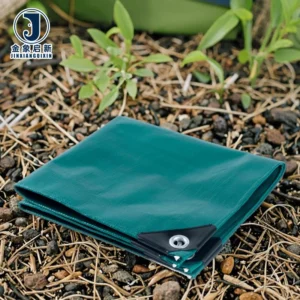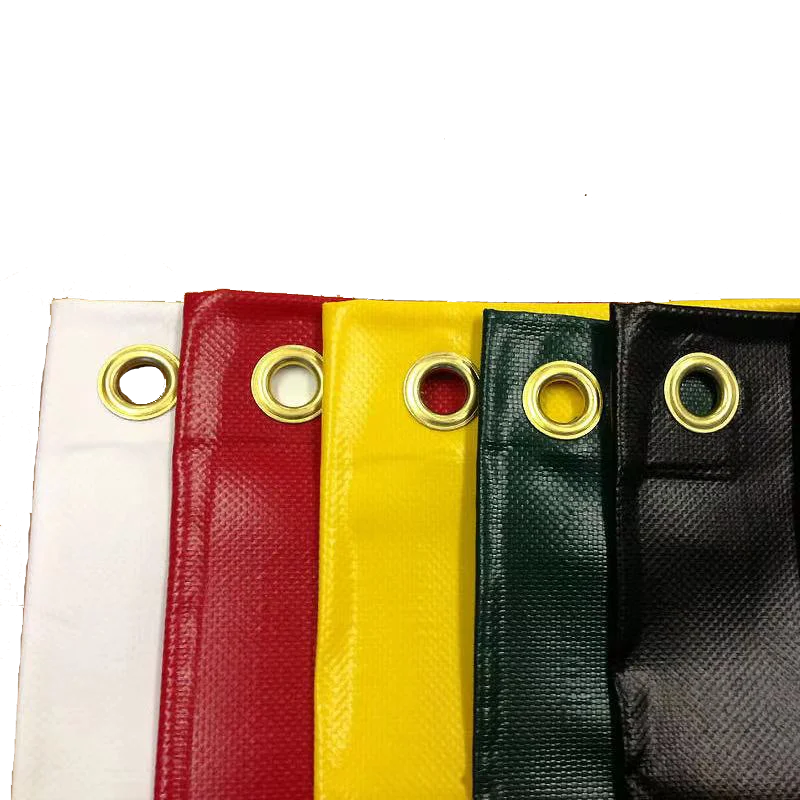
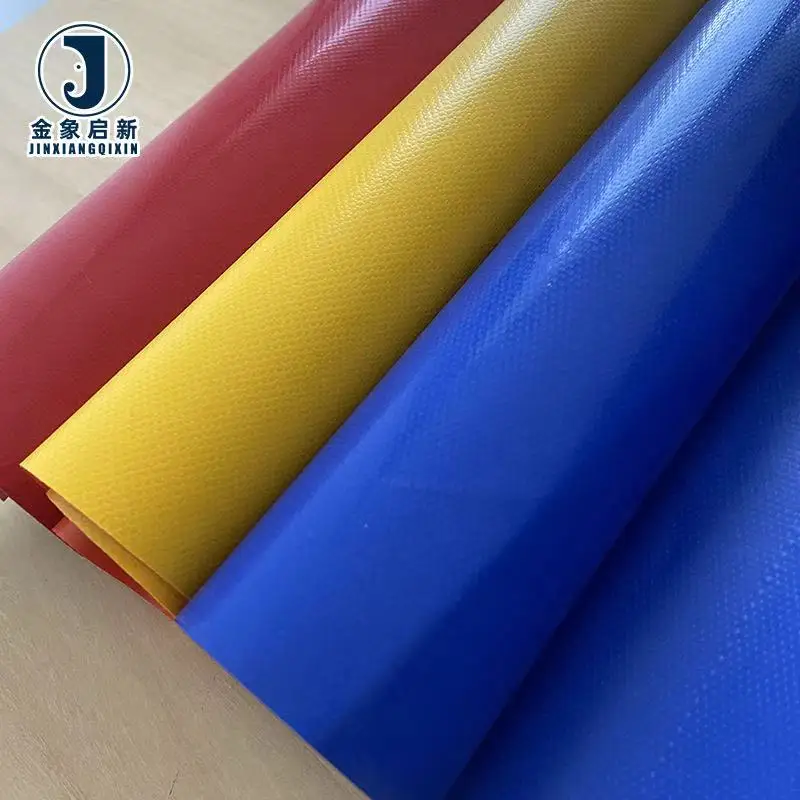
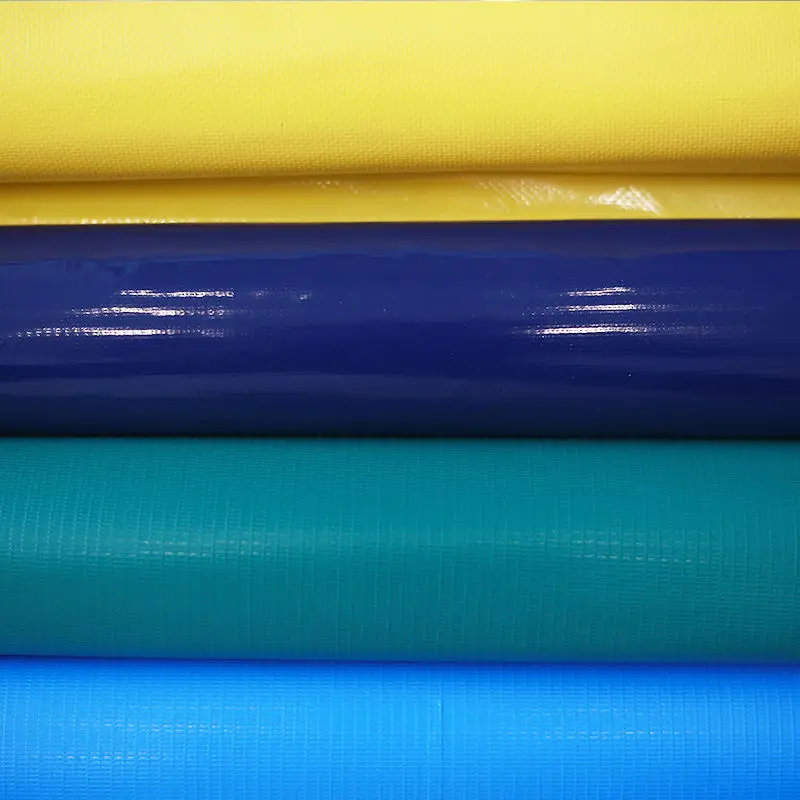

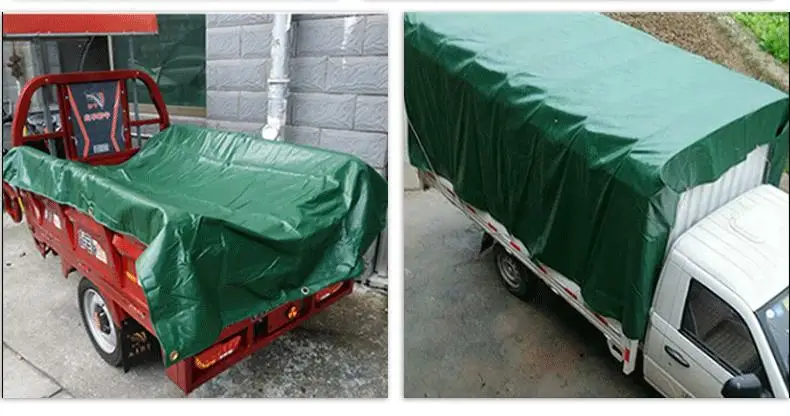
Description
Consistent Roll Weight — every roll of PVC Knife Coated Tarpaulin roll is checked against its specified GSM before dispatch, so the weight you pay for is the weight that arrives in your container.
Technical Specifications
| Parameter | Value |
|---|---|
| Product Type | PVC Knife-Coated Fabric |
| Weight Range | 300-600 gsm |
| Coating Method | Knife Coated |
| Coating Material | PVC |
| Waterproof | Yes |
| Oilproof | Yes |
| Tear-Resistant | Yes |
| Flame Retardant | Available (grade to be confirmed per order) |
| Anti-Static | Available (standard to be confirmed per order) |
| Anti-Cold | Available (grade to be confirmed per order) |
| Anti-Mildew | Available (grade to be confirmed per order) |
| Anti-UV | Available (test basis to be confirmed per order) |
| Surface Finish | Glossy or Matte |
| Key Features | High Strength, Tear-Resistant, Waterproof, Oilproof |
| Format | Roll or Customization |
| Certifications | ISO, CE |
Application Suitability
| Application | Exposure & Requirement |
|---|---|
| Truck Side Curtain Fabric | Constant flexing at hinges, road debris abrasion, UV exposure, wind load stress |
| Outdoor Tent & Awning Fabric | Prolonged UV and rain exposure, tension from frame structure, repeated assembly and disassembly |
| Car and Equipment Covers | Static UV exposure, dust and moisture ingress, surface abrasion during handling |
| General Industrial Tarpaulin | Mechanical handling stress, forklift contact, varied weather conditions in storage yards |
Why Quoted GSM Does Not Always Match What Arrives at Your Warehouse
Verified roll weight is the baseline of honest tarpaulin trade, and it requires in-process measurement rather than a single pre-production sample.
Tarpaulin distributors and importers consolidating full-container orders have seen this pattern: the quotation states a specific GSM, but the rolls that arrive weigh less. The shortfall only becomes visible when finished covers fail early under load or when the fabric feels noticeably thinner during fabrication. [NEED_CITE: methods for measuring areal density of coated fabrics per ISO 536] Batch inconsistency compounds the problem — when one roll in a container is lighter than the next, converters cutting and welding panels end up with finished products of uneven strength. This PVC Knife Coated Tarpaulin roll is produced with dedicated QA checks at the coating stage so that the GSM stated on your purchase order is the GSM recorded on the pre-shipment inspection.
Container-Load Consistency Across Every Roll
When you are buying PVC knife-coated tarpaulin rolls by the container, the gap between the best roll and the worst roll in that shipment defines your actual quality. Our three full production lines maintain coating weight within tight tolerances across the entire batch, and our 10-person R&D team adjusts knife gap and paste viscosity to match the target GSM for each grade. Colour consistency is managed the same way — reference standards are set before production runs begin, and adjacent rolls are compared under controlled lighting before packing.
Treatments Documented, Not Just Claimed
Flame retardant, anti-static, anti-UV and anti-mildew treatments are available for this PVC knife-coated fabric range, but availability is not the same as certification. Each treatment must be matched to the compliance standard required in your destination market. We supply test reports tied to the specific batch you receive, so your downstream customers can verify the treatment grade against local fire codes or safety regulations rather than relying on a general claim. [NEED_CITE: common fire classification standards for coated textiles in European and North American markets]
How Coating Method and Base Fabric Interact to Determine Strength
Knife coating forces PVC paste directly into the weave of the base fabric under controlled blade pressure, producing a uniform coating film that locks into the yarn structure. This method delivers stronger adhesion between coating and substrate compared to simple lamination, which means the layers resist delamination when the fabric is heat-welded or flexed repeatedly. Within the 300-600 gsm range, the actual tensile and tear performance depends on base fabric denier and weave density as much as on total weight — a 450 gsm roll built on a high-denier, tightly woven base can outperform a 500 gsm roll made on a looser weave. Glossy finishes tend to shed dirt and water more readily, while matte finishes reduce glare and can improve ink adhesion for printed branding. The choice between finishes should align with how the finished product will be used and cleaned in the field.
The Hidden Cost of Specifying by GSM Alone
Selecting a roll purely on price per kilogram and quoted GSM creates exposure that shows up after fabrication. A converter who welds truck side curtains from underweight rolls may find that the welded seam fails before the fabric body does, because the coating layer is too thin to form a proper heat bond. Distributors who stock multiple grades without verifying batch-to-batch colour may face returns when customers install panels side by side and see a visible shade difference. [NEED_CITE: weld strength testing methods for PVC-coated fabrics per ISO 1421] These failures trace back to specification gaps at the purchasing stage, not to misuse in the field.
Why Distributors and Converters Source This Roll Stock Here
Dedicated QA at every production stage means each roll of PVC Knife Coated Tarpaulin roll is inspected for coating weight, colour match and surface defects before it leaves the factory. Three full production lines and 36 sets of professional equipment provide the capacity to fill container-load orders without splitting production across unmatched machines. A 10-person R&D team handles custom width, colour matching and sample development, turning around samples within days so you can approve before committing to volume. Full documentation accompanies every shipment — from material specification sheets to pre-shipment inspection records — giving your procurement team traceability on every roll. Nearly three decades of focused coated fabric production means the process controls are established, not experimental.
Documentation & Verification
- Material specification sheet listing base fabric, coating weight and colour reference per batch
- Pre-shipment inspection record with actual GSM measurement for each roll
- Roll packing list detailing roll count, net weight and container loading plan
- Test reports for flame retardant, anti-UV or anti-static grades where specified
- Certificate of origin and customs documentation for cross-border roll shipments
Fabrication, Handling & Storage
- Heat-weld knife-coated PVC rolls using temperature and dwell settings matched to the coating thickness of the selected GSM grade
- Store rolls upright on pallets to prevent flat-spot deformation on the outer coating layer
- Allow cold-stored rolls to reach ambient temperature before unrolling to avoid surface cracking in anti-cold grades
- Cut panels with allowance for weld seam overlap based on the fabric weight and intended joint strength
- Clean glossy-finish rolls with mild detergent only; solvent-based cleaners can soften the PVC coating surface
What to Include in Your Roll Stock Inquiry
Tell us the end-use application, the target market and any compliance standards your customers require so we can recommend the correct treatment grade and base fabric construction. Specify the roll widths and lengths that suit your cutting tables and welding equipment, along with your annual volume so we can plan production slots for consistent batch matching. If colour matching or custom printing is part of your finished product, request a sample roll first to verify shade and surface finish before placing the full order.
Frequently Asked Questions
Q: What GSM grades are stocked for immediate dispatch versus made to order?
A: Standard grades within the 300-600 gsm range are produced regularly, but stock availability varies by width and colour. Made-to-order runs cover non-stock widths, custom colours and specific treatment combinations. Confirm your required grade, width and treatment package so we can quote lead time and minimums accurately for your container order.
Q: Can colour consistency be maintained across all rolls in a single container?
A: Yes. Production runs for a single container order are scheduled as one continuous batch, and rolls are compared against the approved colour standard before packing. This prevents the visible shade variation that occurs when rolls from separate production dates are mixed in one shipment.
Q: Do flame retardant and anti-static treatments come with third-party test reports?
A: Treatment grades are available and can be supplied with test reports matched to the relevant standard for your market. Specify the compliance requirement in your inquiry so the correct grade is produced and documented for your batch.
Q: How are rolls packed for long-distance container shipping?
A: Each roll is wound on a core, wrapped in protective film and packed vertically or horizontally per container loading requirements. A detailed packing list accompanies the shipment listing roll count, dimensions and net weight for customs and receiving verification.
Q: What is the minimum order for custom widths or non-standard colours?
A: Minimums depend on the width, colour and treatment combination requested. Custom widths typically require a full production run to maintain coating consistency. Submit your specification and target quantity so we can confirm the minimum and provide a sample for approval before bulk production.