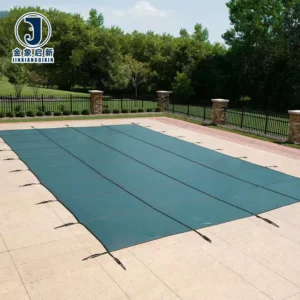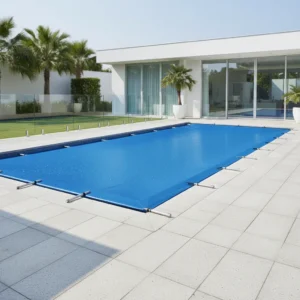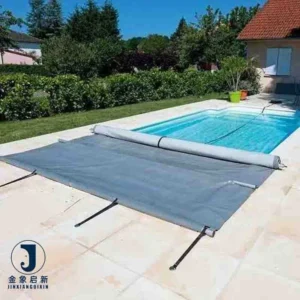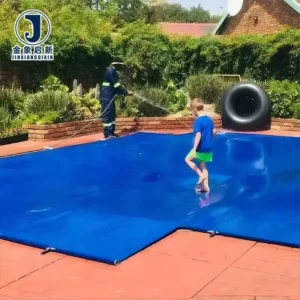
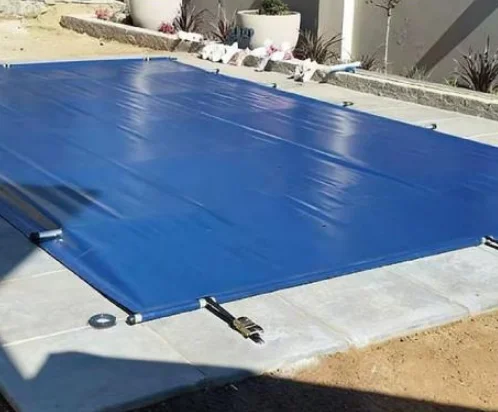
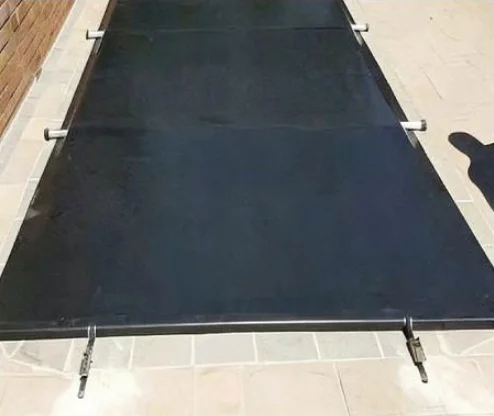
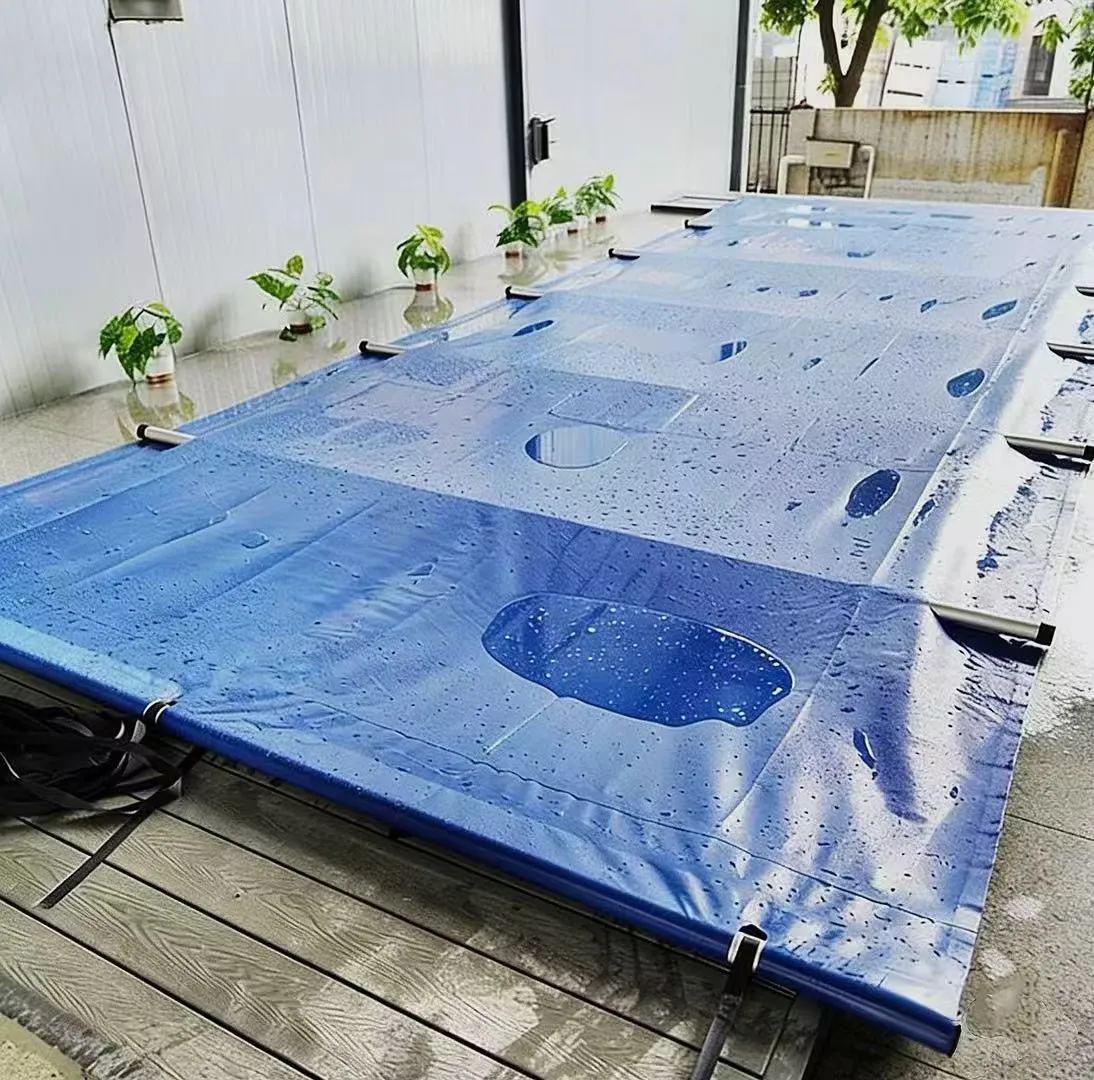
Description
Bulk Roll Consistency — every PVC coated tarpaulin roll is verified for weight, coating adhesion and colour match before dispatch, eliminating the batch variance that causes rework in pool cover fabrication.
Technical Specifications
| Parameter | Value |
|---|---|
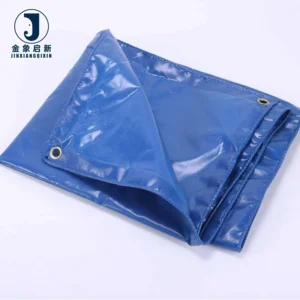
| Product Type | PVC Tarpaulin Pool Cover |
| Material Construction | PVC coated high-strength polyester mesh fabric |
| Coating Method | Laminated technology & hot-melt coating technology |
| Weight (GSM) | 350gsm / 420gsm / 500gsm / 550gsm / 600gsm / 750gsm |
| Total Thickness | 0.32mm / 0.35mm / 0.4mm / 0.45mm / 0.5mm / 0.65mm |
| Roll Width | 2m / 2.1m |
| Roll Length | 50m / 75m |
| Finish Product Size | Custom cut-to-size or sold as inventory roll stock |
| Colour Options | Blue / Red / Yellow / Light Blue / Grey (customised on request) |
| Key Features | High tenacity polyester yarns; outstanding tearing strength for welding; cold crack resistance; anti-mildew; fully waterproof; best colour fastness |
| Special Treatments | Flame retardant, anti-static, anti-cold — available as special treatment (grade not stated in source; confirm the grade required for your market) |
| Certifications | ISO, CE |
Application Suitability
| Application | Exposure & Requirement |
|---|---|
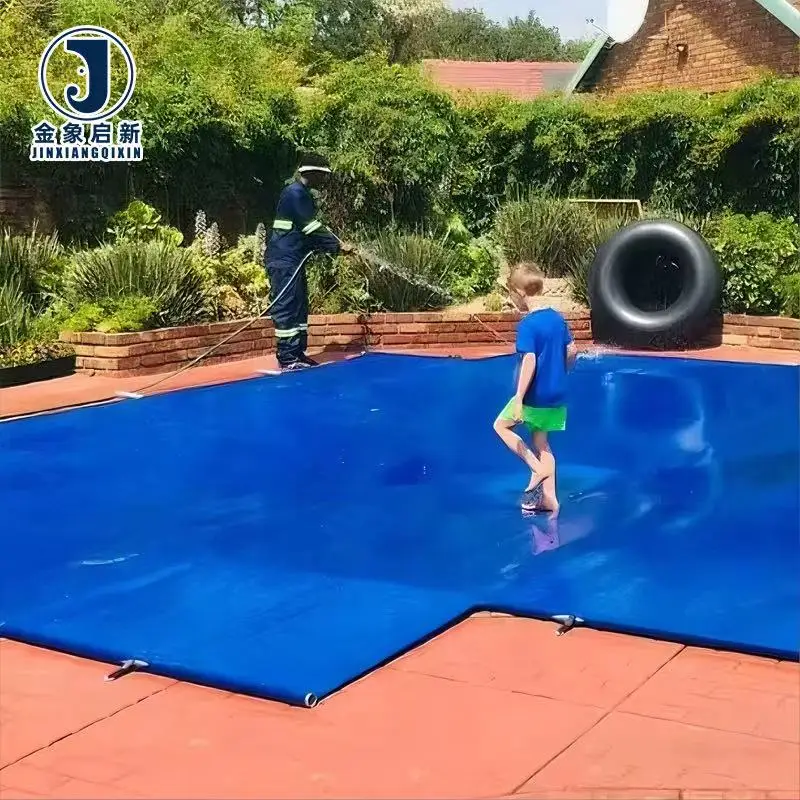
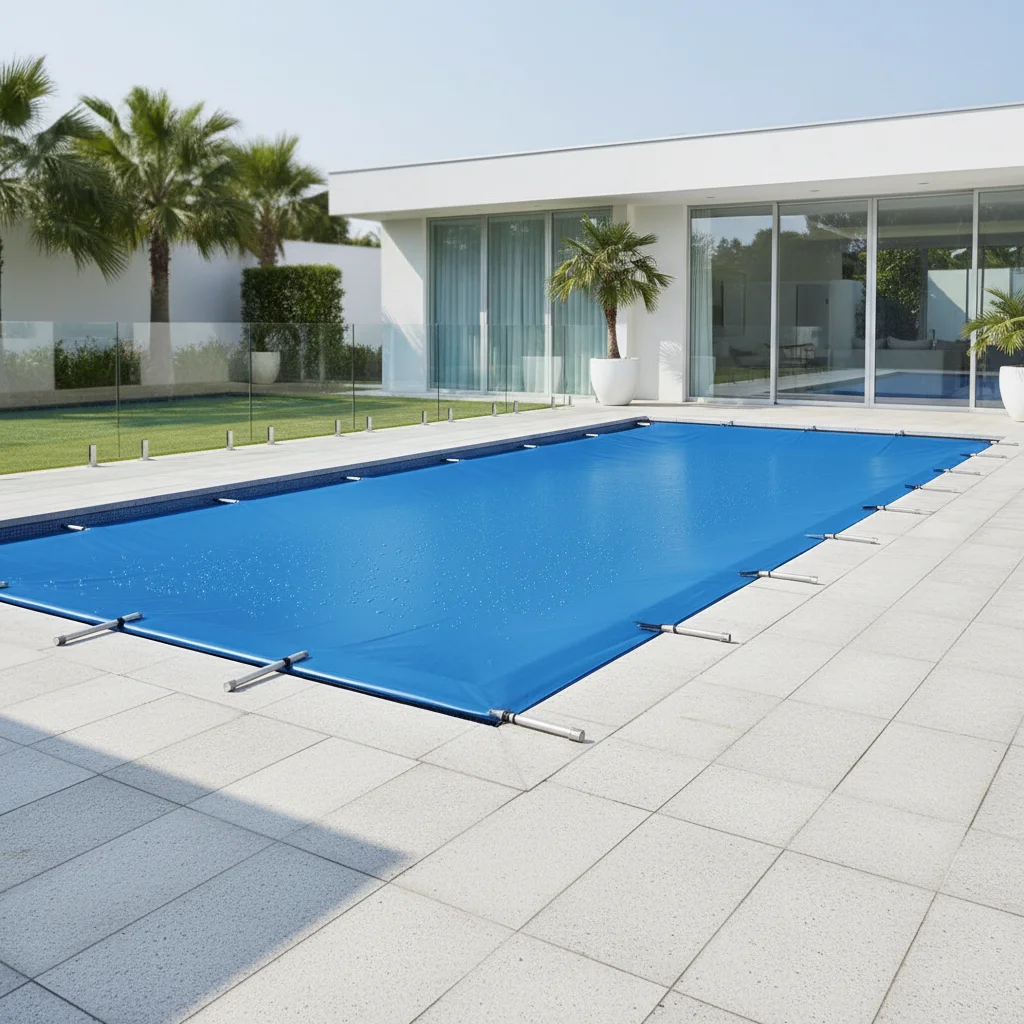
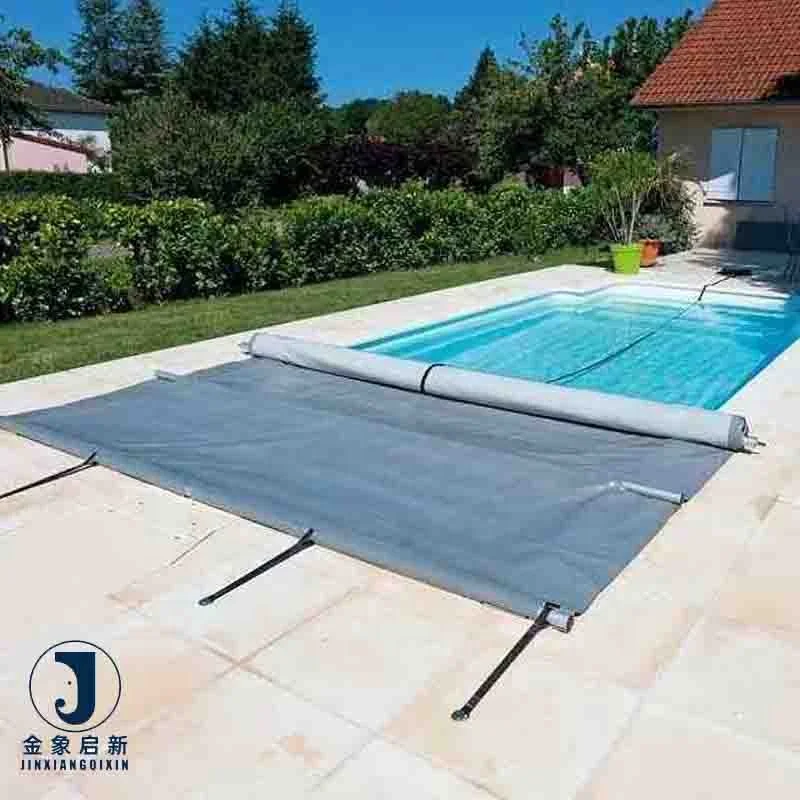
| Swimming pool covers | Prolonged water contact, UV exposure, chemical treatment splash, repeated folding and tensioning over pool frames |
| Fish tank and aquaculture pool liners | Continuous immersion, biofouling environment, seam integrity under hydrostatic pressure |
| Tent and awning covers | Outdoor weathering, wind-driven rain, mechanical stress at pole and frame contact points |
| Cargo ship and truck awnings | Salt spray, road debris abrasion, flex fatigue at mounting rails, sun exposure during transit |
Why Roll-to-Roll Colour Consistency Matters More Than Price Per Kilogram
Batch colour drift across a single container order is the leading cause of customer rejection in pool cover fabrication.
When a fabricator cuts panels from three different rolls to weld a single pool cover, even a slight shade variation between rolls becomes immediately visible once the cover is installed and viewed in direct sunlight. This is not a cosmetic complaint — it is a commercial failure that triggers returns, replacement costs and lost accounts. The problem originates at the compounding and coating stage, where pigment dispersion, plasticiser ratio and oven temperature must remain constant across every production run. In my experience auditing coated fabric shipments, colour variance is rarely caught at the mill; it surfaces only when the buyer lays two rolls side by side on the cutting table [NEED_CITE: visual colour assessment methods for coated fabrics per ISO 105-A02].
Controlling GSM Variance Across a Production Run
Maintaining stated GSM across an entire PVC coated tarpaulin roll order requires monitoring at three points: base fabric weight before coating, wet coating thickness during application and finished roll weight after curing. Laminated and hot-melt coating technology used for these rolls bonds the PVC film to the polyester mesh under heat and pressure, which gives tighter thickness control compared to knife-over-roll methods. Each roll leaving the line is weighed and measured against the specification sheet, and rolls that fall outside tolerance are segregated before packing. This discipline is what separates a wholesale supplier from a trader who simply relabels stock.
How Coating Adhesion Determines Weld Performance
Pool cover fabricators rely on high-frequency or hot-air welding to join panels, and the strength of that weld depends entirely on how well the PVC coating bonds to the base fabric. When adhesion is weak, the coating delaminates at the weld line under tension, leaving a seam that fails before the fabric body does. The hot-melt coating process achieves mechanical interlock with the polyester mesh by forcing molten PVC into the yarn interstices, creating a bond that survives the thermal cycling of outdoor pool environments. For fabricators running automated weld lines, consistent coating adhesion means stable weld parameters from the first metre of roll to the last [NEED_CITE: peel strength test methods for coated fabric laminates].
Reading GSM and Thickness Together for Pool Cover Duty
Weight in GSM and total thickness in millimetres must be evaluated together, because either value alone gives an incomplete picture of how the fabric will perform in service. A 500gsm roll at 0.4mm thickness indicates a denser base fabric with a thinner coating, which typically delivers higher tensile strength and better tear resistance than a 500gsm roll at 0.5mm where the extra thickness comes from additional coating mass. For pool covers that are tensioned over frames and subjected to wind uplift, the base fabric density — reflected in the GSM-to-thickness ratio — is the primary determinant of long-term structural integrity. The available grades from 350gsm to 750gsm span light-duty seasonal covers through heavy-duty commercial installations, with corresponding thickness options from 0.32mm to 0.65mm to match.
The Hidden Cost of Underspecifying Pool Cover Fabric
Selecting a lighter GSM grade to reduce per-metre cost often leads to premature failure at stress points — particularly where the cover is anchored to the pool surround or where water pooling creates sustained hydrostatic load. A cover fabricated from an underspecified roll may pass initial inspection but develop seam creep, coating crack or pinhole leakage within a single season of use. Similarly, specifying a roll without cold crack resistance treatment for markets that experience sub-zero winter storage will result in brittle fracture when the cover is folded or rolled in cold conditions. These failures are rarely attributed back to material selection; instead, they are blamed on fabrication quality or installation error [NEED_CITE: common failure modes in tensioned PVC pool covers].
Why Fabricators and Distributors Source Roll Stock Here
Three full production lines and 36 sets of professional equipment support bulk roll output with consistent scheduling, so container orders ship on time without being squeezed between competing priority runs.
Dedicated QA/QC at every production stage means GSM, thickness and colour are checked before coating, during coating and after curing — not just sampled from the finished roll.
A 10-person R&D team handles custom width, colour matching and sample development within days, allowing fabricators to validate material on their own weld lines before committing to a full container.
Pre-shipment inspection covers 100% of rolls, with each roll weighed and measured against the purchase specification, so the packing list reflects actual shipped weight rather than nominal values.
ISO and CE certified processes provide the documentation trail that distributors need when reselling into regulated European and North American markets.
Documentation & Verification
- Material specification sheet stating exact GSM, base fabric construction and coating weight for each roll grade
- Pre-shipment inspection record with 100% weight and thickness verification per roll
- Roll packing list detailing roll count, individual roll weight and total container load weight
- Colour reference sheet matched to approved sample — no shade variance accepted across rolls in one order
- ISO and CE certificates included with every dispatch documentation package
- Certificate of origin and customs documentation prepared per destination country requirements
Fabrication, Handling & Storage
- Hot-air weld temperature and speed must be calibrated to the specific GSM grade — lighter rolls require lower heat input to avoid coating burn-through
- Store rolls upright on pallets in a shaded, ventilated area to prevent flat-spot deformation on the outer coating layers
- Allow cold-stored rolls to acclimatise to workshop temperature before unrolling to prevent coating micro-cracking
- High-frequency welding is compatible with all laminated grades — confirm power settings against the 0.32mm to 0.65mm thickness range
- Cut panels with a minimum 25mm seam allowance to ensure full weld contact across the polyester mesh layer
- Clean finished covers with mild detergent only; solvent-based cleaners may degrade the PVC plasticiser over repeated use
Requesting a Roll Stock Quotation
To receive an accurate quotation for PVC coated tarpaulin roll stock, specify the GSM grade and thickness you require, along with roll width and length preference. If you are fabricating pool covers for a specific market, indicate any flame retardant, anti-static or anti-cold treatment your end-use regulations demand so we can confirm available grades. For custom colour orders, provide a Pantone or RAL reference and confirm whether you need sample approval before full production.
Frequently Asked Questions
Q: What GSM and thickness options are stocked for pool cover applications?
A: Roll stock is available in 350gsm through 750gsm, with corresponding thicknesses from 0.32mm to 0.65mm. Lighter grades suit seasonal residential pool covers, while heavier grades serve commercial installations subject to sustained tension and wind load. Confirm the grade suited to your specific cover design and climate.
Q: Can I get consistent colour across multiple rolls in one container order?
A: Yes. Every roll in a single order is produced from the same compounded batch and verified against the approved colour reference before packing. Rolls that show any shade deviation are segregated and do not ship, ensuring uniform appearance when panels are cut and welded side by side.
Q: What is the minimum order for custom width or colour?
A: Custom widths and colours are available with minimums that vary by specification. The R&D team can develop a sample roll within days for your approval before full production. Contact us with your required width, colour reference and estimated annual volume for a specific minimum confirmation.
Q: Do you provide test reports with the shipment?
A: Material specification sheets, pre-shipment inspection records and ISO/CE certificates ship with every order. For flame retardant or anti-static treatments, test reports are provided where applicable — confirm the specific grade and test standard required by your market at the inquiry stage.
Q: How are rolls packed for container loading and what documentation ships with the order?
A: Rolls are packed upright on pallets with protective wrapping to prevent transit damage. A detailed packing list with roll count, individual weights and container load plan is included, along with certificate of origin, customs documents and all applicable certification paperwork for your destination market.