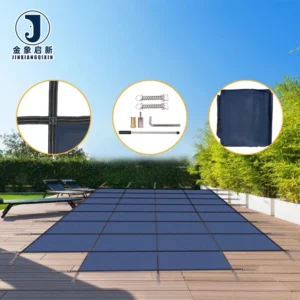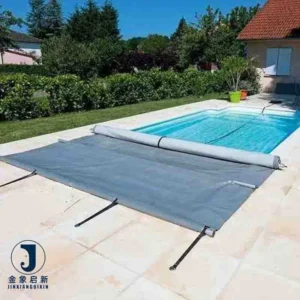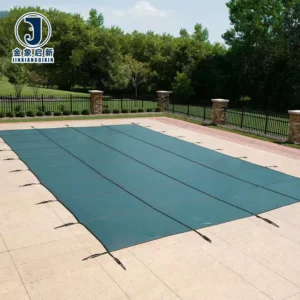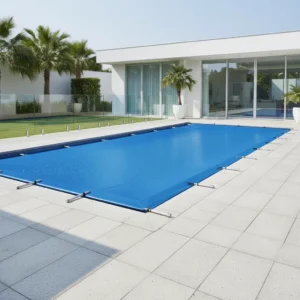
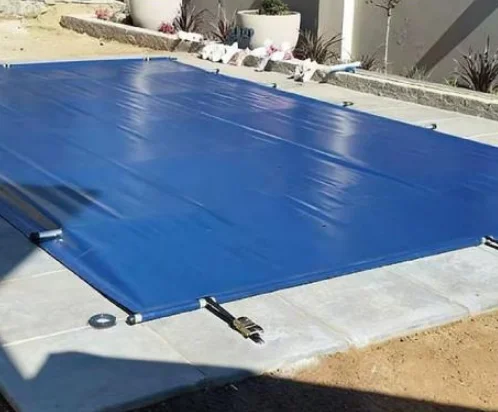
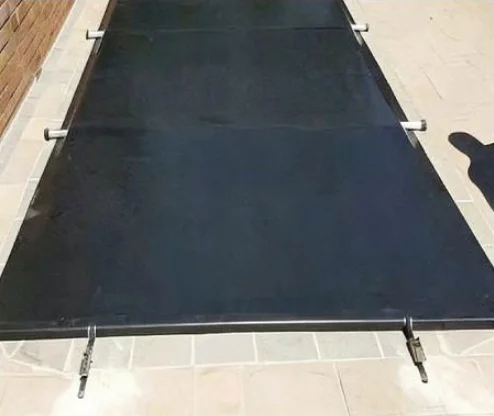
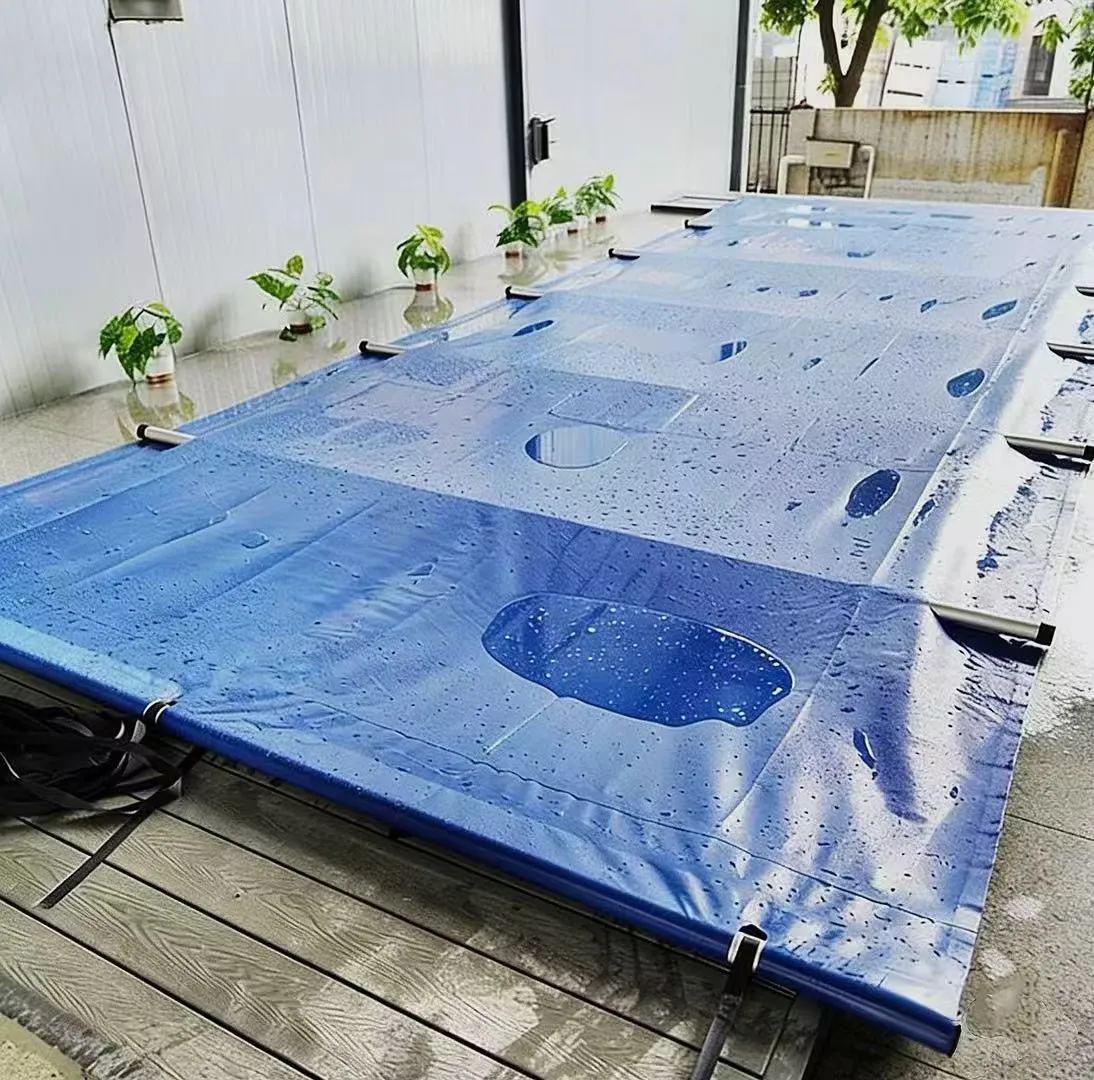
Description
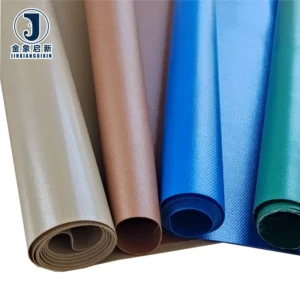
Batch-Verified Roll Stock — every PVC laminated tarpaulin roll is weighed and inspected against the purchase order before dispatch, so the gsm and colour you specify is what arrives at your warehouse.
Technical Specifications
| Parameter | Value |
|---|---|
| Product Type | PVC Swimming Pool Cover |
| Material | PVC + high-strength polyester mesh fabric |
| Coating Method | Laminated technology & hot-melt coating technology |
| Weight Options | 350 gsm, 420 gsm, 500 gsm, 550 gsm, 600 gsm, 750 gsm |
| Total Thickness | 0.32 mm, 0.35 mm, 0.4 mm, 0.45 mm, 0.5 mm, 0.65 mm |
| Standard Roll Sizes | 2 m × 75 m or 2.1 m × 50 m |
| Finish Product Size | Custom cut to order or sold from inventory |
| Color Options | Blue, red, yellow, light blue, grey (custom available) |
| Key Features | Waterproof, cold crack resistance, anti-mildew, sunproof, best color fastness |
| Special Treatments | Flame retardant, anti-static, anti-cold (grades available — confirm the grade required for your market) |
| UV Treatment | Anti-UV (test basis not stated in source — request test report) |
| Standards | ISO, CE |
Application Suitability
| Application | Exposure & Requirement |
|---|---|
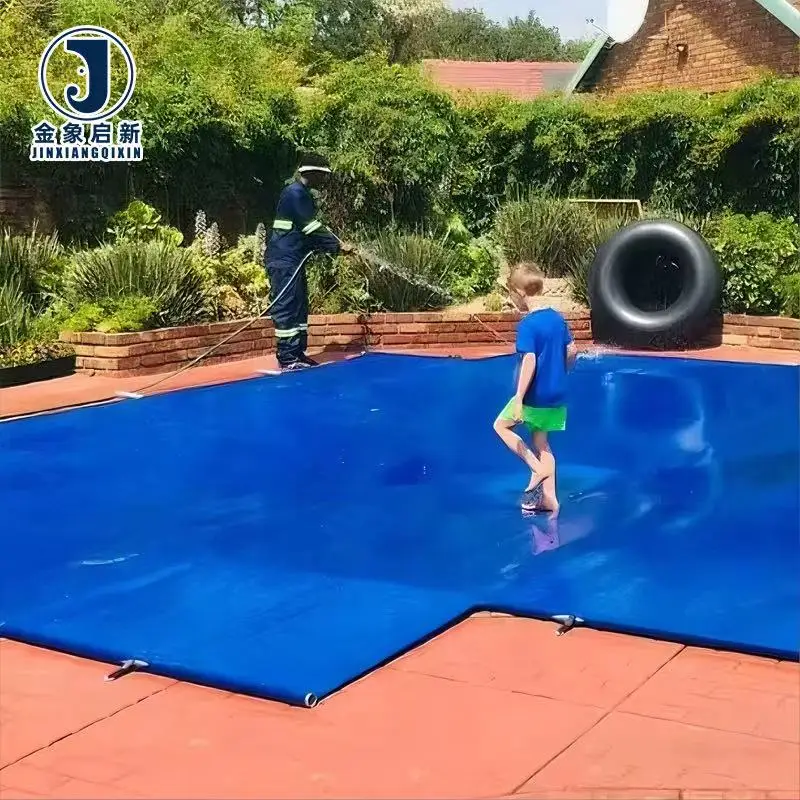
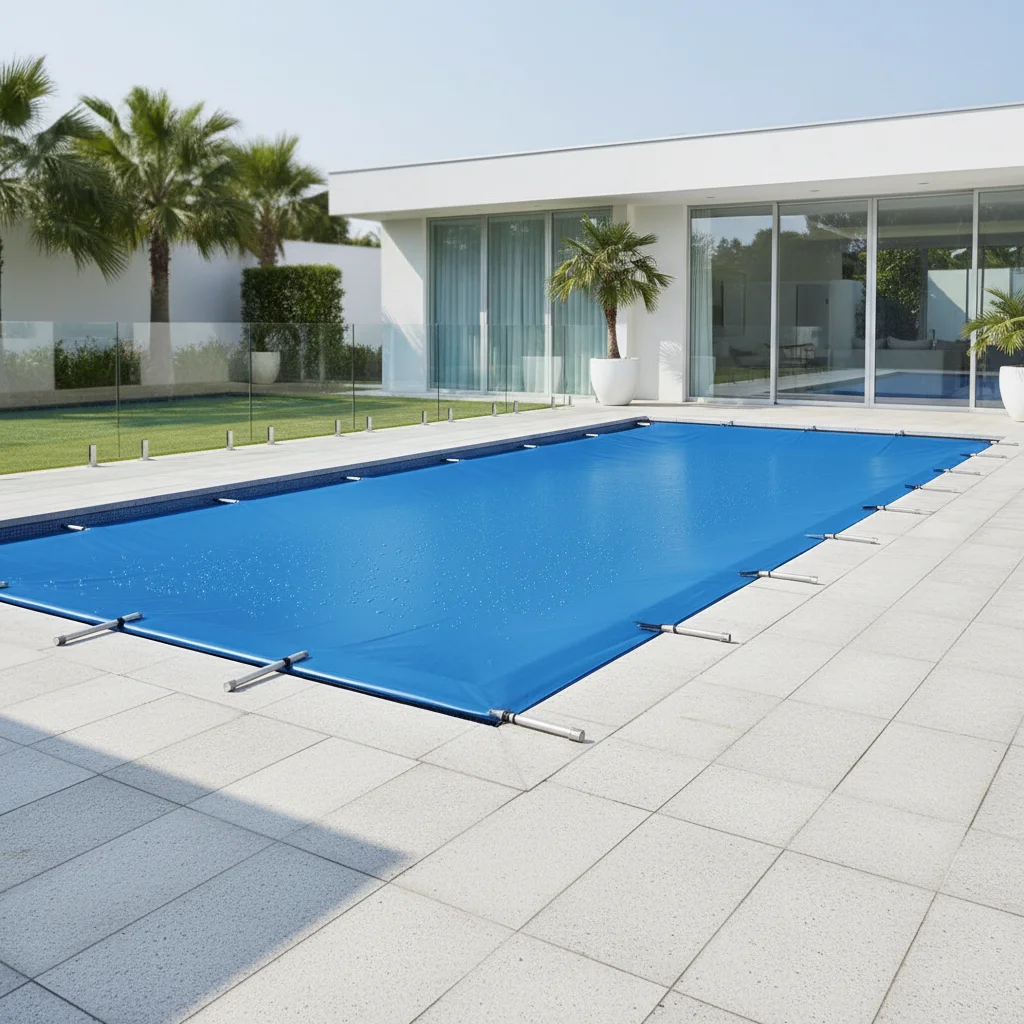
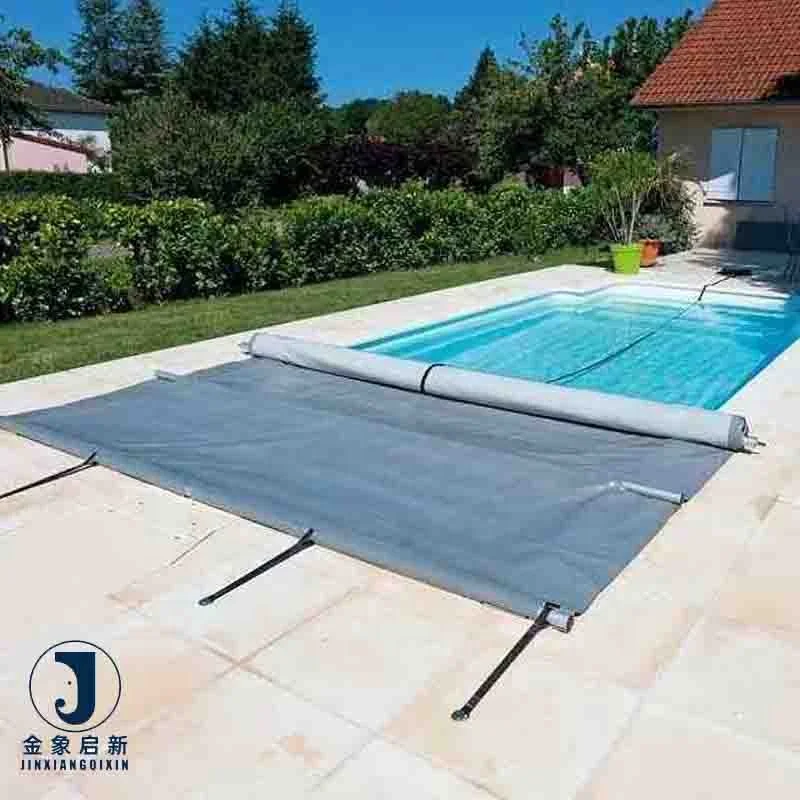
| Residential rectangular pool covers | Continuous UV exposure, debris load, chemical splash from pool treatment, seasonal tensioning and removal |
| Commercial and hotel pool enclosures | High foot-traffic handling, frequent roll and unroll, compliance with local fire codes in public areas |
| Fish tank and aquaculture pond liners | Permanent water immersion, algae and biofilm contact, puncture risk from substrate |
| Custom-shaped pool covers | Irregular cutting and welding, seam integrity at curves, colour matching across multiple panels |
| Tent and awning fabric roll stock | Outdoor weathering, flex fatigue at fold lines, colour consistency across production batches |
Why Roll-to-Roll Consistency Matters More Than Quoted GSM
The gsm printed on the quotation is only as reliable as the inspection that verifies it before the container is sealed.
Wholesale buyers of PVC laminated tarpaulin roll stock regularly face a specific problem: the material that arrives is measurably lighter than what was agreed. A roll quoted at 550 gsm may test closer to 510 gsm at the receiving warehouse, and no single roll in the shipment matches the next in weight or colour. For distributors fabricating pool covers from this stock, the downstream consequence is a finished product that does not meet its own specification — and a customer complaint that traces back to the raw material source. [NEED_CITE: pre-shipment weight verification methods for coated fabric rolls per ISO 1421]
Stocking Multiple Weight Grades From a Single Source
Pool cover fabricators serve markets that range from light-duty residential winter covers to heavy-duty commercial safety enclosures. Sourcing PVC laminated tarpaulin across the full 350 gsm to 750 gsm range from one supplier eliminates the colour and coating variation that occurs when roll stock is consolidated from multiple mills. Each grade in this range is paired with a matched thickness, from 0.32 mm at the light end to 0.65 mm at the heavy end, giving fabricators a predictable material library to quote against.
Coating Adhesion and Weld Integrity at the Seam
Pool covers are assembled from multiple panels, and every seam is a potential failure point under tension and water load. The laminated and hot-melt coating technology used on this PVC swimming pool cover fabric produces a coating-to-base-fabric bond that holds through high-frequency welding. When the fabric flexes at the hem or at a tie-down point, the coating does not delaminate from the polyester mesh — the tear propagates through the base yarn rather than peeling at the interface. [NEED_CITE: coating adhesion and peel strength test methods for PVC laminated fabrics]
Reading GSM and Thickness Together
Weight per square metre alone does not determine how a pool cover fabric will perform under load. A 500 gsm roll with a dense, high-tenacity polyester base yarn will outperform a 550 gsm roll built on a looser weave with heavier coating fill, because tensile and tear strength are governed primarily by the base fabric construction. Thickness readings across this product family — from 0.32 mm to 0.65 mm — correlate more closely with coating mass than with base fabric density. Specifiers should request the base fabric denier and weave count alongside the gsm to make a meaningful comparison between grades. The coating method also matters: laminated technology bonds a pre-formed PVC film to the mesh under heat and pressure, producing uniform coating weight and reliable weld performance, while hot-melt coating flows liquid PVC into the weave, filling interstices more completely and adding puncture resistance at a given gsm.
The Hidden Cost of Inconsistent Colour Across Rolls
When two rolls from the same purchase order show a visible colour shift after installation side by side on a pool deck, the entire cover may need to be replaced or the installer absorbs the cost of a customer credit. This problem originates at the compounding stage — slight variation in pigment batch or in coating temperature across production runs. For wholesale buyers consolidating container loads, the financial exposure multiplies with every roll in the shipment. Colour consistency must be controlled at the coating line and verified under standard lighting before rolls are packed, not discovered at the fabrication bench. [NEED_CITE: colour fastness and batch consistency standards for coated technical textiles]
Why Procurement Teams Consolidate Here
Three full production lines with 36 sets of professional equipment support bulk roll output with dependable scheduling, so container loads ship on the confirmed date rather than sliding week after week. A 10-person R&D team develops colour-matched samples within days when a buyer needs a Pantone or RAL reference that is not in the standard range. Dedicated QA and QC checkpoints at every production stage — from base fabric inspection through coating, winding and packing — catch gsm drift and surface defects before they reach the shipping floor. Every roll is inspected against the purchase order specification, and a pre-shipment inspection record accompanies the documentation package. Sample development for custom widths, colours and special treatments is completed rapidly so buyers can approve material before committing to full production volumes.
Documentation & Verification
- Material specification sheet stating gsm, base fabric denier, coating weight and colour reference per roll
- Pre-shipment inspection record confirming gsm, colour and dimensions against the purchase order
- Roll packing list with exact roll count, net weight and container loading plan
- Test reports for UV resistance and flame retardant grades where applicable
- ISO and CE certificates covering the production facility and management system
- Certificate of origin and customs documentation for destination-country clearance
Fabrication, Handling & Storage
- High-frequency welding parameters should be calibrated to the specific gsm and coating method — laminated and hot-melt coatings respond differently to dwell time and pressure
- Store rolls upright on end caps in a shaded, ventilated area to prevent flat-spotting and permanent creasing of the PVC coating surface
- When cutting panels for custom-shaped pools, nest patterns to minimise offcut waste from the 2 m or 2.1 m standard roll width
- Avoid dragging rolls across concrete floors during warehouse handling to protect the coating surface from abrasion marks
- Anti-mildew treatment on the fabric surface requires only mild detergent cleaning — solvent-based cleaners may degrade the PVC top layer
- In cold-weather transport, allow rolls to reach ambient temperature before unrolling to prevent cold-crack damage at the fold lines
What to Include in Your Inquiry
Specify the gsm grade and thickness that match your pool cover application, along with the roll width and length you need for your fabrication layout. If your market requires flame retardant or anti-static certification for public-access pool enclosures, state the standard or grade so the correct treatment can be confirmed. Indicate whether you need standard inventory colours or a custom colour match, and whether you are ordering full container loads or consolidated shipments with other product lines.
Frequently Asked Questions
Q: How is gsm verified on each roll before dispatch?
A: Every roll is sampled and weighed against the purchase order specification during the pre-shipment inspection. The inspection record documents the measured gsm for each roll and flags any deviation before the container is loaded, so wholesale buyers receive roll stock that matches the quoted weight grade.
Q: How do you control colour consistency across rolls in the same order?
A: Pigment compounding is held to a single batch per order, and rolls are compared under standard lighting at the winding stage. Any roll that falls outside the accepted colour tolerance is pulled before packing, ensuring that fabricators cutting multiple panels from the same shipment see no visible shade variation.
Q: What roll widths and lengths are stocked versus made to order?
A: Standard inventory rolls are produced in 2 m × 75 m and 2.1 m × 50 m configurations across the full gsm range. Custom widths and lengths are available with sample approval first — lead time depends on the colour and treatment combination requested and current production scheduling.
Q: What gsm and thickness should I specify for residential versus commercial pool covers?
A: Residential seasonal covers typically use the lighter grades in the 350 gsm to 500 gsm range for ease of handling and storage. Commercial and public-access pool enclosures generally call for 550 gsm to 750 gsm to withstand frequent roll-and-unroll cycles and meet higher mechanical load requirements. Confirm the exact grade based on your local market specifications.
Q: Which special treatments are available and how are they tested?
A: Flame retardant, anti-static, anti-cold and anti-mildew treatments can be applied during coating. The specific grade and test standard for each treatment varies by destination market — request the applicable test report when placing your inquiry so the correct formulation is matched to your compliance requirement.