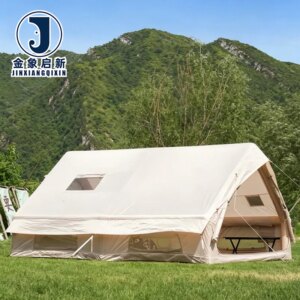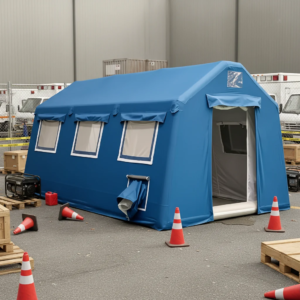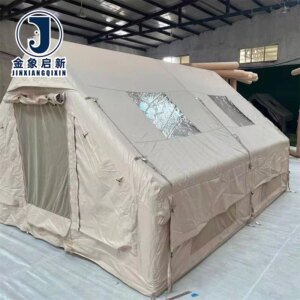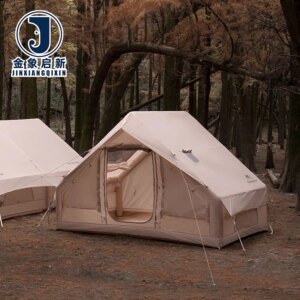
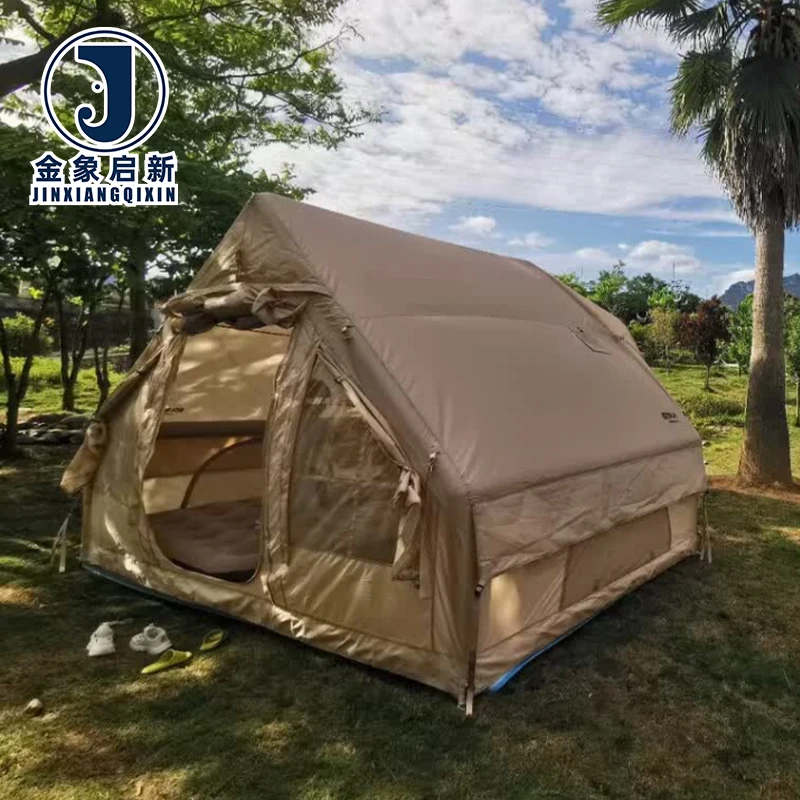
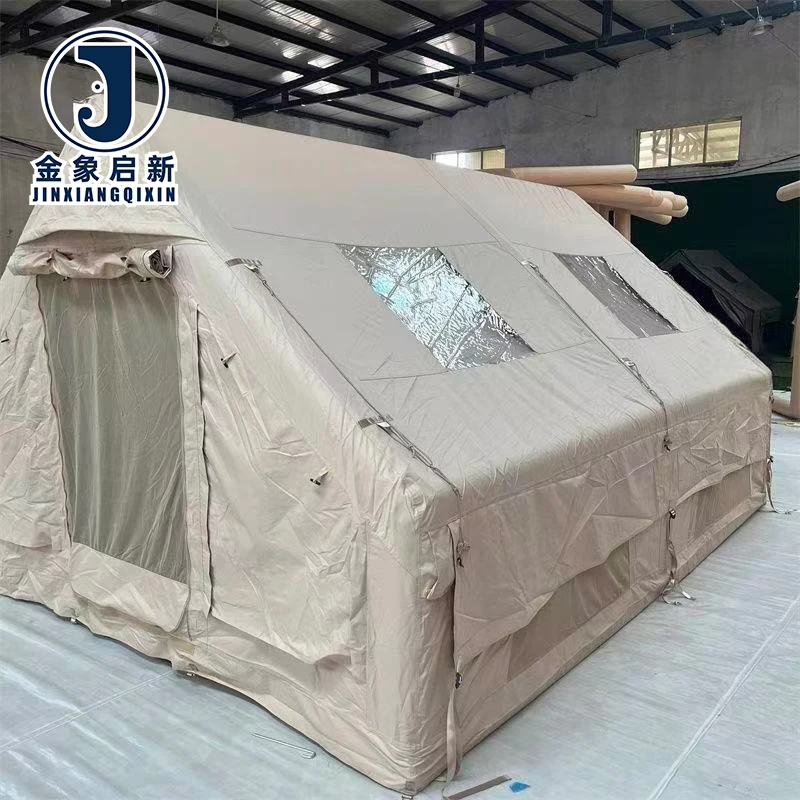
Description
Controlled Coating Weight Consistency — Every roll of PVC inflatable tent fabric leaves the facility with verified GSM and matched colour reference, eliminating batch variation that disrupts series production runs.
Technical Specifications
| Parameter | Value |
|---|---|
| Product Type | Inflatable Tent |
| Core Material | PVC Tarpaulin |
| Construction | Single Layer |
| Waterproof Rating | >3000mm |
| Season Design | 4-Season |
| Opening Mechanism | Quick Automatic Opening |
| Material Treatment | UV-resistant (test basis not stated in source) |
| Customization | OEM & ODM, Sample Customization, Pattern Printing |
| Standards | ISO9001, ISO14001, ISO45001, CE |
Application Suitability
| Application | Exposure & Requirement |
|---|---|
| Tent & Inflatable Structure Manufacturing | High-volume roll consumption, consistent colour across batches, heat-weld seam integrity |
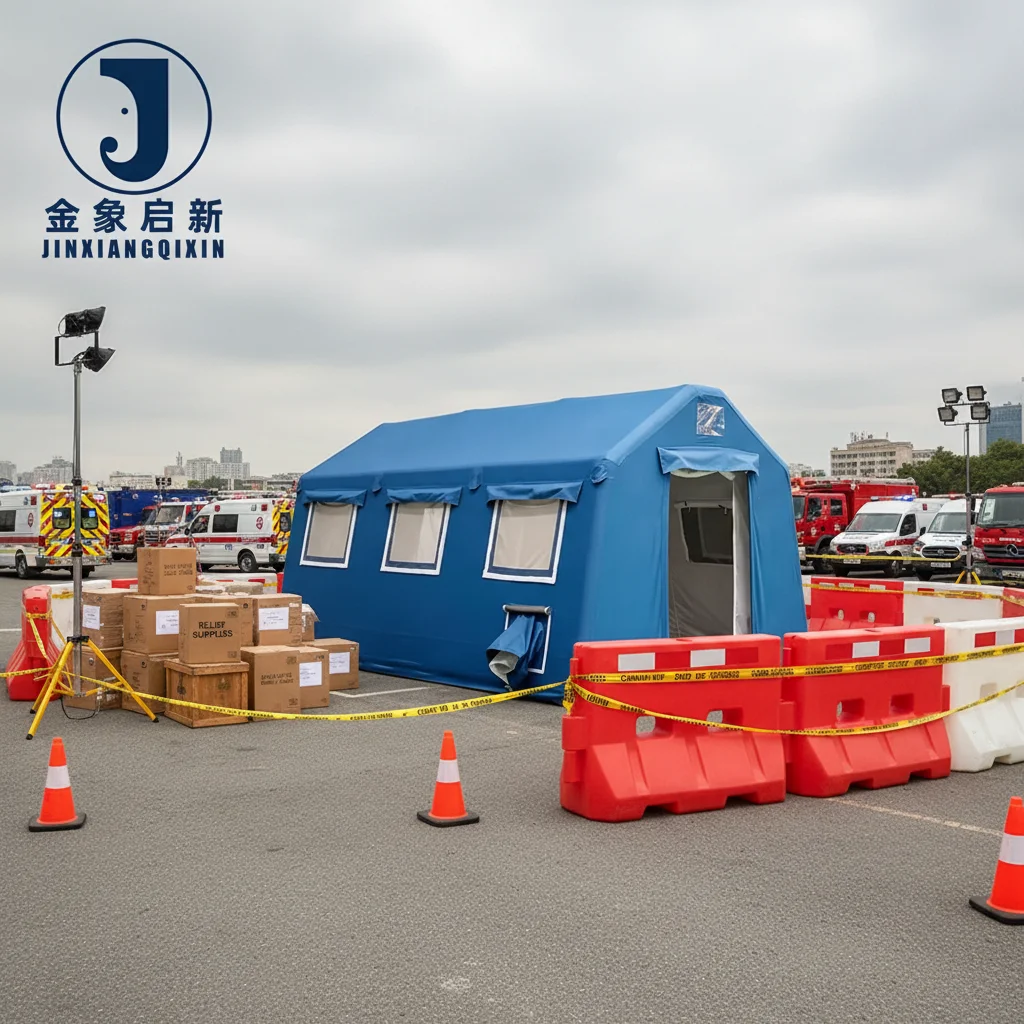
| Temporary Site Offices & Command Centers | Rapid deployment, weather exposure, repeated inflation cycles, abrasion from ground contact |
| Equipment Storage Facilities | UV exposure, moisture ingress prevention, long-term outdoor standing |
| Tarpaulin Distribution & Import | Container loading efficiency, roll-to-roll consistency, regional resale compliance |
| Outdoor Event Covered Workspaces | Quick setup and teardown, visual branding surface, multi-season reuse |
Why Roll-to-Roll Colour Variation Destroys Inflatable Tent Production
Batch-matched colour control across every roll in a single shipment prevents visible panel mismatch once the tent is inflated and installed side by side.
Colour drift between rolls within the same order is one of the most frequent complaints from inflatable tent manufacturers scaling production. When adjacent panels cut from different rolls show even slight hue differences, the finished structure looks defective — even though the material performs perfectly. This issue compounds when manufacturers run multiple production batches over weeks, pulling from stock received at different times. PVC inflatable tent roll supply with documented colour referencing at production and verified again at pre-shipment inspection eliminates this failure mode at the source. [NEED_CITE: colour measurement methods for coated fabrics per ISO 105 series]
Batch Consistency in Roll-Stock PVC Inflatable Tent Fabric
PVC inflatable tent roll procurement for series production depends on material arriving with identical GSM, coating weight, and colour reference across the entire order. When manufacturers cut and weld panels from multiple rolls into a single tent unit, even minor variation in base fabric tension or coating thickness produces visible differences under sunlight. Controlled coating processes ensure that every roll in a container holds the same specification profile, so fabricators can pull from any roll without sorting or matching on the production floor.
Container Loading and Roll Packaging for Tent Fabric
Shipping PVC inflatable tent wholesale orders demands roll packaging that protects coating surfaces from creasing, adhesion transfer, and edge damage during ocean transit. Rolls are wound on rigid cores to prevent compression deformation, wrapped to block moisture ingress, and loaded in container configurations that maximise unit count while maintaining accessible inspection on arrival. Packing documentation includes roll count, net weight, and dimensional data so receiving warehouses can verify shipment completeness before clearing customs. [NEED_CITE: container loading standards for coated fabric rolls]
How Coating Weight and Base Fabric Density Interact
Waterproof rating above 3000mm is achieved through the combined effect of PVC coating thickness and base fabric weave density. A heavy coating on a loosely woven base fabric will crack under flex stress, while a tightly woven base with insufficient coating weight will allow water penetration at thread intersections. Single-layer construction balances these factors to maintain roll weight suitable for transport while delivering the waterproof performance that inflatable tent structures require. UV treatment is available — confirm the specific test standard required for your target market before specifying the grade for your order.
The Cost of Underspecifying Material for Inflatable Structures
Selecting PVC inflatable tent fabric on price per kilogram alone often results in material that fails prematurely at inflation stress points. Lightweight grades may pass initial waterproof tests but develop micro-fractures after repeated inflation and deflation cycles, particularly at welded seams where the fabric flexes most. Coating adhesion that appears adequate on a flat sample can delaminate under the cyclic pressure loads that inflatable structures impose. These failures typically surface after the material has been fabricated into finished units, making replacement costs multiply far beyond the material savings. [NEED_CITE: cyclic stress testing protocols for inflatable fabric structures]
Production Capability Behind Consistent Roll Output
Three full production lines and 36 sets of professional processing equipment support bulk PVC inflatable tent roll orders with reliable scheduling. A 10-person R&D team handles sample development, custom width requests, and pattern printing specifications within days rather than weeks. Dedicated quality control at every production stage — from base fabric inspection through coating application to final winding — catches deviations before rolls reach the packing stage. Pre-shipment inspection covers every roll in an order, not just a statistical sample, with documented GSM and colour reference verification against the approved specification sheet.
Documentation & Verification
- Material specification sheet stating GSM, base fabric denier, and coating weight per roll batch
- Pre-shipment inspection record with waterproof rating verification and colour reference confirmation
- Roll packing list with individual roll count, net weight, and container loading plan
- ISO and CE certificates accompanying each commercial shipment
- Certificate of origin and customs documentation for cross-border roll-stock delivery
Fabrication, Handling & Storage
- Heat-weld temperature profiles should be calibrated to the specific PVC coating thickness on each roll batch
- Store rolls upright on cores in climate-controlled conditions to prevent coating adhesion transfer between layers
- Unroll and allow PVC inflatable tent fabric to relax before cutting to minimise dimensional drift during fabrication
- Single-layer construction reduces overall roll weight, simplifying handling on standard fabrication tables
- Pattern printing and branding surfaces require solvent compatibility testing before applying any field-applied coatings
Starting Your PVC Inflatable Tent Material Inquiry
Provide your target annual roll volume, required width, and colour reference so the specification can be matched to available stock grades or scheduled as a custom production run. Specify whether you need raw roll stock for in-house fabrication or OEM/ODM finished units with pattern printing. Share any compliance requirements for your destination market, including fire classification standards or UV treatment grades, to ensure the material specification sheet documents the correct test basis for your region.
Frequently Asked Questions
Q: How is GSM verified on each roll before shipment?
A: Every roll undergoes GSM measurement during pre-shipment inspection, recorded on the inspection report that accompanies the shipment. This allows you to cross-check delivered material weight against the specification sheet before accepting the container. Rolls that fall outside the stated tolerance are replaced before dispatch.
Q: Can I order custom widths without high minimum quantities?
A: Custom widths for PVC inflatable tent roll orders are available through the production facility. The R&D team reviews your width requirement and provides a quotation with lead time and minimum order specifics based on the coating line configuration and base fabric availability.
Q: What documentation ships with a roll-stock order?
A: Each commercial shipment includes a material specification sheet, pre-shipment inspection record, roll packing list, ISO and CE certificates, and certificate of origin. These documents support customs clearance and provide traceability for each roll batch in the container.
Q: How is colour consistency maintained across rolls in one order?
A: Colour reference is established during sample approval and verified at the coating stage and again during pre-shipment inspection. Rolls within a single order are produced in a continuous run or matched against the approved reference to prevent panel mismatch when adjacent rolls are used on the same tent unit.
Q: How long does sample development take for custom requirements?
A: The 10-person R&D team develops samples for custom width, colour, or pattern printing requirements within days of specification confirmation. Approved samples become the production reference for the full order, ensuring the delivered rolls match the agreed specification.