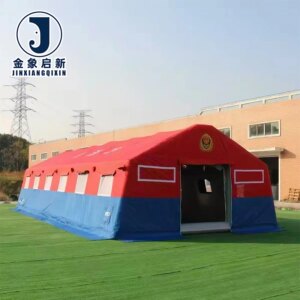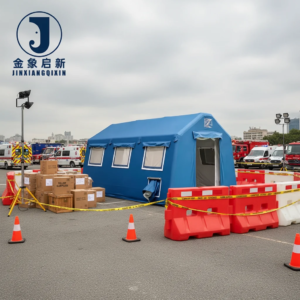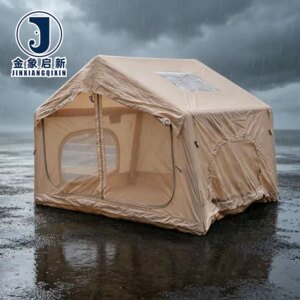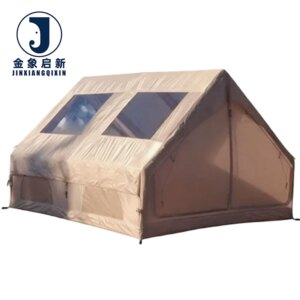
Description
Coating Weight Control — Every roll of PVC inflatable tent fabric leaves our Jinan facility with verified GSM matching your specification sheet, backed by 30 years of coated fabric process control.
Technical Specifications
| Parameter | Value |
|---|---|
| Product Type | Inflatable Tent |
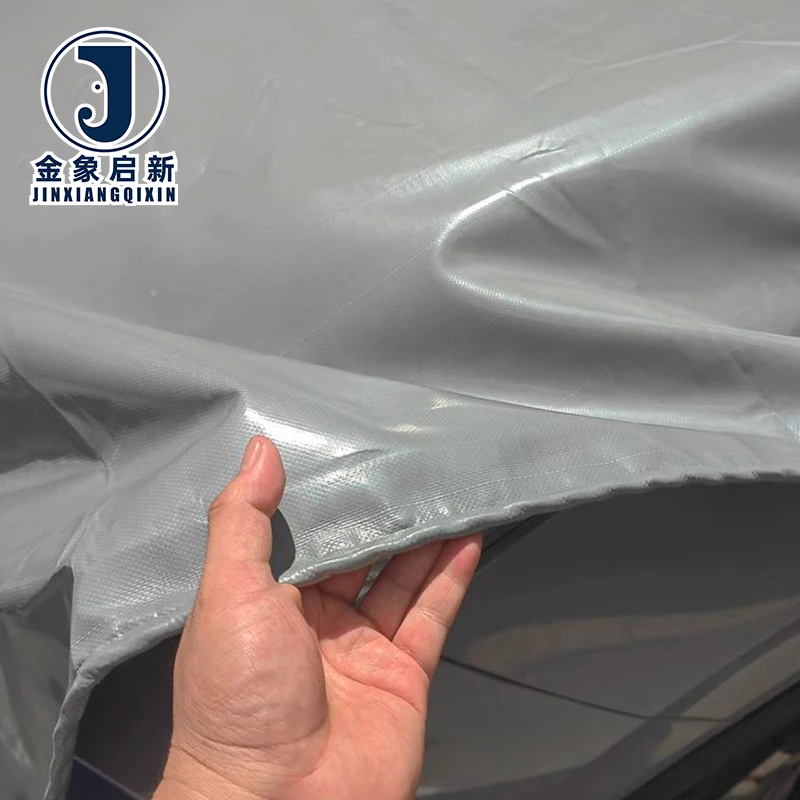
| Core Material | PVC tarpaulin |
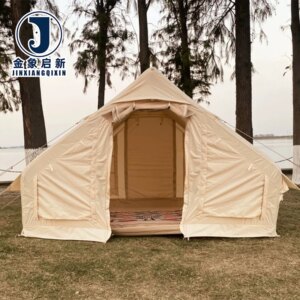
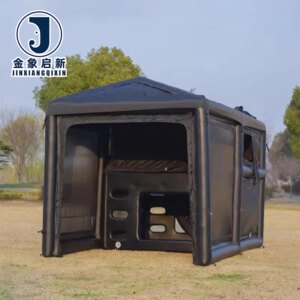
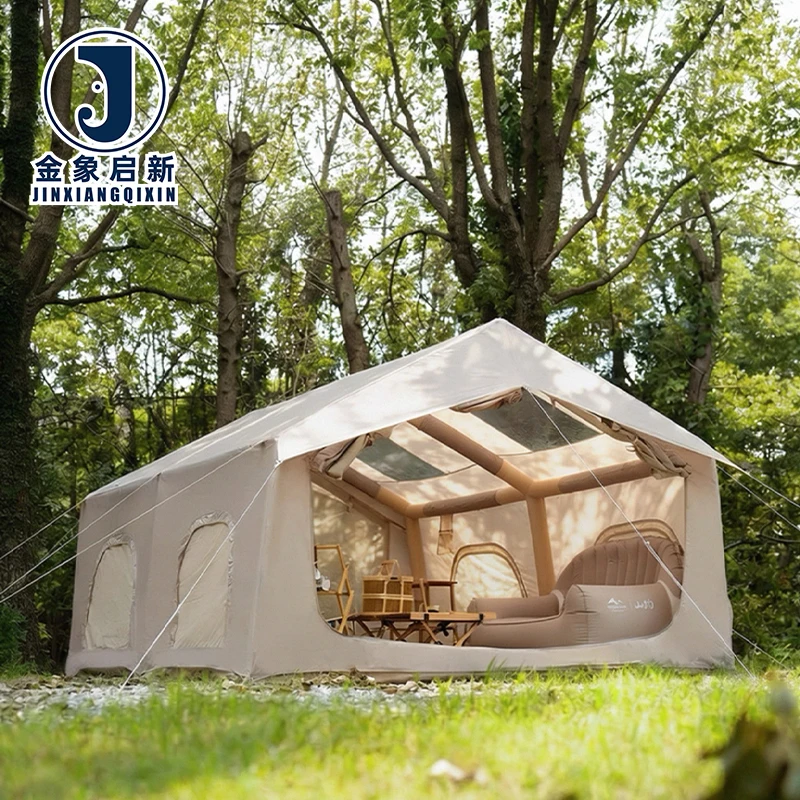
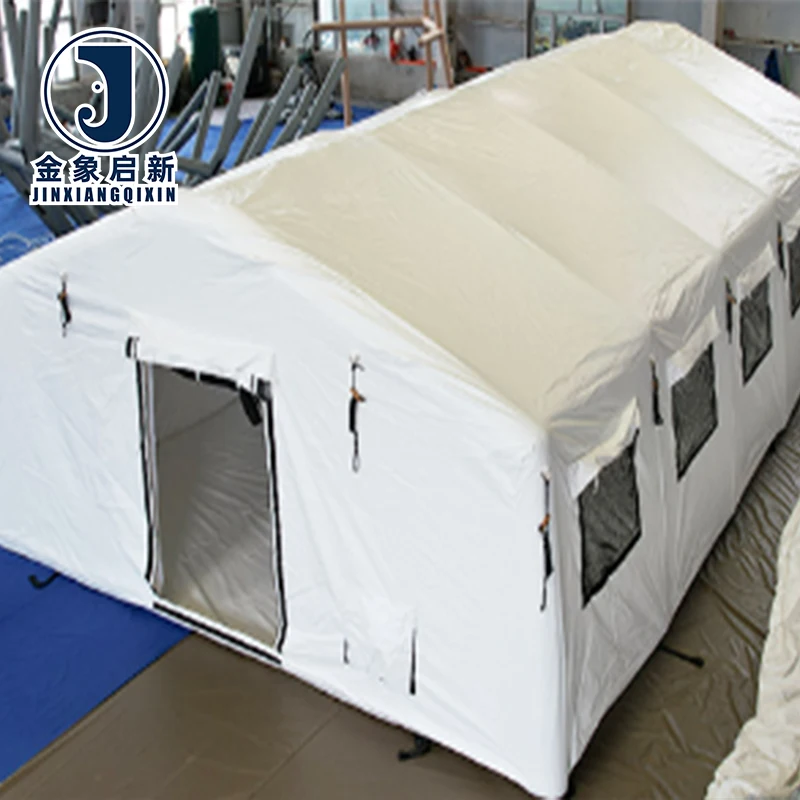
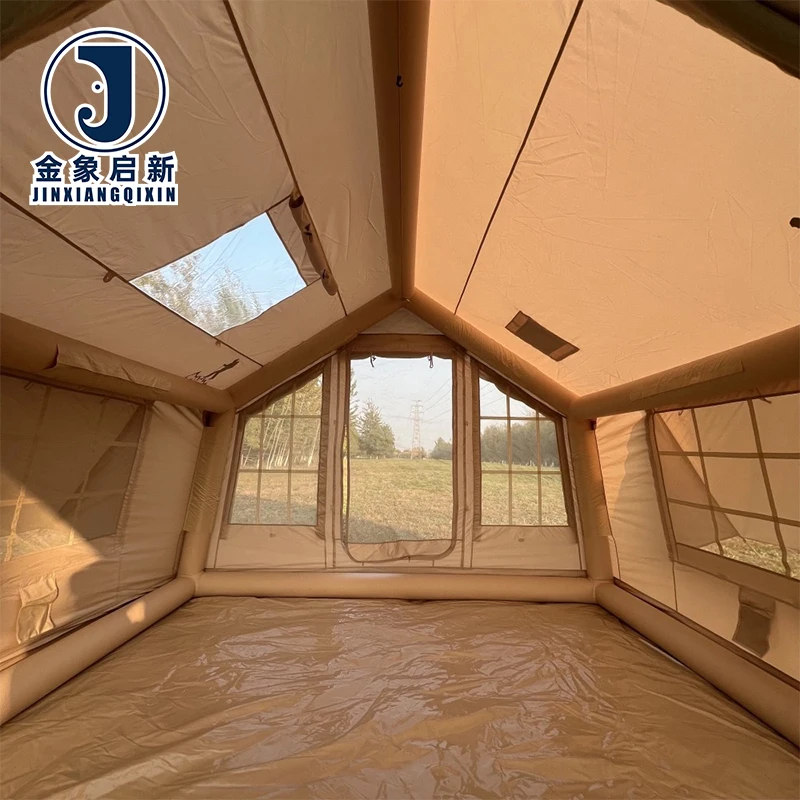
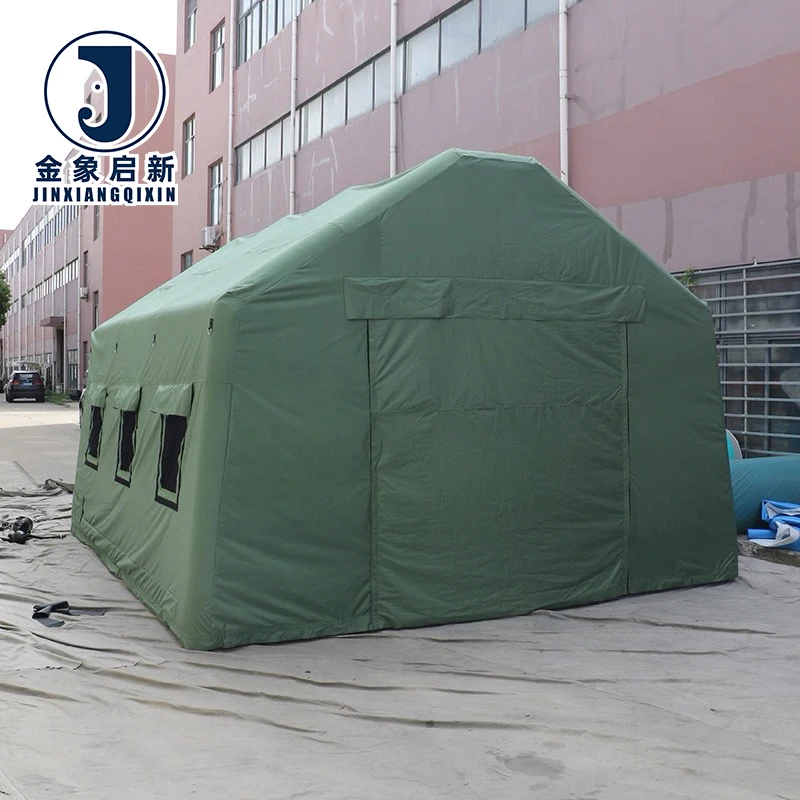
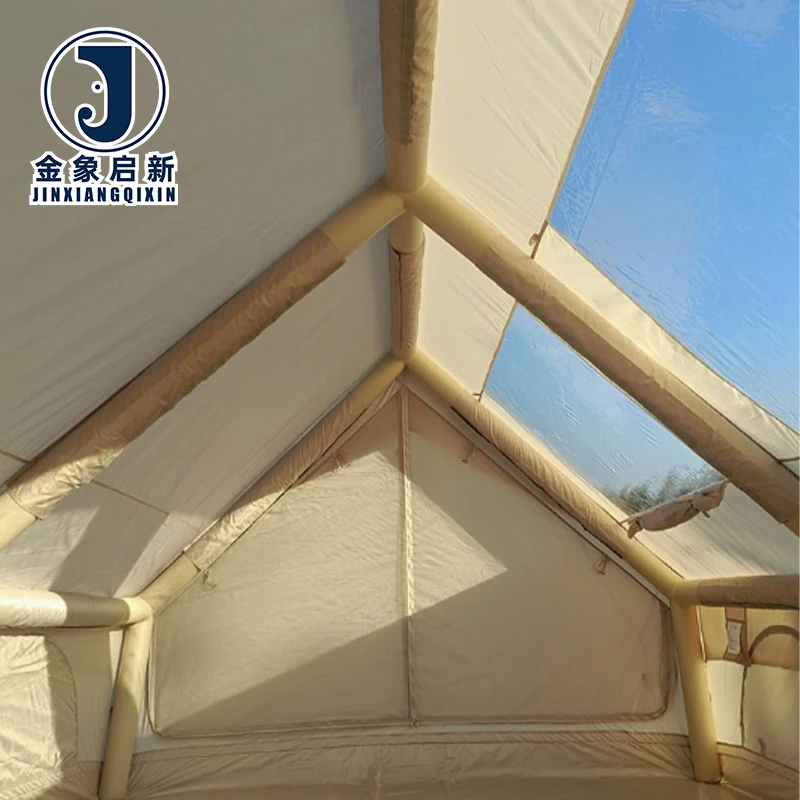
| Construction | Single layer inflatable shelter |
| Key Performance | Waterproof, tear-resistant, quick setup |
| UV Resistance | Available (test basis not stated in source — confirm grade) |
| Flame Retardant | Available in flame retardant grades — confirm the grade required for your market |
| Customization | OEM & ODM (size, color, pattern printing, performance modifications) |
| Quality Control | 7-step inspection process with dedicated QA & QC staff |
| R&D Team | 10 technicians |
| Production Facility | 9180 square meters, 3 full production lines, 36 sets of professional processing equipment |
| Standards | ISO9001, ISO14001, ISO45001, CE |
Application Suitability
| Application | Exposure & Requirement |
|---|---|
| Commercial camping grounds | Year-round weather exposure, repeated inflation cycles, guest safety |
| Outdoor event venues | Rapid deployment, wind load resistance, high visibility branding |
| Industrial site accommodations | Harsh environment durability, extended occupancy, regulatory compliance |
| Equipment storage shelters | UV degradation prevention, moisture ingress protection, structural airtightness |
| Personnel rest areas | Thermal insulation compatibility, ventilation integration, fire safety standards |
Why Batch Consistency Matters More Than Stated GSM for Inflatable Tent Fabric
Roll-to-roll coating uniformity determines whether your inflatable tent production line runs smoothly or stalls with material rejects.
Sourcing PVC inflatable tent fabric by the roll seems straightforward until containers arrive with colour shifts between batches or coating adhesion that varies from one end of the roll to the other. I have watched tent manufacturers lose entire production runs because the heat-seal parameters calibrated on the sample roll failed on the bulk delivery. The stated GSM on the quotation means little if the coating weight distribution across the fabric width is uneven, creating weak zones where air tubes lose pressure or seams delaminate under cyclic stress [NEED_CITE: tensile and tear test methods for coated fabrics per ISO 1421].
Coating Adhesion and Airtight Integrity for Inflatable Structures
Inflatable tent fabric demands more than waterproof performance. The PVC coating must bond to the base fabric with sufficient peel strength to withstand repeated inflation and deflation cycles without delaminating at stress points. Our 36 sets of professional processing equipment maintain consistent coating application across the full fabric width, ensuring that the airtight performance your customers expect holds up through seasons of commercial use.
Production Capacity and Roll Consistency at Scale
Three full production lines running PVC tarpaulin for inflatable applications means we can fill container orders with fabric from the same production batch, eliminating the colour variation that plagues multi-source procurement. Tent manufacturers ordering by the roll need assurance that roll number one and roll number fifty will heat-seal with identical parameters and match visually when fabricated into the same structure. Our batch-controlled coating process addresses this requirement directly [NEED_CITE: coating weight verification methods for PVC tarpaulin].
Reading Beyond the GSM Number on Your Inflatable Tent Fabric Spec Sheet
GSM tells you the total weight per square meter but reveals nothing about the base fabric denier, weave density, or how the coating weight distributes between top and bottom surfaces. A 900 GSM PVC tarpaulin with a loose weave base may tear more easily than a 650 GSM fabric with a high-denier, tight-weave construction. For inflatable tent applications where the fabric must hold air pressure while resisting puncture from ground contact and wind-borne debris, the relationship between base fabric strength and coating thickness determines real-world performance more than weight alone. Coating method also matters: knife-over-roll coating typically achieves better adhesion and heat-seal compatibility than lamination, which affects how your fabrication team sets welding temperatures and dwell times.
The Hidden Cost of Specifying Inflatable Tent Fabric on Price Per Kilogram Alone
Purchasing teams focused on cost per kilogram often receive fabric that meets the weight target through heavier coating on a lighter, weaker base fabric. The result arrives looking correct on the scale but fails when your production team attempts heat-sealing the air tube seams. Coating that is too thick relative to the base fabric denier creates weld lines that crack under flexing, while insufficient coating leaves the base fabric exposed to moisture ingress and UV degradation. I have seen inflatable tent manufacturers forced to scrap completed units because the fabric batch lacked the coating adhesion strength needed for airtight seams [NEED_CITE: heat-seal strength testing for PVC coated fabrics].
Why Procurement Teams Source Inflatable Tent Fabric From This Facility
Nearly 30 years focused on PVC coated fabric means our process control over coating weight and adhesion is embedded in standard operating procedures, not ad-hoc adjustments. Ten technicians in our R&D team handle material selection and sample development for inflatable applications, reducing your qualification timeline. Dedicated QA and QC staff inspect every roll before container loading, with 100% pre-shipment verification against your specification sheet. Three production lines and 36 sets of equipment support volume orders with reliable dispatch scheduling. Sample development within days lets you validate heat-seal parameters and fabrication methods before committing to bulk production.
Documentation & Verification
- Material specification sheet confirming PVC tarpaulin GSM, base fabric denier and coating weight for each roll batch
- Pre-shipment inspection record with 100% QA verification against stated inflatable tent fabric specifications
- Roll packing list detailing roll count, individual weight, dimensions and batch codes for logistics planning
- Test report for UV-resistant or flame-retardant treatment grades upon request — confirm required standards
- Certificate of origin and customs documentation supporting international shipment
Fabrication, Handling & Storage
- Heat-seal parameters vary by PVC coating formulation — request our recommended temperature and dwell time settings for your inflatable tube construction
- Store PVC tarpaulin rolls vertically on pallets to prevent permanent creasing that compromises coating integrity at fold lines
- Allow fabric to reach ambient temperature before unrolling in cold conditions to avoid coating crack damage
- Use compatible PVC welding tape and solvent cement for field repairs matching the inflatable tent fabric coating chemistry
- Plan cutting layouts to maximize yield from standard roll widths, minimizing waste on air tube pattern pieces
What We Need to Quote Your Inflatable Tent Fabric Requirement
Tell us the air tube diameter and overall tent dimensions you are manufacturing, along with your annual roll consumption forecast. Specify any fire-retardant or anti-static certifications required by your destination market regulations. Confirm whether you need solid colours, custom Pantone matching, or pattern printing across the roll order. Let us know if you require sample rolls for heat-seal parameter validation before bulk production.
Frequently Asked Questions
Q: How do you verify GSM consistency across rolls in the same inflatable tent fabric order?
A: Each roll undergoes weight verification against the stated GSM before dispatch, with results recorded on the pre-shipment inspection report. Our batch-controlled coating process maintains uniform application across production runs, and we can provide roll-by-roll weight data for your quality records upon request.
Q: What minimum order applies to custom width or colour for inflatable tent fabric rolls?
A: Custom widths and Pantone colour matching carry minimum order quantities that vary by specification complexity. Contact our team with your required dimensions and colour references, and we will confirm the MOQ alongside lead time for your specific inflatable tent fabric requirement.
Q: How do you ensure colour consistency when I order multiple rolls for the same tent production batch?
A: Our three production lines use batch-controlled coating with inline colour monitoring, so rolls from the same production run match visually and chemically. We pack container orders from single batches where possible and provide batch codes on the packing list for your traceability.
Q: What roll widths and lengths are available for PVC inflatable tent fabric?
A: Standard widths cover common inflatable tube fabrication requirements, with custom widths available subject to production line capability and order volume. Roll lengths are configured to optimize container loading efficiency and minimize handling waste at your fabrication facility.
Q: How is the fabric packed to prevent coating damage during ocean freight?
A: Rolls are wound on reinforced cores, wrapped in protective film, and packed vertically on pallets to prevent crushing and permanent creasing. The packing method accounts for container transit conditions to ensure the PVC coating arrives without surface damage or adhesion loss.