Description
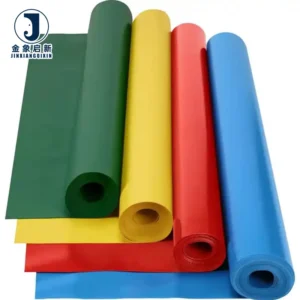
Roll-to-roll colour consistency — Batch uniformity maintained through in-line coating weight checks and pre-shipment sampling, so every roll in a container load matches the approved reference.
Technical Specifications
| Parameter | Value |
|---|---|
| Product Type | PVC Coated Tarpaulin Roll |
| Coating Material | HDPE weaving with LDPE lamination on both sides (source value — verify against manufacturer catalog) |
| Weight Range | 50 g/m² to 220 g/m² available (range covers product family — confirm the grade for this item) |
| Total Thickness | 0.2–0.4 mm / 8–16 mil / Custom |
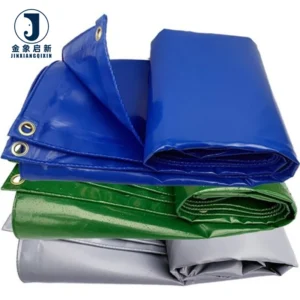
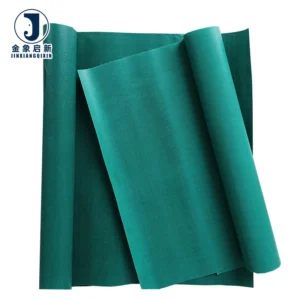
| Colour Options | Blue, Blue/Orange, Green, Grey, Black, Clear, Grey/Green, Orange, or custom |
| UV Treatment | Available (test basis not stated in source) |
| Waterproof | Yes |
| Tear Resistance | Tear resistant (grade not stated in source) |
| Anti-Mildew | Mildew proof, anti-aging |
| Printing Option | Custom printing supported |
| Standards | ISO 9001, ISO 14001, ISO 45001, CE |
Application Suitability
| Application | Exposure & Requirement |
|---|---|
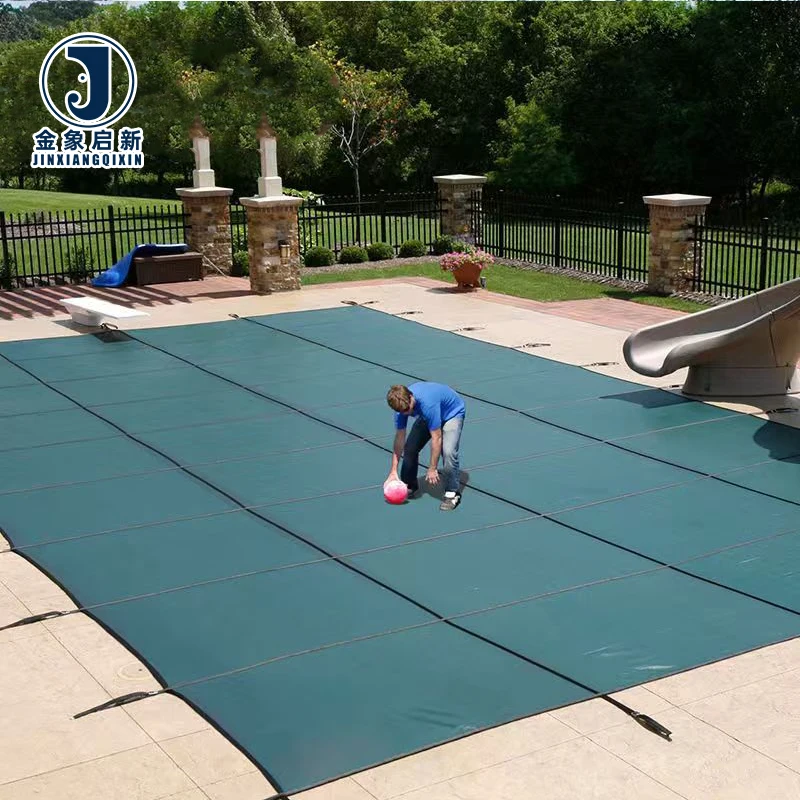
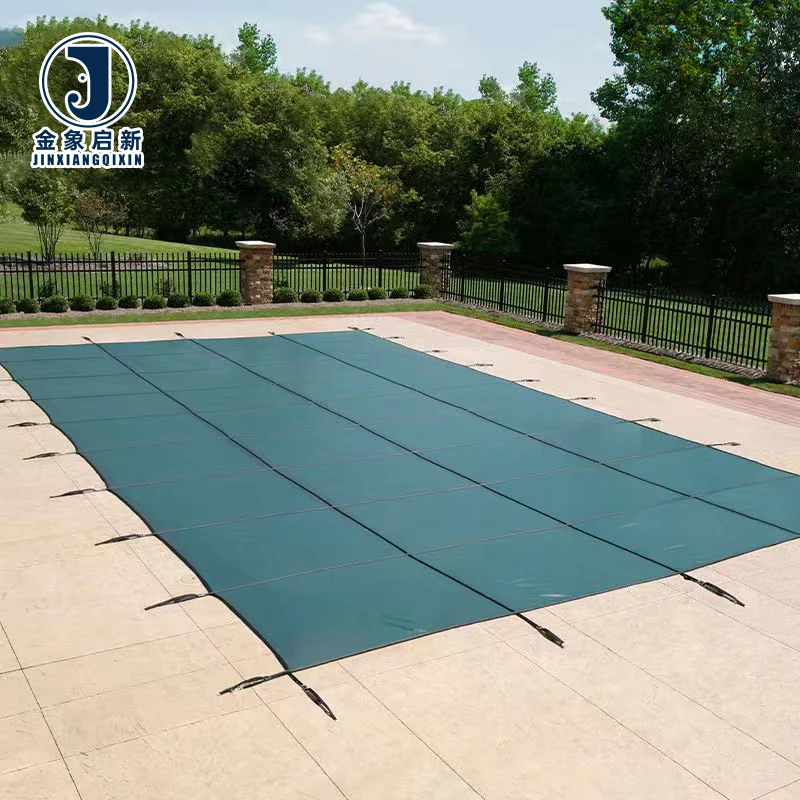
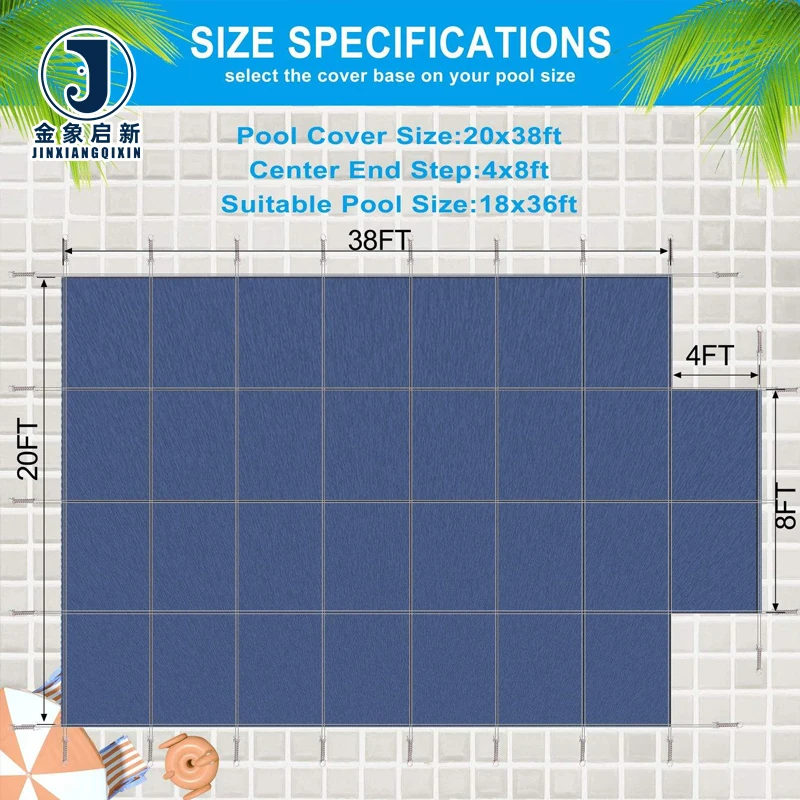
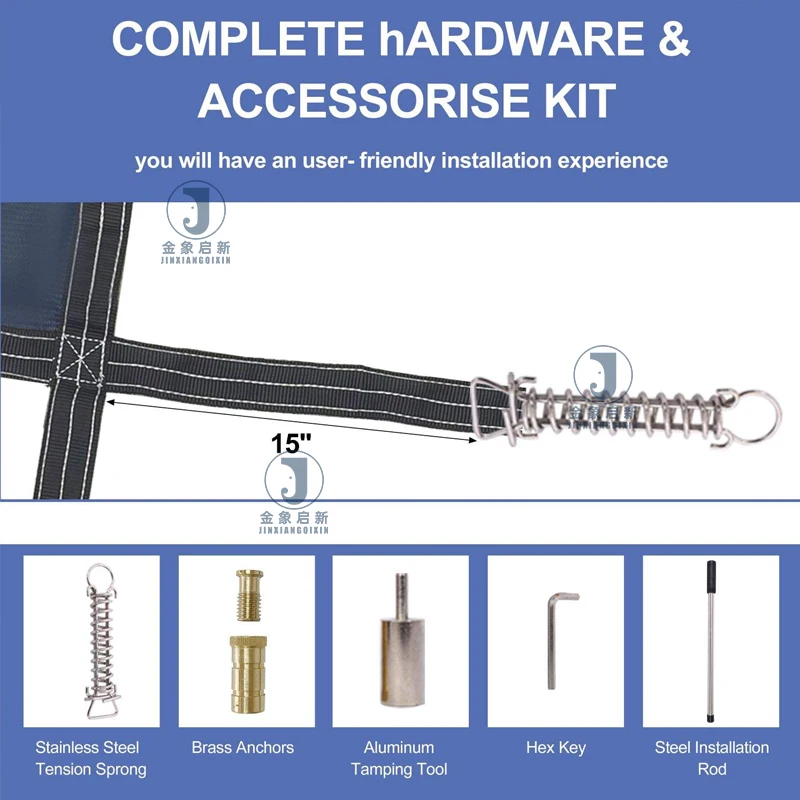
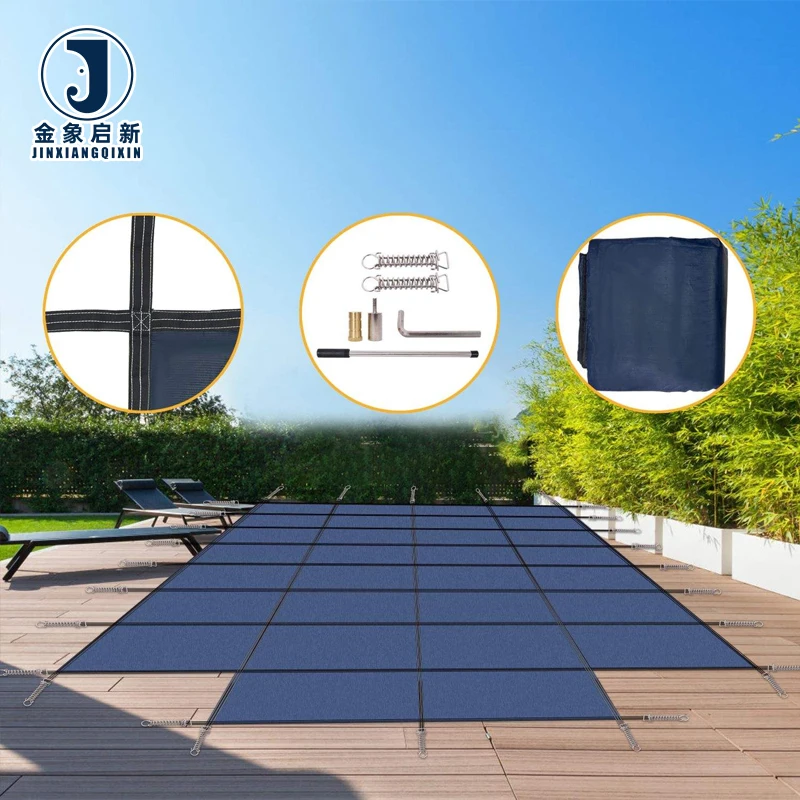
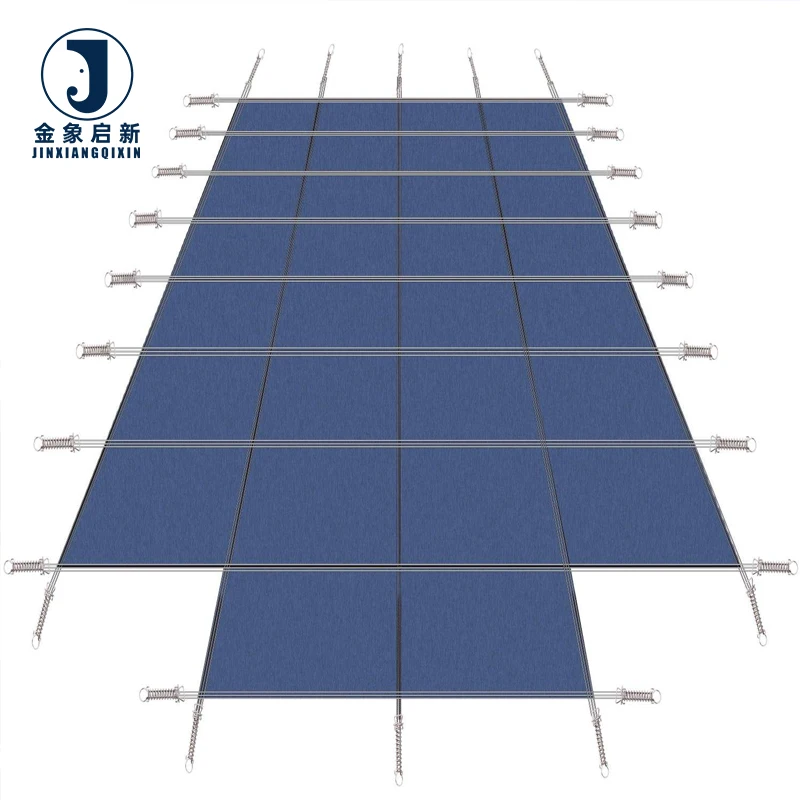
| Swimming pool safety and debris cover | Constant water contact, UV exposure, chemical resistance to pool treatment agents |
| Pond and reservoir liner | Permanent water immersion, soil chemistry, puncture risk from substrate |
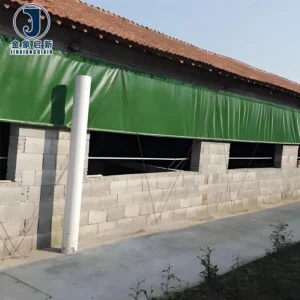
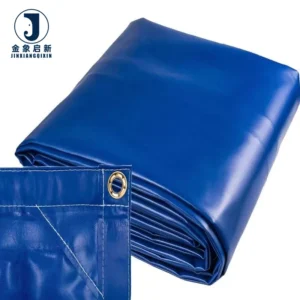
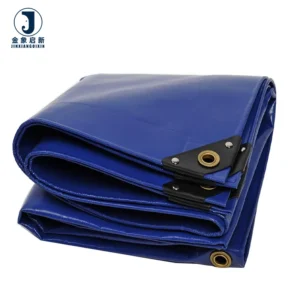
| General outdoor waterproof covers | Weather cycles, UV degradation, mechanical handling and folding stress |
| Agricultural and aquaculture stock covering | Moisture, biological growth, seasonal temperature variation |
| Truck and equipment covers | Road debris, wind load, abrasion at contact points |
| Construction site covers | Dust containment, weather protection, repeated deployment and storage |
Why a Quoted GSM Is Not Enough to Confirm Roll Quality
Verified weight per roll with documentation closes the gap between quotation and delivery.
Distributors loading full containers of PVC tarpaulin roll wholesale shipments frequently discover that the material on arrival feels lighter than what was specified. The GSM figure on a quotation is a target, not a guarantee, unless the supplier runs a weight check on every roll before dispatch. Without that step, the entire container may arrive below the agreed specification, forcing a choice between accepting substandard stock or initiating a costly return [NEED_CITE: common GSM discrepancy in imported tarpaulin rolls].
For a wholesale buyer distributing across regional markets, a lightweight roll means the end user experiences earlier tearing, faster UV degradation, and more frequent replacement claims — all of which trace back to the distributor’s reputation.
Container-Scale Colour Matching Across Rolls
When a distributor orders multiple rolls of the same colour for PVC tarpaulin roll wholesale distribution, any shade drift between rolls becomes visible once the end user installs them side by side. This is particularly damaging for truck cover fabricators and construction cover suppliers, where two panels sewn from different rolls create a visible seam line. Batch-to-batch colour control requires consistent pigment dosing at the coating stage and a master reference sample retained from the initial approval.
Our production runs retain a signed colour swatch from the sample approval stage. Every subsequent roll in the same order is compared against that reference under controlled lighting before it is cleared for packing, reducing the risk of visible variation once the rolls are unrolled and fabricated into finished covers.
Roll Packing That Survives Transit and Storage
Rolls packed loosely or on weak cores arrive with crushed inner layers, edge damage, and coating creases that render the first several metres unusable. For wholesale buyers, that wasted footage adds up across a container load. Each PVC tarpaulin roll wholesale order is wound onto hard paper tubes and wrapped in the same tarpaulin sheet material, forming a protective outer layer that resists moisture ingress and mechanical impact during ocean freight and warehouse handling [NEED_CITE: standard roll packing methods for coated fabric export].
This packing approach also simplifies identification at the destination warehouse, as the outer wrap carries the same colour as the product inside, allowing quick visual sorting without unwrapping.
Reading the Specs Beyond the GSM Number
The weight of a coated fabric in grams per square metre is a useful starting point, but it does not act alone. A roll at 220 g/m² with a loosely woven base fabric may tear more easily than a tighter weave at a lower weight, because the yarn density and denier determine how stress distributes across the fabric structure. The HDPE weaving base in this product family provides the structural skeleton, while the LDPE lamination on both sides seals the weave and delivers waterproof performance.
Thickness, measured here across the 0.2–0.4 mm range, correlates with coating weight and influences stiffness, weldability, and abrasion resistance. Thicker coatings generally tolerate higher heat-sealing temperatures and produce stronger weld seams, which matters when fabricators join panels into large covers. The available UV treatment and anti-mildew formulation address the two most common degradation pathways for outdoor-exposed tarpaulin fabric in tropical and subtropical markets.
The Cost of Specifying the Wrong Roll Grade
Choosing a lighter GSM to save on unit cost often surfaces as warranty claims months later. A pool cover made from a grade that is too thin may puncture under the ratchet system tension or degrade under constant chlorine exposure, leading to customer returns. Similarly, specifying a roll without confirming the UV treatment level can result in surface chalking and embrittlement within a single season of outdoor use in high-sunlight regions [NEED_CITE: UV degradation patterns in laminated PE tarpaulin].
For fabricators, a roll that is too stiff for the intended application causes handling difficulty during welding and may crack at fold lines in cold-weather installations. Colour inconsistency across rolls forces a fabricator to segregate stock and absorb waste, eroding margins that appeared healthy at the quotation stage.
Why Distributors Source Roll Stock Here
Three full production lines and 36 sets of professional equipment support bulk roll output with reliable scheduling, so container-load orders ship within the agreed window. A 10-person R&D team handles custom width, colour, and printing requests, developing samples within days rather than weeks. Dedicated QA and QC at every production stage includes 100% inspection before shipment, catching GSM drift and colour variance before rolls leave the facility.
With nearly 30 years focused on coated fabric manufacturing, process control over coating weight and adhesion is built into standard operating procedure rather than treated as an add-on. Rolls are packed on hard paper tubes with tarpaulin wrap for transit protection, and every shipment includes a roll packing list, material specification sheet, and customs documentation for export to over 20 markets.
Documentation & Verification
- Material specification sheet stating GSM, base fabric type, and colour reference included with every roll shipment
- Pre-shipment inspection record confirming 100% roll check before container loading
- Roll packing list detailing roll count, individual weight, and dimensions for container planning
- Certificate of origin and customs documentation prepared for destination market requirements
- Test reports for UV treatment available upon request — confirm the grade required for your market
Fabrication, Handling & Storage
- Heat-seal LDPE-laminated rolls at moderate temperatures to avoid coating blister on the 0.2–0.4 mm thickness range
- Store rolls upright on hard paper tube cores to prevent edge crushing and inner-layer creasing
- Allow cold-stored rolls to reach ambient temperature before unrolling to avoid coating crack at low flexibility
- Cut panels from the same roll batch to maintain colour consistency across fabricated pool or truck covers
- Use mild detergent for cleaning — avoid solvent-based agents that may attack the LDPE lamination surface
Requesting a Roll Stock Quotation
Provide the target GSM range, required roll width, and annual volume so we can recommend the correct grade from the available 50 g/m² to 220 g/m² range. Specify colour and whether custom printing or private-label branding is needed for your distribution market. Confirm whether you require standard roll lengths or custom cut-to-length rolls to optimise your fabrication yield and reduce waste.
Frequently Asked Questions
Q: How do you verify GSM on arrival — can I request a third-party weight test report?
A: Every roll undergoes weight verification during pre-shipment inspection, and the results are documented on the material specification sheet included with your shipment. If your market requires an independent laboratory test, we can arrange third-party sampling before dispatch. Discuss the required test standard at the inquiry stage to ensure the report meets your local compliance requirements.
Q: How is batch-to-batch colour consistency controlled across a multi-roll order?
A: We retain a signed colour swatch from the approved sample and compare every production roll against that reference under controlled lighting. Rolls that fall outside the acceptable tolerance are flagged and excluded from your shipment. For repeat orders, the same master reference is used to maintain continuity across shipments over time.
Q: What roll widths and lengths are available, and what are the minimums on custom sizes?
A: Standard widths and lengths are kept in stock for common GSM grades, and custom widths are available for volume orders. Minimum order quantities vary by specification and colour. Provide your required dimensions and target quantity at inquiry, and we will confirm availability, lead time, and any setup requirements for non-standard sizes.
Q: How are rolls packed for container loading, and how is transit damage prevented?
A: Each roll is wound onto a hard paper tube core and wrapped in the same tarpaulin sheet material, providing a moisture-resistant and impact-resistant outer layer. Rolls are loaded vertically or horizontally depending on container configuration, and a detailed packing list with roll count, weight, and dimensions is provided for your warehouse receiving team.
Q: Can you supply private-label printing and branding on rolls for distribution markets?
A: Custom printing is supported across the product range, including distributor logos, product labels, and branding elements. Provide your artwork files and specify the print location on the roll surface. We develop a printed sample for your approval before bulk production begins, ensuring colour accuracy and print durability match your market requirements.