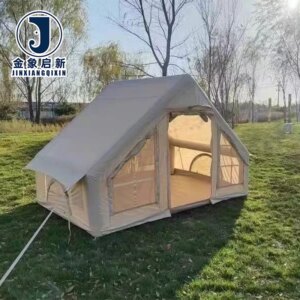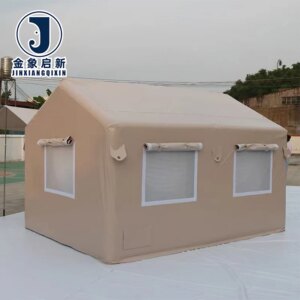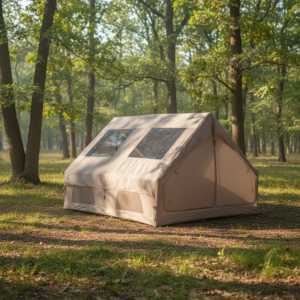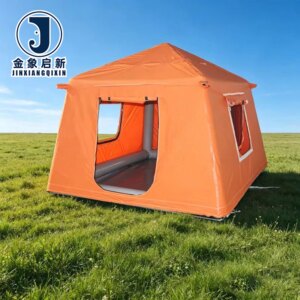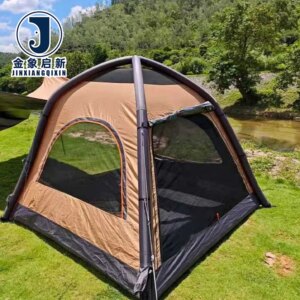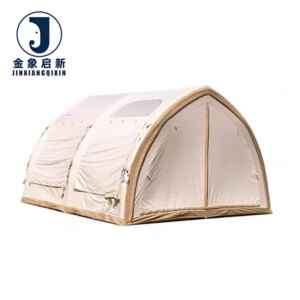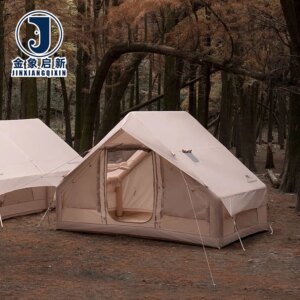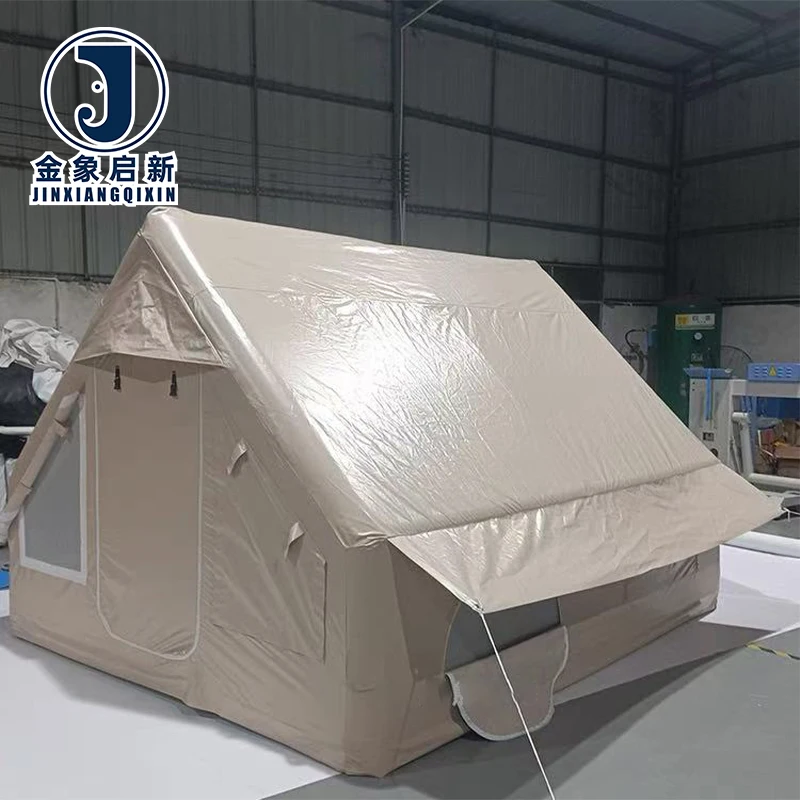
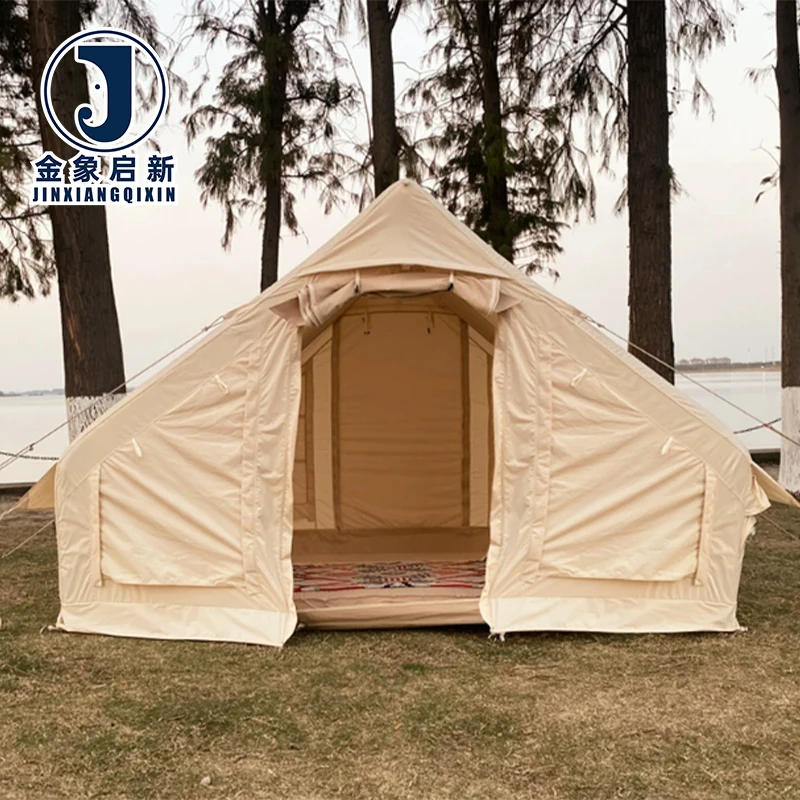
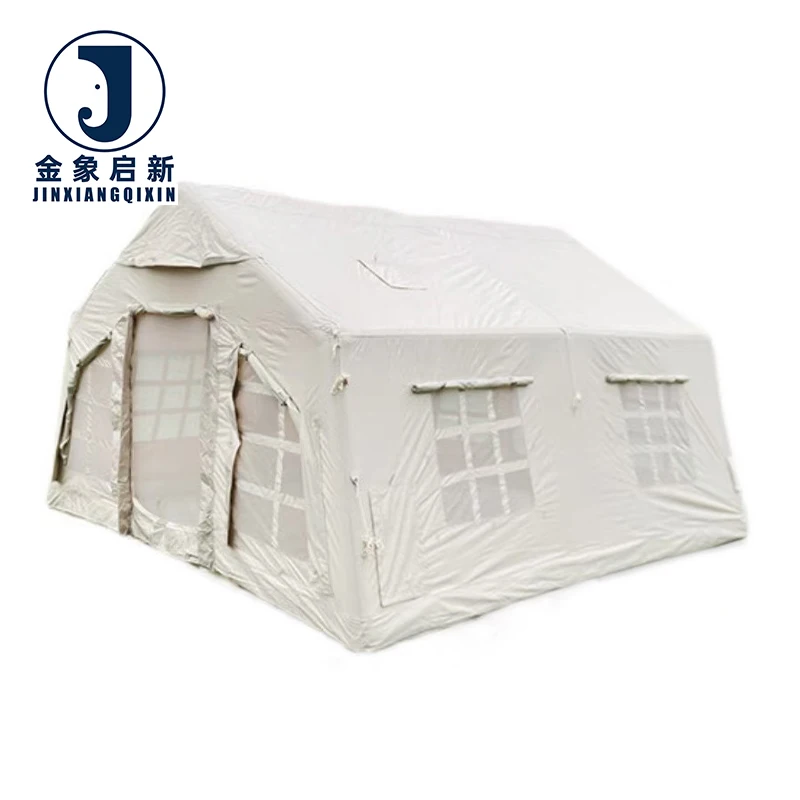
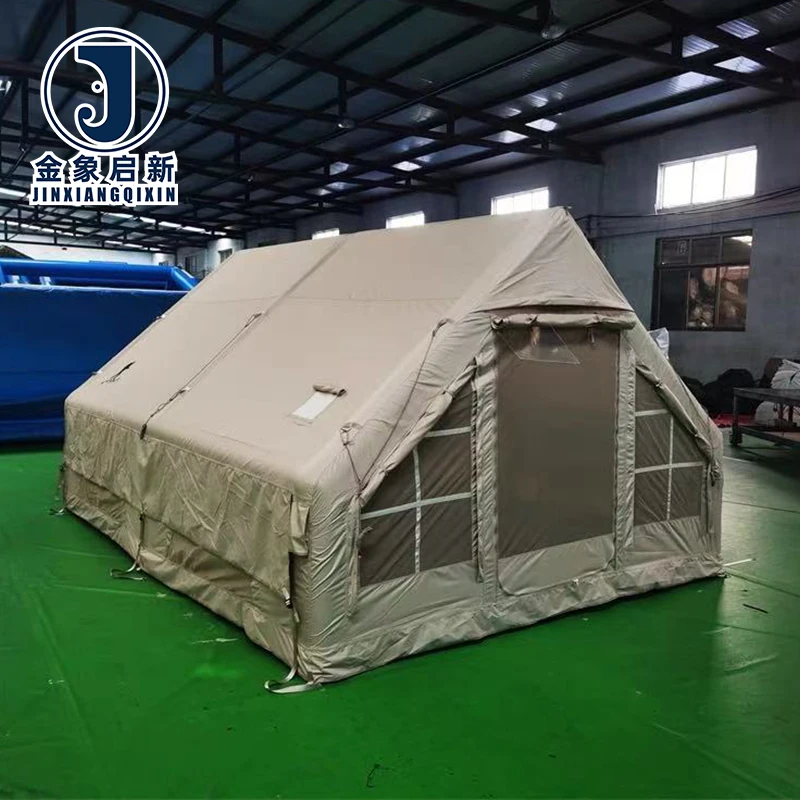
Description
Batch-to-Batch Colour Uniformity — every roll of PVC inflatable tent fabric is inspected against the master colour standard before leaving the production line, eliminating the visible panel mismatch that forces rework on commercial tent builds.
Technical Specifications
| Parameter | Value |
|---|---|
| Product Type | Inflatable Tent |
| Core Material | PVC tarpaulin |
| Capacity | 5-8 Person |
| Opening Mechanism | Quick Automatic Opening (inflatable) |
| Waterproof | Fully waterproof coated construction |
| UV-Resistant | Available in UV-resistant grades — confirm the grade required for your market |
| Tear-Resistant | Tear-resistant PVC coated fabric |
| Flame Retardant | Available in flame retardant grades — confirm the grade required for your market |
| Anti-Static | Available in anti-static grades — confirm the surface resistance required for your site |
| Customization | OEM & ODM (sample customization, pattern printing) |
| Certification | ISO9001, ISO14001, ISO45001, CE |
| Production Facility Area | 9180 square meters |
| Production Lines | 3 full production lines |
| Processing Equipment | 36 sets of professional processing equipment |
| R&D Team Scale | 10 technicians |
Application Suitability
| Application | Exposure & Requirement |
|---|---|
| Outdoor adventure gear manufacturing | Repeated inflation cycles, abrasion from ground contact, UV exposure across all seasons, brand-consistent colour across production runs |
| Event logistics and temporary shelters | Rapid deployment, handling by non-specialist crews, weather exposure during multi-day events, flame retardant compliance for public venues |
| Commercial tent distributors and importers | Roll-to-roll consistency for regional resale, container loading efficiency, accurate labelling for downstream compliance |
| All-season outdoor exposure | Sustained UV load, temperature cycling, moisture ingress prevention, coating adhesion under flex |
Why Roll-to-Roll Colour Drift Derails Tent Production
Colour variation between rolls in a single order is the most common reason commercial tent manufacturers reject entire shipments. When two panels cut from adjacent rolls show a visible shade difference once heat-welded side by side, the tent is unsellable regardless of how well the fabric performs mechanically. The problem compounds at scale: a container holding dozens of rolls can introduce enough variation to affect hundreds of finished units.
Sourcing PVC inflatable tent fabric by the roll means you are trusting the coater’s process control from the first metre to the last. Inconsistent pigment dispersion, fluctuating oven temperatures, or changes in raw material batches between production runs all introduce shade shifts that only become apparent during cutting and assembly. [NEED_CITE: colour consistency measurement methods for coated fabrics per ISO 105 series]
Colour Matching as a Production Discipline, Not a Sorting Exercise
Our approach to roll-to-roll colour consistency starts at the compounding stage, where pigment loading is measured by weight rather than estimated by volume. Each PVC inflatable tent fabric batch is checked against the approved master standard under controlled lighting before coating begins. This catches drift before it enters the production line rather than relying on end-of-line sorting to separate off-shade rolls after the coating has cured.
The 10-person R&D team develops the colour formulation once per specification and locks the recipe for the duration of the order. If a re-order requires a fresh compound batch, a lab draw-down is matched against the retained production sample from the original run before full-scale compounding is authorised. This discipline matters most for brands that sell tents across multiple seasons and need the replacement stock to match existing inventory on the retailer’s shelf.
Coating Weight Consistency Across the Full Roll Length
Coating weight directly influences how the PVC inflatable tent fabric behaves during fabrication. A roll that runs heavier at the edges than in the centre will feed unevenly through automated cutters and produce panels that heat-seal at different temperatures across their width. Our three full production lines use controlled coating application with in-line monitoring, so the stated coating weight applies from edge to edge and from the first metre to the core. [NEED_CITE: coating weight uniformity testing for PVC tarpaulin per ISO 2286]
The 36 sets of professional processing equipment include dedicated lines for different coating methods, allowing us to assign the right line to each specification rather than forcing all grades through a single machine. This separation reduces changeover-related variation and keeps oven dwell times stable throughout the run, which is where most weight drift originates.
Understanding the Base Fabric Behind the Coating
The PVC coating provides waterproofing and surface performance, but the base fabric determines how the inflatable tent fabric handles the internal air pressure that defines the structure. Tensile strength and tear resistance depend on the denier of the yarns and the weave density of the base cloth, not on the coating weight alone. A heavier coating on a loosely woven base will still tear along the warp or weft when a seam is stressed during inflation.
Fabric weight, expressed in GSM, is a useful starting point for comparing PVC inflatable tent fabric options, but it must be read alongside the base fabric specification. Two rolls at the same GSM can perform very differently if one uses a high-denier yarn in a tight weave and the other uses lighter yarn with more coating to reach the same total weight. [NEED_CITE: tensile and tear test methods for coated fabrics per ISO 1421] The material specification sheet we provide with every shipment lists the base fabric construction separately from the coating weight so you can verify the structural properties your tent design requires.
Surface finish — whether glossy or matte — affects how the fabric interacts with heat welding platens and how printed branding holds over repeated inflation cycles. Glossy surfaces typically weld at lower temperatures and produce a cleaner bond line, while matte finishes offer reduced glare and better dirt shedding in field conditions. The choice should be driven by your fabrication setup and the end-use environment rather than aesthetics alone.
The Hidden Cost of Specifying on Price Per Kilogram Alone
When purchasing decisions are driven solely by cost per kilogram of PVC inflatable tent fabric, the savings disappear quickly if the rolls arrive with inconsistent coating weight, off-shade colour, or a base fabric lighter than what the quotation implied. A container of rolls that yields a higher reject rate at the cutting table costs more in wasted labour and delayed shipments than paying for verified specification compliance from the outset. [NEED_CITE: total cost of ownership analysis for coated fabric procurement]
Why Procurement Teams Consolidate Here
Dedicated QA and QC staff inspect every roll of PVC inflatable tent fabric before dispatch, with a pre-shipment inspection record that documents coating weight, colour match, and dimensional accuracy for each roll in the order. The three full production lines run simultaneously to maintain volume availability without sacrificing the line-specific process parameters each grade requires. Sample development for custom widths, colours, and printed patterns is handled by the 10-person R&D team and typically delivered within days, allowing you to approve the exact material before committing to bulk production. Full OEM and ODM capability covers sample customization and pattern printing for brand differentiation, with ISO9001, ISO14001, ISO45001, and CE certification supporting compliance documentation for your downstream markets.
Documentation & Verification
- Material specification sheet stating base fabric denier, weave density, coating weight, and colour reference for every roll
- Roll packing list with individual roll weight, length, and container loading plan for logistics planning
- Pre-shipment inspection record with 100% coverage documenting GSM verification and colour match per roll
- Test reports for UV-resistant and flame retardant grades supplied where applicable to the ordered specification
- ISO and CE certificates confirming management system compliance across the production facility
Fabrication, Handling & Storage
- Heat weld parameters must be adjusted to the specific PVC coating weight to avoid under-cured or burnt seams
- Store rolls upright on pallets to prevent flat spots that cause feed irregularities during automated cutting
- Allow rolls to acclimatise to workshop temperature before unrolling to prevent coating micro-cracking in cold conditions
- Use compatible PVC-based repair patches and solvent cements matched to the coating chemistry for field repairs
- Nest panel patterns across the roll width to maximise yield and minimise offcut waste from each PVC inflatable tent fabric roll
What We Need to Move Your Enquiry Forward
Provide the target tent dimensions, annual roll volume, and any colour or print requirements so we can confirm availability on our production schedule. Specify whether your market requires flame retardant or anti-static certification and which standard applies at the point of sale. Indicate if you need sample rolls for fabrication trials before committing to bulk, and share your preferred roll width to optimise your cutting layout.
Frequently Asked Questions
Q: How can I verify the GSM of each roll matches the quotation when the shipment arrives?
A: We supply a pre-shipment inspection record listing the measured coating weight and total GSM for every roll in your order. On arrival, you can cross-check using a calibrated scale and the roll dimensions on the packing list. Any discrepancy is documented before dispatch, so you receive a transparent record rather than discovering a shortfall during production.
Q: How do you maintain colour consistency across dozens of rolls in a single bulk order?
A: Pigment formulation is locked per order and every batch is checked against the approved master standard under controlled lighting before coating begins. Each roll is inspected against the colour reference on our material specification sheet during pre-shipment QC. Rolls that fall outside the agreed tolerance are withheld rather than mixed into the shipment.
Q: What roll width and length should I specify for my inflatable tent panel cutting layout?
A: The optimal PVC inflatable tent fabric roll width depends on your largest panel dimension and how you nest patterns to minimise waste. Share your cutting template and we will recommend a width that maximises yield. Custom widths are available subject to production line capability, and the R&D team can prepare sample rolls in the proposed width for your fabrication trials.
Q: What are the lead times and minimums for custom colour or printed patterns on roll stock?
A: Lead times depend on whether the custom specification requires a fresh compound batch or a new print cylinder. Sample rolls are typically developed within days for approval before bulk production is scheduled. Minimums are set per colour or print variant and are confirmed at quotation stage based on the ordered width and roll length.