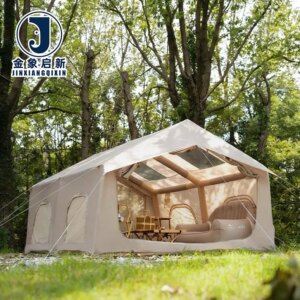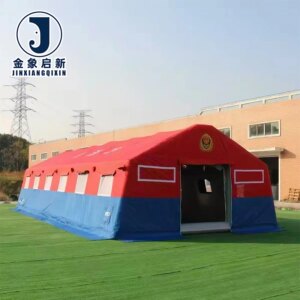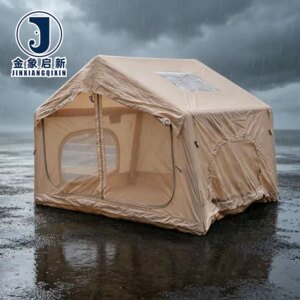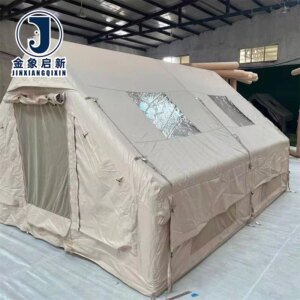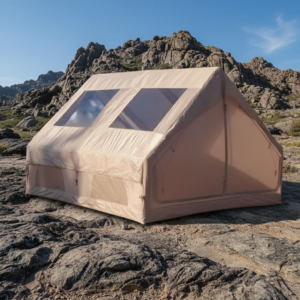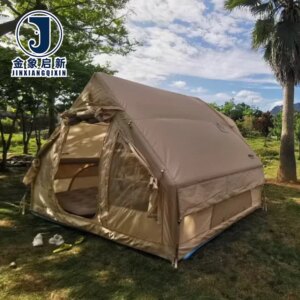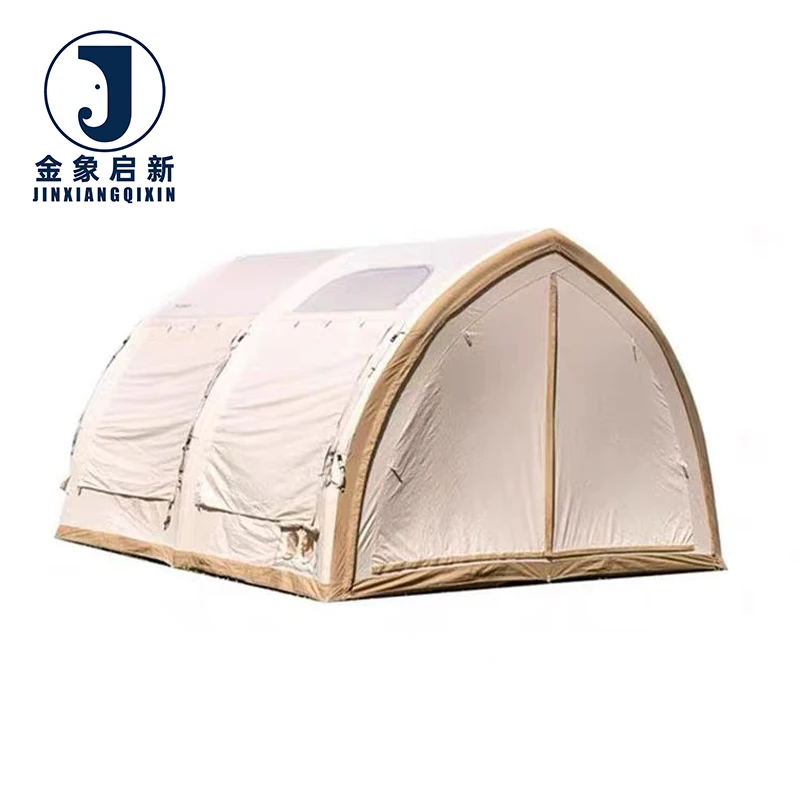
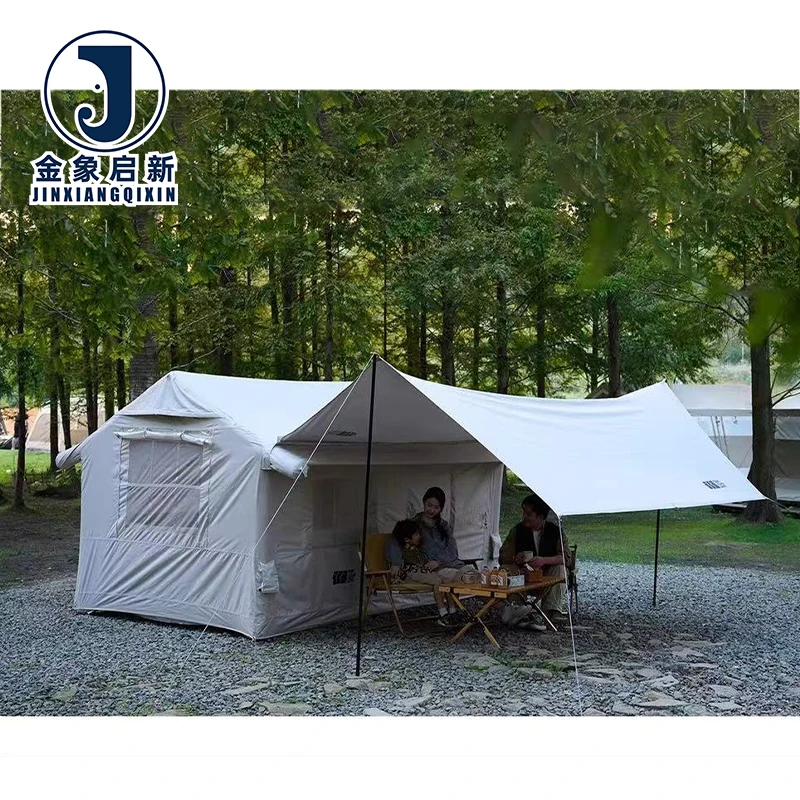
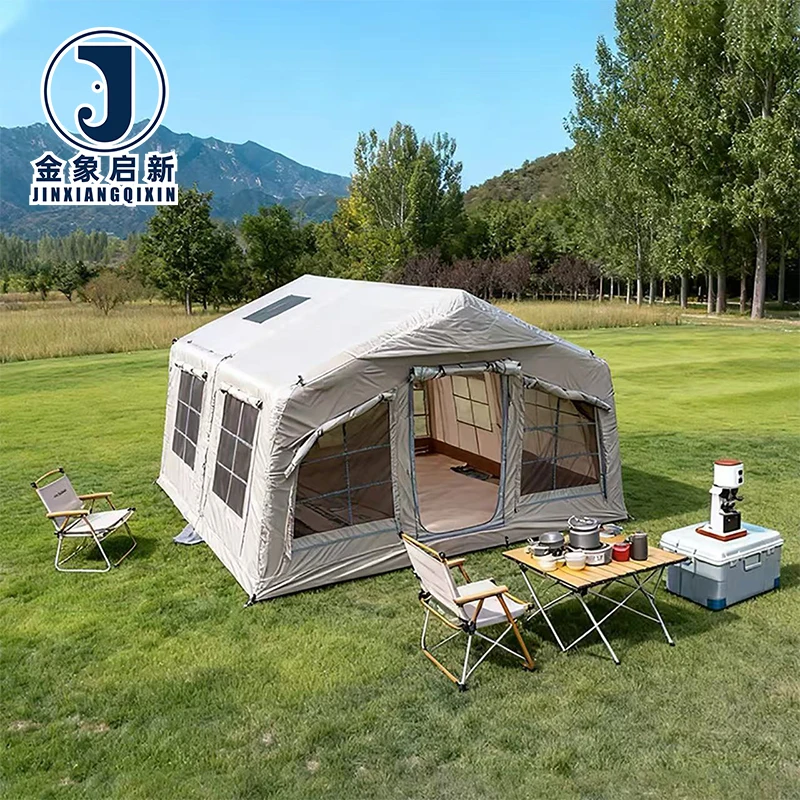
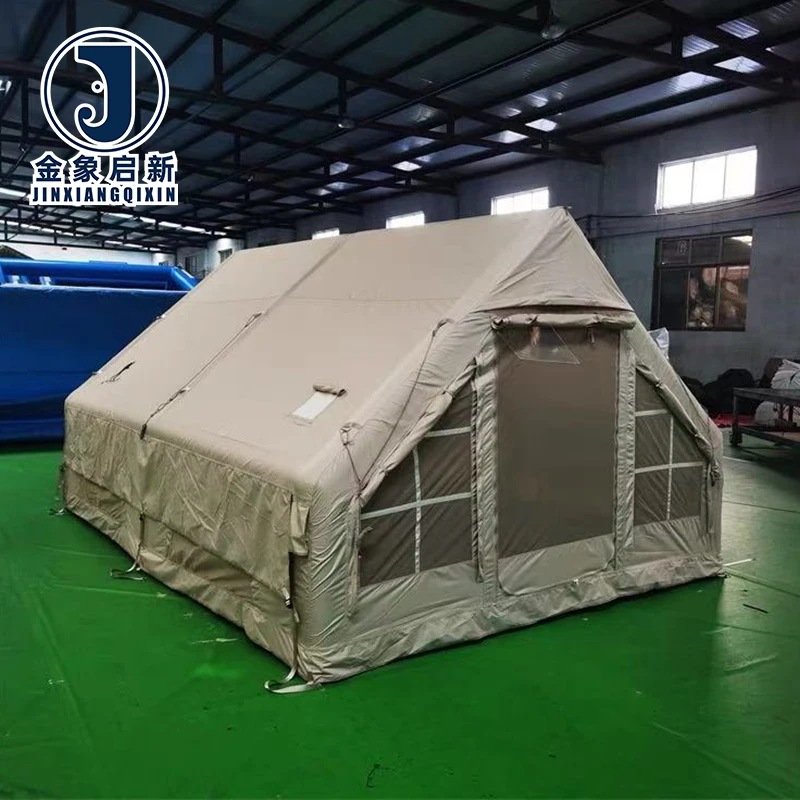
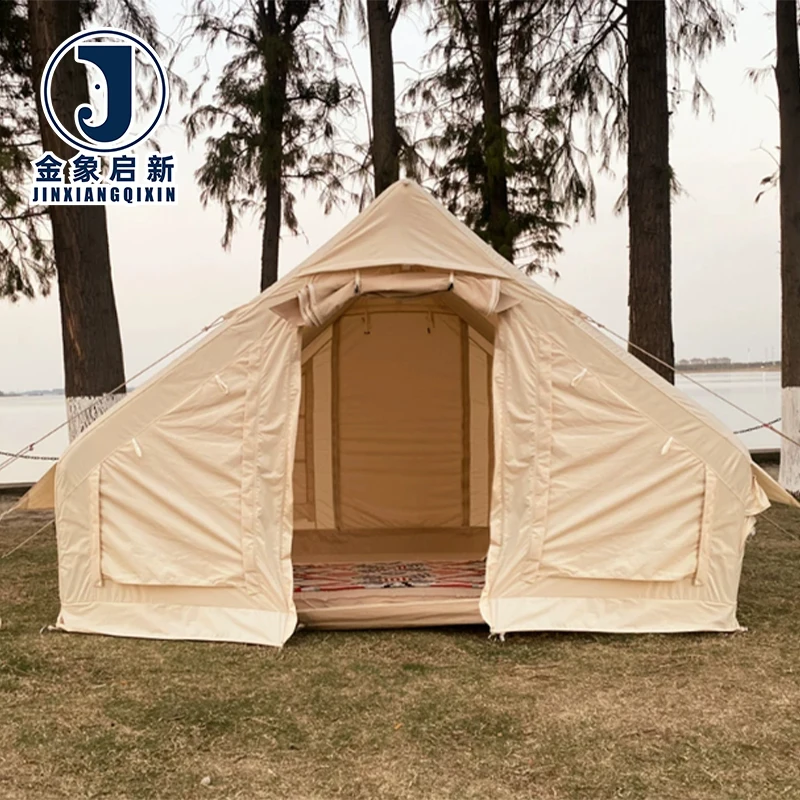
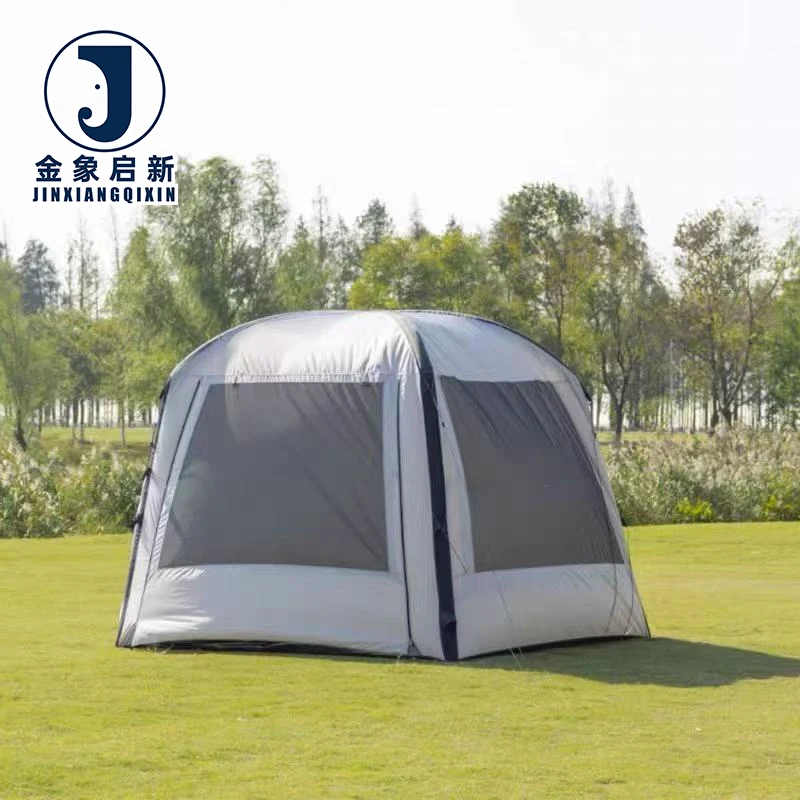
Description
Coated fabric expertise at scale — Our 10-person R&D team supports full OEM/ODM customization for inflatable tent structures, from material selection to rapid sample development, ensuring batch-consistent performance across industrial and emergency deployments.
Technical Specifications
| Parameter | Value |
|---|---|
| Product Type | Inflatable Tent |
| Core Material | PVC tarpaulin (PVC knife-coated fabric) |
| Key Performance | Waterproof, tear-resistant |
| Treatment Options | Fire-retardant (grade to be confirmed at inquiry), anti-static (standard to be confirmed at inquiry), UV-resistant |
| Product Forms | Inflatable structure with automatic opening mechanism |
| Construction | Single layer, extended type design |
| Season Rating | Four-season |
| Customization Service | OEM & ODM (sample, pattern printing, material selection, product design) |
| Standards | ISO9001, ISO14001, ISO45001, CE |
Application Suitability
| Application | Exposure & Requirement |
|---|---|
| Emergency disaster relief rapid-deploy shelters | Extreme weather exposure, rapid deployment needs, multi-season temperature variations |
| Temporary site command centers | Prolonged outdoor use, structural stability under wind load, frequent relocation |
| Mobile maintenance workshops | Industrial handling, equipment movement, abrasion from tools and machinery |
| Equipment storage shelters during disaster recovery | Continuous UV exposure, heavy precipitation, debris impact resistance |
| Emergency logistics hubs | High foot traffic, loading operations, repeated inflation and deflation cycles |
| Four-season inflatable structures for remote sites | Temperature extremes, snow load, sustained wind pressure on fabric membrane |
When Flame Retardant Claims Lack the Test Report to Back Them Up
Verify the grade before you commit to bulk production — documentation prevents failed inspections at the job site.
Inflatable tents deployed for industrial or emergency use often carry flame-retardant claims that sound protective but provide no test basis or classification. Buyers source fabric that passes local fire safety audits, only to discover at delivery that the material carries no traceable test report or the grade does not align with municipal code requirements. I have seen procurement teams accept verbal assurances on fire performance, then face project delays when the fire marshal requests documentation that simply does not exist [NEED_CITE: fire classification standards for temporary structures and inflatable enclosures]. Sourcing from an inflatable tent manufacturer that supplies test reports matched to the stated grade eliminates this risk before production begins.
Rapid Deployment Demands Fabric That Performs Under Pressure
Inflatable tent structures rely entirely on the membrane material for structural integrity once pressurized. The PVC knife-coated fabric used here delivers tear resistance necessary to withstand the inflation cycle and sustained internal pressure without seam separation or panel distortion. When an inflatable tent manufacturer engineers fabric specifically for pneumatic structures, the coating adhesion and base fabric selection account for the biaxial stress that occurs as the structure expands and contracts across temperature ranges.
Fire Safety and Anti-Static Compliance for Regulated Environments
Industrial sites, mining operations, and emergency staging areas often require documented fire-retardant performance tied to a specific grade. We offer fire-retardant and anti-static treatment options — confirm the grade required for your target market and local regulatory framework before placing your order. Custom inflatable tent fabric specified for aviation, tunneling, or disaster-response staging must carry test reports that reference recognized standards, not generic claims. Our R&D team works with you to identify the correct treatment level and ensure documentation ships with your order [NEED_CITE: anti-static and flame-retardant test methods for coated technical fabrics].
How Coating Method and Base Fabric Determine Real-World Durability
The distinction between knife-coated and laminated PVC fabric directly affects how inflatable tent panels behave under sustained inflation pressure. Knife coating forces PVC compound into the base fabric weave under blade pressure, creating mechanical interlock between coating and yarn that resists delamination when the membrane flexes during wind gusts or temperature swings. The base fabric denier and weave density govern tear propagation resistance — a higher denier yarn with tight warp-and-weft spacing limits how far a puncture or cut can spread across the panel. UV-resistant coating additives are compounded into the PVC layer itself rather than applied as a surface spray, meaning the protection remains active as the surface undergoes abrasion from handling and environmental exposure over extended deployment periods.
The Cost of Specifying Without Verification
Ordering inflatable tent fabric based on stated GSM alone, without confirming base fabric density or coating adhesion strength, leads to panels that tear at stress concentrations during inflation or collapse under snow load. Fire-retardant grades selected without reference to the deployment jurisdiction’s fire code result in structures that fail site inspection and require costly replacement before the project can proceed. Batch-to-batch colour variation across a multi-unit order becomes visible once tents are erected side by side at an emergency staging area, forcing cosmetic rejection of an otherwise functional deployment [NEED_CITE: tensile and tear test methods for coated fabrics per ISO 1421]. Welded seams that fail before the fabric body does indicate a mismatch between heat-seal temperature and the coating compound’s fusion point — a problem traceable to inconsistent coating weight across the roll.
What Consistent Supply Chain Discipline Delivers
Our three full production lines and 36 sets of professional equipment support bulk inflatable tent fabric orders with reliable scheduling, so emergency procurement timelines do not slip due to capacity constraints. A dedicated 10-person R&D team handles material selection, pattern printing, and sample development within days rather than weeks, letting you validate fabric performance before committing to volume. QA/QC runs at every production stage with 100% inspection before shipment, catching coating weight deviations and colour drift before rolls leave the facility. We provide material specification sheets, test reports for UV and flame-retardant grades where applicable, and pre-shipment inspection records so your receiving team can verify what arrived matches what was ordered. Nearly 30 years of coated fabric production informs process control decisions that generic suppliers simply cannot replicate.
Documentation & Verification
- Material specification sheet confirming GSM, base fabric construction, coating type, and colour reference per roll
- Test reports for UV and flame-retardant grades provided where applicable, traceable to batch
- ISO9001, ISO14001, ISO45001, and CE certification documentation available for compliance audits
- Pre-shipment inspection record with dedicated QA/QC sign-off before dispatch
- Certificate of origin and customs documentation supporting international shipment
Fabrication, Handling & Storage
- Heat-seal temperature must match the PVC knife-coated compound to prevent weld failure at panel seams
- Store rolls vertically on end caps to avoid flat-spot deformation across the coated surface
- Inflate test panels before full production to verify coating adhesion under biaxial membrane stress
- Use compatible PVC adhesive for field repairs on single-layer inflatable tent panels
- Avoid dragging cut panels across abrasive surfaces to preserve the UV-resistant coating layer
- Allow fabric to acclimate to ambient temperature before unrolling in cold conditions to prevent coating crack
What to Include With Your Inquiry
Provide the deployment environment and expected exposure conditions — temperature range, wind load, precipitation, and duration of continuous outdoor use. Specify the fire-retardant grade or anti-static standard required by your local regulatory authority or project specification. Indicate whether you need rolls for your own fabrication or finished inflatable tent units with automatic opening mechanisms, and confirm colour, sizing, and any pattern printing requirements so we can develop samples for your approval.
Frequently Asked Questions
Q: How do I verify the flame-retardant grade meets my market’s fire safety requirements?
A: Specify the standard required by your local fire code or project specification at inquiry stage. We supply test reports for flame-retardant grades where applicable, traceable to the production batch. Confirm the classification — such as the grade referenced in your building or temporary structure code — before sample approval so the correct compound is selected for your order.
Q: What is the expected outdoor service life under UV exposure for inflatable tent structures?
A: UV-resistant coating is compounded into the PVC layer to extend service life during prolonged outdoor deployment. Actual duration depends on exposure intensity, climate, and inflation cycles. We recommend requesting a material specification sheet and UV test basis at inquiry to assess suitability for your specific four-season deployment conditions and geographic location.
Q: What is the lead time for custom sizing, pattern printing, and sample development?
A: Our 10-person R&D team develops samples for custom inflatable tent requirements within days, covering sizing, colour matching, and pattern printing. Bulk lead times depend on order volume and customization complexity. Submit your specifications and target delivery date at inquiry so we can confirm scheduling against current production line capacity.
Q: How is batch-to-batch colour consistency controlled across multiple inflatable tent units?
A: Colour reference is documented on the material specification sheet for each production run. QA/QC inspection at every stage monitors coating colour against the approved sample before rolls proceed to cutting or shipment. For multi-unit deployments where tents will be erected side by side, specify this requirement at inquiry so tighter batch matching protocols are applied.
Q: How are welded seam strength and inflation pressure verified before shipment?
A: Heat-seal parameters are matched to the PVC knife-coated compound to ensure weld integrity under inflation pressure. Pre-shipment inspection includes seam evaluation and visual assessment of weld consistency across panels. For projects requiring documented pressure testing or destructive weld sampling, specify the protocol at inquiry so testing is incorporated into the QA/QC process before dispatch.