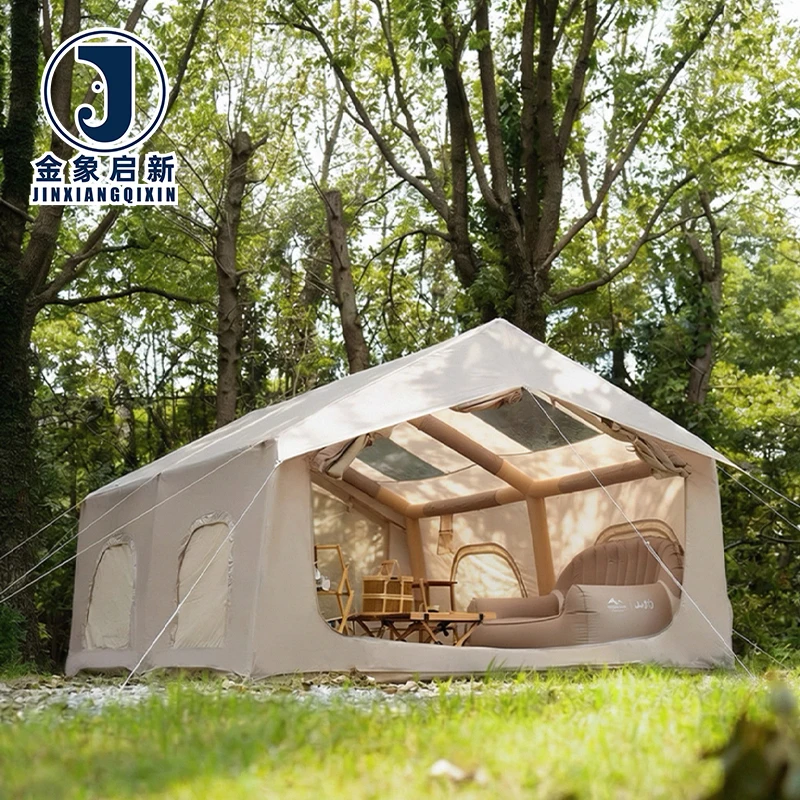
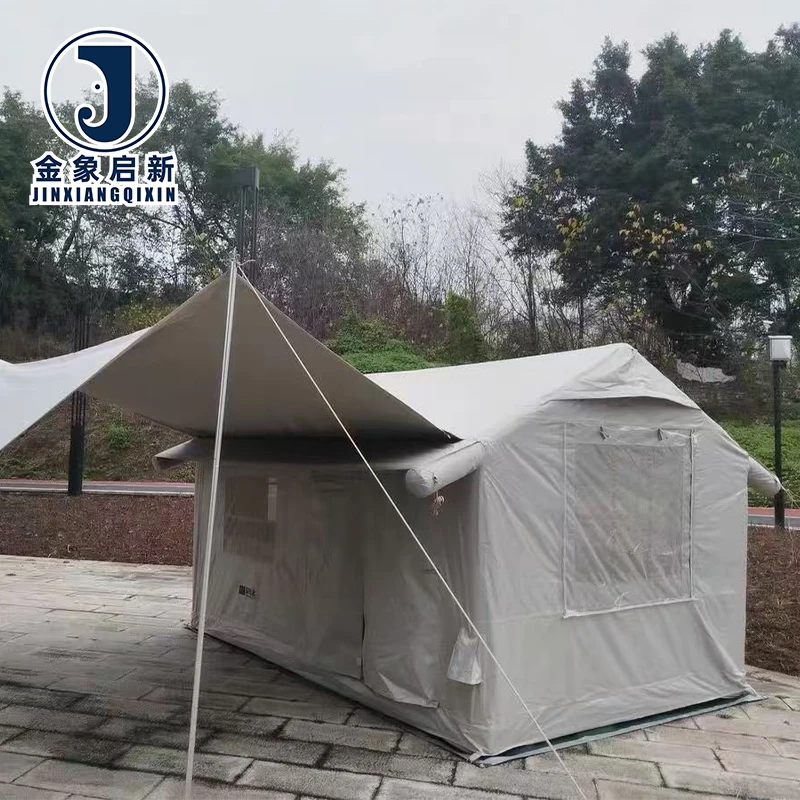
Description
Specification Integrity — In-house sample development and pattern printing capabilities ensure every custom inflatable tent aligns with buyer specifications before mass production begins.
Technical Specifications
| Parameter | Value |
|---|---|
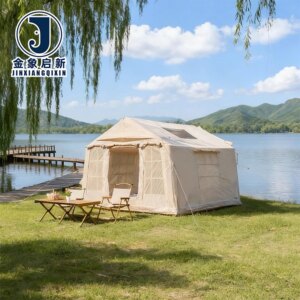
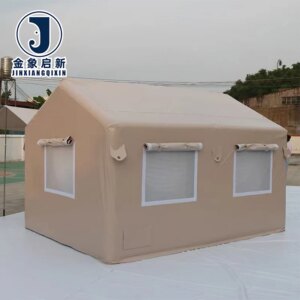
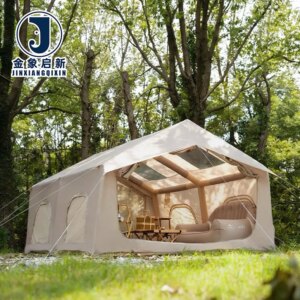
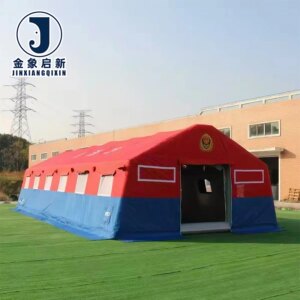
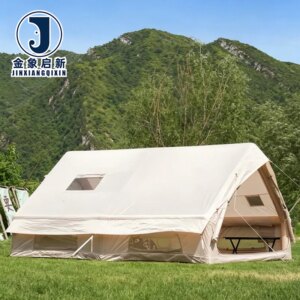
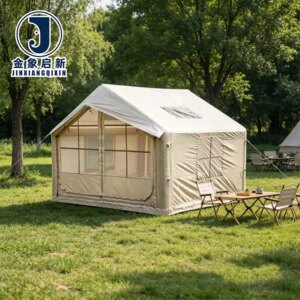
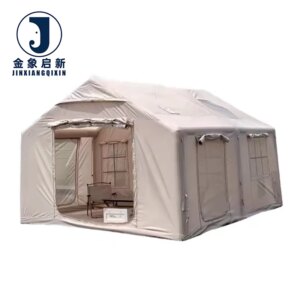
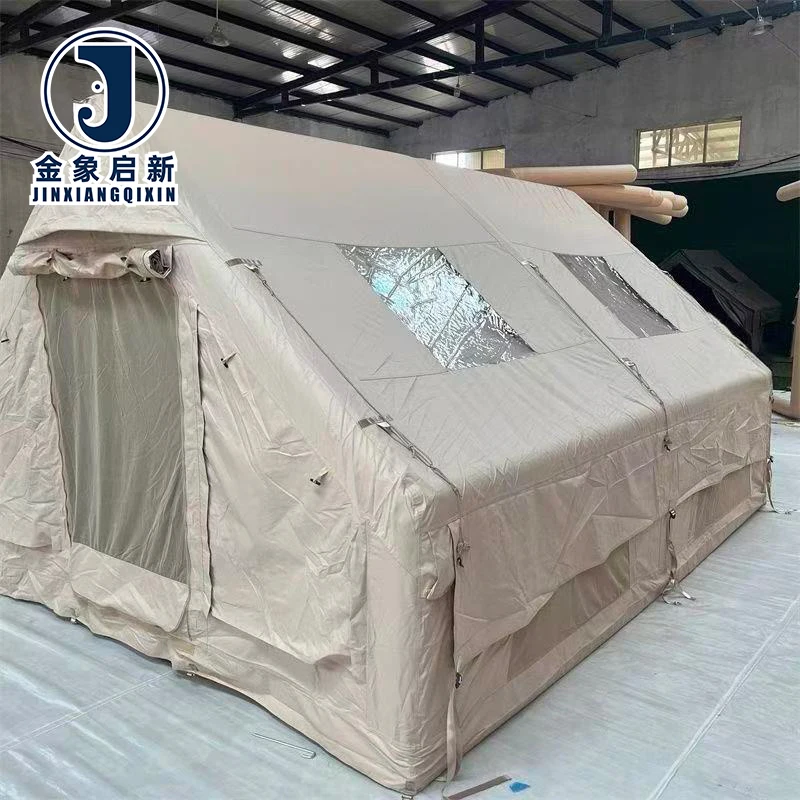
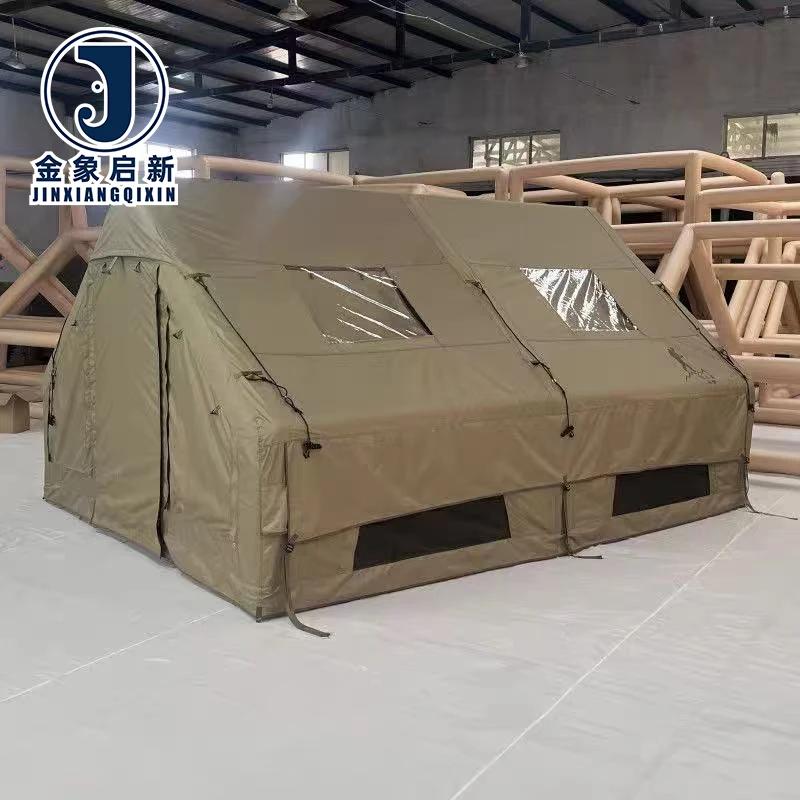
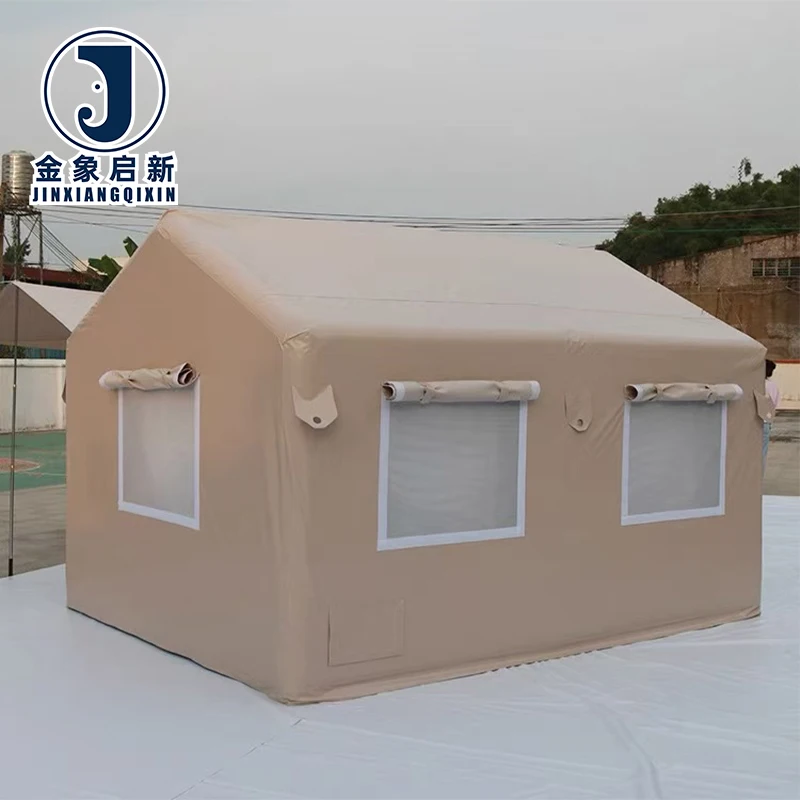
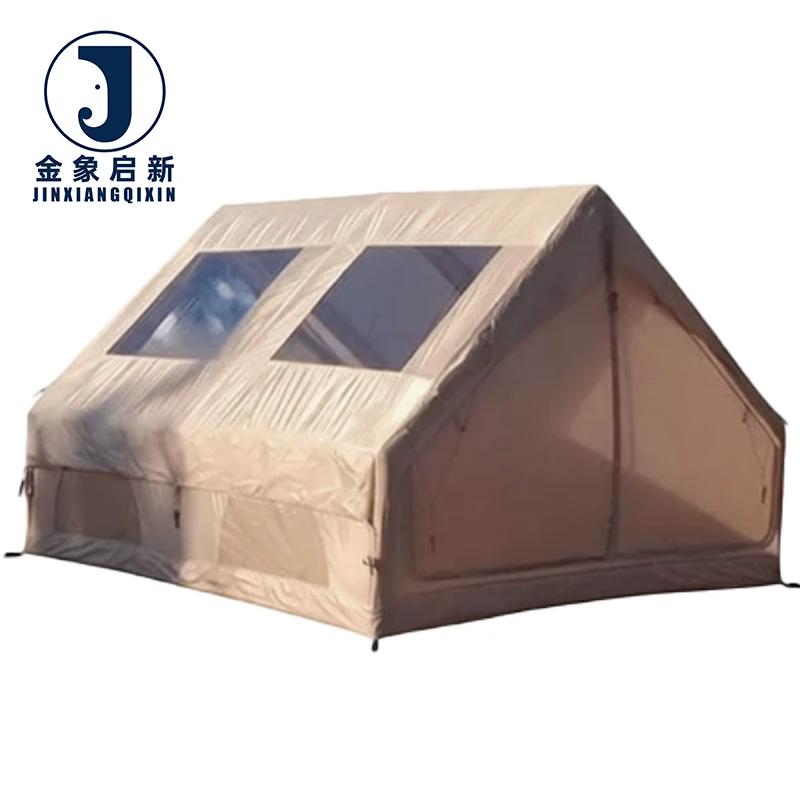
| Product Type | Inflatable Camping Tent 6-8 Person 4 Season |
| Core Material | PVC tarpaulin |
| Key Performance | Waterproof, tear-resistant |
| Optional Treatments | UV-resistant (test basis not stated in source), fire-retardant (grade not stated in source), anti-static (surface resistance not stated in source) |
| Capacity | 6-8 Person |
| Season Rating | 4 Season |
| Operation | Automatic Opening |
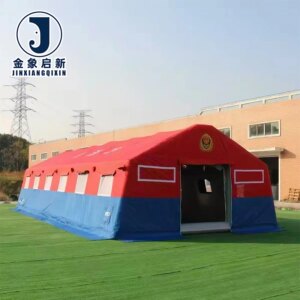
| Customization Service | OEM & ODM (sample customization, pattern printing, material selection, product design) |
| Quality Control System | Strict full-process quality inspection with dedicated QA&QC staff on site |
| Certifications | ISO9001, ISO14001, ISO45001, CE |
Application Suitability
| Application | Exposure & Requirement |
|---|---|
| Commercial camping facility operations | Frequent setup and breakdown cycles, prolonged UV exposure, guest safety, and uniform aesthetic presentation across fleet |
| Industrial field operation base camps | Remote deployment, extreme temperature variations, wind loading, requirement for rapid assembly without skilled labor |
| Outdoor event management temporary shelters | High foot traffic, short-term weather resistance, branded visual impact, compliance with local fire safety regulations |
| Construction site auxiliary accommodation | Dust and debris exposure, rugged ground conditions, long-term occupancy requiring ventilation and thermal stability |
Why Fabric Consistency Matters More Than Quoted Specifications for Bulk Tent Orders
A quoted specification only holds value if the physical roll or unit delivered matches the document in weight, coating thickness, and performance treatment.
Commercial camping operators and event management companies often procure inflatable tents in bulk to establish uniform sites. When material consistency varies from unit to unit, the visual and structural discrepancies become immediately apparent upon deployment. A batch where some tents exhibit different coating stiffness or color depth compromises the professional standard of the site and can lead to uneven stress distribution during inflation. [NEED_CITE: ISO 1421 tensile and tear test methods for coated fabrics]
Controlling Batch-to-Batch Variance in Commercial Tent Fleets
Consistency in a custom Inflatable Tent order depends entirely on the coating line’s ability to maintain uniform adhesive application and oven temperature across every production run. Variations in the PVC compound mixture or curing temperature directly alter the hand feel and structural rigidity of the final panels.
Structural Weld Integrity Under Repeated Inflation Cycles
The seams of an inflatable structure bear the brunt of internal air pressure and external wind loading. High-frequency welding parameters must be calibrated precisely to the specific PVC tarpaulin thickness being used. If the weld penetration is insufficient, the seam becomes the primary failure point during high-wind events or repeated deflation cycles. [NEED_CITE: high-frequency welding parameters for PVC coated textiles]
Decoding Material Density and Coating Adhesion
The structural stability of a 4-season inflatable tent relies on the synergy between the base fabric’s denier count and the PVC coating weight. A higher denier base provides the tear resistance necessary to stop rips from propagating if the fabric is punctured by sharp ground debris. Meanwhile, the coating adhesion strength dictates whether the PVC layer will delaminate from the base weave when the tent panels flex under wind load or during the folding process for transport. Selecting a material with the correct balance ensures the inflatable beams retain their shape without becoming too rigid to pack down efficiently.
The Hidden Costs of Overlooking Treatment Verification
Procurement teams often specify UV or flame-retardant treatments without requiring the accompanying test reports for their specific export market. When tents are deployed in regions with strict fire codes for temporary structures, the lack of a certified test grade can result in failed site inspections and forced dismantling. Similarly, unverified UV treatments may lead to premature embrittlement of the inflatable beams, causing catastrophic collapse during peak usage seasons. [NEED_CITE: fire safety classifications for temporary outdoor structures]
Aligning Production Capability with Project Timelines
Our 9,180 square meter facility operates three dedicated production lines, allowing us to scale output for large commercial camping projects without compromising the QA protocols on individual units. The 10-person R&D team reviews every custom design and pattern print requirement, developing physical samples to confirm structural behavior before the main order enters the cutting phase. Dedicated QA personnel inspect the weld strength and air-holding capability of the inflatable beams at multiple stages, ensuring that the final pre-shipment inspection reflects genuine compliance rather than a simple visual check.
Documentation & Verification
- Material specification sheet stating base fabric denier, PVC coating weight, and treatment grades for each tent unit.
- Test reports for flame-retardant and UV-resistant claims aligned with destination market regulations.
- Pre-shipment inspection records detailing weld strength tests and inflation trials for the specific batch.
- ISO and CE certificates included in the dispatch documentation package for customs clearance.
- Roll and unit packing lists verifying quantity and specification alignment per purchase order.
Fabrication, Handling & Storage
- High-frequency welds on PVC tarpaulin panels require clean surfaces to prevent seam delamination during inflation.
- Store deflated tents in dry, shaded conditions to prevent moisture trapping within the PVC folds.
- Avoid dragging heavy inflatable beams across abrasive surfaces to protect the PVC coating integrity.
- Clean tent exteriors with mild, non-solvent detergents to preserve surface treatments and custom pattern printing.
- Inspect valve fittings and beam connection points for secure bonding before each deployment cycle.
Initiating the Technical Specification Review
To ensure the Inflatable Camping Tent 6-8 Person 4 Season meets your operational demands, please provide the target deployment environment and any specific fire safety grades required by local authorities. Detail your requirements for custom pattern printing, material thickness preferences, and the anticipated order volume to help us align the production schedule with your project milestones.
Frequently Asked Questions
Q: How do you verify the weld strength on finished inflatable tent panels before shipment?
A: Our QA team conducts destructive and non-destructive tests on sample welds from every production batch. We check for coating penetration and adhesion to ensure the seams can withstand the internal pressure of the inflatable beams and external wind loads without peeling or tearing.
Q: What flame-retardant grades are available for different export markets?
A: We supply PVC tarpaulin in various flame-retardant grades. Buyers must specify the exact standard required for their destination market, such as B1, M2, or NFPA 701, so we can provide the matching material and the corresponding third-party test reports for compliance.
Q: How is colour consistency maintained across multiple custom-printed tent units?
A: We control color variance by mixing PVC compounds and inks in centralized batches for the entire order. Our R&D team approves a master sample for the pattern printing and surface finish, which serves as the benchmark for the 100% pre-shipment inspection.
Q: What is the typical lead time for OEM custom-sized inflatable tents?
A: Lead times depend on the complexity of the custom design, pattern printing requirements, and the current load on our three production lines. We provide a confirmed schedule upon sample approval, factoring in the time required for material preparation and rigorous QA testing.
Q: How are the inflatable beams tested for air retention and structural stability?
A: Each tent undergoes a full inflation trial during the final inspection phase. We monitor the air retention over a set period and check the structural rigidity of the beams to ensure the automatic opening mechanism functions correctly and the 4-season rating is maintained.