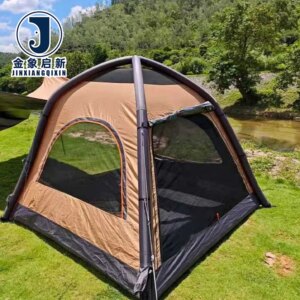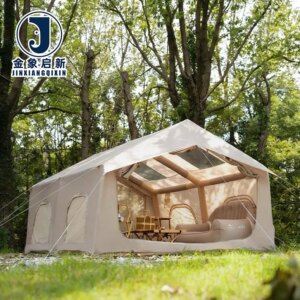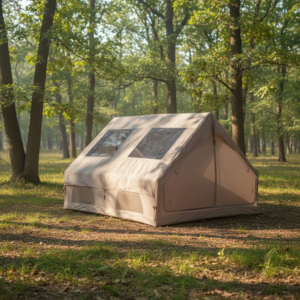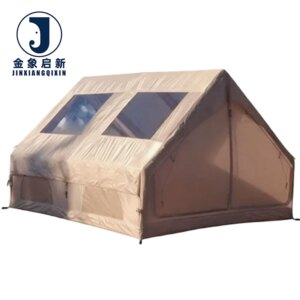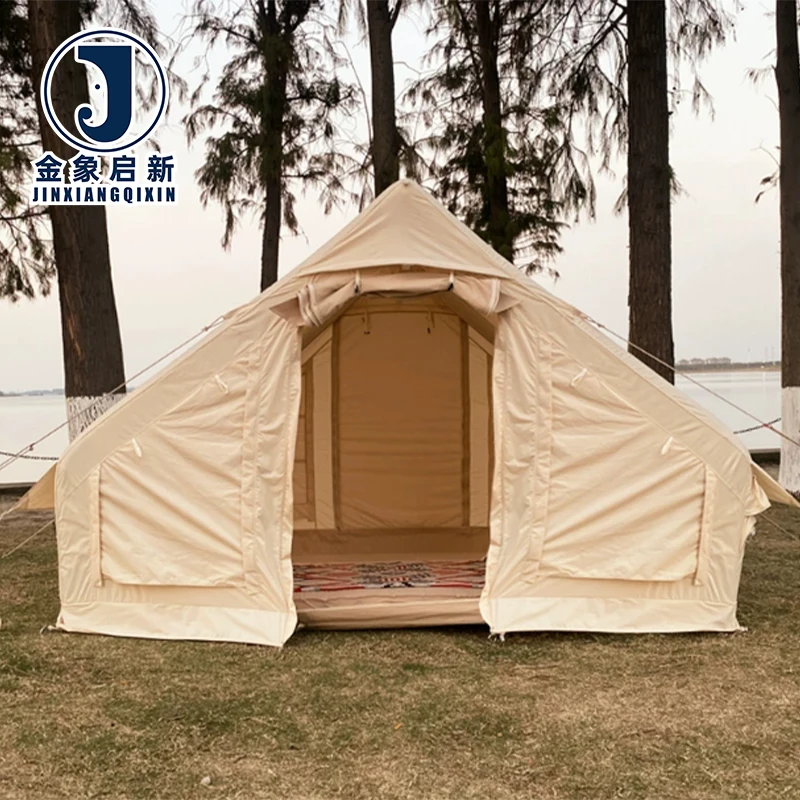
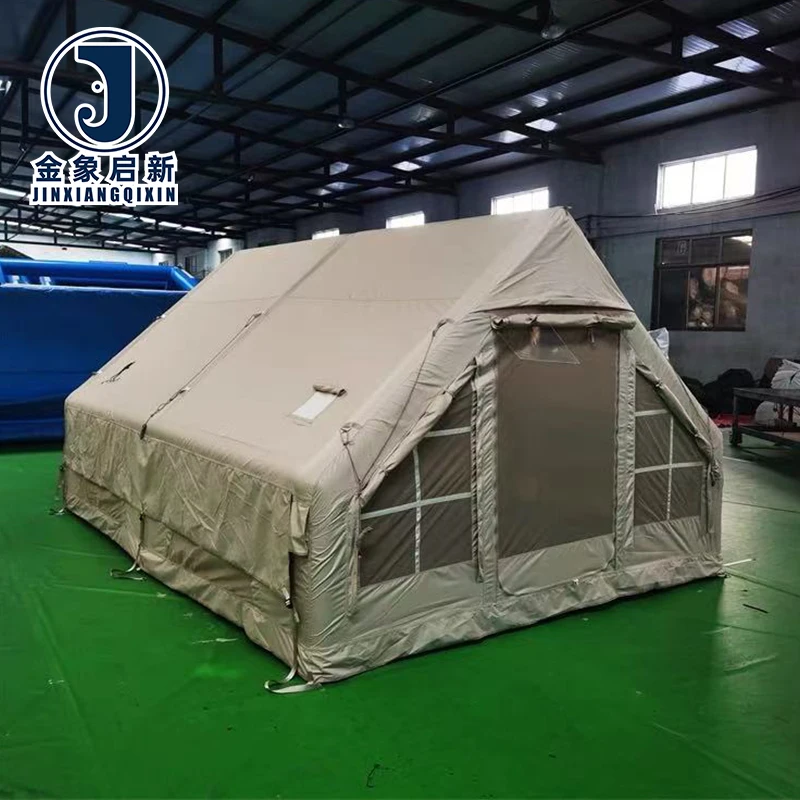
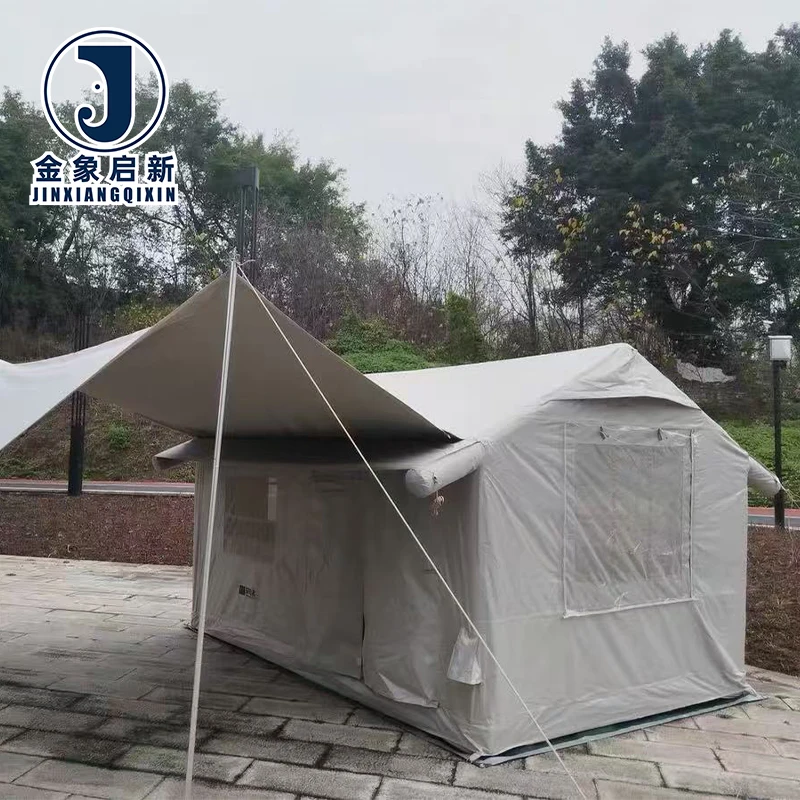
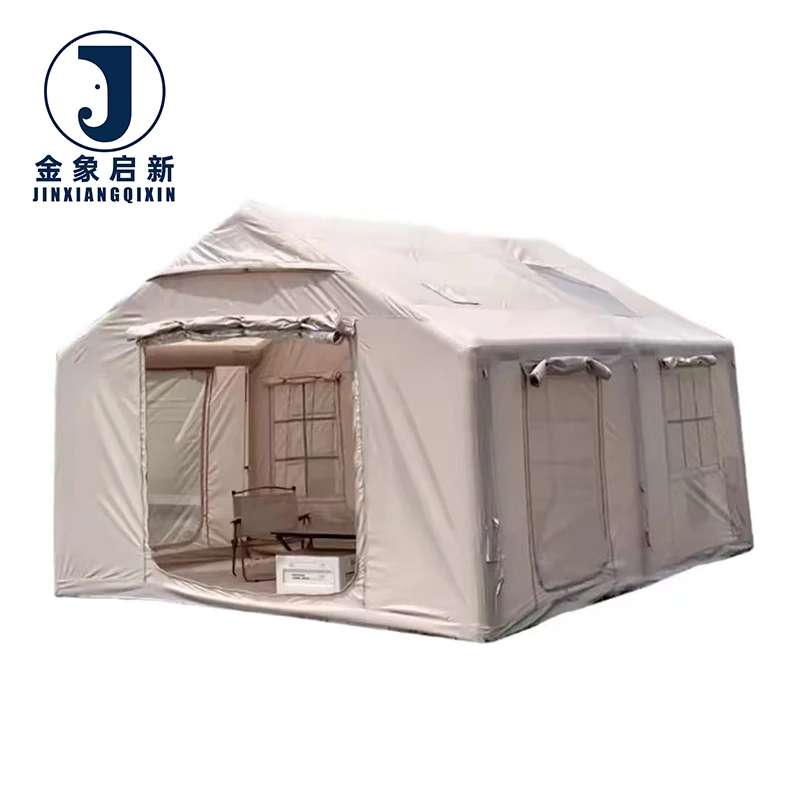
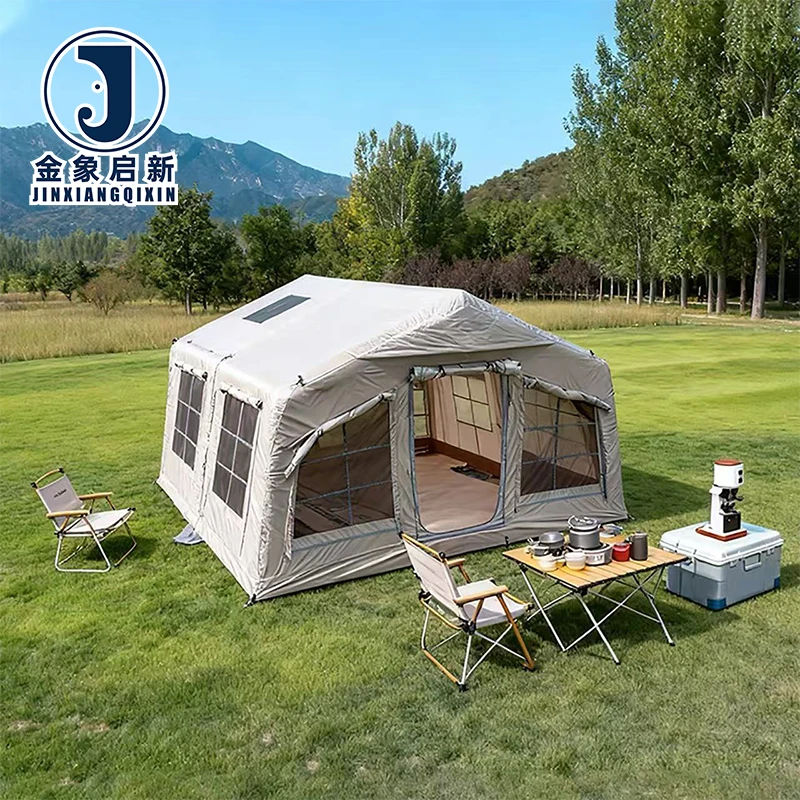
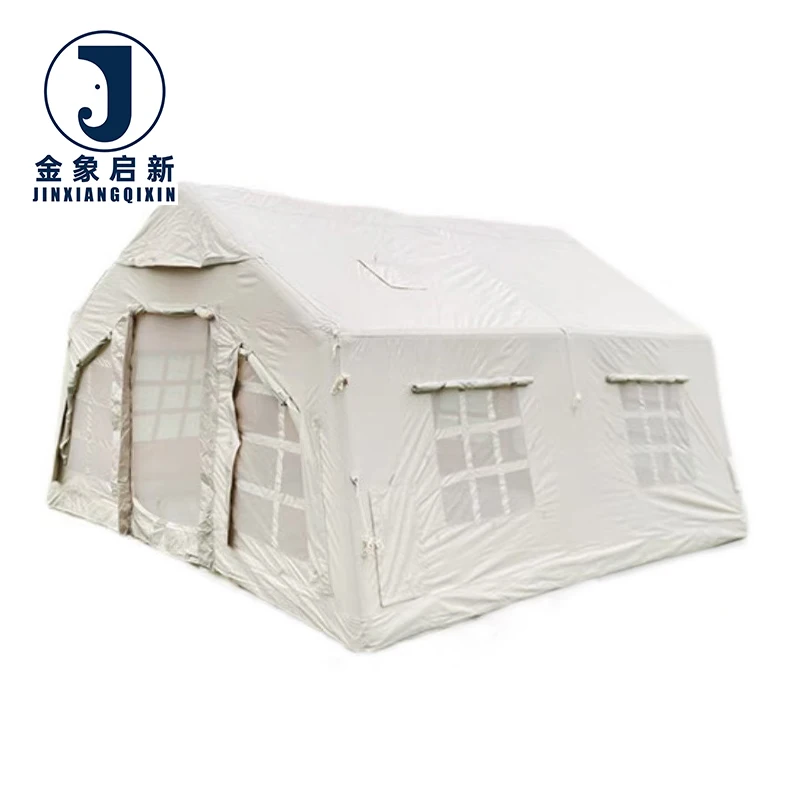
Description
Airtight Integrity Assurance — Each inflatable tent unit undergoes a 24-hour inflation pressure retention test, ensuring every welded seam holds under the flex and load demands of emergency and industrial deployment.
Technical Specifications
| Parameter | Value |
|---|---|
| Product Type | PVC Inflatable Tent |
| Core Material | PVC coated fabric |
| Key Performance | Waterproof, windproof, 4-season suitable, quick automatic opening |
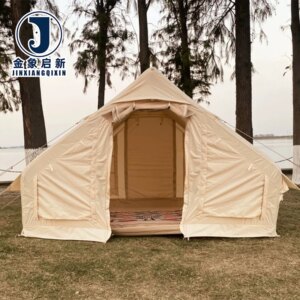
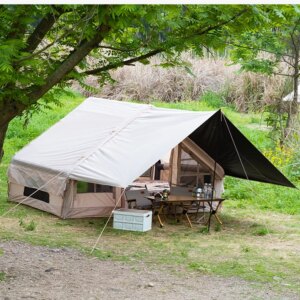
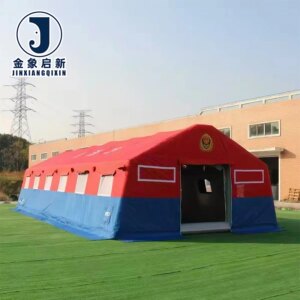
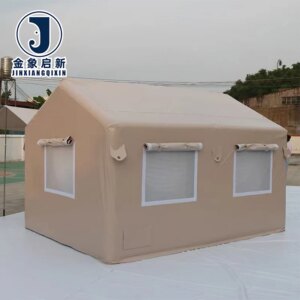
| Product Forms | Extended type, single layer construction |
| Flame Retardant | Available in flame retardant grades — confirm the grade required for your market |
| UV Treatment | Available with UV treatment — test basis to be confirmed per specification |
| Anti-Static | Availability to be confirmed for specific project requirements |
| Customization | OEM & ODM, sample customization, pattern printing |
| Quality Control | Strict full-process quality inspection with dedicated QA & QC staff |
| Certifications | ISO 9001, ISO 14001, ISO 45001, CE |
Application Suitability
| Application | Exposure & Requirement |
|---|---|
| Emergency command centers in disaster zones | Rapid deployment, wind load resistance, waterproof integrity under continuous weather exposure |
| Temporary site offices on construction and mining projects | High-traffic entry points, abrasion from boots and equipment, sustained UV and rain exposure |
| Equipment storage shelters | Protection from moisture ingress and dust, structural stability under snow or wind load |
| Material distribution stations | Quick automatic opening for immediate operational use, repeated inflation and deflation cycles |
Why Airtight Seams Separate Functional Inflatable Shelters from Failed Ones
An inflatable structure fails at the weld line before the fabric reaches its tensile limit.
Procurement teams sourcing inflatable tents for emergency or industrial use encounter the same recurring issue: seams that leak within the first deployment cycle. The PVC coated fabric itself remains intact, but the high-frequency welded joints separating under repeated inflation pressure render the unit useless [NEED_CITE: seam integrity test methods for inflatable coated fabric structures]. Generic inflatable tent manufacturer outputs often skip post-weld pressure testing, leaving the buyer to discover leaks on-site where repair options are limited and operational downtime is costly.
Seam Welding Precision for Inflatable Tent Structures
The airtight integrity of a PVC inflatable tent depends entirely on the consistency of the high-frequency weld along every seam. Our production process controls heat input, dwell time, and pressure at each weld point, adapting parameters to the specific PVC coated fabric thickness used in the build. Every custom inflatable tent unit is inflated and held under pressure for a full 24-hour cycle before dispatch, catching any micro-leaks that visual inspection alone cannot detect.
Rapid Deployment Without Compromising Structural Stability
The quick automatic opening mechanism eliminates complex on-site assembly, a critical requirement when emergency response teams or project mobilization crews need operational shelter within minutes. The single layer extended-type construction balances portability with the internal volume required for command desks, equipment staging, or medical triage layouts. This inflatable tent manufacturer designs each unit to maintain structural rigidity under wind load without requiring external bracing frames [NEED_CITE: wind load performance criteria for inflatable temporary structures].
Understanding Material Weight and Coating Adhesion in Inflatable Applications
The PVC coated fabric weight, combined with the base fabric denier and weave density, determines how the material behaves under inflation pressure and external wind load. A heavier coating does not automatically translate to better performance if the adhesion between the PVC layer and the base fabric is weak — delamination at stress points around valve ports and seam intersections is a common failure mode in poorly controlled production. The coating method influences how well the material accepts high-frequency welding: knife-coated fabrics typically deliver more consistent weld penetration and peel strength compared to laminated alternatives. Surface finish — whether glossy or matte — affects how easily dirt accumulates on the exterior and how well pattern printing adheres when branding is required for event or organizational identification.
The Hidden Cost of Underspecified Inflatable Tent Materials
Selecting an inflatable shelter based on the lowest quoted price often results in units that cannot hold pressure through a single season. Lightweight PVC coated fabric may inflate correctly in the factory but stretches and deforms under sustained wind load on-site, pulling seams apart at the highest stress points. Weld failures on inflatable structures are rarely repairable in the field without specialized equipment, turning a deployment asset into a write-off. Batch-to-batch inconsistency in coating weight compounds the problem — two units from the same order may perform differently under identical conditions [NEED_CITE: coating weight variance and field performance correlation in PVC fabrics].
Procurement Advantages for Project Buyers
Our production facility operates three full production lines with 36 sets of professional processing equipment, supporting simultaneous build of multiple inflatable tent units with consistent weld quality across every batch. The 10-technician R&D team develops custom dimensions, color specifications, and pattern printing samples within days before full production commits, reducing the risk of specification errors on large orders. Every PVC inflatable tent passes through dedicated QA and QC checkpoints at each production stage, culminating in the 24-hour inflation retention test with documented results included in the shipment.
Documentation & Verification
- Material specification sheet stating PVC coated fabric weight, base fabric type, and coating details per order
- Pre-shipment inspection record including 24-hour inflation pressure retention test data per unit
- ISO 9001, ISO 14001, ISO 45001, and CE certificates supplied for compliance and site audit documentation
- Flame retardant and UV treatment test reports provided where applicable to the specified grade
Fabrication, Handling & Storage
- High-frequency weld parameters must match the specific PVC coated fabric thickness to prevent seam delamination at inflation pressure points
- Valve ports and junction seams require reinforced weld passes to prevent localized air loss during sustained deployment
- Store deflated PVC inflatable tent units flat or loosely rolled to prevent permanent creasing that weakens the coating adhesion layer
- Clean exterior surfaces with mild detergent only — solvent-based cleaners degrade the PVC coating and compromise waterproof integrity
- Pattern printing areas require gentle cleaning to preserve branding visibility across repeated inflation cycles
Specification and Deployment Inquiry
Provide the intended application scenario, expected deployment duration, and the environmental conditions the inflatable structure must withstand — including wind exposure, temperature range, and any fire safety compliance requirements for your region. Specify required dimensions, color references, and whether pattern printing or organizational branding is needed on the exterior surface. Confirm whether sample approval is required before full production proceeds on multi-unit orders.
Frequently Asked Questions
Q: How is the PVC coated fabric weight verified before shipment?
A: Every roll of material used in production is weighed and recorded against the specification sheet before cutting begins. The pre-shipment inspection record documents the actual measured fabric weight for each inflatable tent unit, ensuring the material delivered matches what was quoted. Buyers receive this documentation as part of the standard shipment package.
Q: What flame retardant or UV test reports are available for inflatable tent fabric?
A: Flame retardant and UV treatment options are available, with test reports provided when a specific grade is requested during the inquiry stage. We recommend confirming the exact fire classification or UV resistance standard required by your local regulations or project specification, so the correct grade is sourced and tested before production begins.
Q: How are welded seams tested for airtight integrity?
A: Each PVC inflatable tent is fully inflated and monitored for 24 hours under sustained pressure before dispatch. This test identifies any micro-leaks at weld intersections, valve ports, or seam junctions that visual inspection alone would miss. Test data documenting the pressure retention results is included in the shipment documentation for every unit.
Q: What customization options are available and what is the minimum order?
A: Full OEM and ODM customization is supported, including custom dimensions, color specifications, and pattern printing for organizational branding. The R&D team develops samples within days for buyer approval before full production. Minimum order quantities vary based on the complexity of customization and the number of units required — confirm your project volume during the inquiry stage.
Q: How is color consistency controlled across multiple tent units in one order?
A: All units in a single production run are manufactured from the same batch of PVC coated fabric, eliminating the roll-to-roll color variation that occurs when material is sourced from multiple dye lots. The QA team conducts visual color comparison checks at the cutting and final assembly stages to ensure uniform appearance when multiple inflatable tents are deployed side by side.