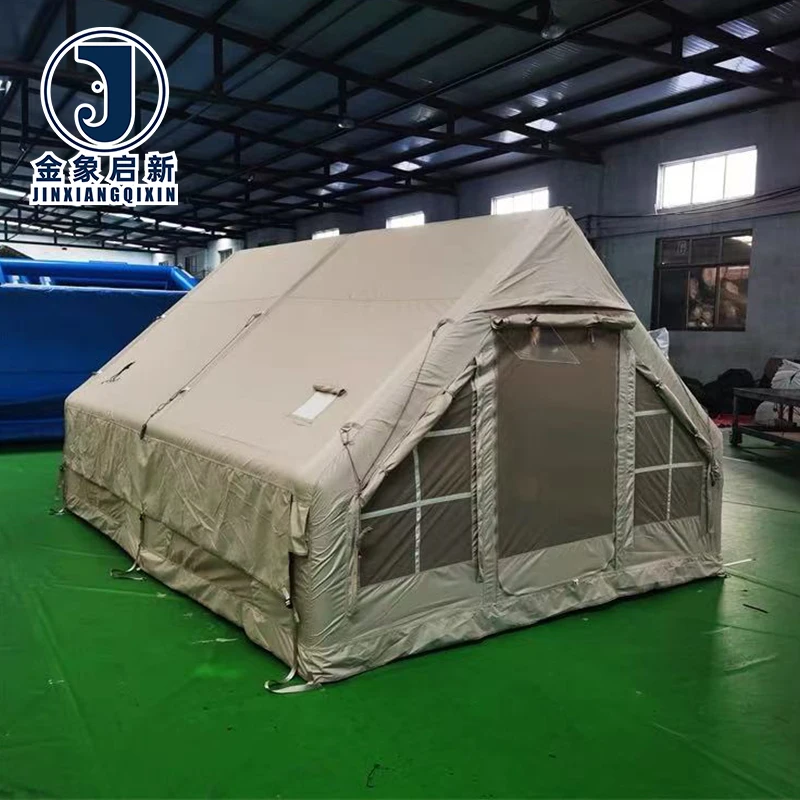
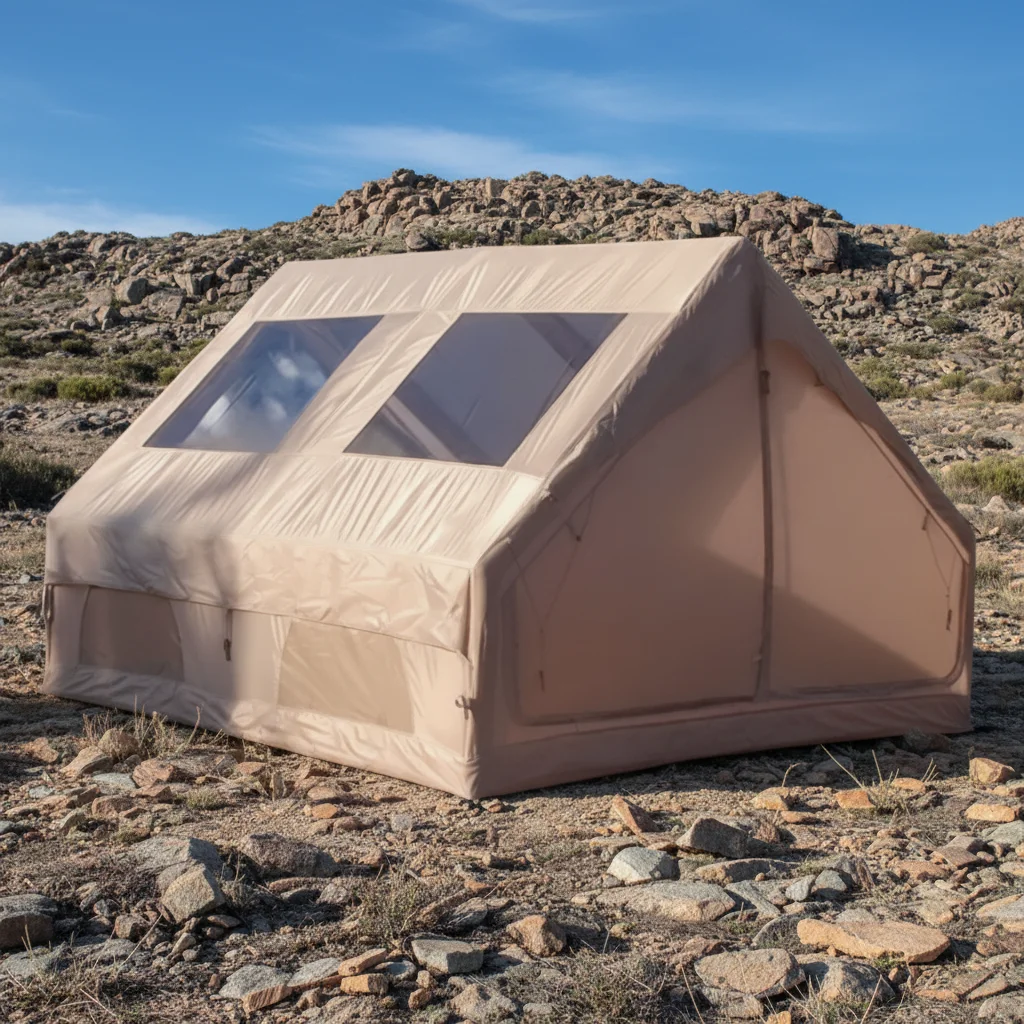

Description
Process-Controlled Coating Consistency — Every roll of PVC inflatable tent fabric undergoes in-process QA at each coating stage, eliminating colour and weight drift across bulk orders.
Technical Specifications
| Parameter | Value |
|---|---|
| Product Type | Inflatable Tent Fabric |
| Core Material | PVC coated tarpaulin |
| Capacity Options | 2-8 Person |
| Waterproof Performance | Fully waterproof coated construction |
| Wind Resistance | Windproof for four-season applications |
| UV Protection | UV-resistant treatment (test basis available on request) |
| Tear Resistance | Tear-resistant fabric construction |
| Customization | OEM & ODM with sample customization and pattern printing |
| Production Facility | 9,180 square meters |
| Production Lines | 3 full production lines |
| Processing Equipment | 36 sets of professional equipment |
| R&D Team | 10 technicians |
| Quality Control | Full-process QA & QC with dedicated staff |
| Standards | ISO9001, ISO14001, ISO45001, CE |
Application Suitability
| Application | Exposure & Requirement |
|---|---|
| Commercial camping tent manufacturing | Four-season weather cycles, internal inflation stress, repeated assembly and packing |
| Inflatable event structures | High internal air pressure, UV exposure during extended outdoor use, surface abrasion from handling |
| Industrial temporary shelters | Wind loading, moisture ingress, rapid deployment and strike requirements |
| Large-scale event facilities | Multi-day UV exposure, crowd contact wear, cleaning chemical exposure between events |
| Construction site shelters | Dust, debris impact, equipment contact, temporary nature requiring repeated relocation |
Why Batch-to-Batch Colour Variation Wrecks Tent Production Runs
Consistent colour across every roll in a single order is not luck — it is engineered through staged coating inspection.
When tent manufacturers cut panels from different rolls in the same shipment, even a slight hue shift becomes visible once the tent is inflated and panels sit side by side under daylight. Buyers ordering inflatable tent fabric roll wholesale often discover this only after sewing and assembly are complete, when replacement means scrapping an entire production batch. This issue traces back to coating weight variance between production runs [NEED_CITE: colour measurement standards for coated textile rolls]. Dedicated quality checks at every coating stage prevent this from leaving the factory.
Colour Matching Across Multi-Roll Orders
Every roll in an inflatable tent fabric roll wholesale order passes through colour verification before leaving the production line. The QA team references the approved sample standard at each coating pass, rejecting rolls that drift outside the agreed tolerance window. This matters for tent makers who cut panels from consecutive rolls — a single off-shade roll can force an entire tent panel to be recut from new stock, adding waste and delay to your production schedule.
Coating Weight and Adhesion Integrity
The PVC coating must bond uniformly to the base fabric across the full width and length of each roll. Inconsistent adhesion shows up during fabrication when the tent maker heat-welds seams: the coating delaminates at the weld line before the fabric itself reaches its stress limit. Our three production lines run dedicated adhesion checks during coating [NEED_CITE: peel strength test methods for PVC coated fabrics per ISO 2411], so the inflatable tent fabric you receive holds together at the seams where inflation stress concentrates.
Reading the Specification Sheet Beyond GSM
GSM tells you the weight per square metre, but it does not reveal the base fabric denier, the weave density, or the ratio of coating to yarn. Two rolls at the same GSM can perform very differently if one carries a heavier coating over a lighter base cloth. For inflatable tent structures, the base fabric carries the inflation load while the coating provides weather protection — both must be specified and verified independently. Ask for the full material specification sheet listing base fabric and coating parameters, not just a single weight figure.
What Happens When Specification Mismatches Reach Your Cutting Table
A tent maker ordering fabric for a 6-person inflatable tent expects the material to hold internal pressure without panel distortion. If the base fabric density falls below what the design requires, panels stretch unevenly under inflation, and the tent loses its engineered shape. Coating weight that reads correct on paper but varies across the roll width creates soft spots that fatigue faster at flex points [NEED_CITE: tensile and tear test methods for coated fabrics per ISO 1421]. These failures surface in the field, not in your factory — which is why pre-shipment inspection with documented results matters more than trusting the quotation sheet alone.
Why Source Inflatable Tent Fabric Roll Wholesale From This Facility
Production runs are scheduled across three full lines with 36 sets of equipment, giving bulk capacity without forcing you to wait behind single-line bottlenecks. The 10-person R&D team develops custom colour and pattern samples within days, so your approval cycle does not stall on supplier lead time. Every roll undergoes dedicated QA at each coating stage, with a 100% pre-shipment inspection before dispatch — not a spot-check on a sampling basis. ISO9001, ISO14001, ISO45001 and CE certifications cover the production system, and full customs documentation ships with every container. Custom width and length options are available with defined minimums, so you can order roll dimensions that match your cutting layout and reduce off-cut waste.
Documentation & Verification
- Material specification sheet stating GSM, base fabric denier and coating type per roll batch
- Pre-shipment inspection record with roll packing list and container loading plan
- UV-resistant test report available per batch upon order number request
- Certificate of origin and full customs documentation for international shipments
- ISO9001, ISO14001, ISO45001 and CE certification documents on file
Fabrication, Handling & Storage
- Heat-weld PVC coated tarpaulin seams at temperatures matched to coating thickness for full bond strength
- Store rolls upright in climate-controlled space to prevent surface creasing and coating compression marks
- Cut panels from consecutive roll numbers to maintain colour uniformity across inflatable tent sections
- Clean coated surfaces with pH-neutral agents to preserve UV-resistant treatment integrity
- Handle rolls with fabric slings — metal chains score the PVC coating and create weak points at inflation stress areas
- Plan cutting layout around roll width to minimise off-cuts and reduce seam count on large tent panels
What to Include in Your Inflatable Tent Fabric Inquiry
Specify your tent capacity range, target market climate zone, and annual volume requirement so we can recommend the appropriate base fabric and coating combination. Confirm whether you need plain rolls or OEM pattern printing, and state the colour references you require for batch matching. If your market mandates specific compliance — such as fire classification for temporary structures — provide the standard reference so we can quote the correct grade. Indicate whether you require sample rolls for your own fabrication trials before placing the bulk inflatable tent fabric roll wholesale order.
Frequently Asked Questions
Q: How is roll-to-roll colour consistency controlled across a bulk order?
A: Each roll passes colour verification against the approved sample standard at every coating stage. Rolls that drift outside the agreed tolerance are rejected before packing. The pre-shipment inspection record documents the colour check result for every roll in your order, so you receive verification before the container leaves the factory.
Q: What GSM grades are available and how is coating weight verified on arrival?
A: Multiple GSM grades are available from lightweight to heavy-duty for different tent capacity and climate requirements. Each roll ships with a material specification sheet stating the exact GSM, base fabric and coating breakdown. Weight verification per roll against the stated GSM is documented in the pre-shipment inspection record before dispatch.
Q: What are the custom width and roll length options, and what are the minimums?
A: Custom widths and roll lengths are available to match your cutting layout and reduce fabrication waste. Minimum order quantities apply based on the colour and specification selected. Provide your required dimensions and annual volume so we can confirm feasibility and lead time for your inflatable tent fabric roll wholesale order.
Q: How is pattern printing matched across multiple rolls in the same production run?
A: Pattern printing is set up from a single approved master file, and registration is checked at intervals throughout the print run. Rolls are numbered sequentially so you can track print position across your cutting plan. The QA team inspects printed rolls for registration drift before they enter the packing stage.
Q: What container loading plans are provided for roll stock shipments?
A: A detailed container loading plan is prepared before dispatch, listing roll count, roll dimensions, weight per roll and stowage position. This document ships with the packing list so you can verify the container contents on arrival and plan your warehouse receiving without manual roll counting.