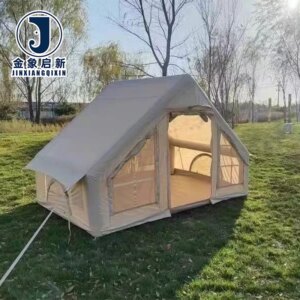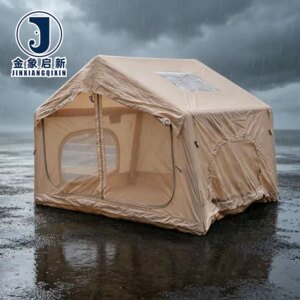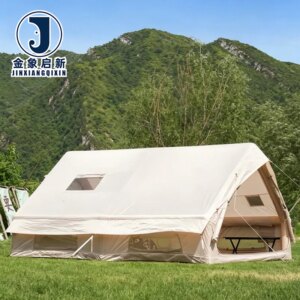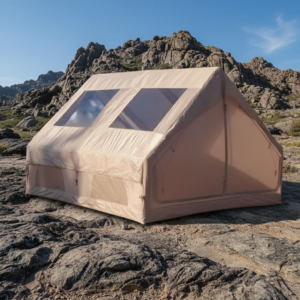


Description
Roll-Stock Consistency — Full-process QA and 100% pre-shipment inspection targeting batch-to-batch GSM, colour, and coating uniformity across every container load of inflatable tent fabric.
Technical Specifications
| Parameter | Value |
|---|---|
| Product Type | Inflatable Tent Fabric / Inflatable Structure |
| Core Material | PVC Tarpaulin (PVC knife-coated fabric) |
| Product Form | Inflatable structure with single layer construction |
| Waterproof | Yes |
| UV-resistant | Available — confirm grade required for your market |
| Tear-resistant | Yes — confirm grade required for your market |
| Fire-retardant | Available — confirm grade required for your market |
| Anti-static | Available — confirm surface resistance standard required |
| Customization | OEM & ODM (sample customization, pattern printing, size adjustments, color options) |
| Certifications | ISO9001, ISO14001, ISO45001, CE |
| Production Facility | 9,180 m² |
| Production Lines | 3 full production lines |
| Processing Equipment | 36 sets of professional equipment |
| R&D Team | 10 technicians |
| Quality Control | Strict full-process inspection with dedicated QA & QC staff on site |
Application Suitability
| Application | Exposure & Requirement |
|---|---|
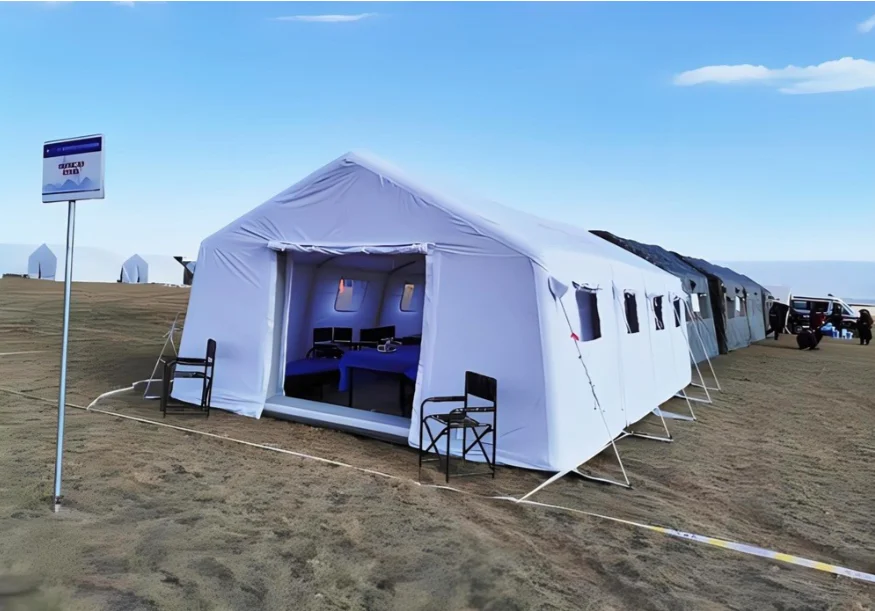
| Disaster relief rapid deployment shelters | Immediate weather protection, repeated inflation cycles, field transport abrasion |
| Temporary storage space at construction sites | Prolonged sun exposure, wind-driven rain, dust and debris impact |
| Emergency command centers during infrastructure projects | Continuous occupancy, climate stability, electrical equipment proximity |
| Weather-protected work areas for outdoor industrial operations | Equipment clearance, forklift traffic, chemical splash resistance |
| Equipment storage and material processing areas | Heavy load proximity, ground moisture, UV degradation over extended standing periods |
Why Roll-to-Roll Consistency Matters More Than Quoted GSM for Inflatable Tent Fabric
Fabric weight verified on the spec sheet means little if the roll you receive varies by more than a few percent from the one next to it.
When purchasing wholesale inflatable tent fabric in container-load volumes, buyers frequently discover that the GSM stated on the quotation does not match what arrives on site. Worse, even when the average weight is correct, individual rolls within the same shipment can vary enough to produce visible differences in panel stiffness and surface tension once inflated side by side. These inconsistencies force fabricators to re-sort rolls, reject batches, or absorb the cost of mismatched panels in finished structures. The problem compounds when colour is involved — a slight coating-weight shift between rolls changes how pigment sits on the surface, creating banding effects that are impossible to correct after cutting [NEED_CITE: common causes of batch variation in PVC coated fabric production].
Volume Procurement Demands Predictable Coating Weight
Sourcing PVC inflatable tent material by the roll means your cutting patterns, heat-weld parameters, and inflation pressure settings all depend on consistent material behaviour. Knife-coated PVC delivers a bonded coating-to-base-fabric relationship that supports predictable thermal welding, but only when the coating weight holds steady from roll to roll. Our three-line production facility runs dedicated QA checkpoints at the coating head, the curing oven exit, and the winding station — catching weight drift before it reaches your container.
Colour Matching Across a Multi-Roll Order
Pattern printing and custom colour runs on inflatable tent fabric present a specific challenge: the substrate must accept ink uniformly across every roll in the batch. Coating surface porosity, gloss level, and plasticiser migration all influence print adhesion and colour appearance. Our 10-person R&D team develops samples for colour and print approval before bulk commitment, so the production run matches the signed-off reference rather than a generic swatch. This matters especially when inflatable tent panels from different rolls will be assembled into a single visible structure.
Understanding the Specification Sheet Beyond the Headline Number
GSM tells you the total mass per square metre, but two rolls with identical GSM can perform very differently depending on how that weight is distributed between the polyester base fabric and the PVC coating layers. A heavier base fabric with a thinner coating will resist tearing differently than a lighter base with a thicker coat — even at the same total weight. Knife coating, as used in this inflatable tent fabric, applies PVC paste directly onto the woven substrate under controlled tension, producing strong mechanical adhesion that supports repeated inflation and deflation cycles without delamination. When reviewing quotations, request the base fabric denier, weave density, and coating weight breakdown alongside the total GSM to understand what you are actually buying [NEED_CITE: relationship between base fabric construction and coated fabric performance per ISO 1421].
The Hidden Cost of Accepting Unverified Material
Accepting inflatable tent fabric without batch-level inspection records creates downstream risk that does not appear until the structure is inflated on site. Rolls that vary in coating thickness produce uneven heat-weld penetration — seams that hold on one roll may fail on the next, because the welder temperature that worked for a thicker-coated panel burns through a thinner one. Colour inconsistency between rolls becomes visible only after panels are joined, meaning the rework cost includes labour, transport, and project delay rather than just material replacement. Fire-retardant or anti-static treatments claimed without supporting test reports expose the end user to compliance failure at the point of site inspection, potentially shutting down an entire relief operation or construction staging area [NEED_CITE: fire-retardant compliance requirements for temporary structures in disaster relief zones].
Why Procure Inflatable Tent Roll Stock Through This Facility
Three full production lines with 36 sets of professional processing equipment provide the capacity to fulfil container-load orders without splitting production across multiple runs, which is where batch inconsistency typically originates. Dedicated QA and QC staff stationed at every production stage — not just at final inspection — means coating weight, colour, and surface finish are verified in real time rather than sampled after the fact. The 10-person R&D team supports OEM and ODM development with sample turnaround in days, allowing you to confirm material behaviour, colour accuracy, and print registration before committing to volume. ISO9001, ISO14001, ISO45001, and CE certifications accompany every shipment as documentation rather than marketing claims. Full-process quality inspection with 100% pre-shipment verification ensures the rolls loaded into your container match the specification sheet you approved.
Documentation & Verification
- Material specification sheet stating GSM, base fabric denier, coating weight, and colour reference per roll batch
- Pre-shipment inspection record confirming 100% inspection of roll count, weight, and surface quality before dispatch
- Roll packing list with individual roll weight, dimensions, and container loading plan for logistics coordination
- ISO and CE certificates included with shipment documentation for customs and compliance audit
- Batch-specific test reports for UV and fire-retardant grades where applicable to the order
Fabrication, Handling & Storage
- Heat-weld temperature profiles must be adjusted to the specific PVC knife-coated thickness — request recommended settings with sample rolls
- Store rolls upright on pallets in climate-controlled space to prevent coating compression marks that affect inflation uniformity
- Allow cold-transported rolls to acclimatise before unrolling to avoid coating cracking at low temperature flex points
- Use compatible PVC solvent cleaners on knife-coated surfaces to maintain coating integrity during post-installation maintenance
- Plan cutting layouts around standard roll widths to minimise off-cuts and welded seam count in finished inflatable panels
Requesting a Quotation That Matches Your Production Line
Provide your target annual volume, preferred roll width, and the inflation pressure range your finished structures operate at so we can recommend the appropriate base fabric and coating combination. Specify any fire-retardant, anti-static, or UV-treatment grades required by your destination market regulations. If pattern printing or custom colour is needed, submit artwork files and Pantone references for sample development before bulk production commitment. Confirm whether you require fabric only or finished cut-to-pattern panels with welded seams.
Frequently Asked Questions
Q: How can I verify the stated GSM on arrival matches the quotation specification?
A: We supply a roll packing list with individual roll weights and a pre-shipment inspection record documenting measured GSM for each batch. On arrival, you can cross-reference these against your own scale readings. Any discrepancy outside the agreed tolerance triggers a documented review process before further rolls are cut or welded.
Q: How do you control batch colour consistency across multiple rolls in a single order?
A: Production runs for a single order are scheduled consecutively on the same line with coating parameters locked after sample approval. Our QA team checks colour against the signed reference at the coating head and again at winding. Rolls showing visible deviation are pulled before packing, and the pre-shipment inspection record confirms which rolls passed.
Q: How should I select roll width and length for inflatable tent panel cutting patterns?
A: Share your panel cutting layout and we will recommend roll widths that minimise off-cuts and reduce the number of welded seams in the finished structure. Custom widths are available subject to minimum order quantities. Longer roll lengths reduce splice joints during continuous production runs and improve fabricator throughput.
Q: What are the container loading details for roll stock shipments?
A: Each shipment includes a roll packing list specifying roll count, individual and total weight, and the container loading plan. Rolls are packed to prevent movement during transit and protected against compression damage. We provide loading photographs and container seal numbers for logistics tracking and receiving verification.
Q: What customisation options are available with minimum order requirements and lead times?
A: OEM and ODM options include custom width, colour matching, pattern printing, and surface treatment grades. Samples are developed within days for approval before bulk production. Lead times depend on order volume and customisation complexity — confirm your specification and we will provide a production schedule with your quotation.