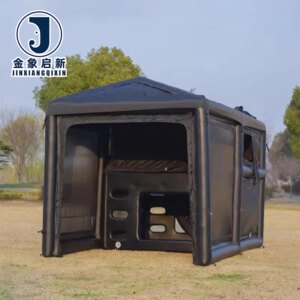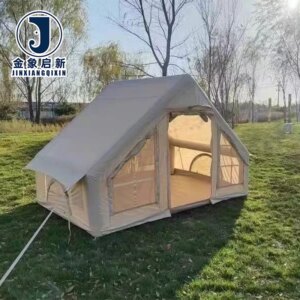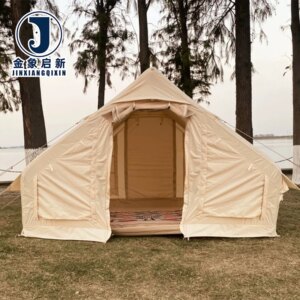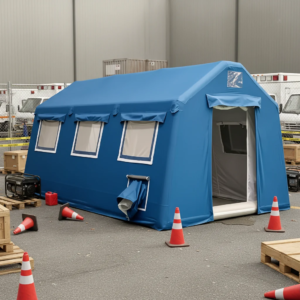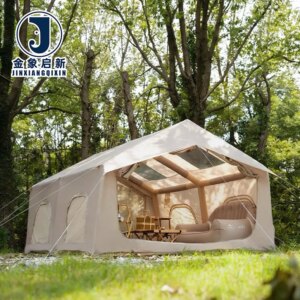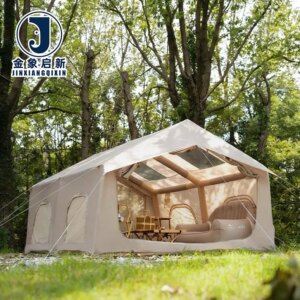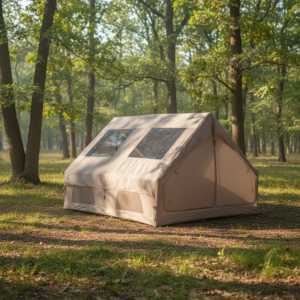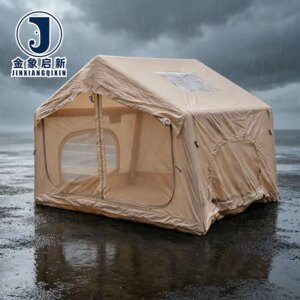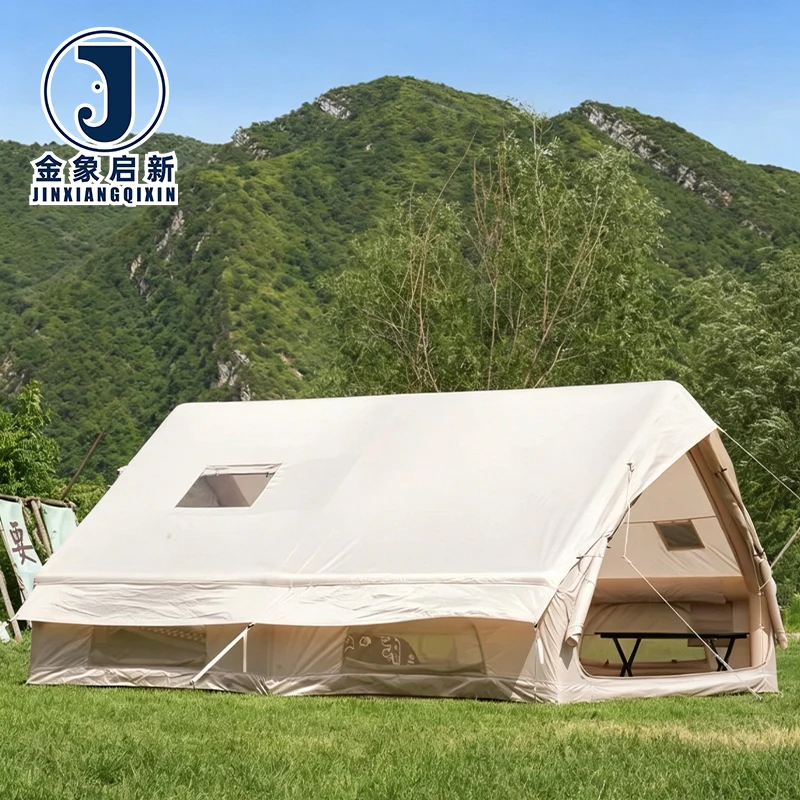
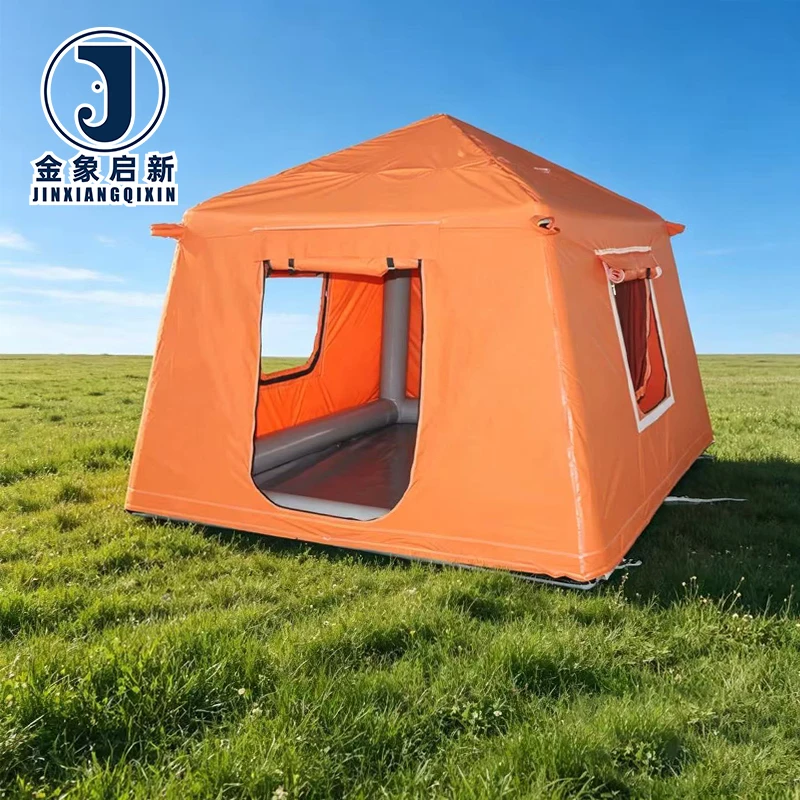
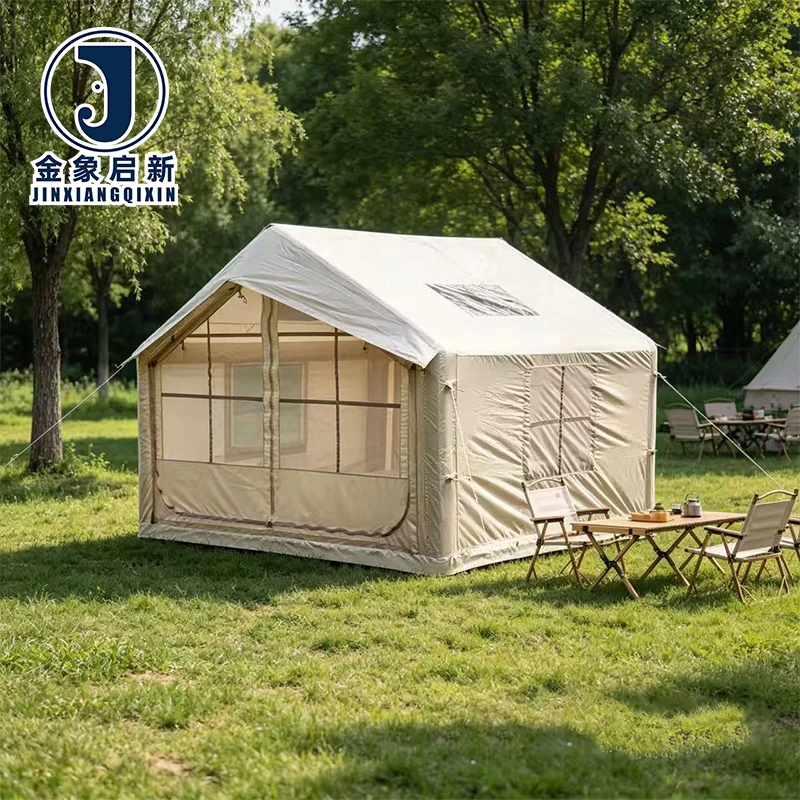
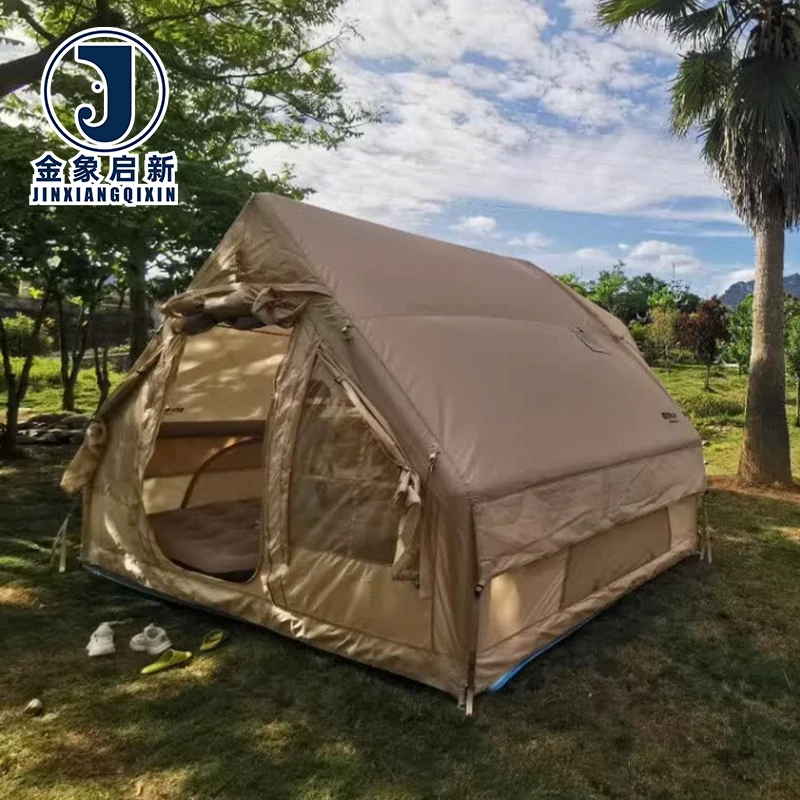
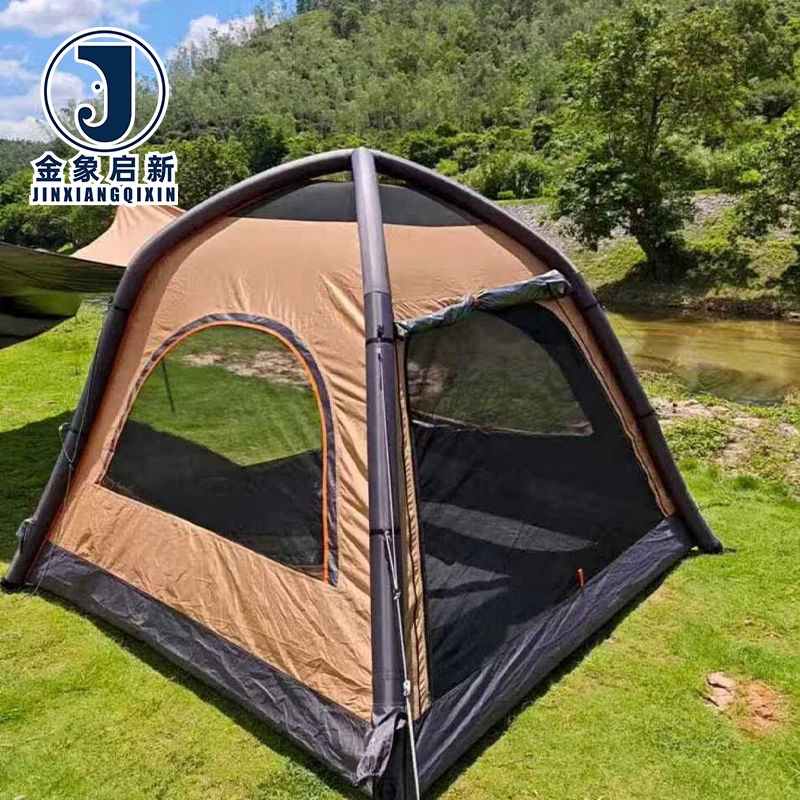
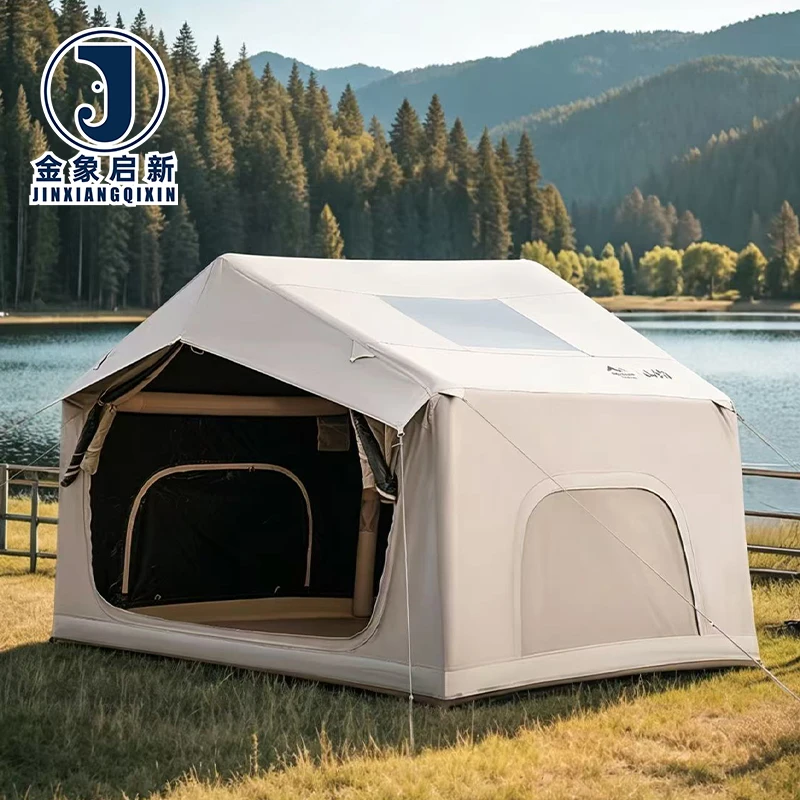
Description
Roll-to-Roll Consistency — Our controlled coating lines maintain uniform colour and weight across every roll of PVC inflatable tent fabric shipped, so tent panels cut from different rolls match seamlessly on the production floor.
Technical Specifications
| Parameter | Value |
|---|---|
| Product Type | Inflatable Tent |
| Core Material | PVC Tarpaulin |
| Capacity Options | 2-3 Person |
| Season Rating | Four-Season |
| Construction | Single Layer |
| Key Performance | Waterproof, Tear-resistant, Quick Automatic Opening |
| UV Resistance | Available with UV treatment — confirm grade required for your market (test basis not stated in source) |
| Customization | OEM & ODM, Sample Customization, Pattern Printing |
| Production Lines | 3 Full Production Lines |
| Processing Equipment | 36 Sets of Professional Equipment |
| R&D Team | 10 Technicians |
| Standards & Certification | ISO9001, ISO14001, ISO45001, CE |
Application Suitability
| Application | Exposure & Requirement |
|---|---|
| Temporary Event Shelters | High foot traffic, repeated inflation/deflation cycles, variable weather exposure |
| Mobile Field Operations | Rapid deployment demands, transport abrasion, exposure to dust and moisture |
| Emergency Response Command Posts | All-weather reliability, quick setup under time pressure, structural integrity during occupancy |
| Construction Site Temporary Workspace | UV and weather exposure, mechanical wear from equipment proximity, frequent relocation |
| Commercial Outdoor Operations | Corporate branding visibility, batch consistency across multiple deployed units, long-term colour retention |
Why Batch Colour Variation Destroys Inflatable Tent Aesthetics
Colour variation between rolls in the same order becomes immediately visible once inflatable tent panels are positioned side by side at an event site, undermining the professional appearance that commercial buyers pay for.
Roll-to-roll colour uniformity starts at the coating line, not at the packing table.
When a festival organiser or emergency response contractor deploys multiple inflatable structures in a row, even slight shade differences between tent panels draw the eye and invite client complaints. Buyers who source PVC inflatable tent fabric from suppliers without inline colour monitoring often receive shipments where one roll reads slightly warmer or cooler than the next [NEED_CITE: colour measurement tolerances for coated fabrics per ISO 105-J02]. The tent manufacturer then faces the choice of absorbing the rework cost or shipping a product that looks mismatched. We control coating temperature, pigment dispersion, and line speed to hold colour within a tight delta across an entire production run, so your cutting table receives rolls that match.
How Inflatable Tent Manufacturers Cut Waste on the Production Floor
Inflatable tent production demands fabric that behaves predictably through heat welding and seam construction. When PVC inflatable tent fabric varies in coating thickness from roll to roll, weld temperatures that worked on the last batch may under-bond or burn through on the next. Our coating process holds adhesion and coating weight within controlled tolerances, giving your welding operators a stable process window. This reduces scrap at the seam station and keeps your production schedule on track.
Pattern Printing That Survives Repeated Field Deployment
Commercial inflatable tents often carry project logos, sponsor graphics, or corporate identification. Pattern printing on PVC tarpaulin must withstand folding, transport abrasion, and UV exposure without cracking or lifting [NEED_CITE: print adhesion testing methods for flexible PVC substrates]. Our in-house printing capability applies patterns directly onto the coated surface with ink systems selected for PVC compatibility. Samples are developed within days so you can verify colour matching, registration accuracy, and fold resistance before committing to a full roll order.
Reading the Specification Sheet Beyond the GSM Number
GSM alone does not tell you how an inflatable tent fabric will perform under inflation pressure or repeated folding. The base fabric denier and weave density determine how the material resists tear propagation at stress points — particularly around valve openings and seam junctions where inflation loads concentrate. Coating weight and adhesion quality govern how well the PVC layer resists delamination during heat welding and long-term flex cycles. A fabric with moderate GSM but a tight, high-denier base weave can outperform a heavier fabric built on a loose, low-denier scrim. Request the full material specification sheet to evaluate base fabric construction alongside coating weight for a complete picture of structural capability.
The Real Cost of Specifying Fabric Without a UV Test Report
Inflatable tents deployed at outdoor events, construction sites, or emergency staging areas face continuous solar exposure. PVC tarpaulin without documented UV treatment will surface-chalk, lose tensile strength, and become brittle over a season of field use. When a buyer specifies "UV-resistant" without requiring a test report, there is no baseline to verify the claim against [NEED_CITE: accelerated weathering test standards for PVC coated fabrics]. We supply UV-resistant grades with test documentation available on request — confirm the specific UV performance level required for your target market and deployment duration before placing your order.
What You Gain by Sourcing Inflatable Tent Fabric Here
Our facility runs three full production lines dedicated to coated fabric, giving us the capacity to fulfil multi-roll orders for inflatable tent manufacturers without splitting your batch across subcontractors. A ten-person R&D team handles material selection, custom width slitting, and pattern printing development in-house, so your specification changes do not get lost in external coordination. Every roll passes dedicated QA and QC inspection before shipment, with weight verification checked against the stated GSM. Sample development for custom colours, widths, and printed patterns is completed within days, not weeks. We ship with a complete documentation package — specification sheets, inspection records, and certificates — so your incoming quality team has the data to verify the shipment on arrival.
Documentation & Verification
- Material specification sheet stating GSM, base fabric denier, and coating weight for each roll batch
- Pre-shipment inspection record confirming 100% roll inspection with weight and colour checks
- Roll packing list detailing roll count, individual roll weight, and container loading configuration
- UV test report available for UV-resistant grades to support your product claims to end users
- ISO9001, ISO14001, ISO45001, and CE certificates included with shipment documentation
Fabrication, Handling & Storage
- Heat weld parameters should be established on sample rolls first to match coating weight and thickness of this PVC inflatable tent fabric
- Store rolls horizontally on racking to prevent flat-spot deformation on the PVC coated surface
- Allow cold-transported rolls to reach ambient temperature before unrolling to avoid coating crack risk
- Use PVC-compatible cleaners only; solvent-based agents may attack the coating and compromise waterproof integrity
- Plan panel cutting layouts to maximise yield from each roll width and minimise offcut waste
Before You Send the Inquiry
Tell us the inflatable tent panel dimensions you need to cut, your target annual roll consumption, and the deployment environments your end users face — this lets us recommend the correct base fabric weight, coating specification, and UV treatment level. If you require pattern printing or custom colour matching, send us artwork files or Pantone references so we can prepare samples for your approval before production begins.
Frequently Asked Questions
Q: How do you control colour consistency across multiple rolls in one inflatable tent fabric order?
A: We control pigment dispersion, coating temperature, and line speed throughout the production run. Each roll is checked against the batch master standard before packing. If your order spans multiple production runs, we retain a reference sample from the first batch to match subsequent runs, keeping shade variation within acceptable limits for side-by-side panel installation.
Q: Can I order PVC inflatable tent fabric in custom widths to reduce cutting waste?
A: Yes. Our slitting capability produces rolls in widths matched to your panel cutting layout. Custom widths are subject to minimum order quantities that depend on the base fabric and coating specification. Send us your panel dimensions and we will recommend the roll width that maximises your cutting yield and reduces offcut waste on your production floor.
Q: What documentation accompanies each roll shipment for incoming inspection?
A: Each shipment includes a material specification sheet stating GSM, base fabric, and coating weight, a pre-shipment inspection record with roll-by-roll weight and colour verification, a roll packing list with count and weight details, and copies of ISO and CE certificates. UV test reports are included where applicable to support your downstream product claims.
Q: What is the sample approval process for custom pattern printing on roll stock?
A: Send us your artwork files and Pantone colour references. Our R&D team produces a printed sample roll section showing registration accuracy, colour match, and ink adhesion on the PVC surface. You approve the sample before we commit the full production run. Turnaround for printed samples is typically measured in days, not weeks.
Q: How do I plan container loading for a bulk roll order?
A: We provide a detailed roll packing list showing roll count, individual roll dimensions, total weight, and container loading configuration. This allows your logistics team to plan container type and loading sequence in advance. Our shipping team can advise on optimal container utilisation based on your roll width and length requirements.