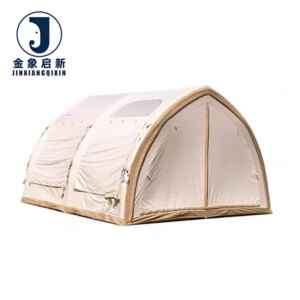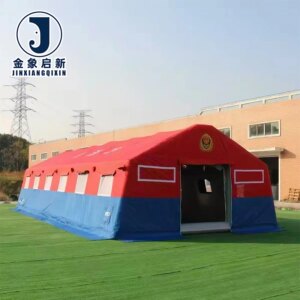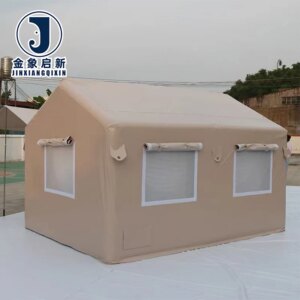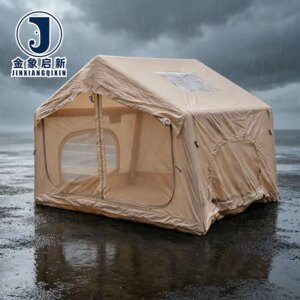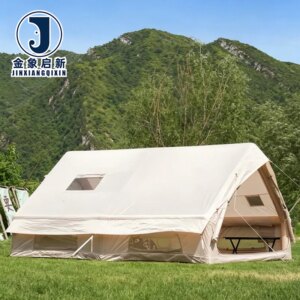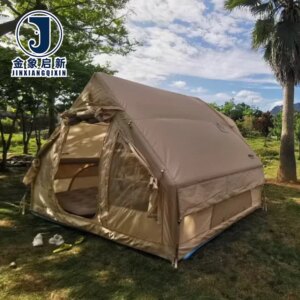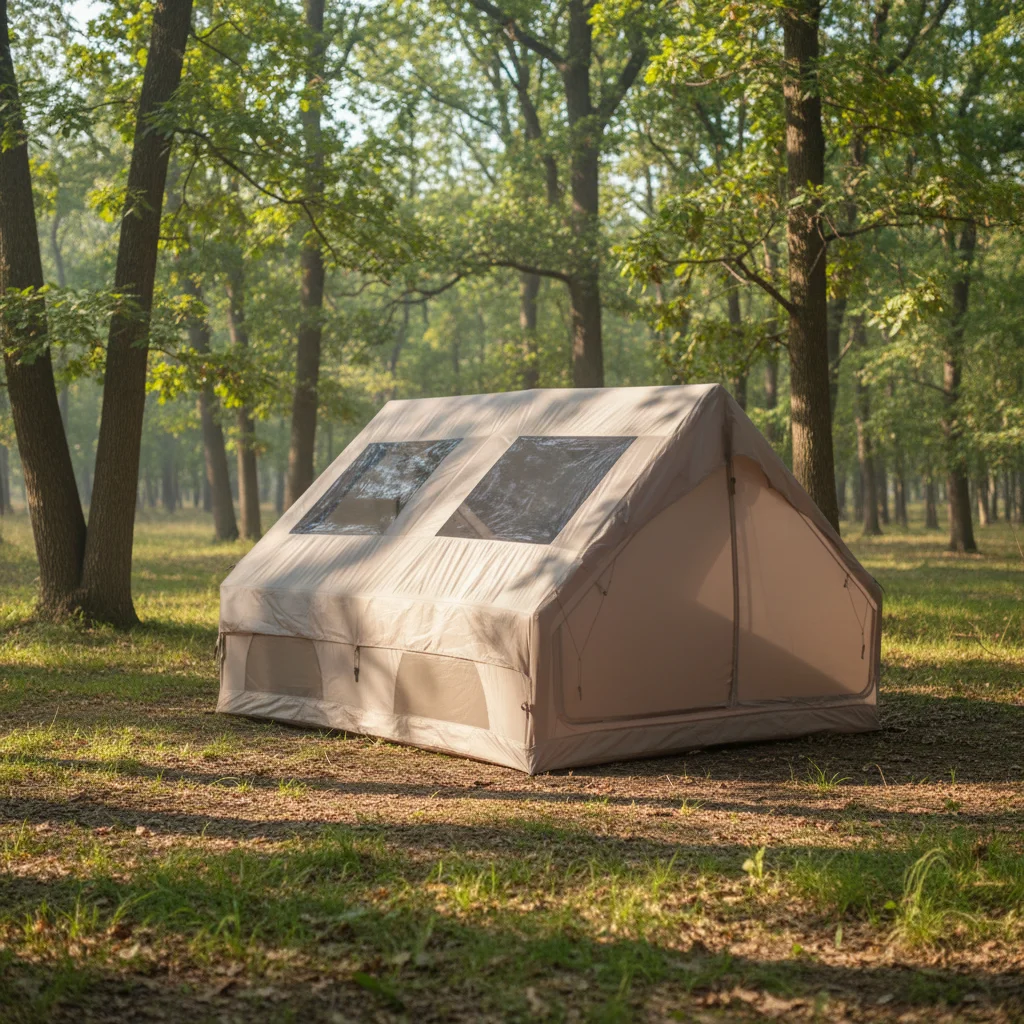

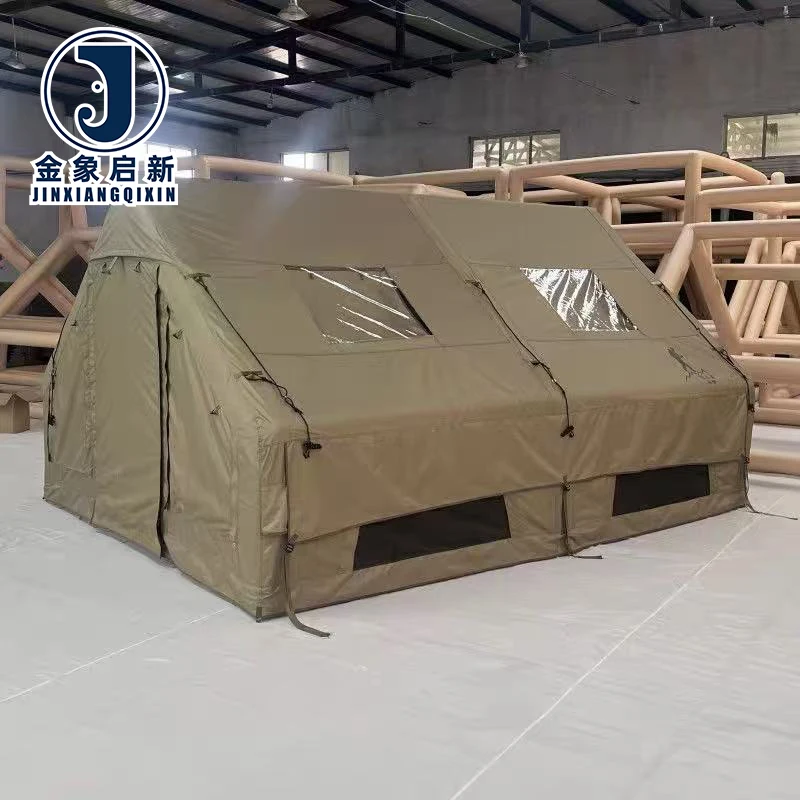
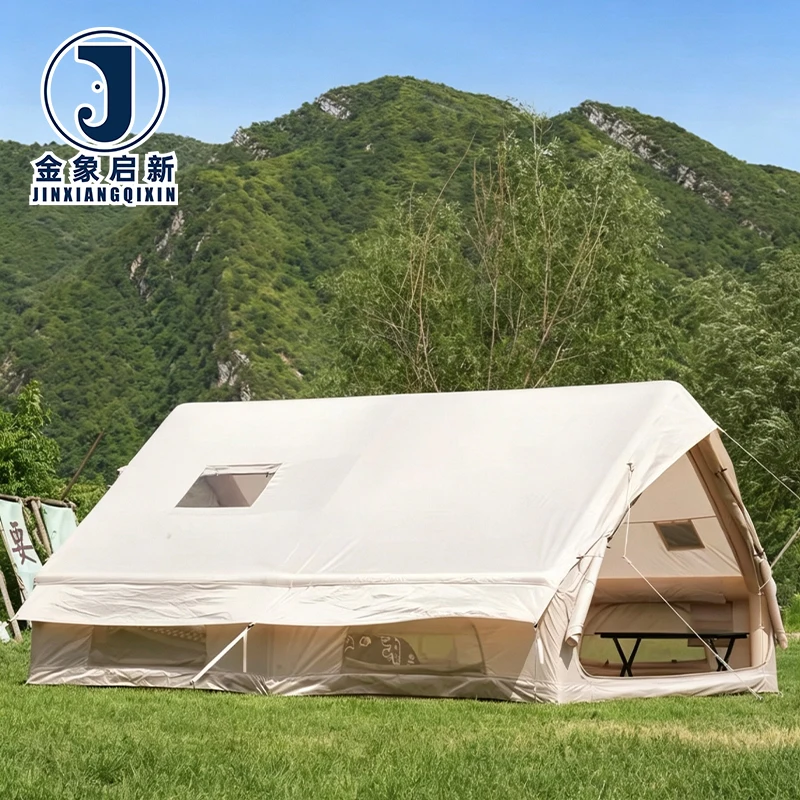
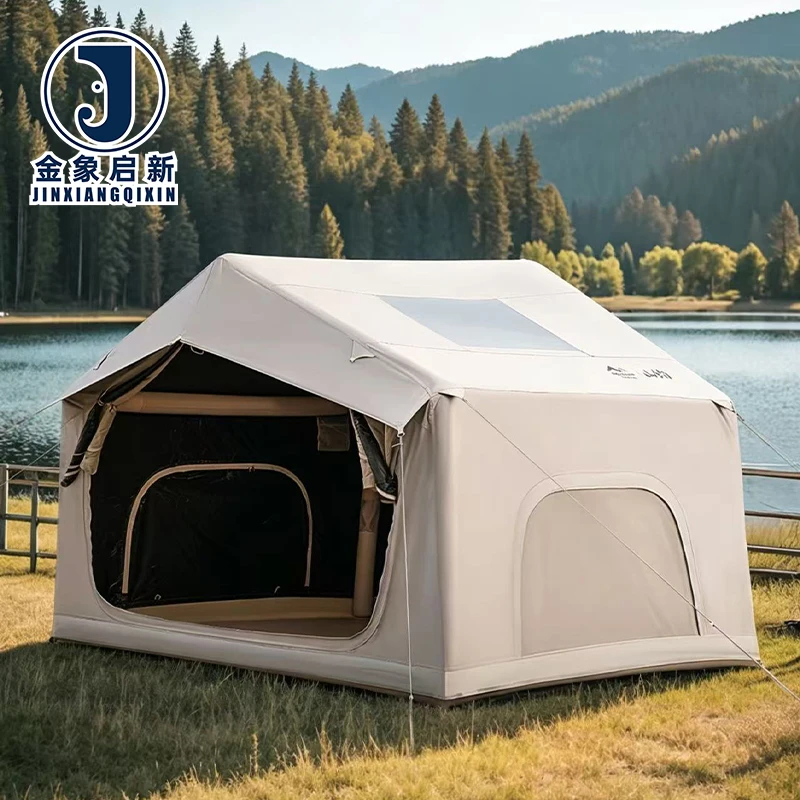
Description
Batch-to-Roll Consistency — Every roll of inflatable tent fabric undergoes in-process QA across 7 critical manufacturing stages before dispatch.
Technical Specifications
| Parameter | Value |
|---|---|
| Product Type | Inflatable Tent |
| Core Material | PVC tarpaulin |
| Waterproof Rating | 3000mm (water column test) |
| Flame Retardancy | EN 13501-1 |
| Tear Resistance | ≥300N |
| Seam Strength | 250N |
| Coating Thickness Tolerance | ±0.02mm |
| UV Resistance | UV-resistant PVC formulation (test basis not stated) |
| Setup Mechanism | Quick automatic opening |
| Capacity | 2-8 person |
| Product Form | Inflatable structure, extended type |
| Season Rating | 4-season |
| Customization | OEM & ODM, sample customization, pattern printing |
| Standards | ISO9001, ISO14001, ISO45001, CE |
Application Suitability
| Application | Exposure & Requirement |
|---|---|
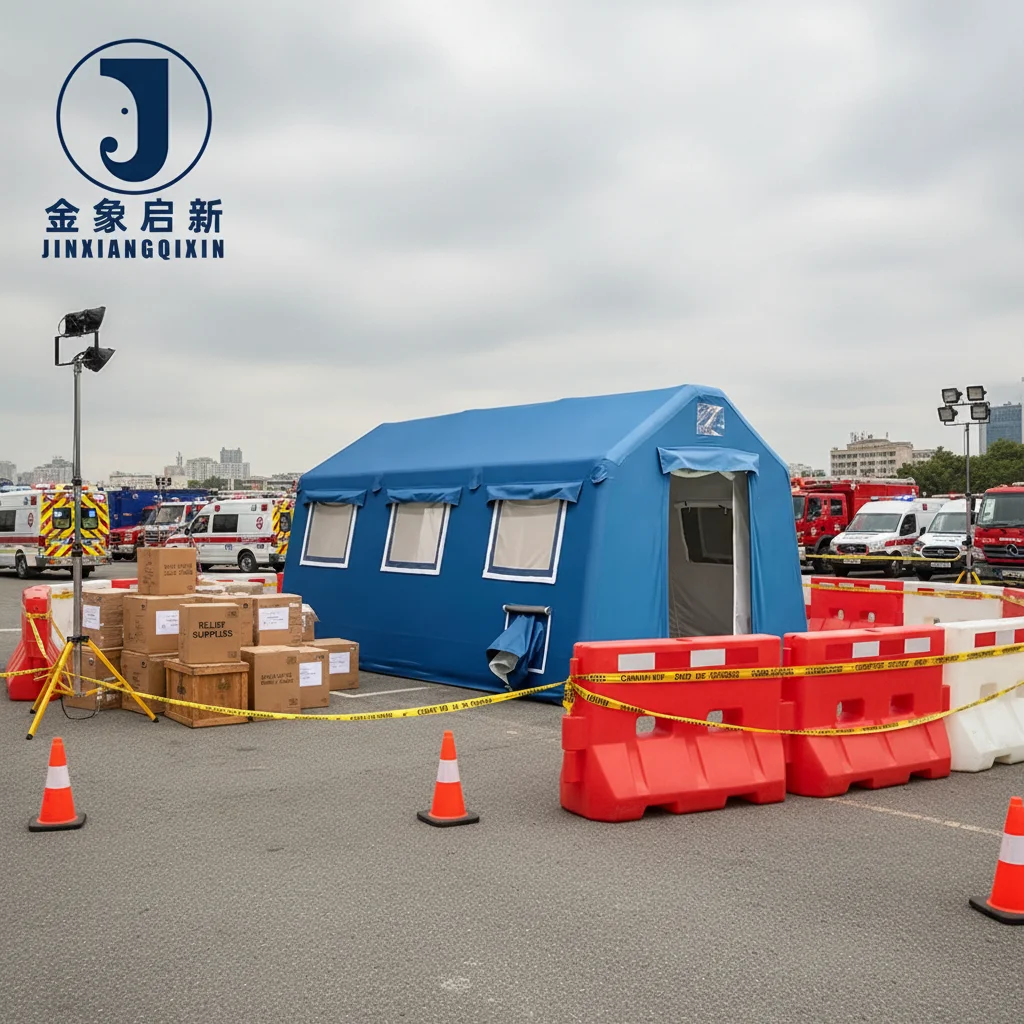
| Disaster relief temporary shelter | Extended outdoor exposure, rapid deployment cycles, multi-climate conditions from desert heat to alpine cold |
| Field command centers | Continuous occupancy, power and lighting integration, wind and precipitation loads |
| Equipment storage in emergency zones | UV degradation, moisture ingress, abrasion from repeated handling and pallet contact |
| Material distribution hubs | High-traffic entry and exit, forklift proximity, bulk stacking near fabric walls |
| Emergency medical operations | Hygienic interior surfaces, flame retardant compliance, rapid pressurisation and deflation |
Why Roll Consistency Matters More Than Quoted GSM for Inflatable Tent Fabric
Thickness tolerance held to ±0.02mm across every roll is what keeps your heat-seal parameters stable through an entire container load.
When purchasing inflatable tent roll stock for disaster relief production, buyers often fixate on the stated GSM and overlook the variance between rolls in the same shipment. A 5% thickness deviation may not register on a scale, but it shifts the heat-seal dwell time enough to produce cold welds on some panels and burn-through on others [NEED_CITE: tensile and tear test methods for coated fabrics per ISO 1421]. In inflatable tent manufacturing, where every seam is a pressure boundary, inconsistent roll geometry means you recalibrate your welding equipment mid-run or accept a higher rejection rate at the pressure retention test.
Roll-to-Roll Coating Weight and Colour Uniformity
Maintaining colour consistency across a multi-roll inflatable tent roll order is a coating-line discipline, not a post-production sorting exercise. Our process monitors coating weight at intervals during each run, so the PVC formulation deposited on the base fabric stays within tolerance from the first metre to the last. This matters when tent panels cut from different rolls are joined into a single inflatable structure — visible shade variation between adjacent panels is a rejection trigger on humanitarian procurement inspections. The inflatable tent wholesale supply is batch-tracked so you can trace each roll back to its coating run.
Pressure Retention and Seam Integrity in Finished Structures
An inflatable disaster relief tent holds its shape through internal air pressure, placing continuous stress on every welded seam. The seam strength of 250N and tear resistance of ≥300N are verified on production samples, but these numbers only translate to field reliability when the base fabric itself is uniform. A thin spot in the PVC coating creates a localised stress concentrator where the seam meets the panel [NEED_CITE: DIN 4102 fire classification for building materials]. Our 24-hour pressure retention testing on finished units catches these weak points before the batch leaves the facility, rather than after deployment in a disaster zone.
Reading the Specification Sheet Beyond the Headline Numbers
The 3000mm waterproof rating and EN 13501-1 flame retardant certification define the baseline performance for disaster relief procurement, but the interaction between base fabric denier and coating weight determines how the material behaves during fabrication. A heavier coating on a lighter base fabric may deliver the target GSM while offering poor peel strength at heat-welded joints — the coating separates from the yarns under thermal stress. The ±0.02mm thickness tolerance across the inflatable tent roll stock ensures that your welding temperature and pressure settings remain valid from roll to roll. UV-resistant PVC formulation extends service life in continuous outdoor deployment, though the specific test method should be confirmed for your target market’s documentation requirements. For buyers evaluating roll width options, wider stock reduces the number of longitudinal seams in large-capacity shelters but increases handling weight and waste on smaller tent patterns.
The Hidden Cost of Specifying on Price Per Kilometre Alone
Choosing inflatable tent fabric based solely on the lowest cost per linear metre often surfaces problems at the fabrication stage rather than the quotation stage. Rolls that arrive below the quoted GSM may still pass a casual weight check if the tolerance band is wide, but the reduced coating thickness compromises waterproof integrity and seam adhesion during heat welding. Batch-to-batch colour drift forces tent manufacturers to sort and match panels manually, adding labour hours and cutting yield [NEED_CITE: coating weight verification methods for PVC tarpaulin]. When flame retardant certification is claimed without a batch-specific test report, the entire shipment risks rejection at the destination port’s compliance inspection.
Why Procurement Teams Source Inflatable Tent Fabric Here
Our three full production lines and 36 sets of professional equipment support bulk inflatable tent wholesale orders with consistent scheduling across container loads. The 10-person R&D team develops custom samples within days, including pattern printing and colour matching against your specified reference. Every roll is inspected at 7 critical manufacturing stages with dedicated QA&QC staff, not spot-checked at the packing bench. Pre-shipment inspection records include batch-specific thickness data and seam strength results, so your incoming quality team can verify against the quotation without destructive testing. Full documentation packages — material specification sheets, EN 13501-1 test reports, ISO and CE certificates — ship with every order for tender compliance.
Documentation & Verification
- Material specification sheet stating GSM, base fabric, coating, and colour reference per roll
- EN 13501-1 flame retardant test report issued against the production batch
- Waterproof performance verification at 3000mm water column per batch
- Pre-shipment inspection record with thickness tolerance and seam strength data
- Roll packing list with container loading details by roll count and weight
- Certificate of origin and customs documentation for international dispatch
Fabrication, Handling & Storage
- Set heat-seal temperature based on the ±0.02mm thickness tolerance to avoid cold welds or burn-through
- Allow PVC inflatable tent rolls to acclimatise before unrolling in cold conditions to prevent coating crack
- Store rolls upright on pallets to prevent flat spots that distort coating thickness at the contact point
- Use compatible PVC adhesive for field repairs on the UV-resistant coated surface
- Plan cutting layout to minimise seams across the roll width for pressure-bearing panels
What to Include in Your Inquiry
Provide the intended shelter capacity and deployment climate so we can recommend the appropriate PVC formulation and roll width. Specify whether you require finished inflatable tent units or roll stock for your own fabrication line, along with your annual volume and target colour references. If your market mandates specific fire safety documentation beyond EN 13501-1, include the applicable standard in your initial inquiry.
Frequently Asked Questions
Q: How do you control batch-to-batch colour consistency across a multi-roll inflatable tent order?
A: Colour is monitored at the coating line during production, not sorted afterward. Each inflatable tent roll in your shipment is traced to its coating run, and the QA team verifies shade against the approved reference before packing. This prevents visible variation when panels from different rolls are welded into a single structure.
Q: Does EN 13501-1 meet the fire code requirements in my destination market?
A: EN 13501-1 is widely accepted across European and many international jurisdictions for temporary structures. However, some markets require supplementary national certifications. Provide your target country’s fire code reference in your inquiry so we can confirm compliance or advise on additional testing.
Q: How is GSM verified before shipment, and can I recheck on receipt?
A: Every roll is weighed and recorded during pre-shipment inspection, with the GSM noted on the packing list. You can verify on arrival using a calibrated scale and a standard sample cutter. Our stated GSM reflects the actual coated weight, not a nominal product family range.
Q: What roll widths and lengths are available for inflatable tent production?
A: Roll dimensions are configured to match your cutting pattern and fabrication equipment. Wider rolls reduce longitudinal seams on large shelters but increase handling weight. Share your tent panel dimensions and annual volume so we can recommend the most efficient roll specification for your production line.
Q: Do you supply finished inflatable tent units or only fabric by the roll?
A: Both options are available. We supply inflatable tent roll stock for manufacturers with their own fabrication capacity, as well as finished units with OEM and ODM customization including pattern printing and sample development for disaster relief procurement programs.