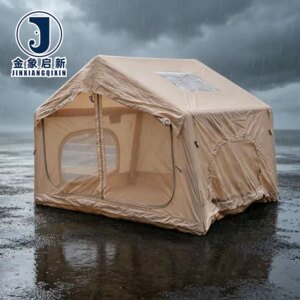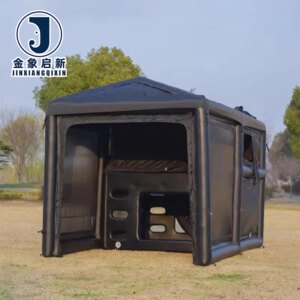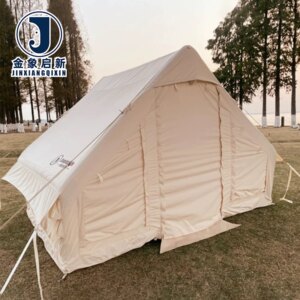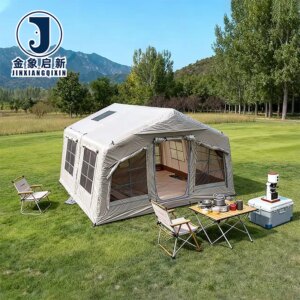
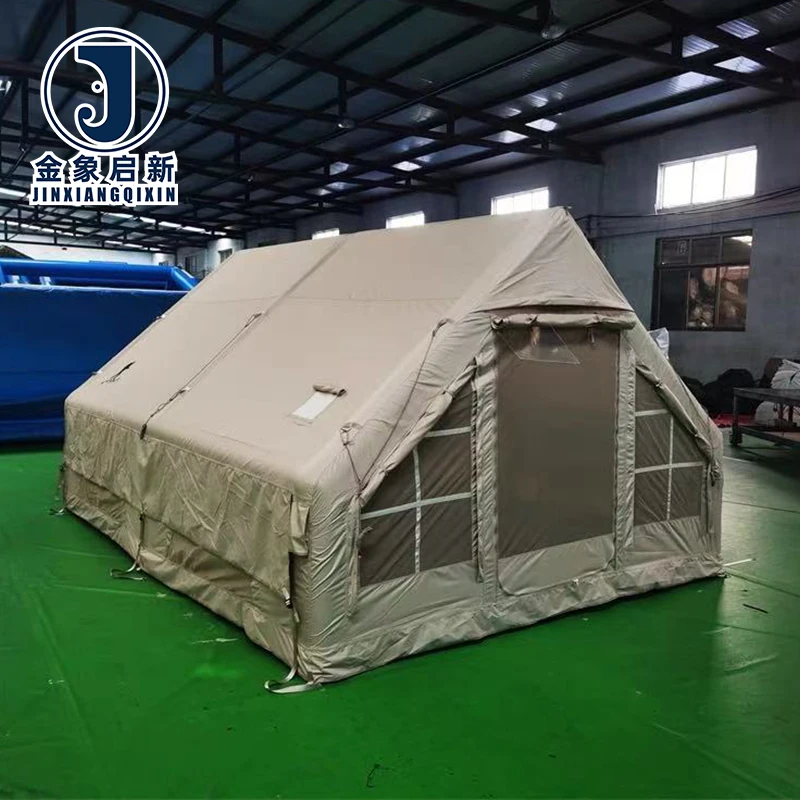
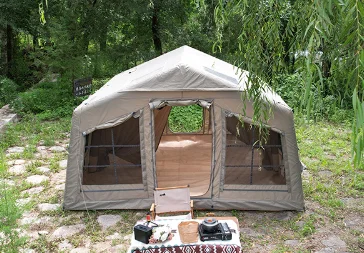

Description
Batch-consistent roll stock — dedicated QA/QC inspection at every production stage ensures colour and weight uniformity across every inflatable tent fabric roll in your order.
Technical Specifications
| Parameter | Value |
|---|---|
| Product Type | Inflatable Fabric / Tent Fabric |
| Core Material | PVC tarpaulin |
| Key Performance | Waterproof, tear-resistant |
| UV Resistance | Available with anti-UV treatment — confirm the UV standard required for your market |
| Flame Retardancy | Available in flame retardant grades — confirm the grade required for your market |
| Anti-Static | Available with anti-static treatment — confirm the standard required for your market |
| Customization | OEM & ODM, sample customization, pattern printing |
| Certifications | ISO9001, ISO14001, ISO45001, CE |
Application Suitability
| Application | Exposure & Requirement |
|---|---|
| Inflatable camping tent manufacturing | Repeated inflation cycles, seam stress at air-beam junctions, outdoor UV and moisture exposure |
| Commercial event shelter production | High-frequency deployment and teardown, crowd contact abrasion, varying weather conditions |
| Temporary site accommodation structures | Wind loading on membrane panels, ground moisture, temperature fluctuation across seasons |
| Outdoor adventure product lines | Consumer-grade finish quality, brand printing clarity, retail packaging roll presentation |
Why Roll-to-Roll Consistency Matters More Than Quoted GSM for Inflatable Tent Fabric
Batch colour drift and weight variance are the two most frequent complaints from tent manufacturers sourcing PVC inflatable tent fabric roll stock from multiple suppliers.
When you order inflatable tent fabric wholesale across several rolls, even slight GSM deviation between rolls forces cutting-room adjustments and produces panels that behave differently under inflation pressure. Colour variation between adjacent rolls becomes visible once the tent panels are welded side by side — a defect that is only discovered after fabrication is complete, making rework costly and delivery schedules slip. [NEED_CITE: ISO 1421 tensile and tear test methods for coated fabrics]
How We Control Coating Weight Across Every Roll
Coating weight directly determines how the PVC tarpaulin behaves during high-frequency welding and how much inflation pressure the air-beam channels can sustain. Our three full production lines use calibrated coating heads that maintain uniform PVC deposition across the entire fabric width. Each roll is sampled during production and checked against the target GSM before it moves to the winding stage. This process control means the inflatable tent fabric roll you receive matches the specification sheet you approved at the sample stage — not a lighter alternative substituted to save material cost.
Pattern Printing and Brand Integration Per Roll
Commercial tent brands require logo placement, colour blocking, and instructional graphics printed directly onto the fabric before cutting. Our 10-person R&D team develops print layouts aligned with your panel cutting template so that branding registers correctly on every tent shell. The PVC surface accepts solvent and UV-curable inks, and the coating formulation is adjusted to promote ink adhesion without compromising the heat-weld integrity of adjacent seam zones. [NEED_CITE: PVC coating adhesion and ink receptivity standards for technical textiles]
Reading the Specification Sheet Beyond the GSM Number
GSM alone tells you the total weight per square metre, but it does not distinguish between base fabric contribution and coating contribution. A PVC tarpaulin with a high-denier base fabric and thinner coating will tear differently than one with a lighter base and heavier coating, even at identical GSM. For inflatable tent shells, the base fabric weave density governs how punctures propagate — a critical factor when the air-beam structure is under constant internal pressure. The coating weight governs weldability and surface durability. Requesting both values separately lets your engineering team model panel behaviour accurately rather than relying on a single composite number.
Coating method also affects your production line. Knife-coated PVC tarpaulin typically delivers higher peel strength at the coating-to-yarn interface, which translates to stronger welded seams that resist delamination when the tent flexes under wind load. Laminated constructions may offer cost savings but can separate at the weld line under repeated inflation cycles. Understanding which coating method produced your inflatable tent fabric roll stock determines the welding temperature and dwell time your fabrication team should set.
The Hidden Cost of Specifying on Price Per Kilogram Alone
When procurement decisions focus on cost per kilogram without verifying what that kilogram contains, the delivered rolls often arrive lighter than the quoted GSM. For inflatable tent manufacturers, this means air-beam walls that are thinner than designed, losing rigidity and sagging under load. Flame retardant treatments claimed on the quotation but unsupported by a test report can cause your finished tents to fail site safety inspections, resulting in rejected shipments and contract penalties. [NEED_CITE: fire classification standards for temporary membrane structures]
Colour inconsistency between rolls forces your cutting room to segregate panels by shade, increasing fabric waste and disrupting production scheduling. These downstream costs routinely exceed the per-kilogram saving that motivated the purchase.
What Production Infrastructure Means for Your Roll Orders
Dedicated QA/QC staff inspect every roll at multiple production stages rather than sampling only at final packing. Thirty-six sets of professional processing equipment support the coating, winding, printing, and slitting operations required for inflatable tent fabric wholesale orders. The 9,180 m² facility houses three full production lines that run in parallel, reducing lead times on repeat orders and providing capacity for volume commitments. Sample development for custom widths, colours, and print layouts is completed within days through the in-house R&D team, allowing your approval cycle to stay on schedule before bulk production begins.
Documentation & Verification
- Material specification sheet stating GSM, base fabric construction, and PVC coating weight per roll batch
- Colour reference card matched to your approved sample for every dye lot produced
- Test reports for UV resistance and flame retardant grades supplied where applicable to your market requirements
- Pre-shipment inspection record confirming 100% roll-by-roll QA check before dispatch
- Roll packing list detailing roll count, individual roll dimensions, and gross weight for container loading planning
- Certificate of origin and customs documentation prepared for your destination market
Fabrication, Handling & Storage
- Set high-frequency welder dwell time to match the PVC coating weight specified on your material sheet to avoid seam delamination
- Store rolls vertically on padded cradles to prevent flat-spot deformation on the PVC tarpaulin coating surface
- Allow fabric to acclimatise to workshop temperature before unrolling to avoid creasing on cold-stiffened PVC coating
- Use solvent-compatible cleaners only — abrasive pads will score the PVC surface and compromise printed branding clarity
- Plan panel nesting on full roll width to minimise off-cuts and reduce the number of welded seams in the finished inflatable tent shell
What We Need to Quote Your Roll Order Accurately
Provide your target roll width, annual volume estimate, and the specific flame retardant or anti-static standard your end market requires. Share your panel cutting template if you need pattern printing registered to specific tent sections. Let us know whether you need the inflatable tent fabric roll stock shipped as full-width parent rolls or pre-slit to your cutting width, and whether sample approval is required before the bulk production run begins.
Frequently Asked Questions
Q: How is GSM verified on arrival and what documentation supports the quoted weight?
A: Every roll is weighed and measured during our pre-shipment inspection, and the results are recorded on the inspection report that ships with your order. The material specification sheet included in the documentation package states the target GSM alongside the actual measured value for each roll batch, so your receiving team can cross-check without independent laboratory testing.
Q: What fire-retardant or anti-static certifications can accompany the fabric for tent compliance?
A: Flame retardant and anti-static treatments are available in multiple grades depending on your destination market requirements. We supply the corresponding test reports with your shipment once the specific standard — such as a local building code or event safety regulation — is confirmed at the quotation stage so the correct formulation is applied during production.
Q: How is batch colour consistency maintained across multiple rolls in a single order?
A: Colour matching is controlled against your approved sample using reference standards at the coating stage. Every roll in a single production batch is inspected under standardised lighting conditions before winding. Rolls that fall outside the accepted colour tolerance are removed before packing, ensuring uniform appearance when panels from different rolls are welded side by side.
Q: What custom widths, roll lengths, and MOQ apply to inflatable tent fabric orders?
A: Custom roll widths and lengths are produced on our coating lines based on your cutting template and container loading plan. Minimum order quantities vary by specification complexity — standard stock grades carry lower thresholds while custom colours and printed patterns require dedicated production runs. Confirm your required dimensions and annual volume at the inquiry stage for an accurate MOQ assessment.