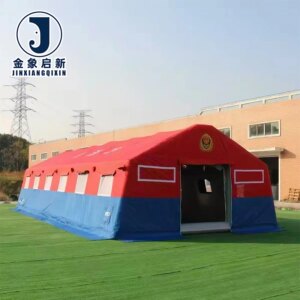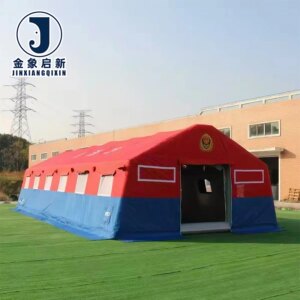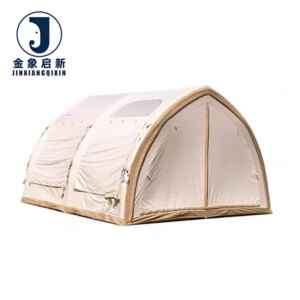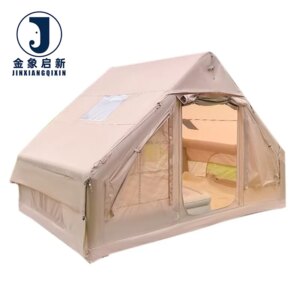
Description
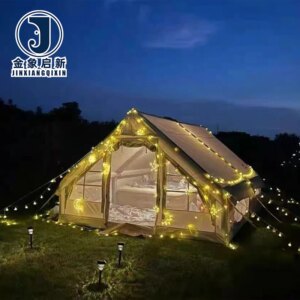
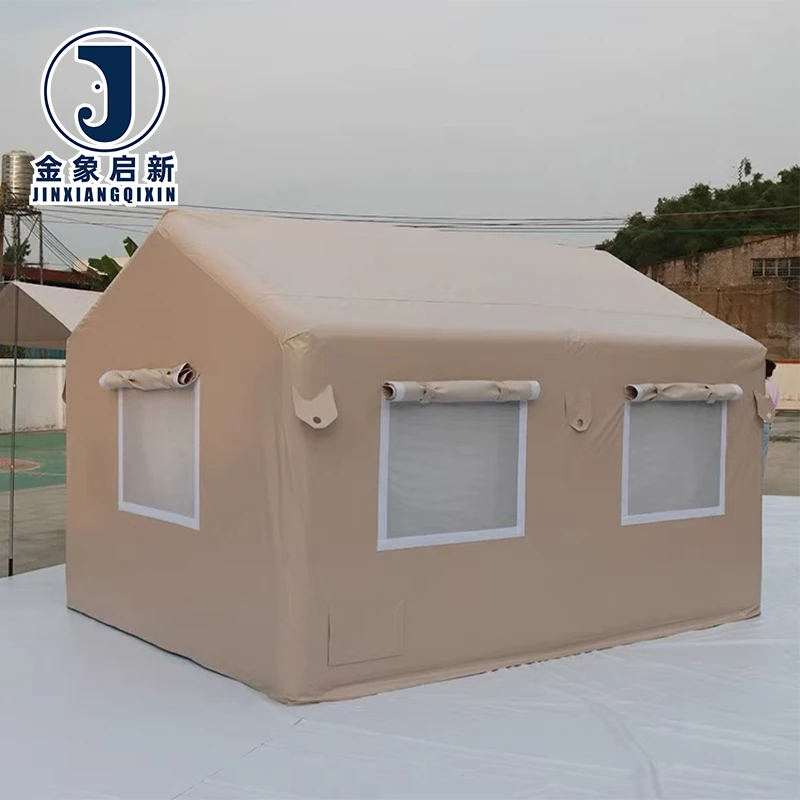
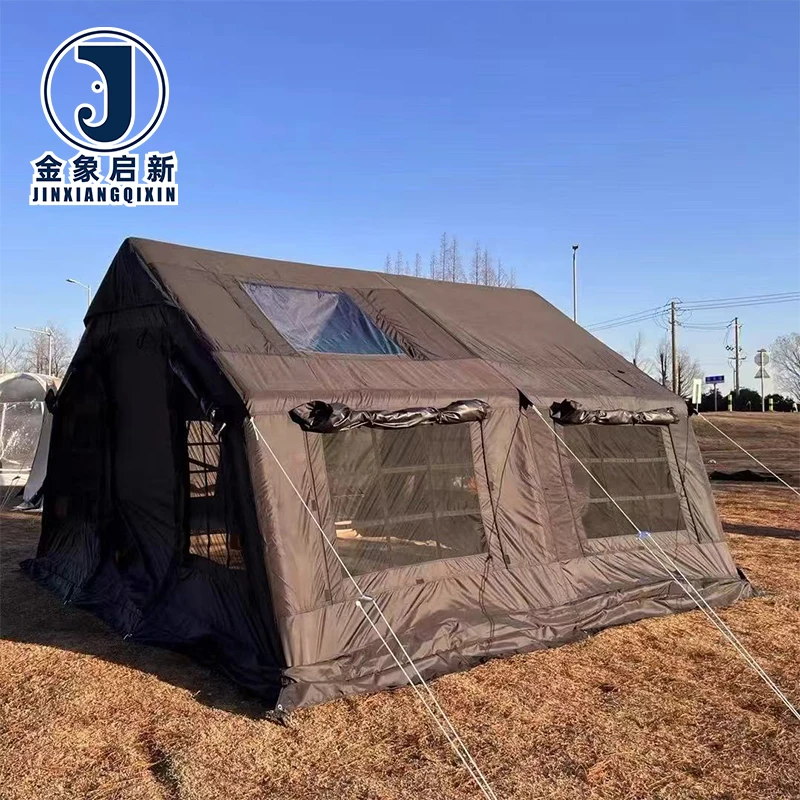
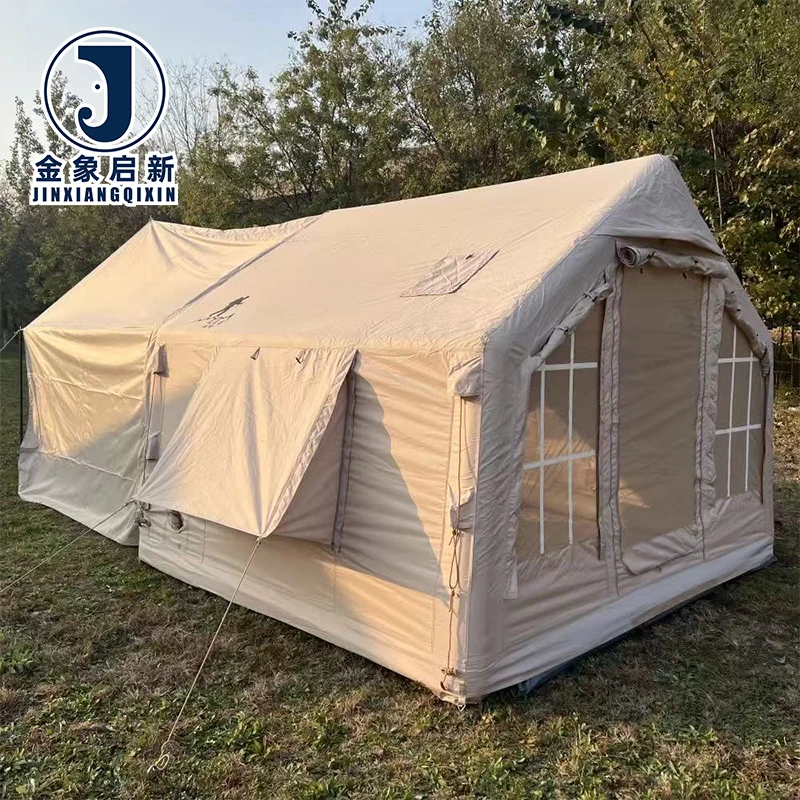
Consistent Roll-to-Roll Colour & Weight — Every batch of PVC inflatable tent fabric undergoes coating weight and colour verification before leaving the production line, ensuring adjacent rolls install without visible variation.
Technical Specifications
| Parameter | Value |
|---|---|
| Product Type | Inflatable Tent Fabric / Inflatable Structure Material |
| Core Material | PVC Tarpaulin |
| Key Features | Waterproof, UV-resistant, Tear-resistant, Fire-retardant, Anti-static |
| Waterproof Rating | ≥10,000mm (source value — verify against manufacturer catalog) |
| Tear Strength | ≥300N (standard not stated in source) |
| Wind Shear Resistance | Up to 60 km/h (source value — verify against manufacturer catalog) |
| UV Lifespan Extension | 30% under continuous sunlight (source value — verify against manufacturer catalog) |
| Season Rating | Four-Season |
| Opening Mechanism | Quick Automatic Opening (Air Inflation) |
| Construction | Single Layer |
| Customization Options | OEM & ODM — sample customization, pattern printing, custom dimensions, color matching, logo printing, modified opening mechanisms |
| Quality Control | Full-process inspection, 12 raw material performance checks per PVC batch, 48-hour pressure retention test before shipment |
| Certifications | ISO 9001, ISO 14001, ISO 45001, CE |
Application Suitability
| Application | Exposure & Requirement |
|---|---|
| Commercial camping ground facilities | Continuous UV exposure, seasonal temperature swings, guest turnover demanding rapid inflation and deflation cycles |
| Outdoor event management | Short-term high-visibility deployment, wind gust loading, quick setup and teardown under variable weather |
| Mobile field operations and temporary site accommodation | Remote logistics, dust and abrasion, repeated relocation requiring fabric that withstands folding and re-inflation |
| Inflatable tent manufacturers buying roll stock | Batch colour consistency across production runs, weld seam compatibility, custom widths to minimise cutting waste |
| Membrane and inflatable structure contractors | Fire-retardant compliance for temporary public structures, anti-static behaviour in dry environments |
Why Roll Consistency Matters More Than Quoted GSM
Matching the quoted GSM on paper does not guarantee the fabric performs identically roll after roll.
Buyers who source PVC inflatable tent fabric from multiple suppliers frequently encounter visible colour shifts when unrolling adjacent batches side by side. The coating weight may fall within tolerance on a single sample, yet drift across a container load — leading to panels that look mismatched once welded into a finished tent structure. This inconsistency forces fabricators to sort rolls manually or reject entire shipments, both of which delay production schedules and increase material waste [NEED_CITE: batch consistency standards for coated fabrics]. Sourcing custom PVC inflatable tent fabric from a facility that inspects coating weight and colour at every production stage removes this variable from your supply chain.
How Batch Colour Matching Works Across a Production Run
Colour drift in PVC coated fabric typically originates from pigment dispersion variation during the mixing phase or temperature fluctuation across the coating line. When you order PVC inflatable tent fabric in volume, each batch of PVC compound is mixed with pigments to a target colour reference, then applied to the base fabric under controlled line speed and oven temperature. Dedicated QA staff verify the shade against the approved reference before the roll is wound. This process ensures that rolls shipped in the same container share a uniform appearance once fabricated into finished inflatable tent panels.
Custom Width and Length to Reduce Cutting Waste
Inflatable tent manufacturers cut panels from roll stock in shapes that rarely align with standard textile widths. Ordering PVC inflatable tent fabric in custom widths allows fabricators to nest pattern pieces more efficiently, reducing offcut waste and lowering per-unit material cost. The production lines support variable width runs, and the R&D team works with buyers to determine the most material-efficient roll dimensions for a given tent design [NEED_CITE: pattern nesting efficiency in coated fabric cutting]. Custom lengths also mean fewer mid-panel joins on large tent sections, which directly improves the visual continuity and structural integrity of the finished inflatable structure.
Understanding the Relationship Between Base Fabric, Coating, and Performance
The tear strength and tensile behaviour of inflatable tent fabric depend on two independent variables: the base fabric construction and the PVC coating formulation. The base fabric — defined by yarn denier and weave density — carries the structural load when the tent is inflated and subjected to wind shear. The coating provides waterproofing, UV screening, and surface protection but contributes relatively little to tear resistance on its own. A heavier coating weight does not automatically mean a stronger fabric; it may simply mean more plasticiser and filler sitting on the surface. Buyers evaluating PVC inflatable tent fabric should request both the base fabric specification and the coating weight as separate data points, rather than relying on total GSM alone to predict field performance. Fire-retardant and anti-static properties are achieved through specific additive packages within the coating compound — confirm the grade required for your target market before placing a bulk order.
The Hidden Cost of Specifying on Price Alone
When roll stock is selected primarily on unit price, the trade-offs surface during fabrication and in the field. A coating formulation with excessive filler content may pass an initial GSM check but exhibit poor weld adhesion — seams fail before the fabric body does, typically at the flex points where the inflatable structure bends under wind load. Rolls with inconsistent plasticiser distribution become brittle in cold weather or tacky in heat, compromising the inflation pressure envelope. Buyers who discover these issues after receiving a full container face the choice of absorbing rework costs or filing a claim that delays the entire project season [NEED_CITE: coating adhesion failure modes in PVC tarpaulin]. Verifying coating formulation and weld compatibility through pre-production samples eliminates this risk before commitment.
What This Supply Channel Delivers to Roll Buyers
Three full production lines running simultaneously mean large-volume orders for PVC inflatable tent fabric move through the facility without being queued behind unrelated product categories. Thirty-six sets of processing equipment handle coating, winding, slitting, and inspection in sequence, maintaining throughput without sacrificing per-roll quality checks. A ten-technician R&D team supports custom colour matching, width adjustments, and sample development within days rather than weeks. Every PVC batch undergoes twelve performance checks before coating begins, and each finished roll is inspected before packing — giving buyers documented assurance that the material they receive matches the material they approved.
Documentation & Verification
- Weight verification per roll against the stated GSM before dispatch
- Batch-specific quality inspection report covering waterproof rating and tear strength
- Fire-retardant classification report matched to the additive package used
- Material safety data sheets provided for each coating formulation
- Roll packing list with individual roll weights and dimensions for customs clearance
- Certificate of origin and ISO/CE certification copies included as standard
Fabrication, Handling & Storage
- Hot-air welding temperature should be calibrated to the specific PVC coating formulation used on these rolls to avoid seam delamination
- Store rolls upright on pallets in a dry, shaded area to prevent flat-spot deformation of the coated surface
- Allow cold-stored rolls to acclimatise to ambient temperature before unrolling to avoid coating micro-cracking
- Cut panels with sharp rotary blades to prevent fraying the base fabric yarns at panel edges
- Clean fabricated tent surfaces with mild detergent only — solvent-based cleaners may degrade the plasticiser in the PVC coating
- Nest cutting patterns across the available roll width to minimise offcut waste on custom-width orders
Request a Roll Stock Quote
To receive an accurate quotation for PVC inflatable tent fabric, share your required roll width, target colour reference, annual volume estimate, and any fire-retardant or anti-static grade your market demands. If you need custom pattern printing or logo application on the fabric surface, provide the artwork files and repeat dimensions. Sample rolls can be produced for your welding and fabrication trials before you commit to a production order.
Frequently Asked Questions
Q: What is the minimum order quantity for custom colours or widths?
A: MOQ varies depending on whether you require a standard stock grade or a custom colour matched to your specification. Custom widths and pattern printing may carry different minimums due to line setup requirements. Share your target dimensions and volume, and the production team will confirm the applicable threshold before sampling begins.
Q: Can third-party test reports for fire retardancy and UV resistance be provided?
A: Fire-retardant and UV-resistant grades are available with supporting test documentation. The specific classification depends on the additive package selected for your coating formulation. Confirm the standard required by your destination market — such as a regional fire code — so the correct test report accompanies your shipment.
Q: How is colour consistency maintained across multiple rolls in one order?
A: Every PVC batch is mixed against an approved colour reference and verified by QA staff before coating. Rolls from the same production run are grouped together during packing. This process ensures adjacent rolls show no visible shade difference when fabricated side by side into tent panels.
Q: Is custom logo printing or pattern printing available on roll stock?
A: Pattern and logo printing can be applied during production using the facility’s printing equipment. Provide artwork files with repeat dimensions and colour specifications. The R&D team will produce a printed sample roll for your approval before the full order enters production, ensuring registration accuracy and ink adhesion meet your requirements.
Q: How are rolls packed for international shipping?
A: Rolls are wound on cores of appropriate diameter to prevent creasing, wrapped in protective outer layers, and loaded into containers based on a pre-confirmed loading plan that accounts for roll count and total weight. This method minimises transit damage and optimises container space for ocean freight.