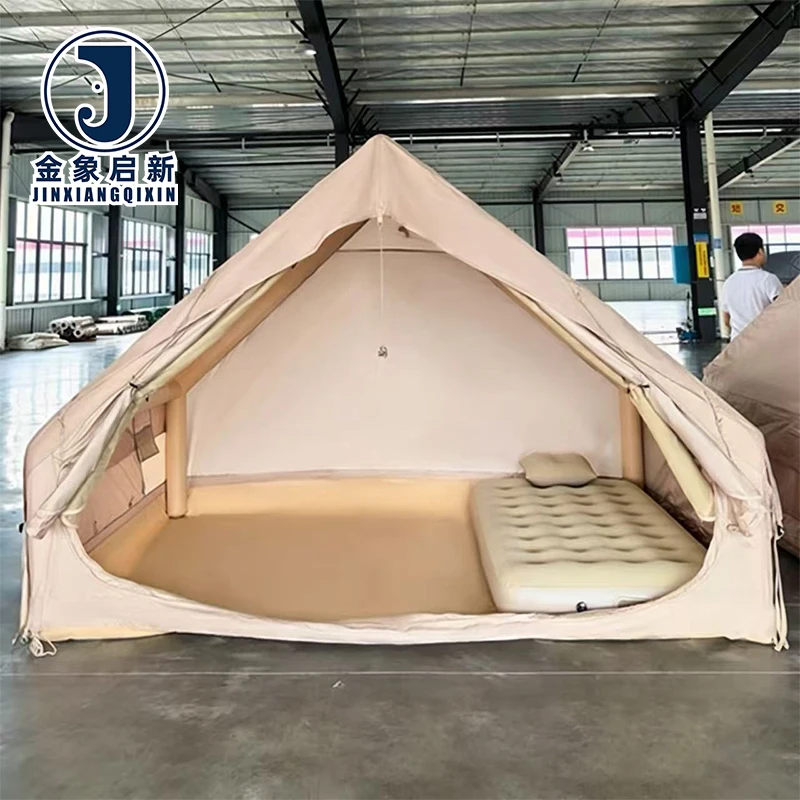
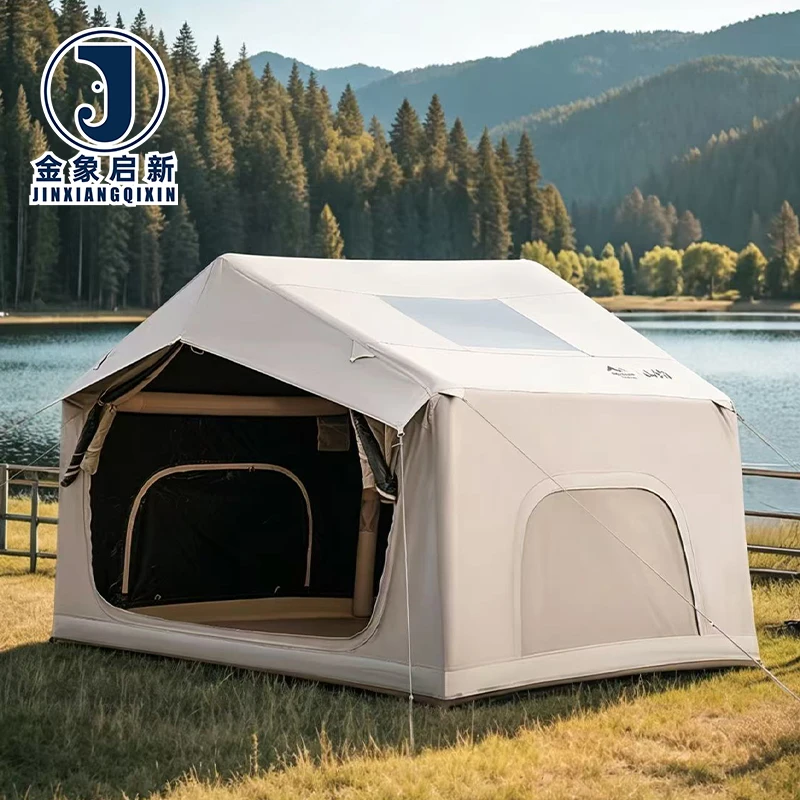
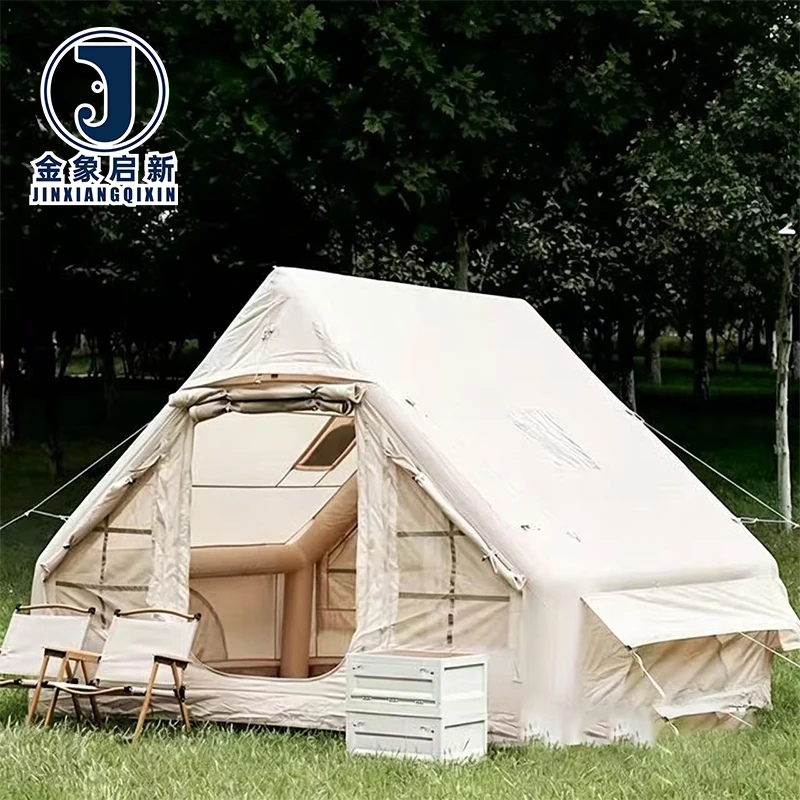
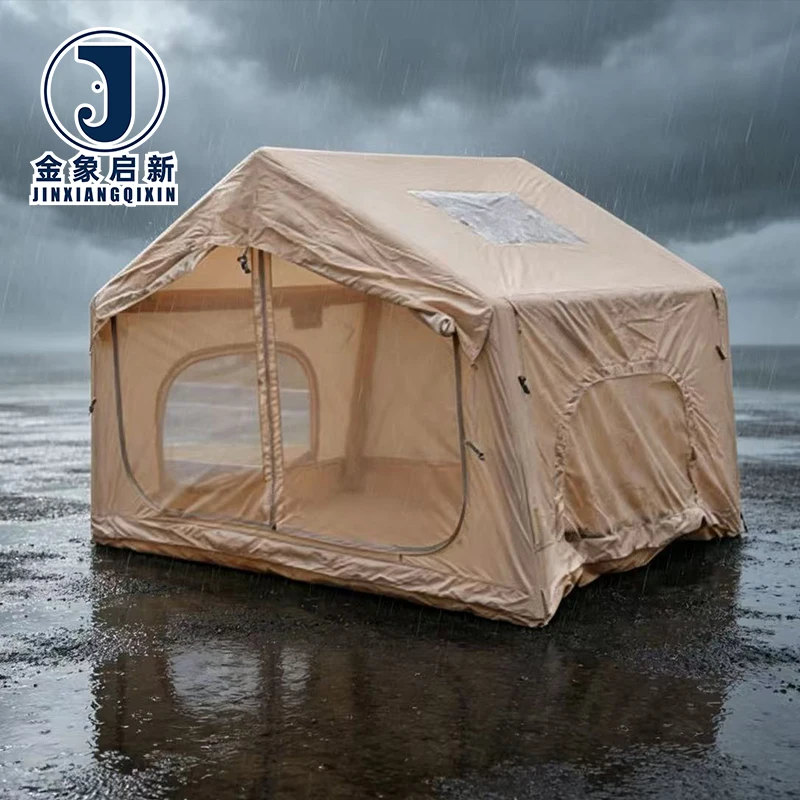
Description
Batch-to-Batch Consistency — three dedicated production lines and 100% pre-shipment inspection ensure every roll of inflatable tent fabric meets the same specification you approved in sampling.
Technical Specifications
| Parameter | Value |
|---|---|
| Product Type | Inflatable Tent Fabric |
| Core Material | PVC tarpaulin |
| Waterproof | Fully coated construction |
| UV Resistance | UV-resistant treatment (test basis not stated in source) |
| Fire Retardancy | Fire-retardant grades available — confirm the grade required for your market |
| Anti-Static | Anti-static treatment available (standard not stated in source) |
| Tear Resistance | Tear-resistant PVC structure |
| Customization | OEM & ODM, sample customization, pattern printing |
| Quality Control | Full-process QA & QC inspection, 100% pre-shipment check |
| Certifications | ISO9001, ISO14001, ISO45001, CE |
Application Suitability
| Application | Exposure & Requirement |
|---|---|
| Inflatable tent manufacturing by the roll | Consistent colour and GSM across multiple rolls, weldability for seam construction, UV exposure during prolonged outdoor deployment |
| Outdoor event shelter systems | Waterproof performance under sustained rainfall, repeated inflation and deflation cycles, abrasion from anchoring hardware |
| Temporary site accommodation covers | Fire-retardant compliance for on-site safety regulations, resistance to wind-driven debris, tear resistance at structural flex points |
| Commercial outdoor gear production | Bulk roll procurement with uniform thickness, pattern printing adhesion for branding, dimensional stability across seasonal temperature shifts |
Why Roll Consistency Matters More Than Quoted GSM When Sourcing Inflatable Tent Fabric
The specification on paper only matters if every roll you receive actually matches it.
Procurement teams ordering inflatable tent fabric roll wholesale often focus on the quoted GSM as a proxy for durability. Yet a 650 GSM material that arrives weighing 580 GSM compromises weld strength and structural integrity. When fabric weight drifts between rolls within the same shipment, tent manufacturers discover colour mismatch on the production floor and weld failures at stress points. [NEED_CITE: tensile and tear test methods for coated fabrics per ISO 1421] The cost of rework on fabricated inflatable structures far exceeds the savings from accepting unchecked material variation.
Coating Integrity Across the Full Roll Length
Inflatable tent fabric demands uniform coating adhesion from the first metre to the last. Inconsistent PVC coating thickness creates weak zones that fail during inflation cycles or high-wind events. Our coating process maintains controlled PVC application across each inflatable tent fabric roll, ensuring the material behaves predictably when your fabrication team sets heat-welding parameters. This consistency eliminates the guesswork that arises when operators adjust weld temperatures mid-production to compensate for variable material behaviour.
Colour Matching Across Multi-Roll Orders
Event shelter producers and commercial tent manufacturers frequently assemble structures from multiple rolls. Visible colour variation between adjacent panels compromises the finished appearance and triggers rejection at client handover. [NEED_CITE: colour measurement standards for coated textile batches] Our R&D team manages pigment formulation and coating temperature together, producing inflatable tent fabric wholesale batches where roll-to-roll colour remains within acceptable tolerance — critical for buyers fulfilling branded orders where panel uniformity is contractually specified.
Understanding PVC Tarpaulin Construction for Inflatable Applications
PVC tarpaulin performance in inflatable tent structures depends on the relationship between base fabric weave density and coating weight. A tightly woven polyester base provides dimensional stability, preventing the fabric from stretching unevenly under internal air pressure. The PVC coating encapsulates the yarns and bonds across the weave, creating a continuous waterproof barrier while contributing to tear propagation resistance. When coating adhesion is strong, the material resists delamination at welded seams — the most common failure point in inflatable structures. Fire-retardant and anti-static treatments, where specified, are incorporated into the coating compound rather than applied as a surface finish, ensuring these properties persist through fabrication and field use.
The Hidden Cost of Specifying Fabric on Weight Alone
Buyers who source inflatable tent material based solely on a GSM figure without verifying base fabric denier and weave density often experience premature failures. A heavier coating applied over a loosely woven base produces a fabric that meets the weight target but tears readily at seam lines and anchor points. [NEED_CITE: weld seam strength testing for PVC coated fabrics] In inflatable tent applications, the constant inflation-deflation cycling places repeated stress on welded joints, making coating-to-substrate adhesion more consequential than raw weight. When batches arrive with unverified GSM, manufacturers face warranty claims and replacement costs that erase any initial savings from the material purchase.
Why Volume Buyers Source Inflatable Tent Fabric Here
Our 9,180 square-metre facility houses three full production lines running simultaneously, supporting the throughput required for container-scale inflatable tent fabric wholesale orders without compromising lead times. Each roll passes through dedicated QA and QC checkpoints at every production stage — coating weight verification, adhesion testing, visual inspection — before shipment clearance. The 10-person R&D team develops custom samples within days, allowing buyers to validate colour, weight, and weldability before committing to bulk production. We supply material specification sheets that document the exact GSM, base fabric construction, and coating parameters for your order, not generic product-family ranges. Pre-shipment inspection records accompany every dispatch, providing traceable evidence that what was quoted is what was delivered.
Documentation & Verification
- Material specification sheet detailing GSM, base fabric denier, and PVC coating weight per roll
- Fire-retardant and anti-static test reports matched to target market compliance standards
- Pre-shipment inspection record confirming weight verification against quoted specification
- Roll packing list with individual roll numbers for traceability through your production line
- ISO9001, ISO14001, ISO45001, and CE certificates for procurement compliance documentation
Fabrication, Handling & Storage
- Heat-weld PVC tarpaulin at manufacturer-recommended temperatures, adjusting for coating thickness verified on incoming inspection
- Store inflatable tent fabric rolls upright on pallets to prevent flat-spot deformation across the coating surface
- Allow cold-stored rolls to reach ambient temperature before unrolling to avoid PVC cracking at low-temperature flex points
- Use compatible PVC adhesive for field repairs, ensuring the compound bonds with the specific coating formulation supplied
- Plan cutting layouts to maximise roll utilisation and minimise transverse welds across the inflatable panel structure
Request a Specification Match for Your Inflatable Tent Programme
Provide your target GSM range, required roll width, and annual volume to receive a matched specification with sample lead time. Confirm whether fire-retardant or anti-static grades apply to your destination market so we include relevant test documentation. Indicate if pattern printing or custom colour matching is required for branded tent production runs.
Frequently Asked Questions
Q: How do we verify the stated GSM when inflatable tent fabric rolls arrive at our facility?
A: We supply a pre-shipment inspection record documenting actual measured GSM per roll. Upon receipt, take sample cuts from the outer wrap and mid-roll positions, weigh them on a calibrated scale against the known sample area, and compare to the material specification sheet included with your shipment. Any discrepancy outside tolerance triggers our replacement process.
Q: How is batch-to-batch colour consistency controlled across multiple inflatable tent fabric roll orders?
A: Our R&D team locks pigment formulation at the sampling stage and references it for every subsequent production run. Coating temperature and line speed are held constant to prevent shade shift. For multi-roll orders, panels from the first and last rolls are compared under controlled lighting before dispatch, ensuring colour remains within agreed tolerance for adjacent panel assembly.
Q: Which fire-retardant grades are available and how do they align with regional safety requirements?
A: Fire-retardant treatments are available in multiple grades — confirm the classification required by your market authority before ordering. We provide test reports matched to the applicable standard once your target grade is confirmed. European, North American, and Asian markets each reference different fire classification systems, so specifying the end-use jurisdiction ensures correct documentation.
Q: What roll width and length options are available, and what is the minimum order for custom sizing?
A: Roll width and length are configured to your cutting layout and container loading plan. Custom widths and lengths are produced on our three full production lines. Confirm your required dimensions and target roll count per container, and we will advise the minimum order quantity and lead time for your specific inflatable tent fabric wholesale programme.
Q: How are rolls packed and protected during transit to prevent coating damage?
A: Each inflatable tent fabric roll is wrapped in protective film and packed on pallets designed to prevent crushing during container transit. The roll packing list included with each shipment details roll numbers, dimensions, and weights for receiving verification. We advise upright pallet storage upon arrival to maintain coating integrity across the full roll surface.