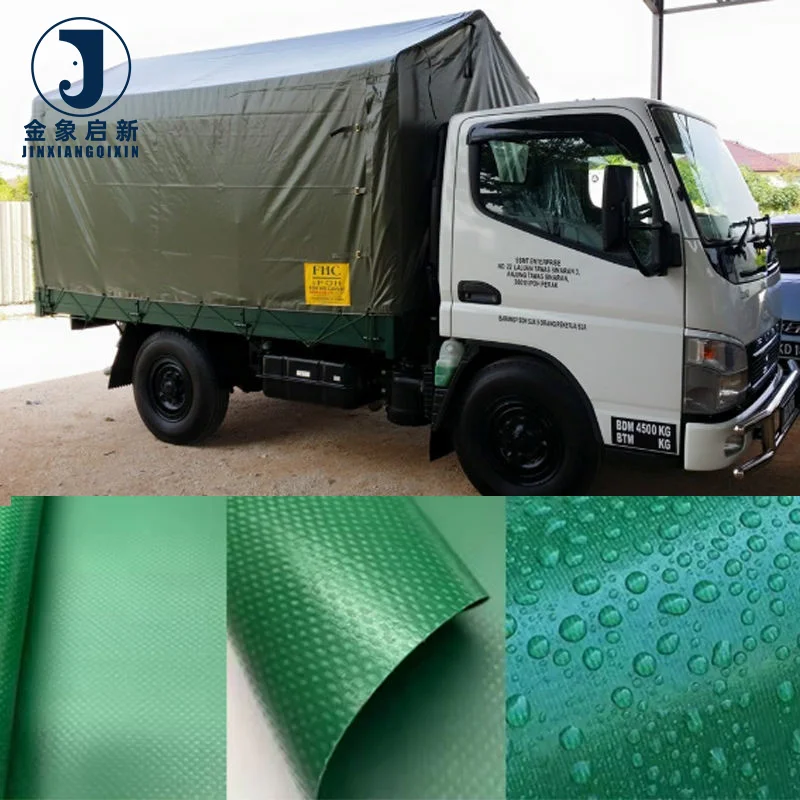
Description
Consistent Roll Weight — Every roll is weighed and verified against the stated GSM before container loading, eliminating the discrepancy between quotation and arrival.
Technical Specifications
| Parameter | Value |
|---|---|
| Product Type | PVC Truck Cover Tarpaulin |
| Coating Material | PVC (vinyl-coated polyester mesh, 100% PES dipping) / PE (HDPE weaving with LDPE lamination) |
| Base Fabric Construction | Knitting and plain weave (PVC) / HDPE weaving (PE) |
| Weight Range | 50gr/m2 ~ 220gr/m2 (confirm specific grade for application) |
| Total Thickness | 0.2-0.4mm / 8 mil-16 mil / Custom |
| Roll Width Options | 2m, 4m, 6m / 6ft, 8ft, 10ft, 12ft |
| Roll Length Options | 100 yards, 100 meters, or custom |
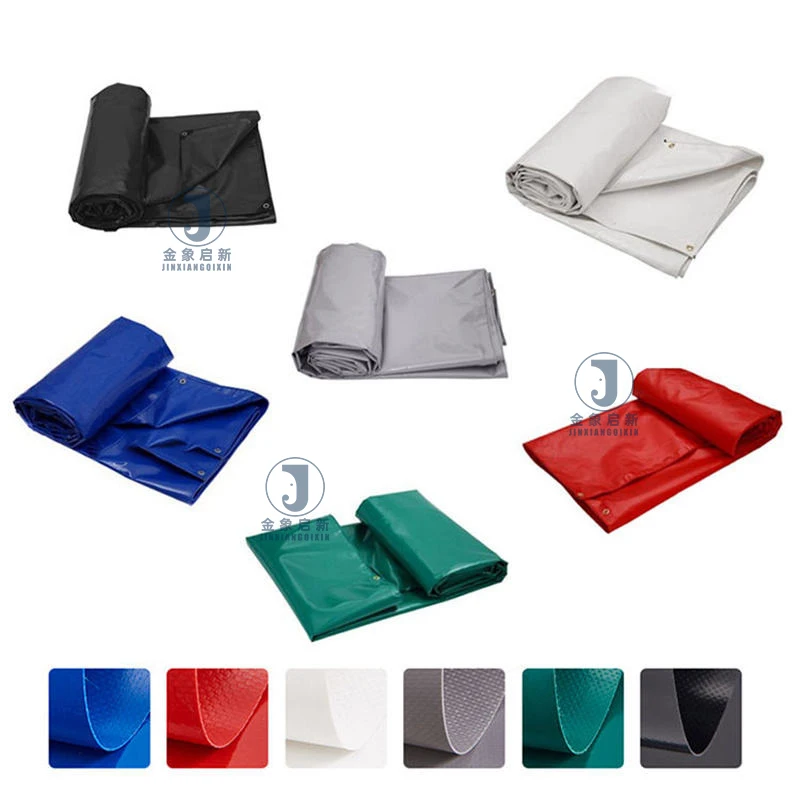
| Color Options | Blue, Blue/Orange, Green, Grey, Black, Clear, Grey/Green, Orange, or custom |
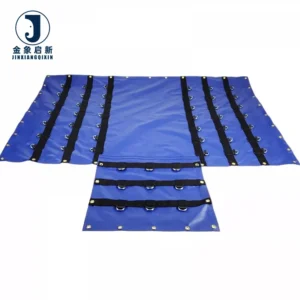
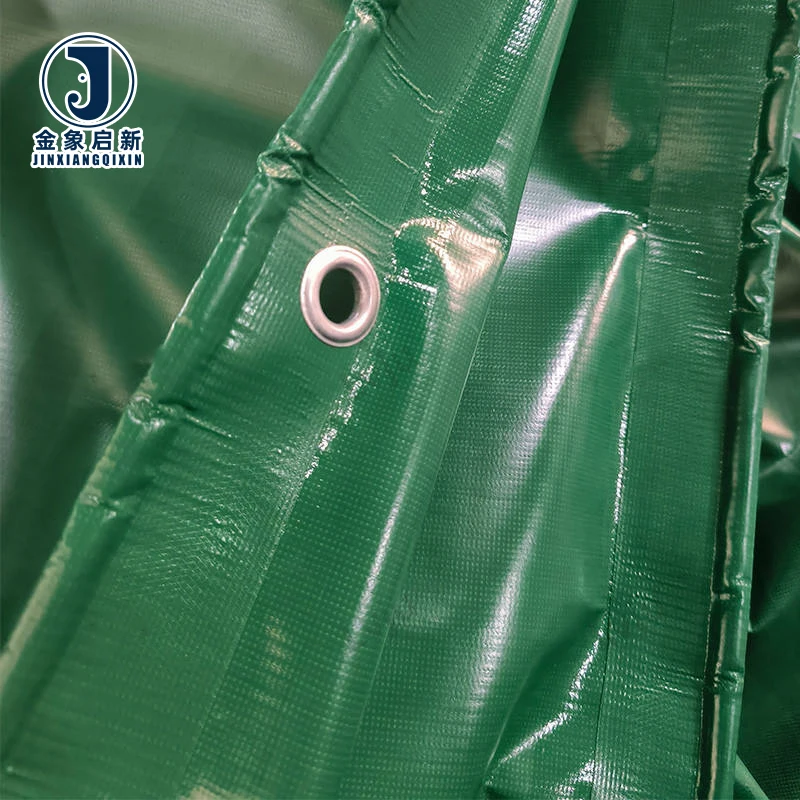
| Edge Reinforcement | All four edges reinforced with PP rope in hem |
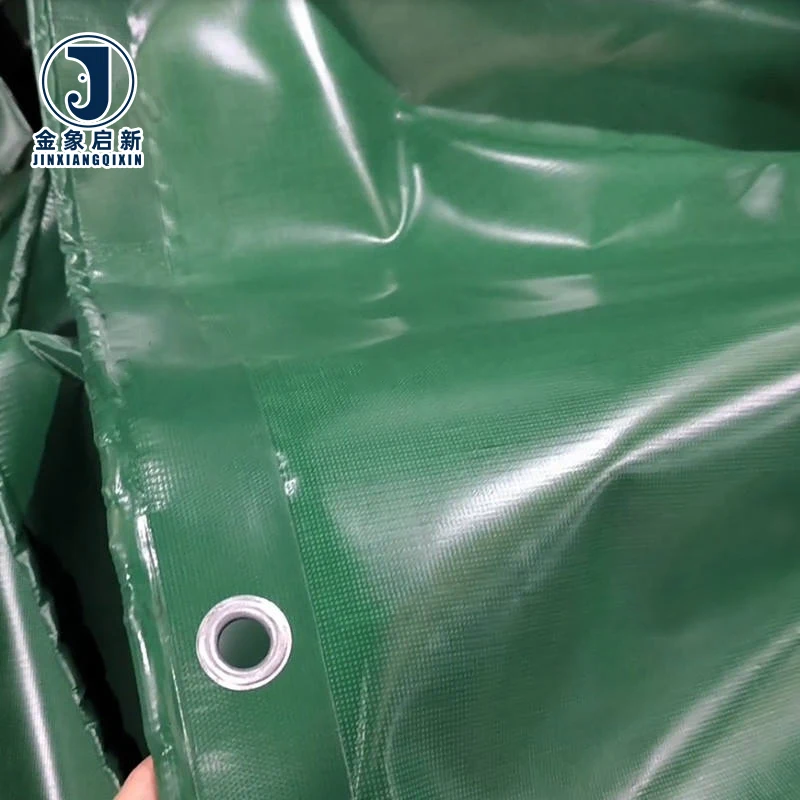
| Eyelet Spacing | Galvanized eyelets every 3ft or 1 meter interval |
| Corner Reinforcement | Reinforced plastic corners |
| Key Features | Waterproof, washable, tear resistant, mildew proof, anti-aging, UV treatment available (test basis not stated) |
| Standards | ISO, CE |
Application Suitability
| Application | Exposure & Requirement |
|---|---|
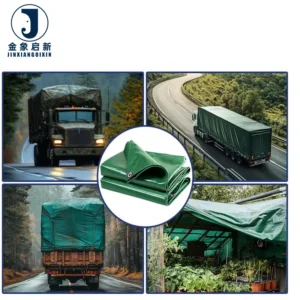
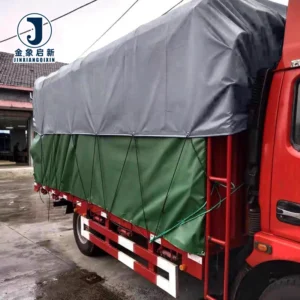
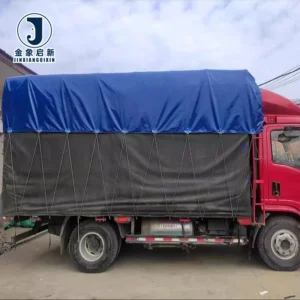
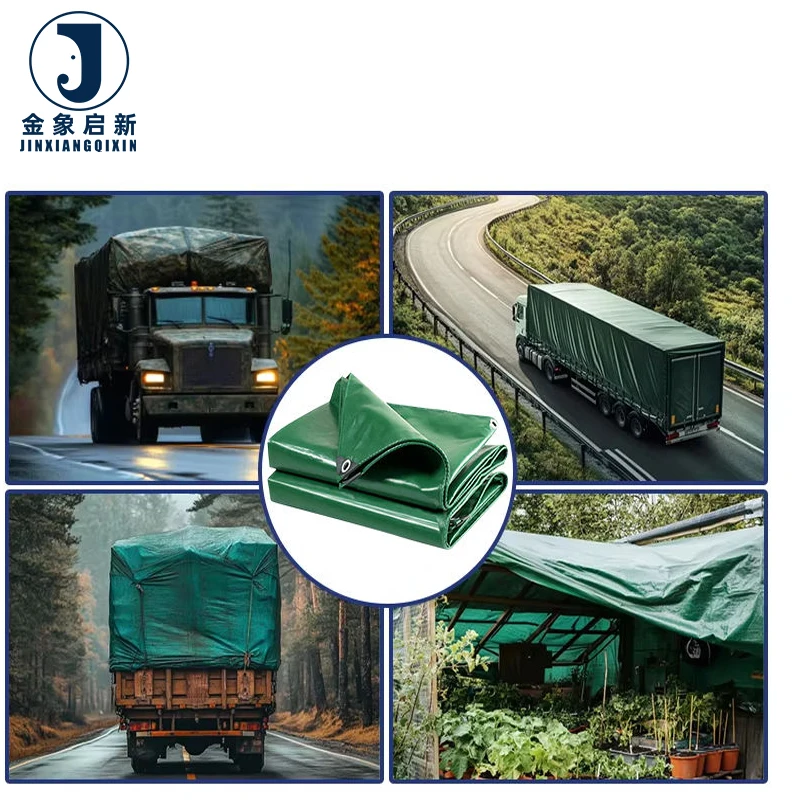
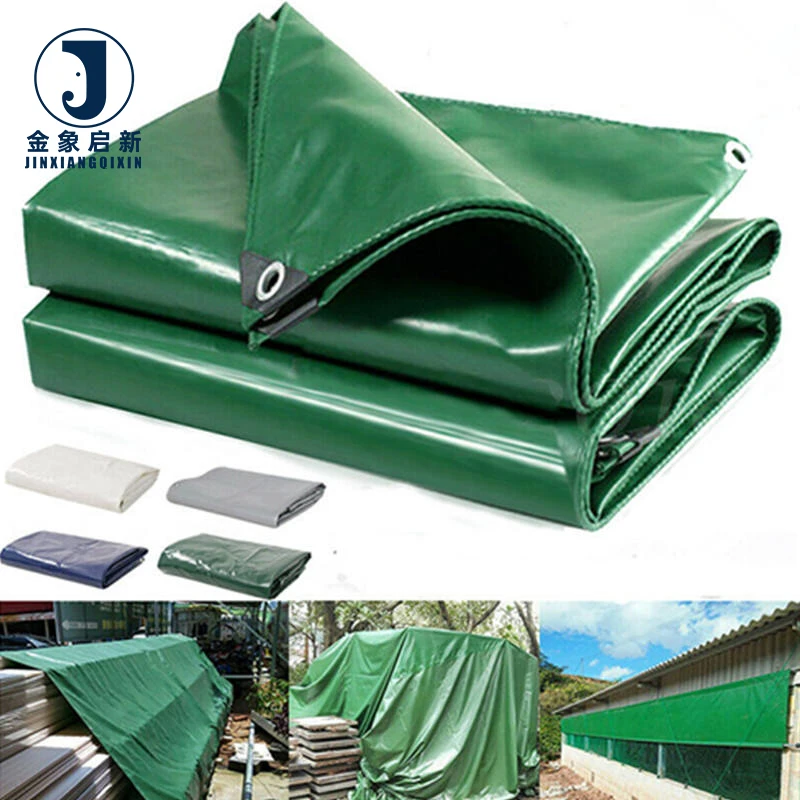
| Flatbed truck and trailer load covering | Constant road vibration, wind flap, UV and weather exposure, tie-down abrasion at eyelets |
| Lumber and steel tarpaulin panels | Sharp edges, heavy point loads, forklift contact during loading and unloading |
| Coil tarpaulin covers | Concentrated weight on curved surfaces, flex stress at roll contact points |
| Tarpaulin distributor regional resale | Batch-to-batch colour and weight consistency across container-load volume |
| Fleet operator side curtain conversion | Repeated daily rolling and unrolling, abrasion against trailer frame hardware |
Why Roll-to-Roll Colour Drift Costs More Than the Fabric Itself
Colour variation between rolls becomes visible only after fabrication and installation, when rejection and rework costs are at their highest.
When a transport fleet orders multiple rolls of PVC truck cover tarpaulin for a batch of trailers, the expectation is that roll three will match roll seven once welded side by side. Shade drift across a single order forces the converter to either absorb the rework or ship a product the end user rejects on sight. Pigment dispersion and coating consistency at the production stage are the control points that determine whether an entire container load installs as a uniform fleet or becomes a claim. [NEED_CITE: colour measurement methods for coated textile surfaces per ISO 105-J02]
Container-Load Planning by Roll Width and Count
Stocking PVC truck cover tarpaulin in widths from 2 m to 6 m allows distributors and converters to configure container loads around the finished product dimensions they cut most often. A converter producing 2.5 m side curtains will waste less from a 4 m parent roll than from a 2 m roll that requires welding two panels together. Roll lengths of 100 yards or 100 metres align with standard container dimensions, enabling accurate forecasting of roll count and total weight per 20 ft or 40 ft unit before the order is placed.
Batch Consistency Across Repeat Orders
Transport fleets standardise on a single material specification across mixed trailer types, which means the PVC truck cover tarpaulin ordered in March must match the material received the previous September. Colour reference is confirmed with a physical sample before each production run, and the coating formulation is held to that reference across the full order. [NEED_CITE: batch colour tolerance standards for industrial coated fabrics] Roll packing lists carry individual roll weight, dimensions and batch codes so that warehouse receiving teams can trace every roll back to its production run.
Reading GSM in Context With Base Fabric Density
Grams per square metre alone does not define how a tarpaulin will perform under load. A 50gr/m2 PE tarpaulin woven from high-denier HDPE tape yarns may tear more readily than a 50gr/m2 PVC vinyl-coated mesh, because the base fabric construction — knitting and plain weave versus HDPE weaving — governs how stress distributes across the yarn intersections. Coating method matters equally: the 100% PES dipping process used for PVC-coated grades encapsulates the mesh, contributing to adhesion between coating and substrate, while LDPE lamination on PE grades bonds two film layers to a woven core. When evaluating the 50gr/m2 to 220gr/m2 range available for PVC truck cover tarpaulin, the correct grade depends on whether the end use demands flex durability, puncture resistance, or simply a weather barrier for static storage covers. Thickness from 0.2 mm to 0.4 mm correlates with coating mass but not directly with tensile strength, which is why the specification sheet must state base fabric denier and weave alongside GSM. [NEED_CITE: tensile and tear test methods for coated fabrics per ISO 1421]
The Hidden Cost of Skipping Pre-Shipment Roll Inspection
Accepting a container load without verifying roll-by-roll weight and colour against the specification sheet transfers all risk to the buyer. Rolls that arrive underweight compared to the quoted GSM may pass a visual check but fail prematurely at tie-down points and welded seams, where the coating is thinnest and mechanical stress is greatest. Shade variation that was not caught at dispatch becomes a fleet-wide appearance problem, forcing the distributor to offer discounts or fund replacement fabrication. Eyelet spacing that deviates from the specified 1 m interval leaves converters short on attachment points, requiring on-site drilling that compromises the reinforced hem. [NEED_CITE: pre-shipment inspection protocols for coated textile roll goods]
What 30 Years of Coated Fabric Production Delivers for Roll Buyers
Three full production lines and 36 sets of professional equipment provide the throughput capacity to fill container-load orders without splitting production across external coaters, which is where batch inconsistency typically enters the supply chain. A 10-person R&D team handles custom width slitting, colour matching and sample development within days, so non-stock specifications do not add multi-week delays to the production schedule. Dedicated QA/QC at every production stage includes 100% inspection before shipment, with each roll checked for weight, colour shade and eyelet spacing — not just a sampling of the first and last roll on the line. Full documentation accompanies every dispatch: material specification sheets, roll packing lists, certificates of origin and customs support, removing the administrative burden from the importer.
Documentation & Verification
- Material specification sheet stating exact GSM, base fabric and coating per roll, not a product family range
- Pre-shipment inspection record with roll-by-roll weight, colour and eyelet spacing verification
- Roll packing list showing individual roll weight, dimensions and batch code for customs declaration
- ISO and CE certificates included with every bulk shipment
- UV treatment test documentation available where applicable — confirm the test basis for your market
Fabrication, Handling & Storage
- Heat-weld seams at temperatures matched to the PVC dipping coating thickness for consistent peel strength
- Galvanised eyelets at 1 m intervals distribute tie-down loads across the PP-rope reinforced hem
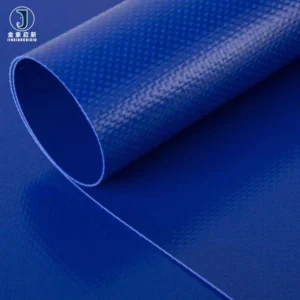
- Store rolls horizontally on pallets to prevent edge compression marks on the 0.2-0.4 mm coating
- Allow rolls to acclimatise before unrolling in cold weather to avoid cracking the PVC surface
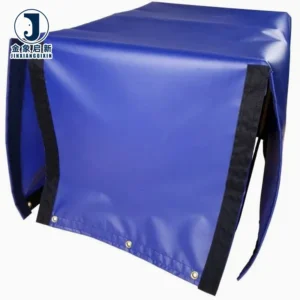
- Cut panels from 4 m or 6 m parent rolls to minimise welded seams on wide trailer covers
- Clean mildew-proof coated surfaces with mild detergent; avoid solvents that attack the PVC layer
What to Include With Your Roll Stock Inquiry
Specify the finished application and the exposure conditions the PVC truck cover tarpaulin will face — road abrasion, static outdoor storage, or daily flex cycling on side curtains. State your required roll width, target GSM within the 50gr/m2 to 220gr/m2 range, and whether you need roll stock only or finished covers with eyelets and reinforced hems. If colour consistency across multiple containers is critical, request a physical sample for approval before the production run begins.
Frequently Asked Questions
Q: What GSM tolerance do you guarantee across a full container order?
A: Every roll is weighed during pre-shipment inspection and compared to the GSM stated on your material specification sheet. The inspection record documents actual weight per roll, so you receive verified data — not a quotation figure that may not match what arrives. Any roll outside the agreed tolerance is replaced before container loading.
Q: Can I mix different widths and colours in one container load?
A: Yes. Roll widths from 2 m to 6 m and the full colour palette can be combined within a single container. Each roll is listed individually on the packing list with its width, length, colour and batch code, supporting accurate warehouse receiving and regional redistribution.
Q: How is colour variation controlled between production batches?
A: Pigment is controlled at the coating stage against a confirmed physical colour reference, not just a digital code. Pre-shipment inspection checks shade roll by roll so that adjacent panels fabricated from different rolls install without visible drift. [NEED_CITE: instrumental colour evaluation for coated textiles]
Q: What documentation is included for customs clearance?
A: Each shipment includes a roll packing list with individual weights and dimensions, a material specification sheet, certificate of origin, and ISO and CE certificates. UV treatment or other performance claims are documented with test reports where applicable, so your import declaration matches the paperwork at the port of entry.
Q: Do you stock standard rolls or is everything made to order?
A: Common widths and colours are produced in volume runs, while custom widths, colours and printed branding require a production run with sample approval beforehand. Lead times for non-stock specifications are confirmed at quotation stage, and samples are developed within days for buyer sign-off.