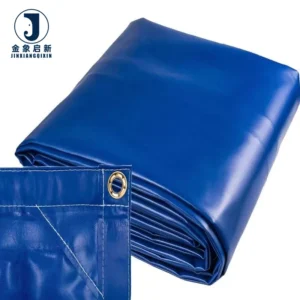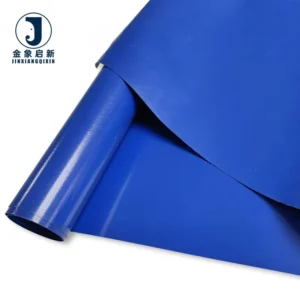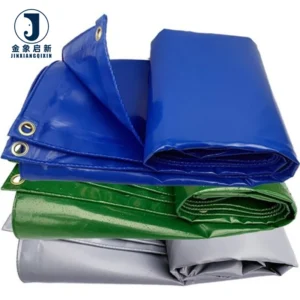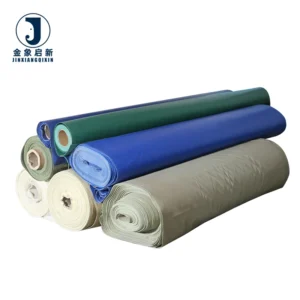
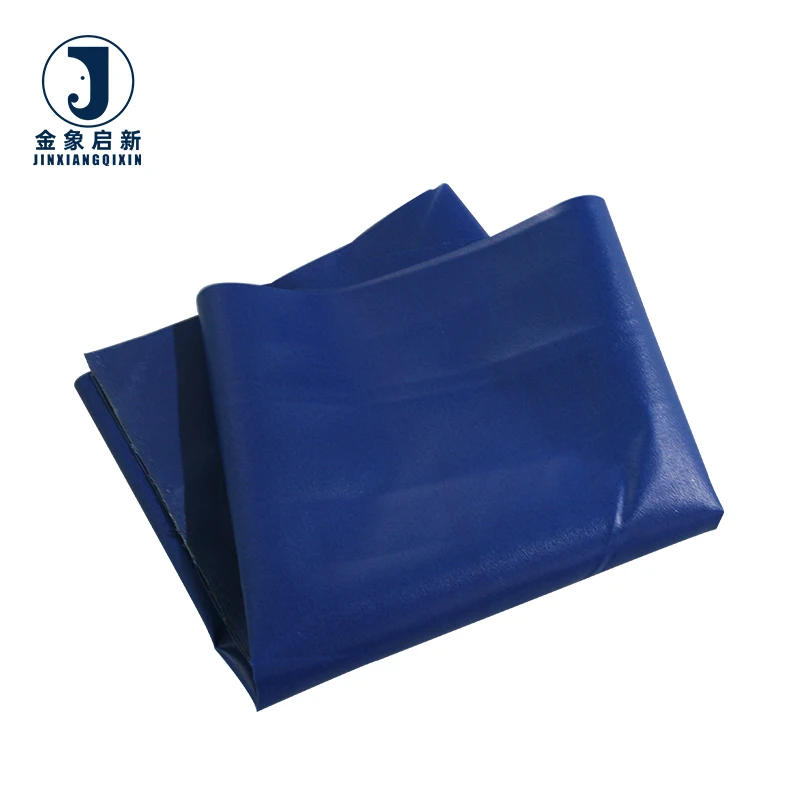
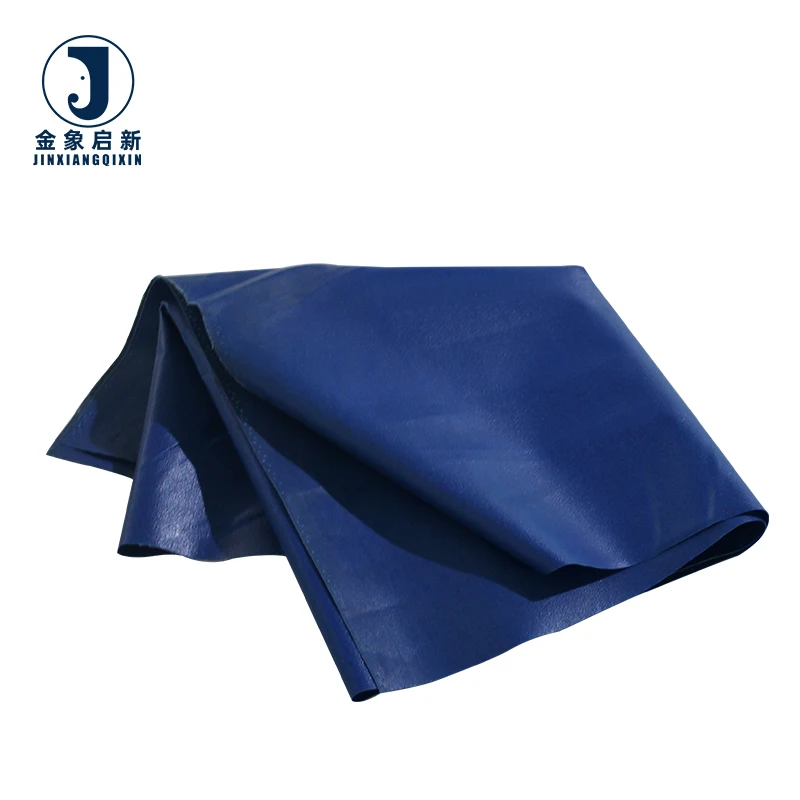
Description
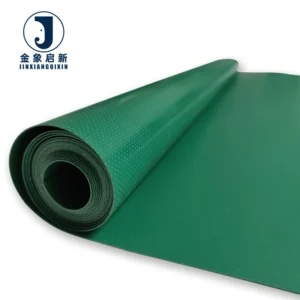
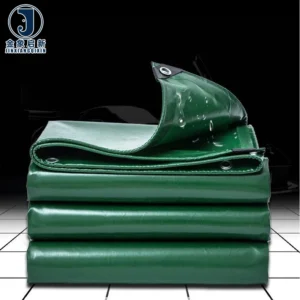
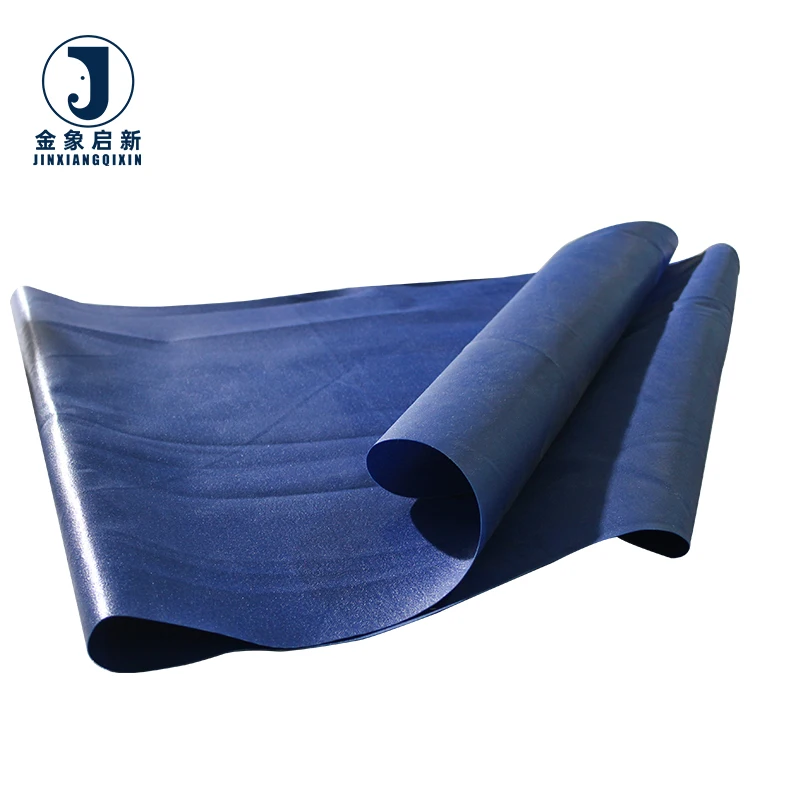
Bulk-ready roll consistency — verified coating weight and colour matching across every PVC coated tarpaulin roll before dispatch, backed by inline QA records.
Technical Specifications
| Parameter | Value |
|---|---|
| Product Type | PVC Tarpaulin Roll |
| Material Construction | HDPE weaving with LDPE lamination on both sides (source value — verify against manufacturer catalog) |
| Weight (GSM, PE range) | 50 gr/m² – 220 gr/m² |
| Weight (GSM, title claim) | 550g / 600g / 650g / 900 GSM |
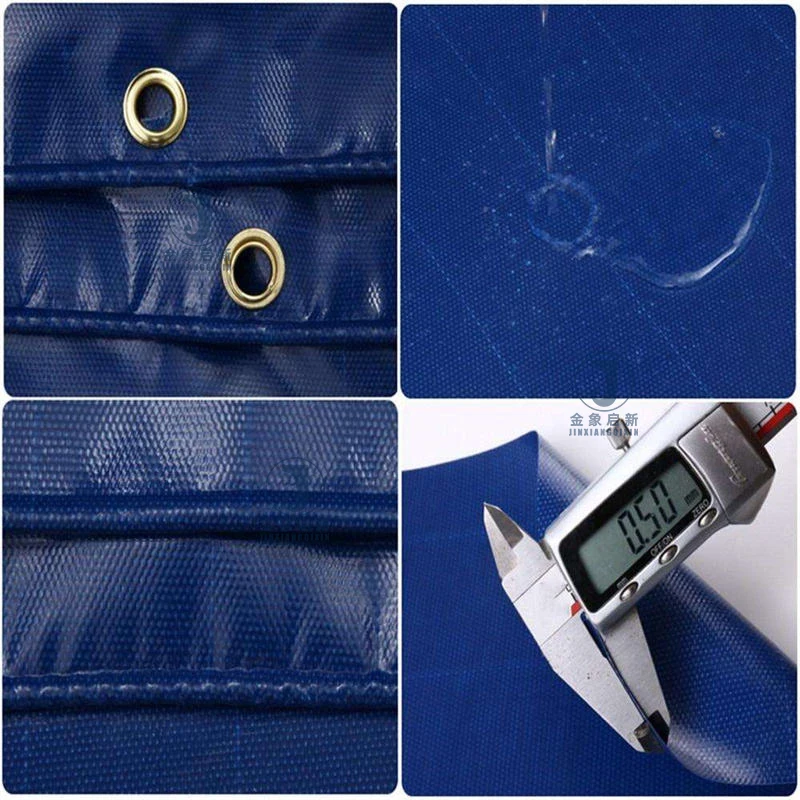
| Total Thickness | 0.2–0.4 mm / 8–16 mil |
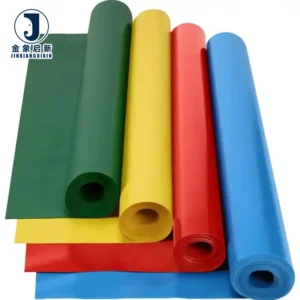
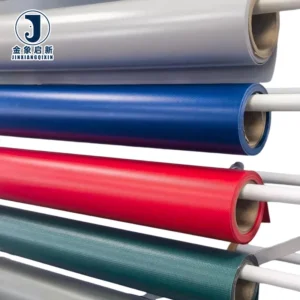
| Colour Options | Blue, Blue/Orange, Green, Grey, Black, Clear, Grey/Green, Orange, or custom colour |
| UV Treatment | Available (test basis not stated) |
| Waterproof | Yes (source claim) |
| Mildew Proof / Anti-Aging | Yes (source claim) |
| Printing Option | Custom brand printing on roll stock accepted |
| Certifications | ISO, CE (certificate numbers not extracted) |
Application Suitability
| Application | Exposure & Requirement |
|---|---|
| Truck and trailer load covering | Road abrasion, wind flap, UV exposure, repeated flex at tie-down points |
| Construction site and equipment covers | Dust, rain, UV, mechanical contact with steel and concrete |
| Agricultural and aquaculture pond lining | Permanent water contact, soil chemistry, puncture from substrate |
| Tent and awning fabric | UV exposure, tension loading, colour consistency across panels |
| Pallet and equipment protection | Warehouse stacking, forklift contact, moisture ingress |
Why Stated GSM Alone Does Not Guarantee a Reliable PVC Coated Tarpaulin Roll
Weight on paper means little without verified coating control at the point of production.
Importers regularly open containers to find rolls that feel noticeably lighter than the quoted grade. The base fabric density, coating adhesion method and lamination consistency all contribute to real-world strength [NEED_CITE: tensile and tear test methods for coated fabrics per ISO 1421]. A roll that arrives below spec not only fails earlier in the field — it also damages the distributor’s reputation with downstream fabricators who trusted the label.
Colour Matching Across Container-Volume Orders
When multiple PVC coated tarpaulin rolls are installed side by side on a truck curtain or a large tent structure, even minor shade variation becomes immediately visible. Batch-to-batch colour control starts at the pigment dispersion stage and continues through coating temperature regulation. Rolls shipped within a single wholesale order are produced in matched runs so that the hue, gloss level and surface texture remain consistent from the first roll to the last.
Thickness and Weight Selection for Wholesale Restocking
Stocking the right range of grades determines how quickly a distributor can fulfil downstream orders. Lightweight grades suit temporary covers and agricultural sheeting, while heavier grades serve long-term transport and construction applications. The available thickness range of 0.2–0.4 mm / 8–16 mil covers most standard wholesale demand in Southeast Asia and Africa [NEED_CITE: regional tarpaulin import data by GSM grade]. Custom thickness beyond this band is available on request with sample confirmation.
How Coating Method Affects Roll Behaviour in Fabrication
Lamination-based coating, where LDPE film is bonded to both sides of an HDPE woven base, produces a roll that feeds smoothly through automated cutters and heat-sealing bars. The bond between coating and base fabric governs peel strength: if the layers separate during heat welding, the seam fails before the fabric body does. Knife-coated PVC grades in the 550g–900 GSM range follow a different production path, where liquid PVC is applied directly to the scrim and cured, yielding a thicker monolithic layer suited to high-frequency welding and heavy-duty side curtain fabrication. The choice between laminated PE and coated PVC roll stock depends on the downstream fabrication method and the mechanical demands of the final application.
What Happens When Roll Specifications Are Wrong for the Market
A distributor who imports rolls that are lighter than local buyers expect faces returns, margin erosion and lost contracts. Flame-retardant grades claimed without a supporting test report can cause a construction or mining project to fail site inspection, leaving the entire shipment stranded [NEED_CITE: site safety compliance requirements for coated fabrics in mining ventilation]. Colour inconsistency across rolls forces fabricators to reject panels that would otherwise be structurally sound, turning a profitable container into a partial write-off. These are not material defects — they are specification-to-market mismatches that are preventable with pre-shipment documentation.
Why Wholesale Buyers Source Roll Stock Here
Three full production lines with 36 sets of professional equipment support bulk output without sacrificing per-roll inspection. A 10-person R&D team handles custom width, colour matching and brand printing requests, developing samples within days rather than weeks. Every roll passes 100% pre-shipment inspection with coating weight verification before it leaves the factory. The documentation package — spec sheet, inspection record, packing list and certificate of origin — travels with each container so that customs clearance and buyer verification proceed without delay. This production depth keeps lead times predictable for repeat wholesale programmes.
Documentation & Verification
- Material spec sheet listing base fabric, coating type and verified GSM per roll grade
- Pre-shipment inspection record confirming coating weight and colour consistency
- Roll packing list with batch reference for traceability and inventory matching
- Certificate of origin and customs documentation for cross-border import clearance
- UV and flame-retardant test reports supplied where grades are specified and tested
Fabrication, Handling & Storage
- Heat-seal laminated PE rolls at moderate temperatures to avoid LDPE layer delamination from the HDPE base
- For PVC grades in 550g–900 GSM range, use high-frequency or hot-air welding matched to coating thickness
- Store rolls upright on pallets to prevent flat-spotting and permanent creasing across the 0.2–0.4 mm thickness range
- Allow cold-stored rolls to reach ambient temperature before unrolling to prevent coating crack in low GSM grades
- Custom-printed brand panels should be rolled with the printed face outward to protect ink during transit
- Cut laminated rolls with heated blades for clean edges that resist fraying at the HDPE weave boundary
Planning Your Roll Stock Enquiry
To receive an accurate quotation with lead time and container loading plan, share your target GSM range, preferred width and roll length, and the colour or printing requirements for your market. If your region mandates flame-retardant or anti-UV grades, specify the test standard your buyers require so that matching documentation can be prepared. Confirming whether you need raw roll stock or pre-cut panels will determine the production routing and minimum order.
Frequently Asked Questions
Q: How is GSM verified on each roll before shipment and how can I re-check on arrival?
A: Each roll is weighed and measured during pre-shipment inspection, with coating weight recorded against the stated grade. On arrival, cut a known-area sample from any roll, weigh it on a calibrated scale and compare to the specification sheet supplied with your shipment. Discrepancies are covered by the inspection record included in your documentation package.
Q: What is the MOQ for custom width, custom colour and printed rolls?
A: Minimums vary by grade and colour. Standard stock widths carry the lowest threshold, while custom widths and matched Pantone colours require a production run minimum to ensure coating consistency. Printed rolls for private-label programmes require artwork approval and a sample roll sign-off before the full order enters production.
Q: How do you control colour consistency across multiple rolls in the same order?
A: Rolls within one order are produced in a single matched batch using the same pigment lot and coating line settings. Inline colour checks during production catch shade drift early. The pre-shipment inspection record documents the colour reference so that any future reorder can be matched to the original batch.
Q: How are rolls packed and loaded for container shipping to prevent transit damage?
A: Each roll is wrapped and secured on pallets in an upright or horizontal configuration depending on container type. The packing list details roll count, weight and position within the container so that unloading and warehouse sorting proceed efficiently. Loading plans are optimised by roll dimensions and total weight for freight cost efficiency.
Q: What documentation ships with each wholesale container order?
A: A material specification sheet, pre-shipment inspection record, roll packing list and certificate of origin are included as standard. UV or flame-retardant test reports are added where applicable grades were specified. All documents reference the same batch numbers found on the roll labels for full traceability.