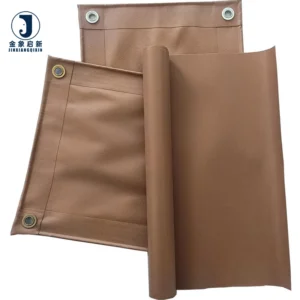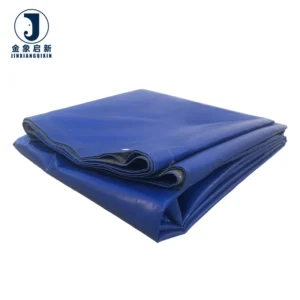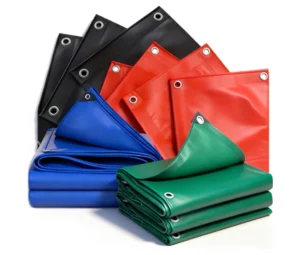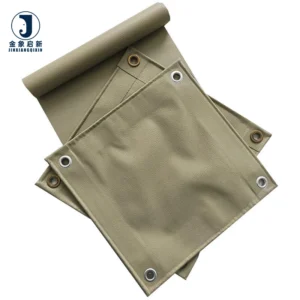
Description
Coating Adhesion Mastery — Nearly 30 years focused on PVC coated fabric translates into process control over hot melt coating weight and lamination adhesion that remains consistent across every roll in a bulk shipment.
Technical Specifications
| Parameter | Value |
|---|---|
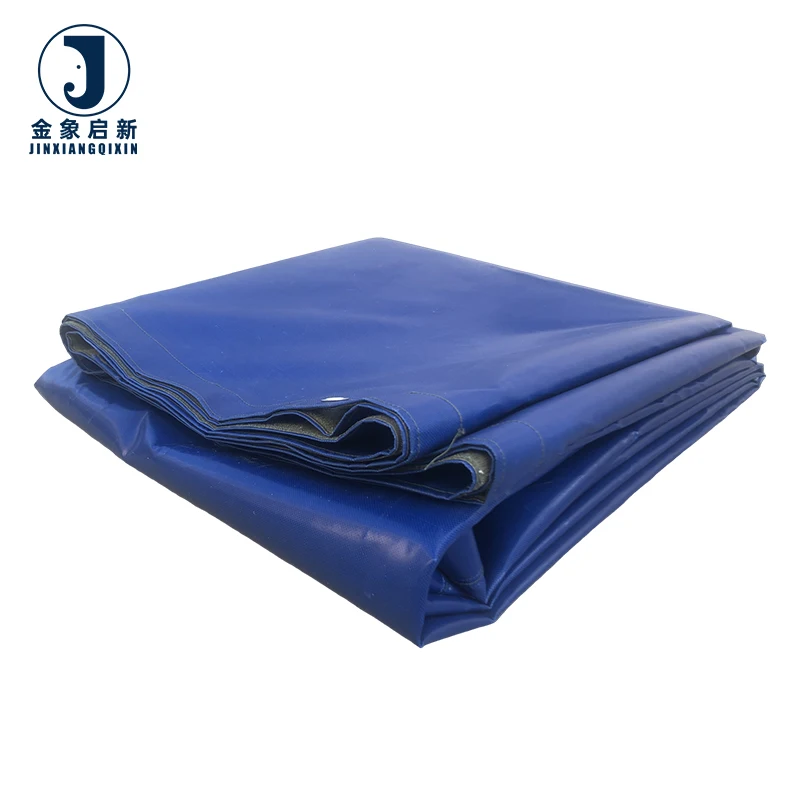
| Product Type | PVC Coated Tarpaulin |
| Material | High toughness polyester yarn with PVC coating |
| Manufacturing Technology | Lamination technology and hot melt coating technology |
| Thickness Range (Medium-duty) | 0.35-0.45 mm |
| Weight Range (Medium-duty) | 400-500 g/m² |
| Yarn Denier (Medium-duty) | 500D |
| Tensile Strength (Medium-duty, Warp) | 1500-2000 N/5cm |
| Tensile Strength (Medium-duty, Weft) | 1200-1800 N/5cm |
| Thickness Range (Heavy-duty) | 0.70-1.0 mm |
| Weight Range (Heavy-duty) | 700-1000 g/m² |
| Yarn Denier (Heavy-duty) | 1000D |
| Tensile Strength (Heavy-duty, Warp) | 2000-2500 N/5cm |
| Tensile Strength (Heavy-duty, Weft) | 1800-2200 N/5cm |
| Thickness Range (Super Heavy-duty) | 1.2-1.5 mm |
| Weight Range (Super Heavy-duty) | 1100-1500 g/m² |
| Yarn Denier (Super Heavy-duty) | 500D-2000D |
| Tensile Strength (Super Heavy-duty, Warp) | 2500-3000 N/5cm |
| Tensile Strength (Super Heavy-duty, Weft) | 2200-2800 N/5cm |
| Weather Resistance | 3-5 years outdoor guarantee |
| Treatment Options | Flame retardant (grade available on request); Anti-static (standard available on request); Cold resistant; Mold proof |
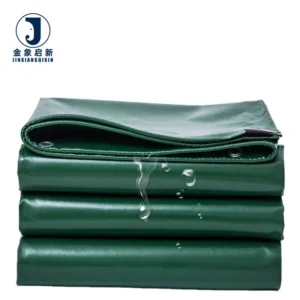
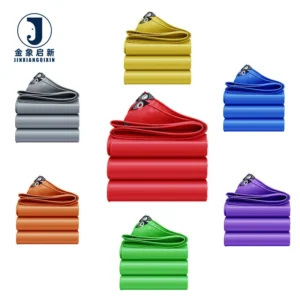
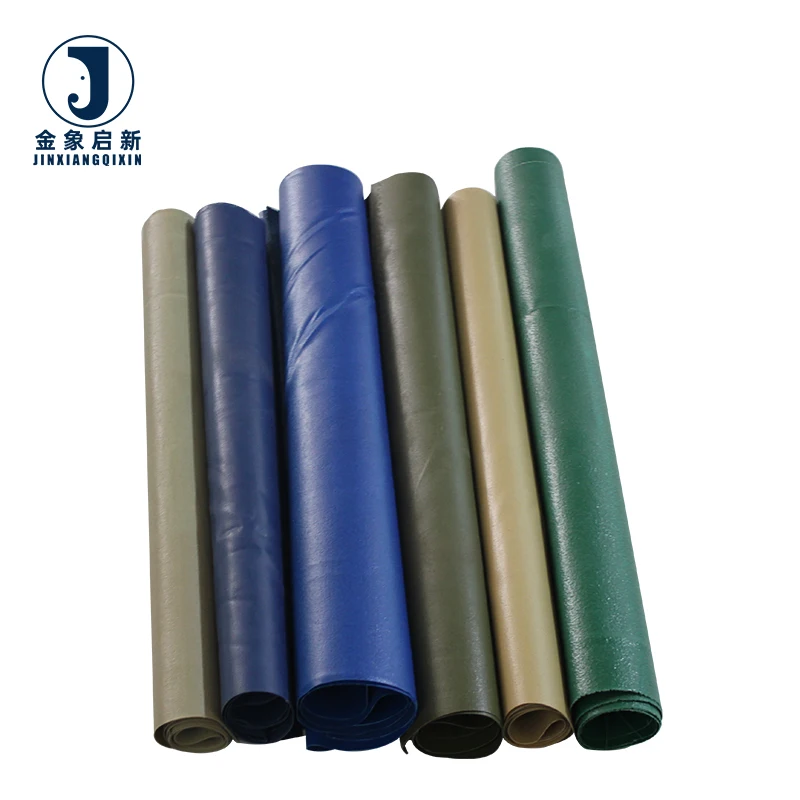
| Color | Blue (other colors available on request) |
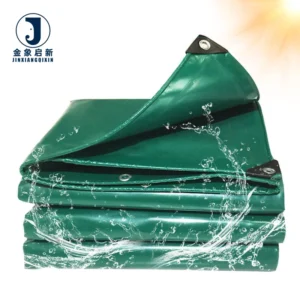
| Key Features | Waterproof, Cold Resistant, Anti-Mildew |
Application Suitability
| Application | Exposure & Requirement |
|---|---|
| Truck and trailer side curtains | Constant flexing at load points, road debris abrasion, prolonged UV exposure, requirement for weld integrity under tension |
| Tent and awning fabrication | Roll-to-roll colour consistency for adjacent panels, dimensional stability during cutting, clean surface for heat-welded seams |
| Inflatable and membrane structures | High tensile strength to contain internal pressure, consistent coating adhesion to prevent delamination under cyclic stress |
| Industrial pipe and equipment canopies | Permanent outdoor exposure, moisture ingress prevention, anti-mildew performance in humid climates |
| Tarpaulin distribution and resale | Multiple GSM grades from one source, batch uniformity across container loads, reliable lead times for inventory planning |
Why Roll-to-Roll GSM Variance Destroys Wholesale Margins
A quoted 650 GSM roll that arrives at 610 GSM is not a discount — it is a fabrication liability.
When importing a PVC Coated Tarpaulin Roll wholesale, the specification sheet is your contract with the material. Yet in bulk coated fabric trade, it is common for rolls within the same container to deviate from the stated weight, sometimes by enough to alter the tensile behaviour of the final product. Fabricators cutting truck covers or tensioned structures rely on the GSM-to-strength correlation; when that correlation breaks down, the finished product fails in the field and the warranty claim lands on your desk [NEED_CITE: typical GSM variance tolerance in coated fabric import trade]. Colour drift between rolls is equally costly. A distributor installing adjacent panels from two different rolls will see the colour mismatch immediately, forcing a full panel replacement that consumes both material and credibility.
Stocking Multiple Grades Without Sacrificing Consistency
The range covers three distinct weight tiers — medium-duty from 400-500 g/m², heavy-duty from 700-1000 g/m², and super heavy-duty from 1100-1500 g/m² — each mapped to specific yarn denier and tensile strength values. For a PVC Coated Tarpaulin Roll aftermarket supplier, this tiered structure means you can stock a full product family from one production source, reducing the administrative burden of managing multiple vendors. The hot melt coating and lamination technology applied across all three tiers ensures that the adhesion strength between the PVC coating and the polyester base fabric remains uniform regardless of the weight grade you are ordering.
Batch Colour Matching Across Container Loads
Colour consistency is controlled at the compounding stage, not corrected after coating. Each production run references a confirmed colour standard before the PVC compound is mixed, so rolls produced weeks apart for a repeat order maintain visual alignment. This matters most for distributors selling into the tent and awning market, where end users install panels side by side and expect a uniform appearance. The pre-shipment inspection process checks colour against the reference standard across multiple rolls in the batch [NEED_CITE: colour fastness testing methods for PVC coated textiles].
Reading the Specification Sheet Beyond the GSM Number
GSM alone is an incomplete indicator of how a PVC coated fabric will perform under load. A 700 g/m² roll woven from 1000D yarn with a tight weave construction will resist tear propagation differently than a 700 g/m² roll using heavier yarn at lower density. The tensile strength values — listed separately for warp and weft directions — reveal how the base fabric distributes force, which is critical when designing truck covers that experience directional stress during transit. The lamination and hot melt coating method influences peel strength at the coating-to-yarn bond; this bond determines whether the fabric fails by delamination or by yarn breakage under tension. Cold-resistant and anti-mildew treatments extend the usable temperature range and storage life of the roll, particularly relevant for buyers importing into climates with high humidity or sub-zero winters.
The Hidden Cost of Specifying on Price per Kilogram Alone
Buyers who select roll stock based solely on the lowest cost per kilogram often discover the real expense at the fabrication stage. Rolls with inconsistent coating weight produce uneven heat-weld seams — some sections bond cleanly while others delaminate under peel testing. In a truck cover application, this means the welded seam fails before the fabric body does, precisely at the point where the load flexes most during transport [NEED_CITE: weld seam failure modes in PVC coated tarpaulin fabrication]. Colour variation between rolls forces fabricators to sort and match panels manually, adding labour hours that erase the per-kilogram saving. Anti-mildew treatment that was claimed but not verified shows up as staining on rolls stored in humid warehouses, degrading the inventory before it reaches the end customer.
Why Wholesale Buyers Consolidate Orders Here
Three full production lines and 36 sets of professional equipment provide the capacity to fill container-load orders without extending lead times beyond what inventory planning requires. A dedicated 10-person R&D team handles custom width, colour matching, and pattern printing development, producing samples within days so buyers can confirm specifications before committing to bulk production. Every roll undergoes inspection at each production stage with 100% pre-shipment verification of weight and colour, meaning the documentation you receive matches the material in the container. The QA process catches GSM deviation and colour drift before dispatch rather than after the container is opened at the destination port.
Documentation & Verification
- Material specification sheet stating base fabric denier, coating weight, and treatment options per roll grade
- Weight verification per roll against the stated GSM recorded during pre-shipment inspection
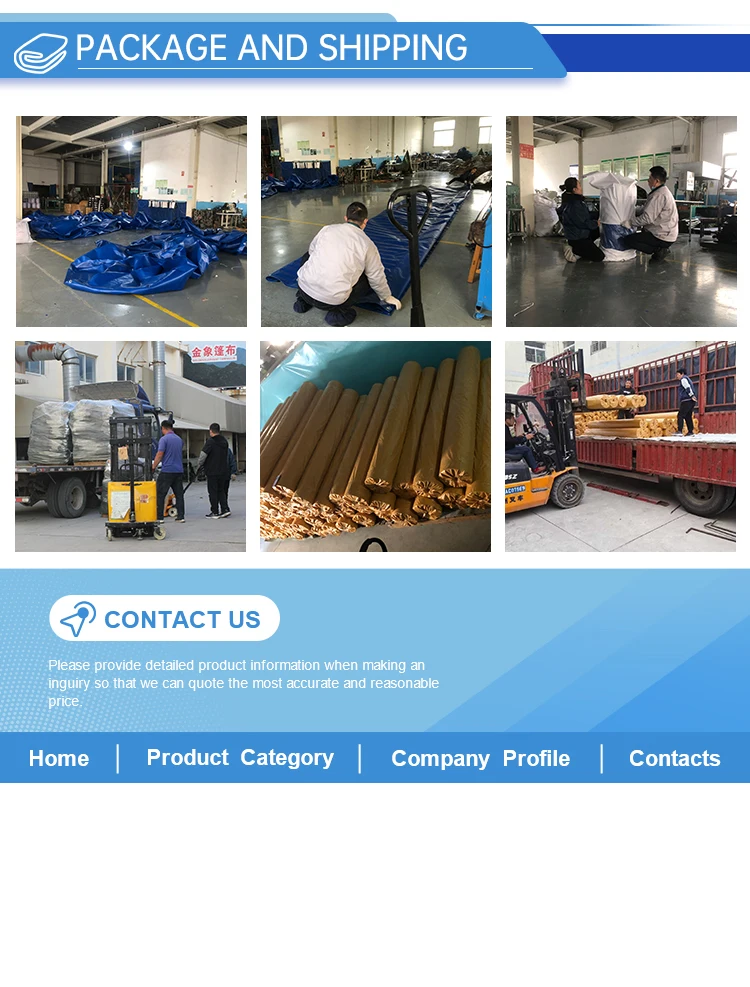
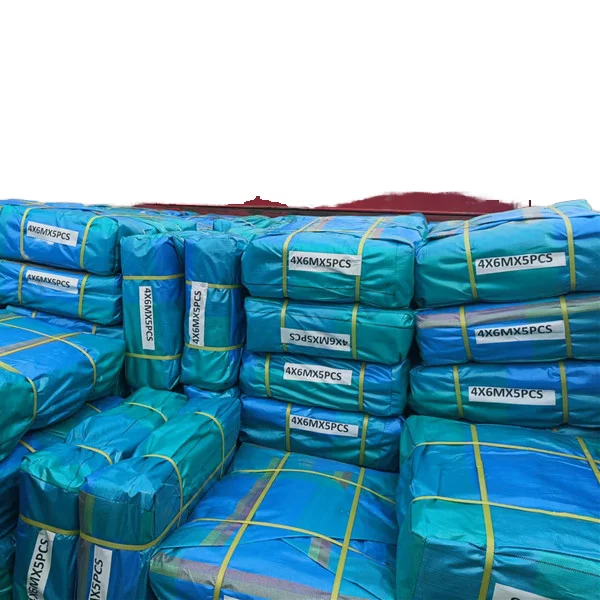
- Roll packing list with individual roll dimensions, weight, and count for container loading reconciliation
- Colour reference confirmation record matching each production batch to the approved standard
- Certificate of origin and customs documentation prepared for international bulk shipment clearance
Fabrication, Handling & Storage
- Heat-weld temperature and dwell time should be calibrated to the specific GSM grade, as the 400-500 g/m² and 1100-1500 g/m² tiers require different thermal input for consistent peel strength
- Store rolls upright on pallets in a dry, shaded area to prevent flat-spot deformation on the coating surface of heavy-duty grades
- When unrolling in cold conditions, allow the PVC coating to acclimatise before cutting to avoid micro-cracking at the fold line
- Anti-mildew treated rolls should be stored with airflow between layers to maintain treatment effectiveness during extended warehouse storage
- Cutting layout should account for the standard roll width to minimise off-cuts and welded seam count on large-format covers
What We Need to Quote Your Roll Order Accurately
To provide a specification-matched quotation, share the target GSM grade or end-use application, the required roll width and approximate annual volume, and any treatment requirements such as flame retardant grade or anti-static standard applicable in your market. If colour consistency across multiple rolls is critical for your fabrication process, provide a colour reference or request a sample swatch from our current production batch before placing the bulk order.
Frequently Asked Questions
Q: What GSM and width options are available as standard roll stock?
A: The standard range covers medium-duty at 400-500 g/m², heavy-duty at 700-1000 g/m², and super heavy-duty at 1100-1500 g/m², each with corresponding yarn denier and thickness values. Standard widths are available across the range; custom widths can be produced with a confirmed minimum order quantity. Request the current stock list for immediate availability and container loading calculations.
Q: How is colour consistency maintained across multiple rolls in one order?
A: Colour is controlled at the PVC compounding stage using a confirmed reference standard before production begins. Each batch is checked against the approved standard during pre-shipment inspection, and the inspection record accompanies the shipment. For repeat orders, the original colour reference is retained on file to ensure continuity across production runs.
Q: Can custom widths, colours, or pattern printing be ordered by the roll?
A: Yes. The 10-person R&D team develops samples for custom width, colour matching, and pattern printing within days of receiving the specification. Once the sample is approved, production proceeds with the same QA checkpoints applied to standard grades. Minimum order quantities apply and vary by the complexity of the customisation requested.
Q: What documentation ships with each roll shipment?
A: Each shipment includes a material specification sheet, roll packing list with individual roll dimensions and weights, pre-shipment inspection record confirming GSM and colour, and certificate of origin. Where flame retardant or anti-static treatment is specified, the applicable test report is included. Customs documentation is prepared to support clearance at the destination port.
Q: What is the minimum order and lead time for non-stock grades?
A: Minimum order quantities depend on the customisation scope — standard colour and width combinations carry lower minimums than custom print or non-standard treatment grades. Lead times are confirmed at the quotation stage based on current production scheduling and the specific grade requested. Sample development typically takes several days before bulk production is authorised.