Description
Roll-to-Roll Consistency — Every PE tarpaulin roll is weighed and inspected against the quoted GSM before dispatch, with batch colour controlled at the coating stage across the full production run.
Technical Specifications
| Parameter | Value |
|---|---|
| Product Type | PE Tarpaulin |
| Coating Material | Polyethylene (PE) |
| Weight Range | 40–500 g/m² |
| Thickness (Lightweight) | 0.18–0.22 mm |
| Thickness (Medium) | 0.22–0.28 mm |
| Thickness (Heavy-duty) | 0.30–0.35 mm |
| Knitting Density (Lightweight) | 8×8 |
| Knitting Density (Medium) | 10×10 |
| Knitting Density (Heavy-duty) | 12×12 |
| Weave Density Range | 5×5 ~ 20×20 |
| Tensile Strength (Lightweight) | Meridian 300–500 / Latitude 250–450 N/5cm |
| Tensile Strength (Medium) | Meridian 500–800 / Latitude 400–700 N/5cm |
| Tensile Strength (Heavy-duty) | Meridian 900–1200 / Latitude 700–1000 N/5cm |
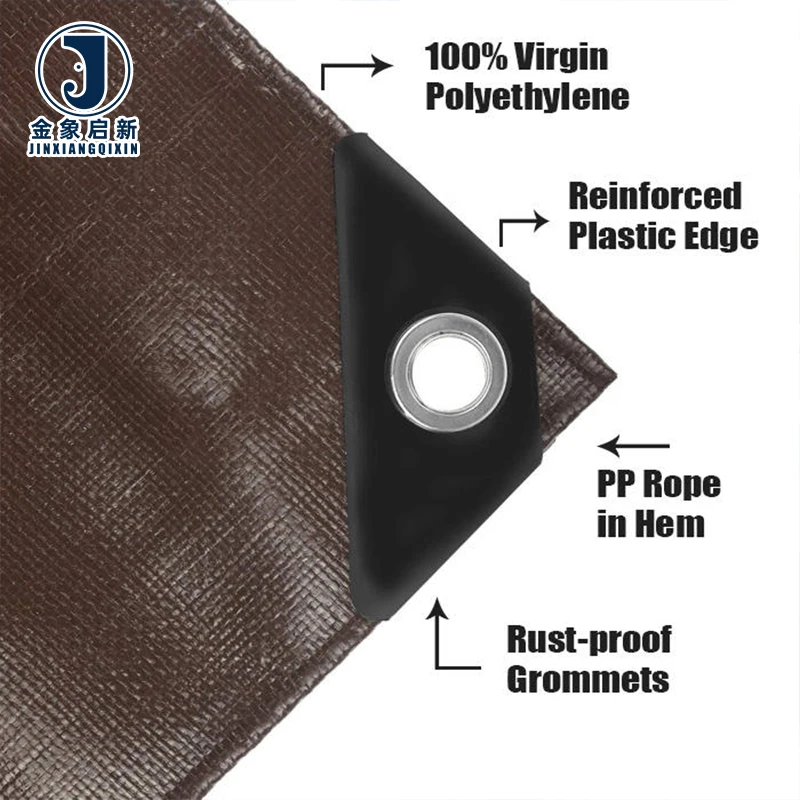
| Surface Treatment | Double waterproof surfaces, UV treatment available, mildew proof, anti-aging |
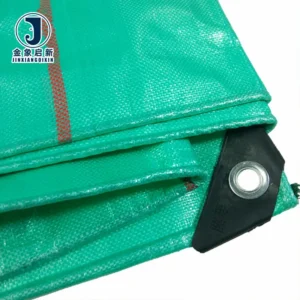
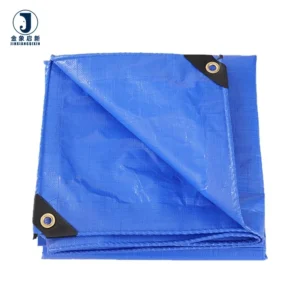
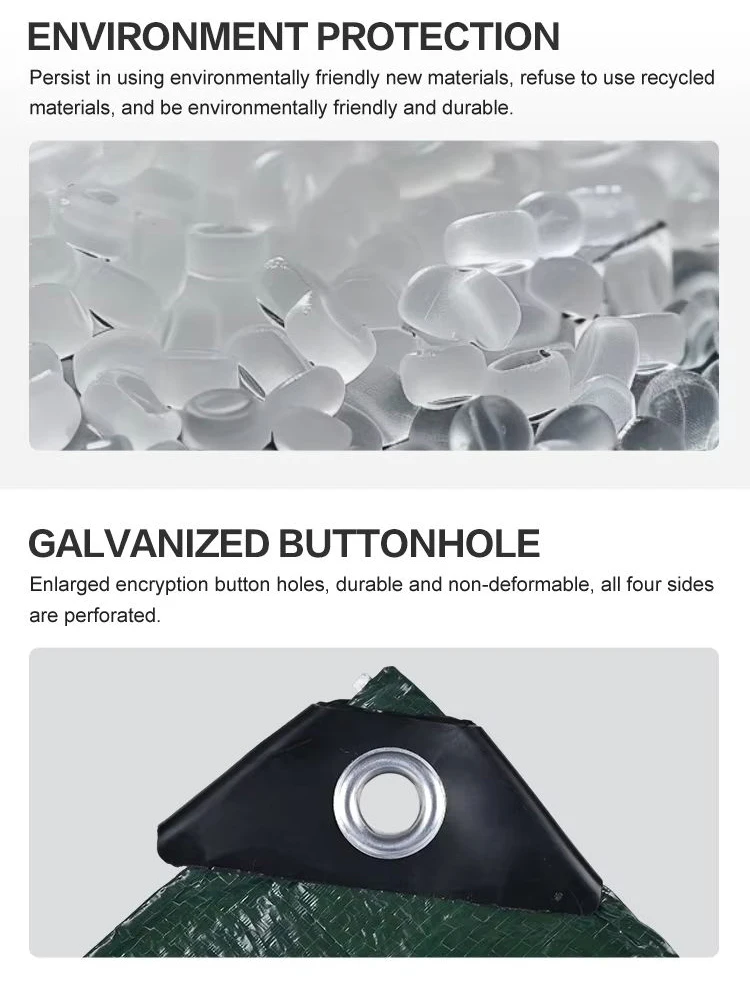
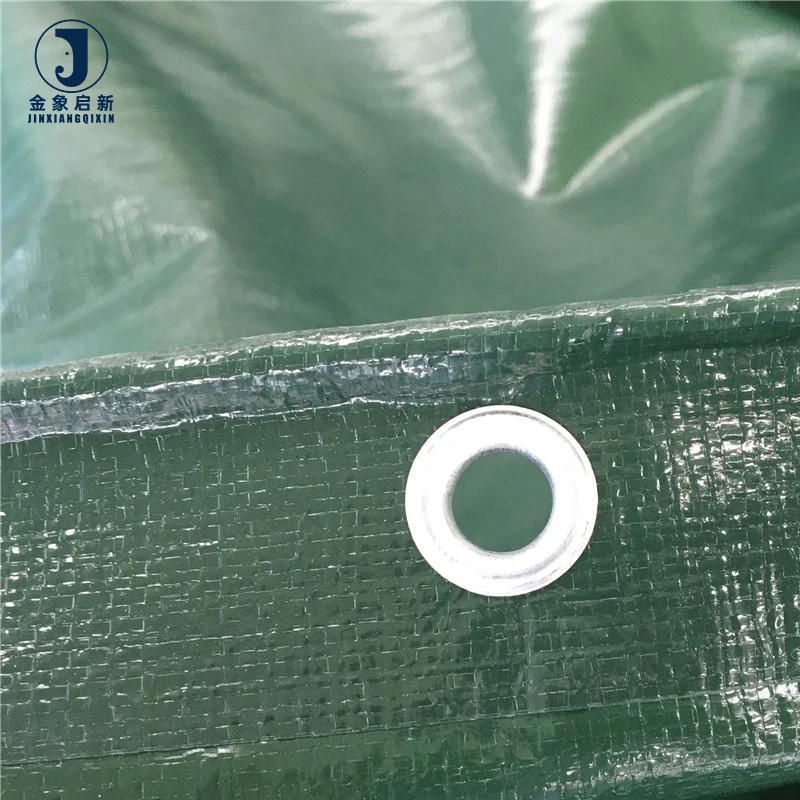
| Reinforcement | Reinforced corner |
| Water Resistance | Tear-resistant, water-resistant and washable |
| Size | Custom size |
| Color | Custom color |
| Certification | ISO, CE |
Application Suitability
| Application | Exposure & Requirement |
|---|---|
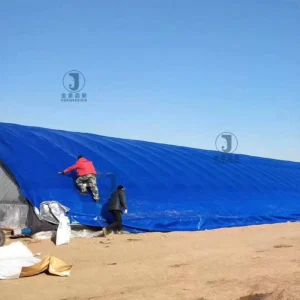
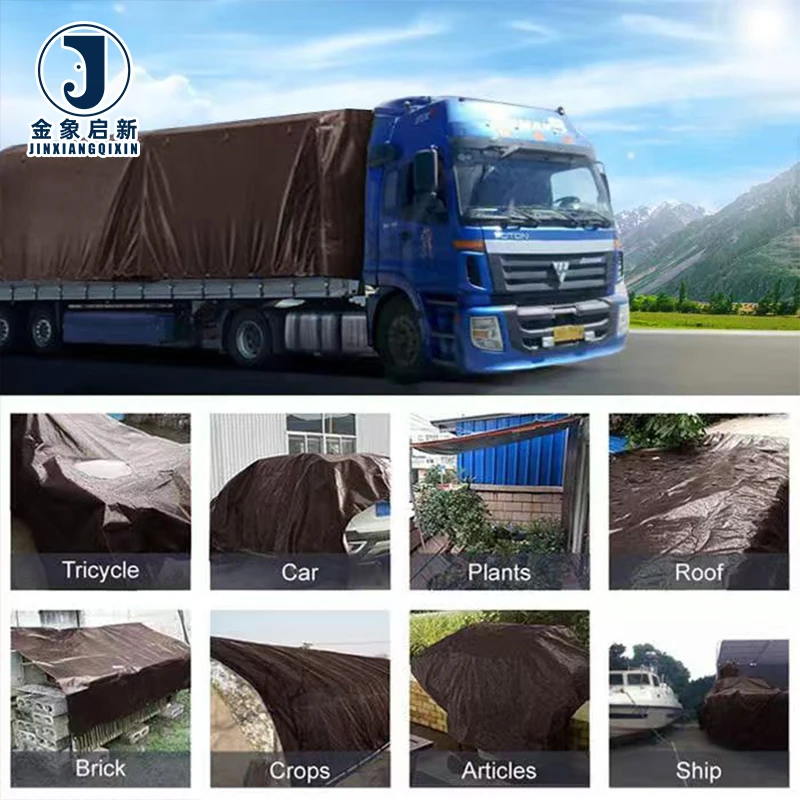
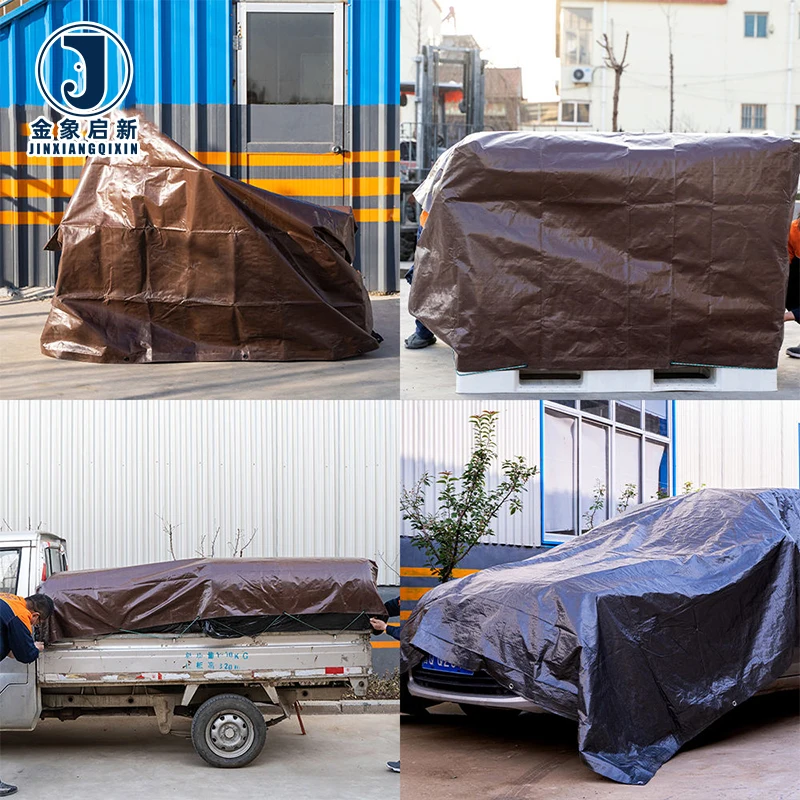
| Agricultural covering | Prolonged sun exposure, moisture contact, wind loading — requires UV-stable and waterproof fabric with adequate tensile strength to span wide spans without tearing |
| Warehouse coverage | Dust, moisture, and occasional handling abrasion — medium-weight rolls with consistent coating provide a reliable barrier over stored goods |
| Truck tarpaulin | Road vibration, wind flap, weather exposure, and tie-down stress — heavy-duty grades with high meridian tensile strength resist fatigue cracking at fold lines |
| Industrial protective covering | Chemical splash, mechanical abrasion, and repeated deployment — double waterproof surfaces with reinforced corners maintain integrity through handling cycles |
| Lightweight covering cloth | Short-term shelter, temporary enclosure, and stock protection — lightweight rolls offer cost-effective coverage without compromising basic water resistance |
Why the Label GSM Does Not Match What Arrives on the Dock
Weight verification at the roll level, not just the quotation, is what separates a reliable wholesale supply from a claims dispute.
When buying PE tarpaulin roll stock for wholesale distribution, the specification sheet often states one GSM while the rolls on the container floor weigh something else. This is not always deliberate — coating weight fluctuates across production runs, and some suppliers average the batch rather than measuring each roll. The result is a container full of material that does not match the purchase order, and a distributor left explaining the shortfall to their own customers. [NEED_CITE: GSM verification methods for coated fabric rolls in wholesale trade]
Batch-to-batch consistency in PE tarpaulin roll stock is a function of process control at the coating stage. When coating weight drifts, the roll may look identical but perform differently in tensile and tear resistance, creating silent failures that only show up in the field.
Stock Availability and Bulk Loading by Roll Count
Wholesale buyers need to know how many rolls fit a container and whether different grades can share one shipment. PE tarpaulin roll stock in this range is available from lightweight 40 g/m² agricultural grades up to heavy-duty 500 g/m² transport covers, allowing distributors to consolidate multiple product lines into a single container load. Roll dimensions and packing format are standardised so that loading plans can be confirmed at the quotation stage, eliminating last-minute surprises at the stuffing point.
Batch Colour and Coating Uniformity Across the Order
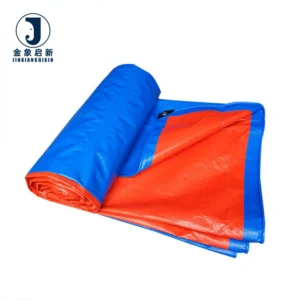
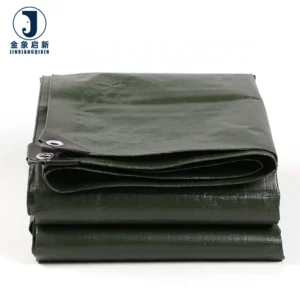
Colour variation between rolls is one of the most visible defects a tarpaulin importer can face — it becomes obvious the moment two rolls are unrolled side by side at the customer’s site. Colour consistency in PE tarpaulin wholesale orders is controlled through masterbatch dosing at the coating stage, with reference samples confirmed before the full production run begins. This means that whether the order calls for a standard olive green or a custom-branded colour, every roll in the batch matches the approved swatch within a defined tolerance. [NEED_CITE: colour matching standards for batch-produced coated fabrics]
How Mesh Count, Tensile Strength, and Weight Interact in PE Woven Fabric
The knitting density — from 8×8 in lightweight grades to 12×12 in heavy-duty — defines the base fabric structure before any coating is applied. A denser weave distributes load across more yarn intersections, which directly improves both tensile and tear performance. However, mesh count alone does not determine strength; the denier of the HDPE yarns and the coating weight together define the final roll properties. A 10×10 mesh with a heavy PE coating may outperform a 12×12 mesh with a thin film, which is why GSM, mesh count, and tensile values must always be read as a system rather than as isolated numbers.
Coating thickness also governs how the fabric handles fabrication. Thicker coatings at 0.30–0.35 mm provide more material for heat-welded seams, improving peel strength at the joints where most field failures originate. Lightweight grades at 0.18–0.22 mm, by contrast, are better suited to stitched or taped seams where flexibility matters more than weld strength. Understanding this relationship helps wholesale buyers match the right roll grade to the end-use without over-specifying or under-specifying the material. [NEED_CITE: relationship between coating thickness and seam peel strength in polyethylene woven fabrics]
The Hidden Cost of Specifying on Price Per Roll Alone
When procurement decisions are driven purely by roll price, the GSM and mesh count often become the first variables to be quietly reduced at the coating line. A roll that arrives 10–15% lighter than quoted may still pass a visual inspection, but it will fail earlier under load, tear more easily at the grommet line, and degrade faster under UV exposure. For a wholesale distributor, this translates into warranty claims, customer churn, and the cost of replacing stock that should still be in service. The real cost of a cheap roll is not the price difference — it is the downstream liability that only appears months after the container has been unloaded. [NEED_CITE: field failure patterns in underweight coated fabric rolls]
Why Sourcing PE Tarpaulin Roll Stock Through Jinxiang Works
Three full production lines and 36 sets of professional equipment allow simultaneous production of multiple GSM grades without cross-contamination between runs. This means lightweight agricultural rolls and heavy-duty transport rolls can be produced in the same delivery window without compromising batch integrity.
A dedicated 10-person R&D team develops samples for custom widths, colours, and GSM targets within days, so buyers can confirm specifications before committing to a full container order.
Every roll undergoes 100% inspection before dispatch — weight, colour, coating uniformity, and visual defects are all checked and recorded. The inspection record travels with the shipment, giving the buyer verifiable proof of what was loaded.
Roll packing is planned at the quotation stage, with container loading by roll count and weight shared before production begins, so logistics costs are predictable.
ISO and CE certification underpins the quality management system, providing a documented audit trail from raw material to finished roll.
Documentation & Verification
- Material specification sheet stating GSM, base fabric mesh count, and coating type for each roll grade
- Weight verification per roll measured against the quoted GSM before dispatch with inspection record
- Roll packing list detailing roll count, individual weight, and container loading arrangement
- Pre-shipment inspection record covering visual, weight, and dimensional checks
- Certificate of origin and customs documentation for cross-border shipment
Fabrication, Handling & Storage
- Heat-weld heavy-duty grades (0.30–0.35 mm thickness) at temperatures matched to PE melting point for full seam peel strength
- Stitch lightweight rolls (0.18–0.22 mm) with UV-stable thread and tape the seam underside to maintain waterproofing
- Reinforce grommet positions with extra PE patches on high-tensile grades to prevent tear-out under tie-down load
- Store rolls upright on pallets in shaded, ventilated areas to prevent compression marks on the coated surface
- Unroll in temperatures above 5 °C to avoid creasing — cold PE fabric is prone to micro-cracking along fold lines
- Clean with mild detergent and soft brush; avoid solvents that degrade the PE coating layer
What to Include in Your Enquiry
To receive an accurate specification and loading plan, share your target GSM range, required roll widths, and the end-use application for each grade. If custom colours are needed, provide a Pantone or RAL reference so that a physical sample can be produced for approval before the bulk run. Confirming your container volume and preferred roll packing format at the enquiry stage allows a precise loading plan and lead-time estimate to be included with the quotation.
Frequently Asked Questions
Q: Can I mix different GSM grades in one container?
A: Yes. Lightweight, medium, and heavy-duty PE tarpaulin roll stock can be consolidated in a single container. The loading plan is calculated by roll count and weight at the quotation stage, so you know exactly how many rolls of each grade fit before production starts.
Q: How is colour consistency controlled across rolls in the same order?
A: Colour is managed through masterbatch dosing at the coating stage, with a physical reference sample confirmed by the buyer before the full run. Every roll is visually compared against the approved swatch during the pre-shipment inspection.
Q: What is the minimum order for custom width or colour?
A: Minimum quantities for custom width and colour PE tarpaulin roll stock depend on the specific GSM grade and coating setup required. Sample rolls are produced first for approval, and the MOQ is confirmed alongside the sample quotation.
Q: Do you provide test documentation for UV and waterproof treatment?
A: Material specification sheets state the UV treatment and waterproof construction for each roll grade. Where specific test reports are required for your market, these are confirmed during the specification recommendation stage before production.
Q: How are rolls packed for long sea freight?
A: Rolls are packed vertically on pallets with protective wrapping to prevent compression damage and moisture ingress during transit. A detailed roll packing list with weights and container loading arrangement is provided before dispatch.