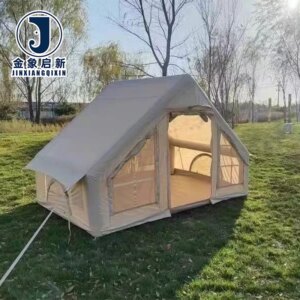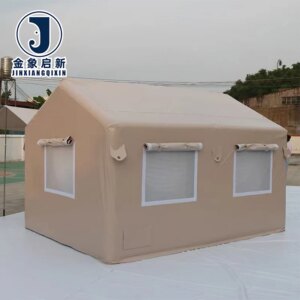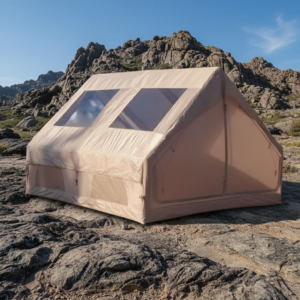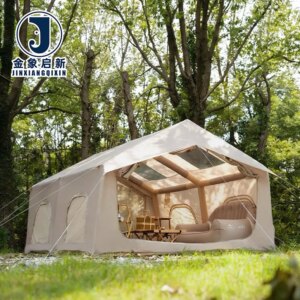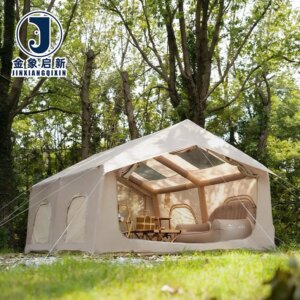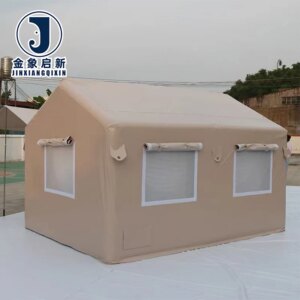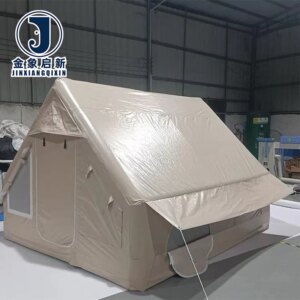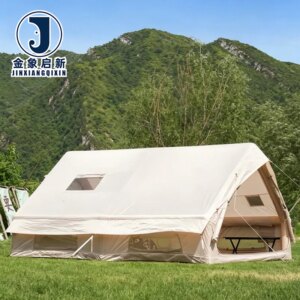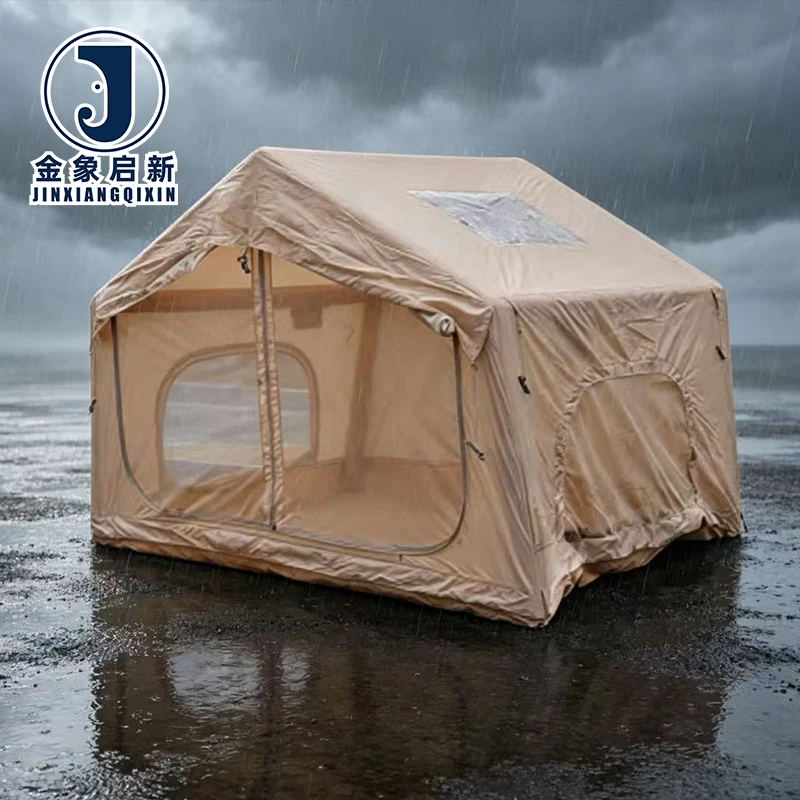
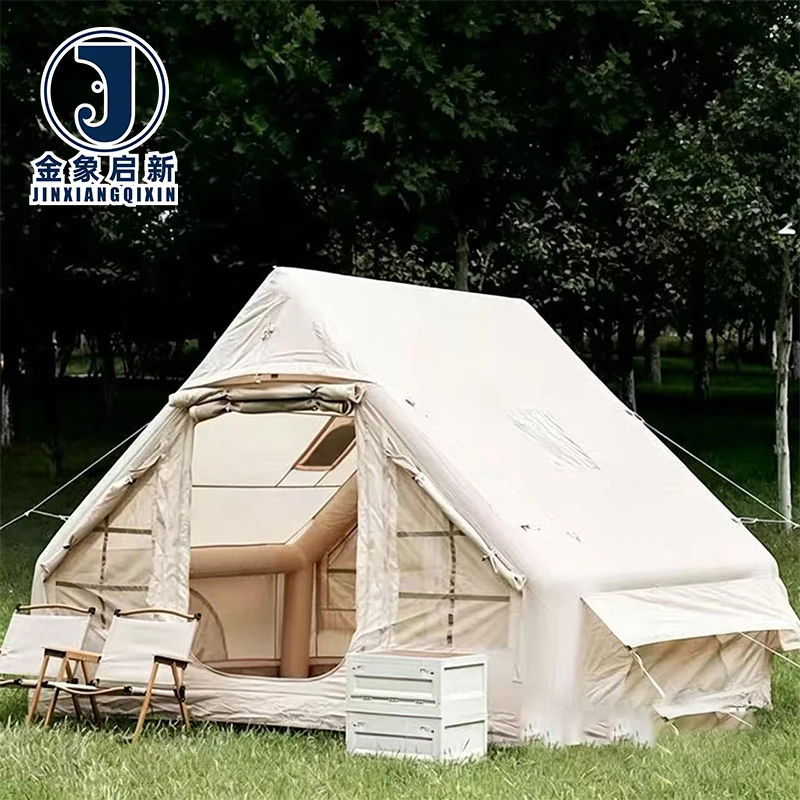
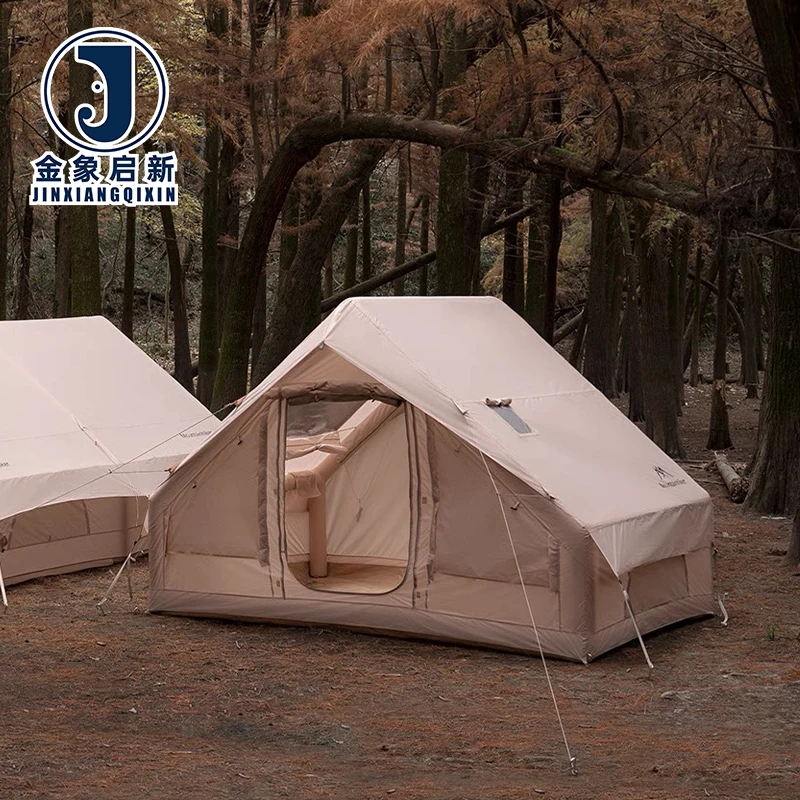
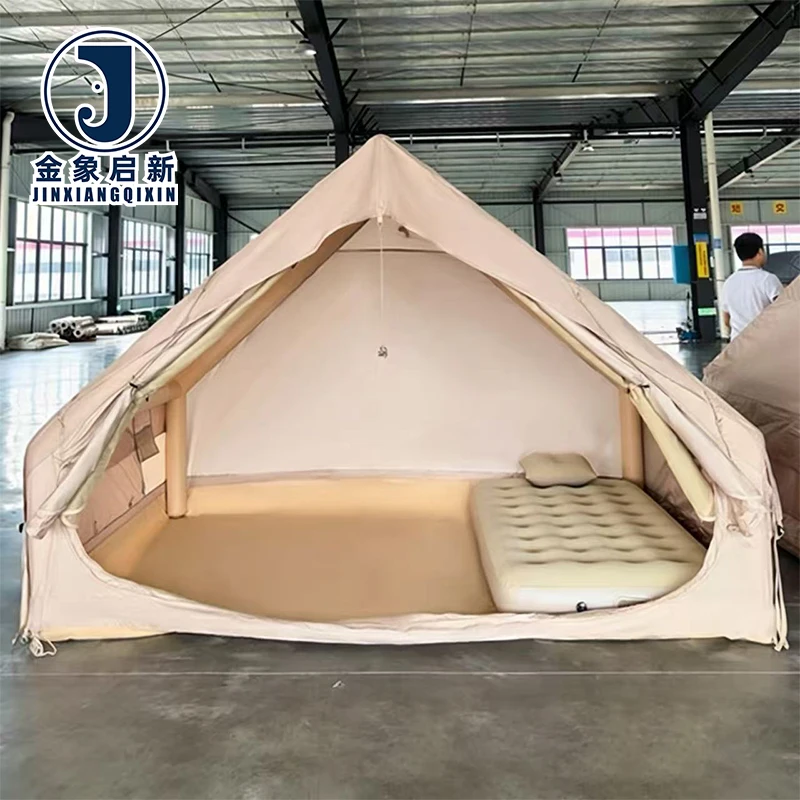
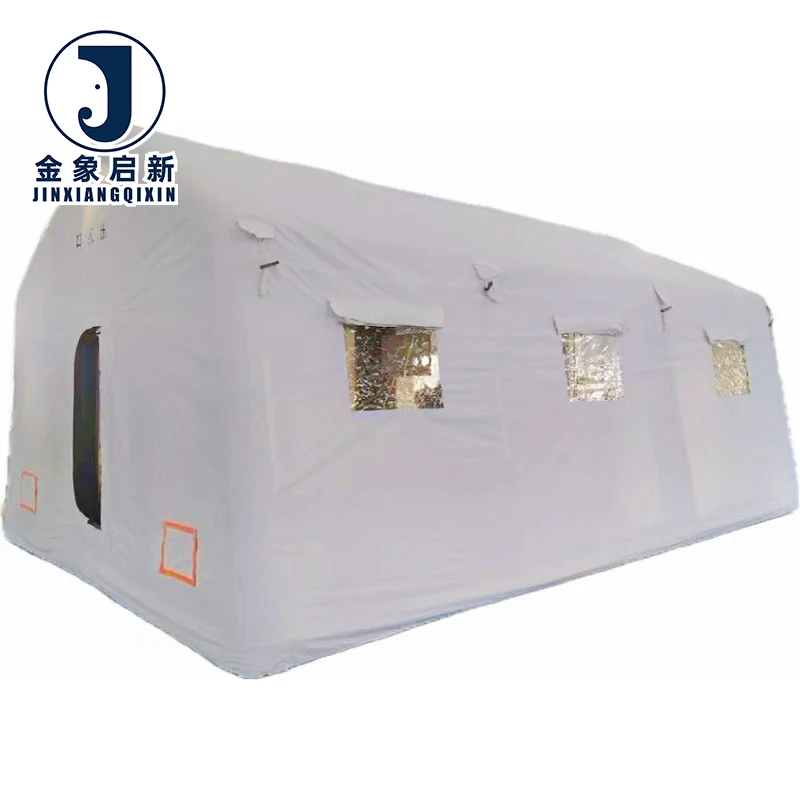
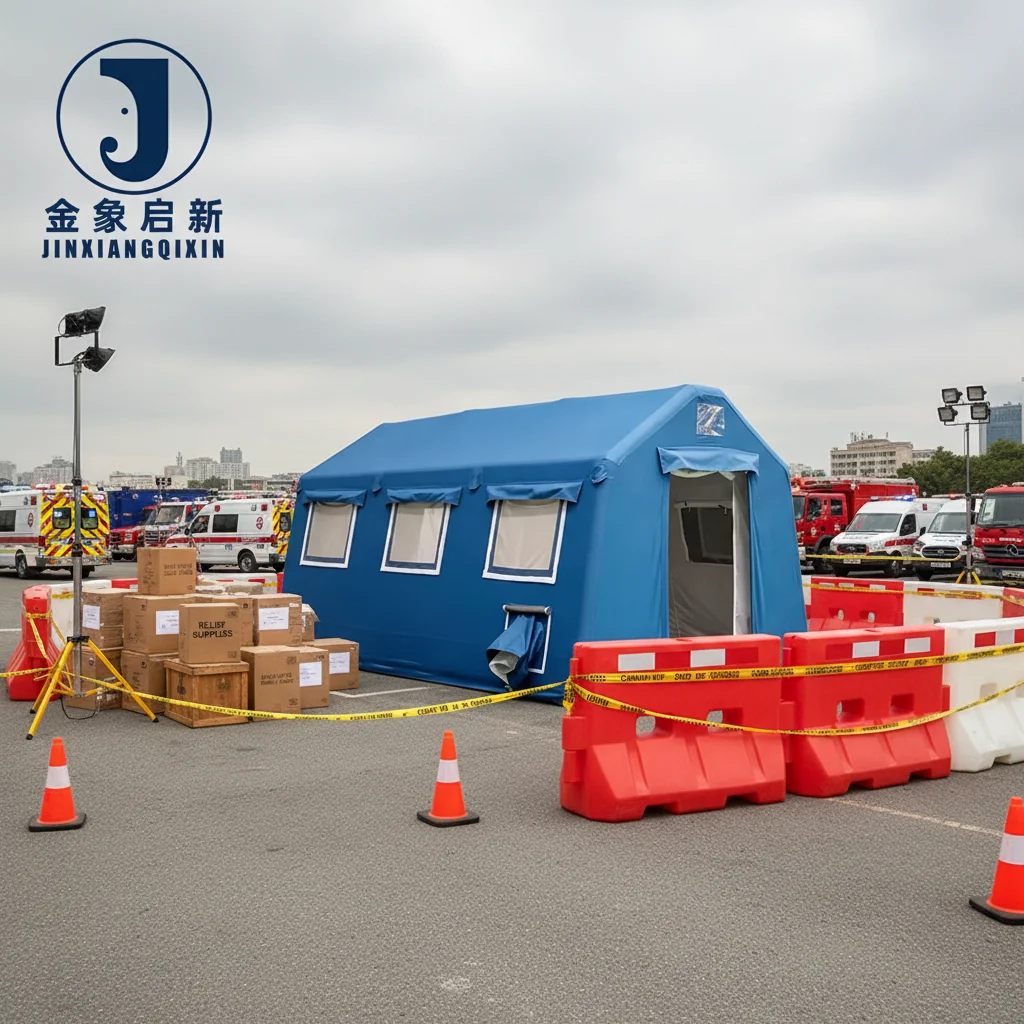
Description
Roll-to-roll uniformity — every batch of inflatable tent fabric is produced under continuous coating weight control across three dedicated lines, ensuring colour and GSM consistency from the first roll to the last in your shipment.
Technical Specifications
| Parameter | Value |
|---|---|
| Product Type | Inflatable Tent Fabric |
| Core Material | Waterproof UV-Resistant PVC |
| Key Performance | Waterproof, UV-resistant, tear-resistant |
| UV Treatment | UV-resistant (test basis not stated in source — confirm grade required for your market) |
| Waterproof Rating | Waterproof (grade not stated in source — confirm rating required for your application) |
| Construction | Single layer |
| Design Feature | Four-Season Design, Quick Auto Opening |
| Customization Service | OEM & ODM including sample customization and pattern printing |
| Production Facility Area | 9,180 m² |
| Production Lines | 3 full production lines |
| Processing Equipment | 36 sets of professional processing equipment |
| R&D Team Scale | 10 technicians |
| Standards | ISO 9001, ISO 14001, ISO 45001, CE |
Application Suitability
| Application | Exposure & Requirement |
|---|---|
| Inflatable tent and awning manufacturing | Repeated inflation and deflation cycles, flex stress at seam lines, UV exposure during outdoor display and storage |
| Inflatable and membrane structure fabrication | Large-panel consistency across multiple rolls, welded seam integrity under air pressure, colour uniformity on visible exterior surfaces |
| Commercial camping equipment production | Branded or custom-printed fabric for product differentiation, tear resistance for field handling and packing, waterproof performance in varied weather |
| Construction site temporary shelters | Continuous weather exposure, abrasion from site conditions, rapid deployment and takedown cycles |
| Disaster relief and emergency shelters | Bulk supply with short lead times, reliable waterproof barrier, durability through repeated use in harsh environments |
Why Colour Varies Between Rolls and How to Prevent It on Inflatable Tent Fabric Orders
Colour drift across rolls in a single order is almost always a coating process control issue, not a raw material defect.
When inflatable tent manufacturers cut and weld panels from different rolls side by side, even slight shade variation becomes visible once the structure is inflated and lit. This is especially problematic on large membrane structures where multiple rolls cover a continuous surface. In our experience working with coated fabrics, the root cause typically traces back to inconsistent pigment dispersion during the coating stage or temperature variation across the coating head. Buyers who specify colour by Pantone or RAL reference still receive shipments with visible roll-to-roll differences because the supplier did not lock the colour at the mixing stage. [NEED_CITE: colour measurement methods for PVC coated fabrics per ISO 105 series]
Batch Consistency Controls That Matter for Roll Stock
Inflatable tent fabric must arrive with uniform colour, coating weight, and surface finish across every roll in a container load. Our production process locks pigment ratios at the mixing stage and monitors coating thickness continuously across all three lines. Each production run is tracked by batch number, and rolls from the same batch are grouped for dispatch. This approach eliminates the situation where a fabricator opens a container and finds two distinct shades that cannot be used on the same inflatable structure.
Width and Length Options Aligned to Your Cutting Table
Inflatable tent fabric in roll form is available in custom widths to match your production line layout and minimize offcut waste. Standard and non-standard widths can be specified at the inquiry stage, and our 10-person R&D team develops samples before you commit to a bulk order. Choosing the correct roll width reduces the number of welded seams in the finished inflatable structure, which directly affects both appearance and air-holding performance. Longer roll lengths also mean fewer splice points during your cutting and panel-joining process. [NEED_CITE: tensile and tear test methods for coated fabrics per ISO 1421]
Reading the Specification Sheet Beyond the Headline GSM
The specification sheet for inflatable tent fabric lists GSM, base fabric construction, and coating type, but these numbers interact in ways that matter for end-use performance. A higher GSM does not automatically mean better tear resistance if the base fabric denier and weave density are low — the coating adds weight but not structural strength. Single layer construction keeps the fabric portable and easier to fold for inflatable camping tent applications, while the PVC coating formulation provides the waterproof and UV-resistant barrier. The relationship between base fabric weave density and coating adhesion determines how well the material holds up at welded seams, which are typically the first failure point on an inflatable structure under internal air pressure. Surface finish — whether glossy or matte — affects both print adhesion for branded tent panels and dirt retention during outdoor use.
The Hidden Cost of Specifying on Price Alone
Rolls that arrive lighter than the quoted GSM force fabricators to either accept reduced durability or reject the shipment and delay production. When inflatable tent fabric is ordered at the lowest available price, the coating weight is often the first variable a supplier reduces to protect margin. This results in a material that looks correct on the roll but fails prematurely at welded seams or shows early UV degradation on the installed structure. Flame-retardant grades that lack a verified test report create compliance risk on commercial and public-event installations where fire certification is inspected. [NEED_CITE: DIN 4102 fire classification for building materials] Colour inconsistency discovered after cutting has already begun means wasted labour and material, not just a fabric replacement claim.
Why Fabricators Source Inflatable Tent Fabric Here
Every roll is produced on one of three dedicated coating lines with 36 sets of processing equipment, giving us the capacity to fulfil bulk container orders without splitting production across incompatible machines. The 10-person R&D team handles material selection, custom width development, and pattern printing samples so you can verify colour and print quality before mass production begins. Dedicated quality inspection at every production stage means coating weight, colour, and surface defects are checked before any roll is packed — not sampled after the container is sealed. We provide a full documentation package including material specification sheets, pre-shipment inspection records, and certificates of origin, so your receiving team can verify the inflatable tent fabric against the purchase order without guesswork. ISO 9001, ISO 14001, ISO 45001, and CE certifications are maintained across the facility, supporting compliance requirements in export markets across North America, Europe, and Asia.
Documentation & Verification
- Material specification sheet stating GSM, base fabric, coating type, and colour reference per roll batch
- Pre-shipment inspection record confirming 100% inspection of inflatable tent fabric before dispatch
- Roll packing list with roll count, weight, and batch reference for container loading planning
- UV and flame-retardant test reports matched to batch number where applicable grades are specified
- Certificate of origin and customs documentation included for international shipment clearance
Fabrication, Handling & Storage
- Set hot-air welding temperature to match the single-layer PVC coating thickness for consistent seam peel strength
- Store rolls upright on pallets to prevent flat-spot compression marks on the PVC surface
- Allow cold-stored rolls to reach workshop temperature before unrolling to avoid coating cracking
- Use compatible PVC-based adhesives for patch repairs on waterproof UV-resistant inflatable tent fabric
- Plan cutting layout to minimize cross-grain panels and reduce stretch mismatch at welded joints
- Clean printed panels with mild detergent only to protect custom pattern and branding integrity
What to Include in Your Inquiry
To provide an accurate specification and lead time for inflatable tent fabric, share your target roll width, annual volume estimate, and whether you require finished cut sizes or roll stock only. If your end market has specific fire-safety or UV-performance requirements, include the relevant standard so we can match the correct treatment grade. For custom colour or branded printing projects, a Pantone or RAL reference and print layout file allow our R&D team to develop a sample roll for your approval before bulk production.
Frequently Asked Questions
Q: What roll widths are available for inflatable tent fabric, and how do I choose the right one?
A: Custom widths are available to match your cutting table and production layout. Wider rolls reduce the number of welded seams in the finished inflatable structure, improving both appearance and air retention. Share your panel dimensions and annual volume so we can recommend the most efficient roll width and length for your operation.
Q: How do you control colour consistency across multiple rolls in one order?
A: Pigment ratios are locked at the mixing stage, and coating parameters are monitored continuously throughout the production run. All rolls in a single order are grouped by batch number, and 100% pre-shipment inspection checks colour uniformity before packing. Sample rolls can be produced for your approval before bulk manufacturing begins.
Q: Can I order custom-printed inflatable tent fabric with my brand logo or pattern?
A: Yes, OEM and ODM services include pattern printing and branding on inflatable tent fabric. Our R&D team develops print samples using your artwork files so you can verify colour accuracy and print resolution. Production begins only after you approve the sample.
Q: What is the minimum order quantity for custom width or colour rolls?
A: Minimum order quantities depend on the specific width, colour, and treatment combination you require. Custom specifications typically involve multi-week lead times for sample development and production scheduling. Contact our team with your full specification to receive an accurate quotation and timeline.
Q: What documentation is included with each shipment of inflatable tent fabric?
A: Each dispatch includes a material specification sheet, roll packing list with batch references, pre-shipment inspection record, and certificate of origin. Where flame-retardant or UV-resistant grades are specified, the corresponding test report is matched to the batch number and included in the documentation package.