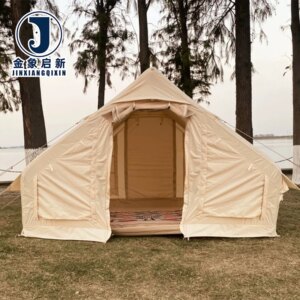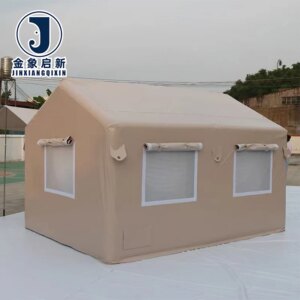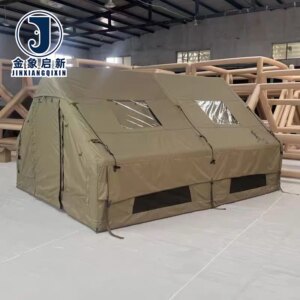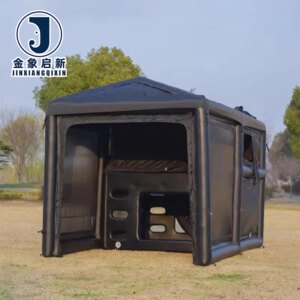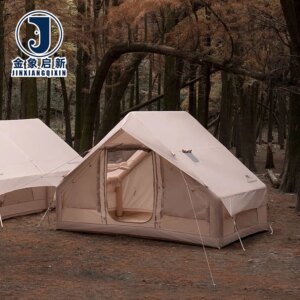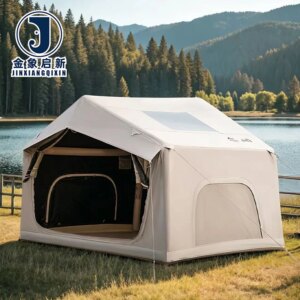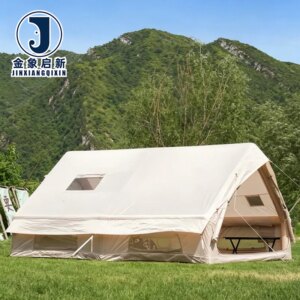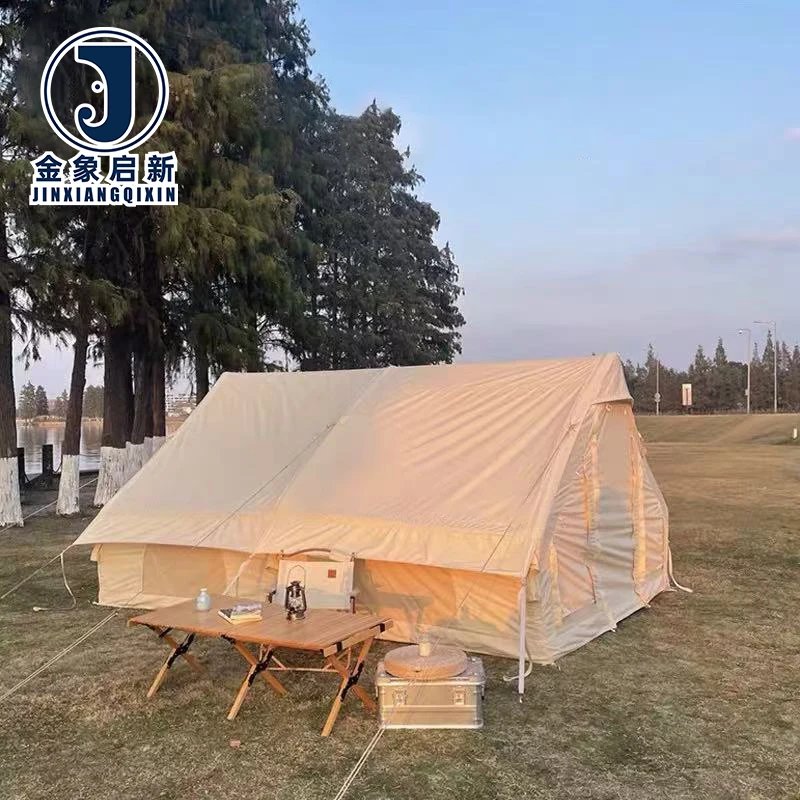
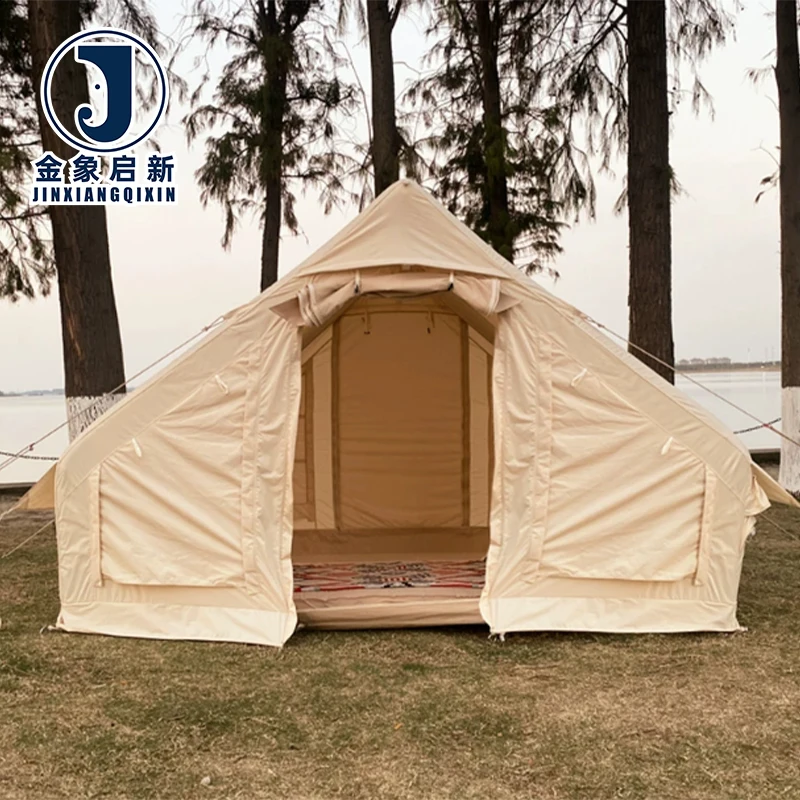
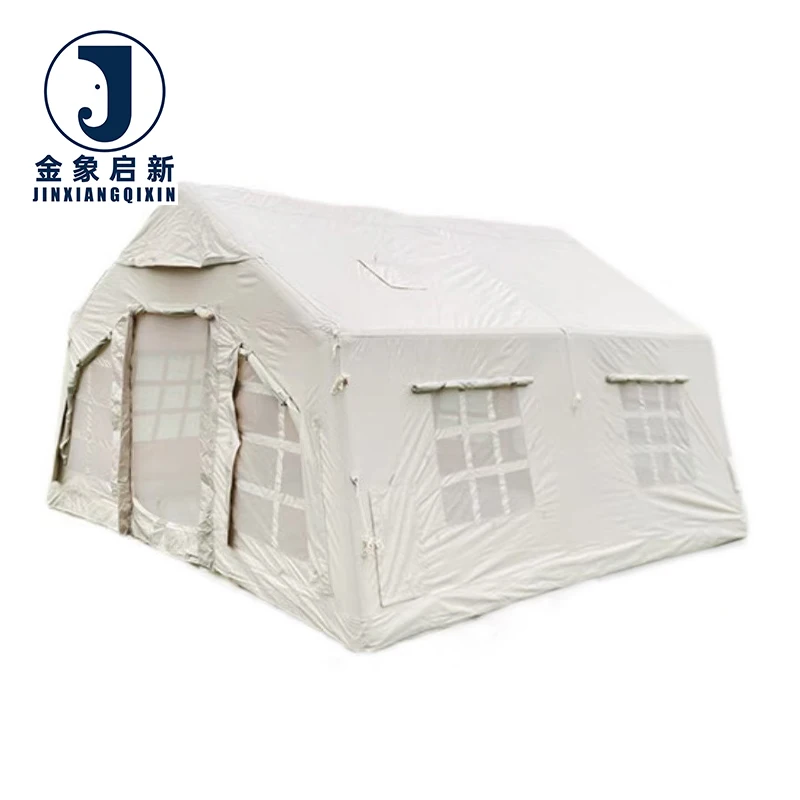
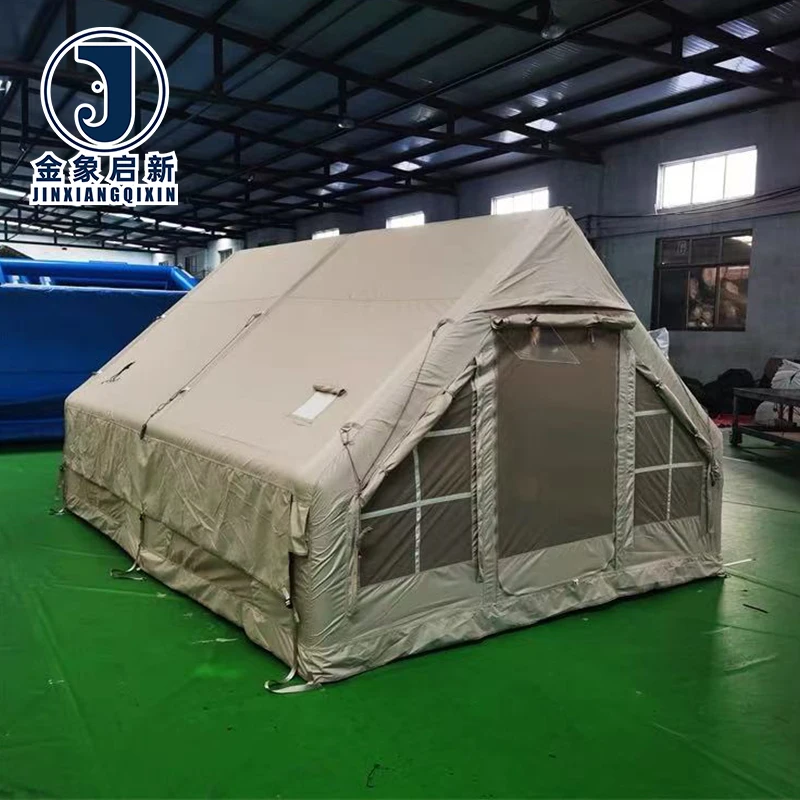
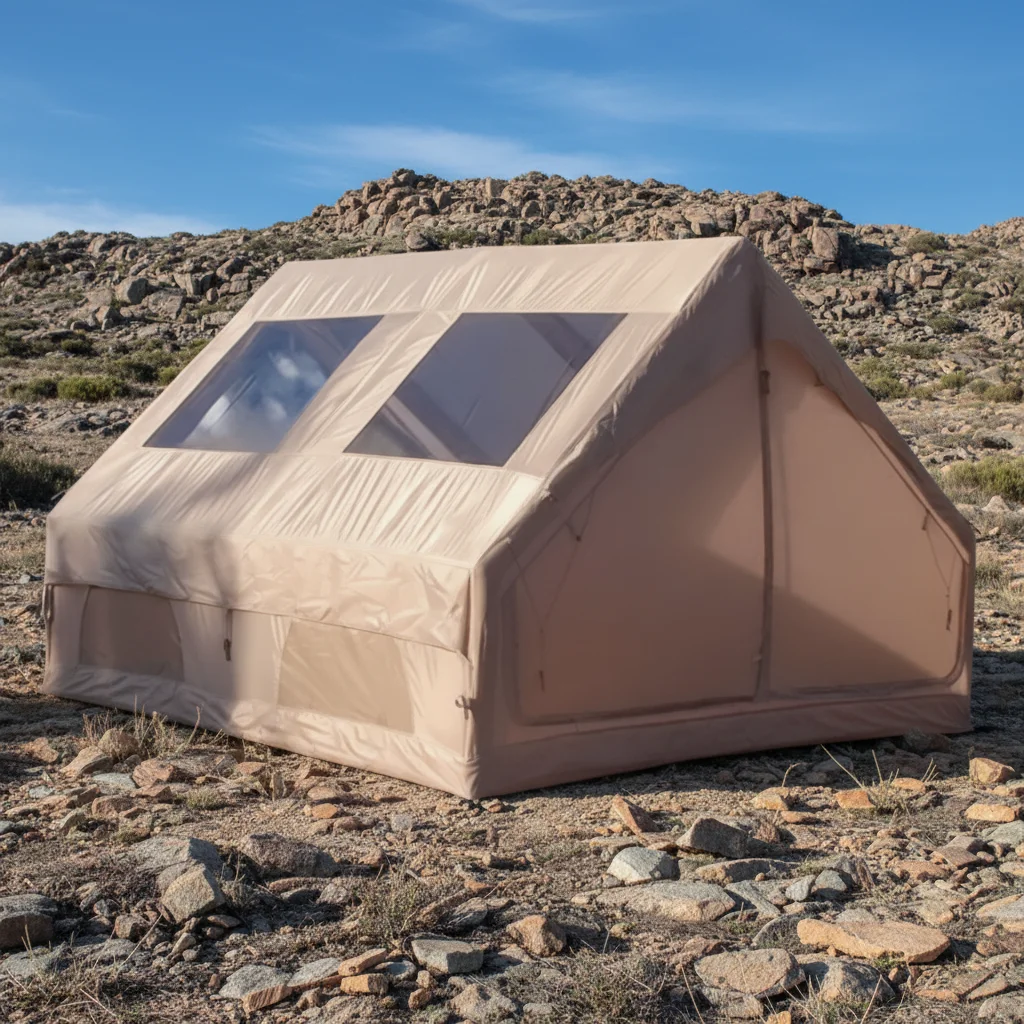

Description
Batch-consistent roll supply — dedicated QA at every coating stage ensures color and weight remain uniform across all rolls in a single inflatable tent fabric order.
Technical Specifications
| Parameter | Value |
|---|---|
| Product Type | Inflatable Tent Fabric |
| Core Material | PVC coated fabric |
| Key Performance | Waterproof, Quick Automatic Opening, Four-Season Design, Single Layer Construction |
| UV Treatment | Available with anti-UV treatment — confirm the specific UV grade required for your market (test basis not stated in source) |
| Flame Retardant Grade | Available in flame retardant grades — confirm the grade required for your market (grade not stated in source) |
| Customization | OEM & ODM, sample customization, pattern printing per roll |
| Quality Control | 100% pre-shipment inspection with dedicated QA/QC at every production stage |
| Certifications | ISO 9001, ISO 14001, ISO 45001, CE |
Application Suitability
| Application | Exposure & Requirement |
|---|---|
| Inflatable tent and glamping tent manufacturers buying fabric by the roll | Bulk roll stock with batch-to-batch color and weight consistency for welded seam construction |
| Tent and awning fabricators | Reliable heat-welded seam strength on inflatable air beams and structural panels |
| Commercial outdoor hospitality projects | Year-round weather exposure, waterproof protection, and rapid deployment capability |
| Temporary event accommodations and outdoor festivals | High-volume deployment with single layer construction balancing durability and transport efficiency |
| Remote workforce housing projects | Extended outdoor exposure requiring waterproof and four-season rated shelter fabric |
Why Roll-to-Roll Colour Consistency Matters When You Buy Inflatable Tent Fabric Roll in Bulk
Colour variation between rolls in the same shipment is one of the most visible failures in tent manufacturing.
When a tent maker installs panels cut from different rolls side by side, even a slight shade difference becomes obvious to the end user under natural light. This is not a cosmetic issue alone — it signals inconsistent coating formulation across the batch, which often correlates with uneven plasticiser distribution and unpredictable heat-welding behaviour. Fabricators who have dealt with this know the cost: rejected panels, re-cutting from reserve stock, and delayed project handover [NEED_CITE: coated fabric batch consistency standards for tent manufacturers].
Coating Weight Control and Its Direct Impact on Welded Seam Integrity
Inflatable tent structures depend entirely on the airtight integrity of heat-welded seams along air beams and panel joints. The PVC coating weight directly determines how well adjacent layers fuse during hot-air or wedge welding. When coating weight drifts between rolls, operators must constantly adjust welding temperature and speed, increasing the risk of incomplete fusion or burn-through. This inflatable tent fabric roll is produced with controlled coating adhesion, giving fabricators a stable baseline for dialling in their welding parameters and holding them across an entire production run.
Single Layer Construction for Transport Efficiency in Bulk Shipments
Commercial glamping operations often deploy tens or hundreds of tent units across dispersed sites. Single layer PVC construction keeps each tent unit lighter and more compact when packed, reducing container volume per unit during ocean freight. For the inflatable tent fabric roll buyer, this translates to more sellable units per container and lower landed cost per tent. The single layer design does not sacrifice waterproof performance — the PVC coating provides a continuous barrier without relying on laminated secondary layers that could delaminate under field stress [NEED_CITE: single versus double layer construction trade-offs in inflatable tent design].
Reading the Specification Sheet Beyond the GSM Number
GSM tells you the total weight per square metre but nothing about how that weight is distributed between the base fabric and the PVC coating. A roll with a high GSM achieved mostly through heavy coating and a light base scrim will have poor tear propagation resistance — the coating cracks and the tear runs through the thin yarn structure. Conversely, a denser base fabric with moderate coating weight delivers better tensile and tear performance at a similar or lower GSM. When evaluating inflatable tent fabric roll stock, request the base fabric denier and weave density alongside the GSM to understand where the strength actually comes from. The balance between warp and weft yarn count determines how the fabric behaves under the multi-directional stress that inflated air beams exert at curved panel junctions.
What Happens When Welding Parameters Are Not Matched to the Coating
The most common failure on inflatable tents is not the fabric tearing — it is the welded seam splitting open at the point where the air beam flexes under wind load or occupant movement. This happens when the welding temperature is set for one coating formulation but the actual roll has a slightly different plasticiser content. The weld appears solid on visual inspection but has not achieved full molecular fusion between the coating layers. Under inflation pressure, the bond fails progressively, starting at stress concentration points around corners and valve openings. Fabricators sourcing inflatable tent fabric roll should request sample rolls first and establish their welding parameters before committing to full production volume [NEED_CITE: hot air welding parameter correlation with PVC plasticiser content in coated fabrics].
Verified Production Capacity Backed by Dedicated Equipment
Our 9,180 m² production facility runs 3 full production lines and 36 sets of professional processing equipment, giving us the capacity to fulfil large-volume roll orders without splitting production across subcontracted lines. The 10-technician R&D team handles material selection, sample development, and custom pattern printing directly, so OEM tent brands receive roll stock that matches their specification from the first sample to the last container. Every roll passes through dedicated QA/QC inspection at each coating stage, with 100% pre-shipment check against the order specification — eliminating the surprise of GSM drift or colour variation at the receiving dock.
Documentation & Verification
- Material specification sheet stating GSM, base fabric denier, and coating type for each roll in the shipment
- Pre-shipment inspection record confirming 100% roll-by-roll check before container loading
- Roll packing list detailing roll count, individual roll weight, and container loading plan
- Batch consistency verification report confirming colour and coating weight uniformity across the order
- ISO 9001, ISO 14001, ISO 45001, and CE certificates provided with each dispatch
Fabrication, Handling & Storage
- Set hot-air welding temperature based on sample roll test before welding full PVC inflatable tent fabric roll stock
- Store rolls horizontally on pallets to prevent creasing that affects downstream cutting accuracy
- Allow PVC rolls to acclimatise to workshop temperature before unrolling to avoid cold-cracking at the coating surface
- Use compatible PVC-based repair adhesives that match the coating chemistry for field seam repairs
- Plan cutting layout across roll width to maximise panel yield and minimise offcut waste per roll
Requesting a Quotation on Inflatable Tent Fabric Roll Stock
Provide your target roll width, required GSM range, and the flame retardant or UV grade your end market demands. If you need pattern printing or custom colour matching, share the Pantone reference and print artwork file for sample development. Specify whether you require raw roll stock only or finished cut panels, and include your estimated annual volume so we can confirm production line allocation and lead time.
Frequently Asked Questions
Q: How is GSM verified on arrival and what is the tolerance per roll?
A: Each inflatable tent fabric roll is weighed and measured during 100% pre-shipment inspection, with results recorded on the batch inspection report. We provide a material specification sheet per roll stating the verified GSM. Tolerance is agreed at the quotation stage based on your application requirement — confirm your acceptable deviation range when you submit your enquiry.
Q: How do you control colour consistency across rolls in a single bulk order?
A: Dedicated QA staff monitor coating formulation and pigment dosing at every production stage. All rolls in one order are produced in a continuous run where possible, and 100% pre-shipment inspection includes side-by-side colour comparison. Rolls that fall outside the agreed shade range are separated before packing.
Q: What are the heat-welding parameters for seam strength on this PVC fabric?
A: Welding temperature and speed depend on the specific coating formulation and your welding equipment. We supply sample rolls from the production batch so your team can establish optimal parameters before full-scale fabrication. The R&D team can provide a starting parameter range based on the coating type used on your order.
Q: What custom widths and roll lengths are available, and what is the MOQ?
A: Roll width and length are configurable based on your cutting layout and container loading plan. Our 3 production lines support custom width orders with dedicated scheduling. MOQ varies by specification and customisation level — share your required dimensions and annual volume for a confirmed minimum and lead time.
Q: How is the fabric packed for container shipping to prevent creasing and surface damage?
A: Each inflatable tent fabric roll is wound on a core and packed to prevent compression marks and surface abrasion during transit. The roll packing list details roll count, weight, and container loading configuration so you can plan receiving and warehouse storage in advance.