
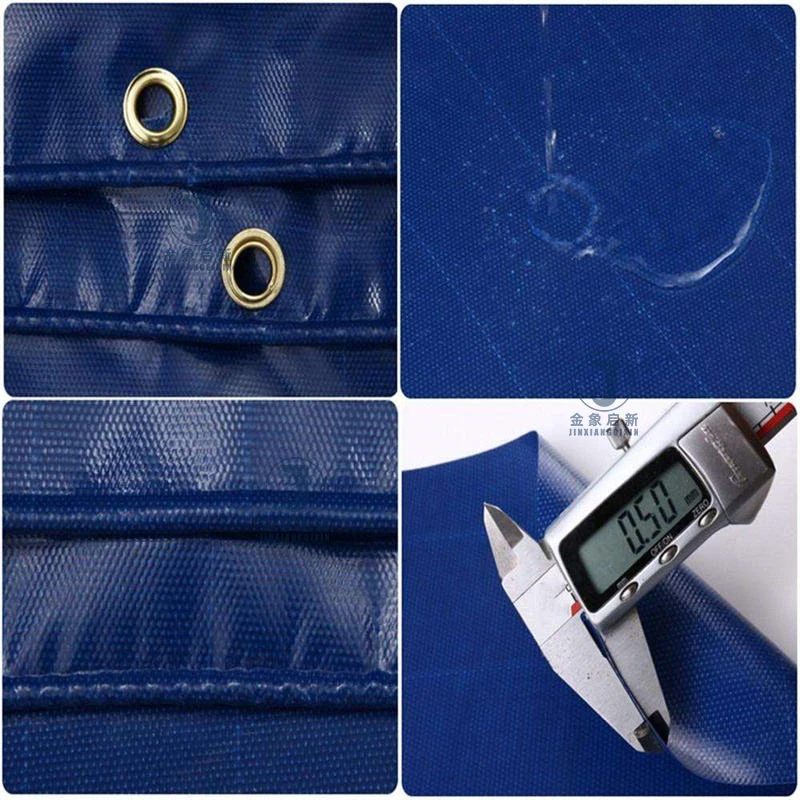
Description
Volume consistency across every roll — Three full production lines and dedicated QA at every stage allow this PVC Coated Tarpaulin to ship with matched GSM, colour and coating weight from the first core to the last, so container-load orders arrive ready for resale or fabrication without sorting or dispute.
Technical Specifications
| Parameter | Value |
|---|---|
| Product Type | PVC Coated Tarpaulin Roll |
| Material | PVC coated fabric, polyester base |
| Thickness Range | 0.35–1.5 mm |
| Weight Range | 400–1500 g/m² |
| Base Fabric Denier | 500D–2000D |
| Tensile Strength (Warp) | 1500–3000 N/5cm (test basis not stated) |
| Tensile Strength (Weft) | 1200–2800 N/5cm (test basis not stated) |
| Key Features | Waterproof, tear resistant, mildew proof, anti-aging |
| UV Treatment | Available — confirm the grade required for your market |
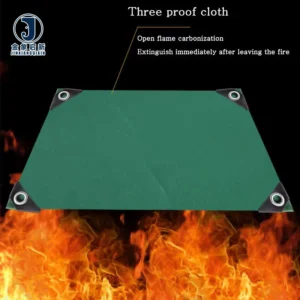
| Flame Retardant | Available in flame retardant grades — confirm the grade required for your market |
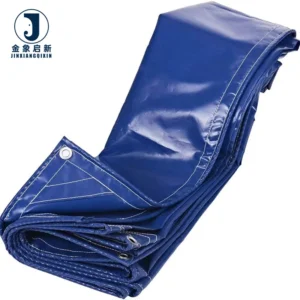
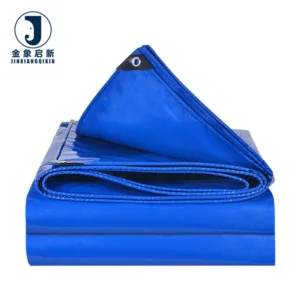
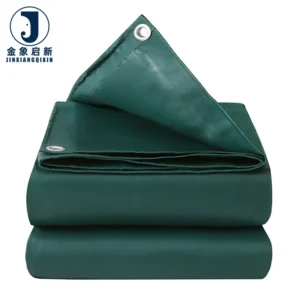
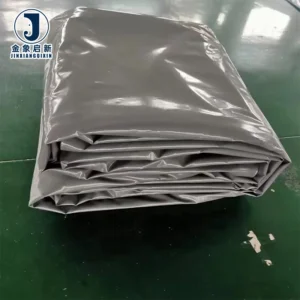
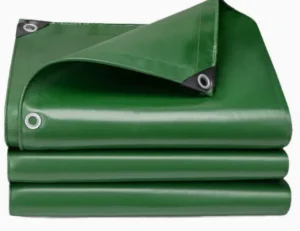
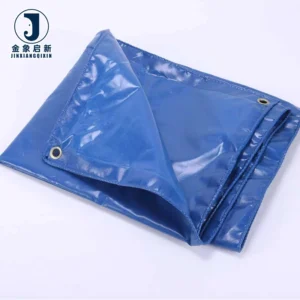
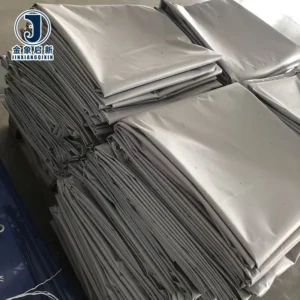
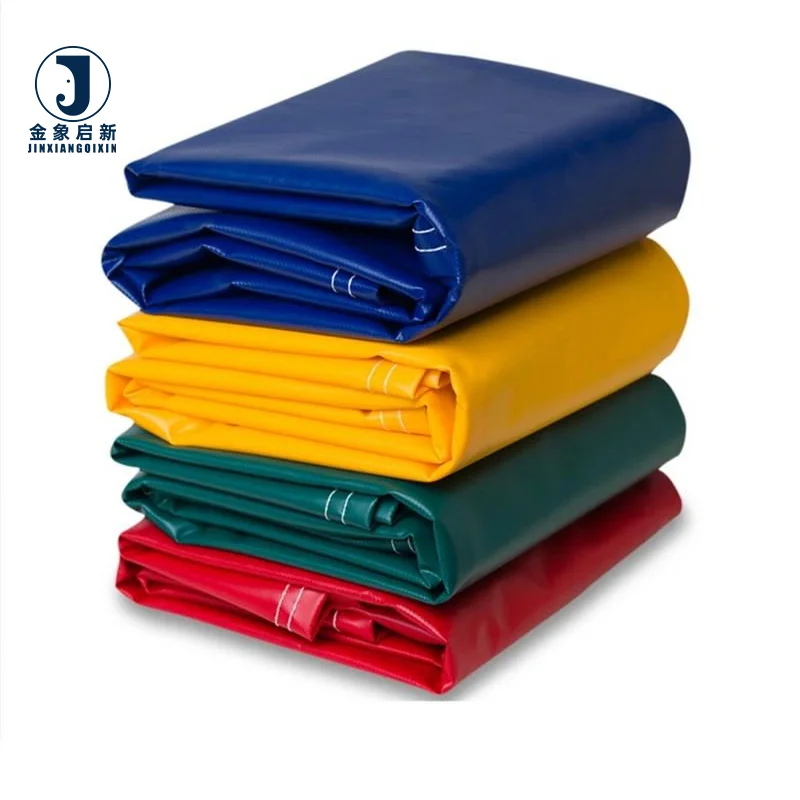
| Color Options | Blue, Blue/Orange, Green, Grey, Black, Clear, Grey/Green, Orange, custom |
| Customization | Width, length, color, pattern printing |
| Standards | ISO, CE |
Application Suitability
| Application | Exposure & Requirement |
|---|---|
| Truck and trailer load covering | Constant road vibration, UV exposure, flex at tie-down points, weather across climate zones |
| Construction site protection | Abrasion from debris, prolonged sun and rain, repeated handling and repositioning |
| Farm and agricultural machinery covers | Moisture, dust, chemical residue from fertilizers, seasonal storage |
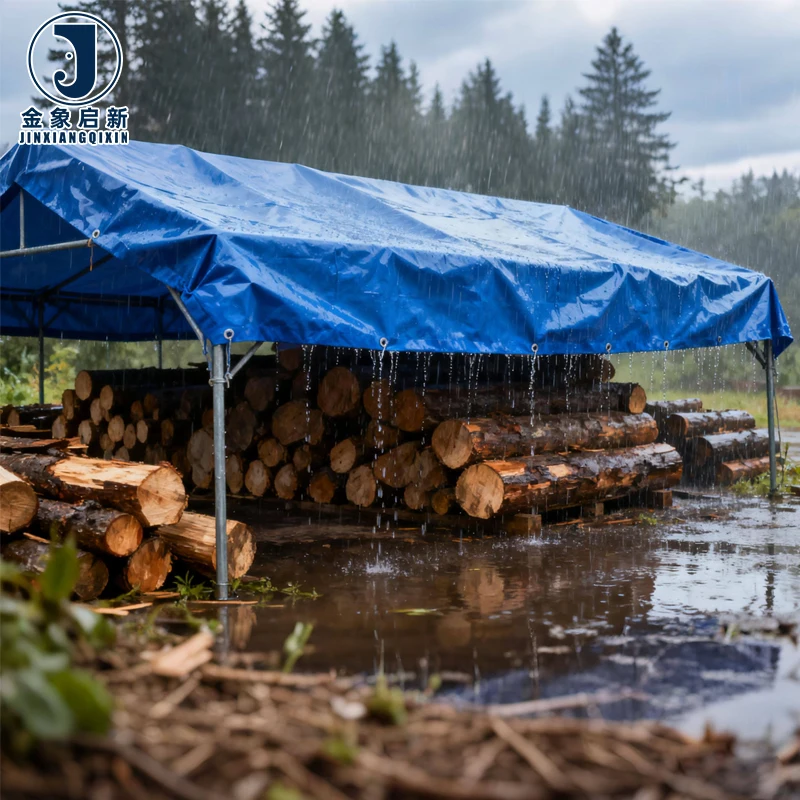
| Outdoor storage and patio covers | Standing water, wind load, temperature swings, surface staining |
| Industrial pipe canopy and tensioned structures | High tensile load, sustained UV, wind uplift, welded seam integrity |
Why Roll-to-Roll Colour Drift Destroys a Container Shipment
A spec sheet can show the same colour code on every roll, but the human eye catches variation the moment two panels hang side by side.
When a distributor unrolls stock for a fleet customer or a tent fabricator lines up panels for a marquee, even a subtle shift in hue across the batch becomes a visible defect. The buyer flags the shipment, the container gets held at the warehouse, and the supplier faces a claim that erases the margin on the entire order. Colour consistency is not a cosmetic detail in the PVC coated tarpaulin roll market — it is the single most frequent cause of batch rejection among volume buyers [NEED_CITE: common causes of coated fabric batch rejection in wholesale trade]. This PVC Coated Tarpaulin addresses that risk through controlled pigment dosing and batch-matched production runs.
Batch Matching from First Core to Last
Maintaining a uniform colour across a multi-roll production run requires tight control over pigment dispersion, coating temperature and line speed. Any drift in one variable shifts the final shade. This PVC Coated Tarpaulin is produced with in-process colour checks at defined intervals, so rolls within the same order share a single batch reference. For wholesale buyers stocking multiple widths and GSM grades, that discipline means the blue on a 400 g/m² roll sits next to the blue on a 700 g/m² roll without visible mismatch when both are displayed in a showroom or cut into finished covers.
Stock Grades and Container Loading
Wholesale purchasing demands predictable lead times and efficient container utilisation. This PVC coated tarpaulin roll is available across three weight tiers — medium at 400–500 g/m², heavy at 700–1000 g/m² and super heavy at 1100–1500 g/m² — covering the full spectrum from light truck covers to tensioned industrial canopies. Standard widths and roll lengths are held in production rotation, and custom widths or lengths are developed with samples before bulk commitment. Container loading plans are calculated by roll diameter and weight, maximising payload per twenty-foot or forty-foot unit [NEED_CITE: standard container loading calculations for coated fabric rolls].
Reading the Spec Sheet Beyond the GSM Number
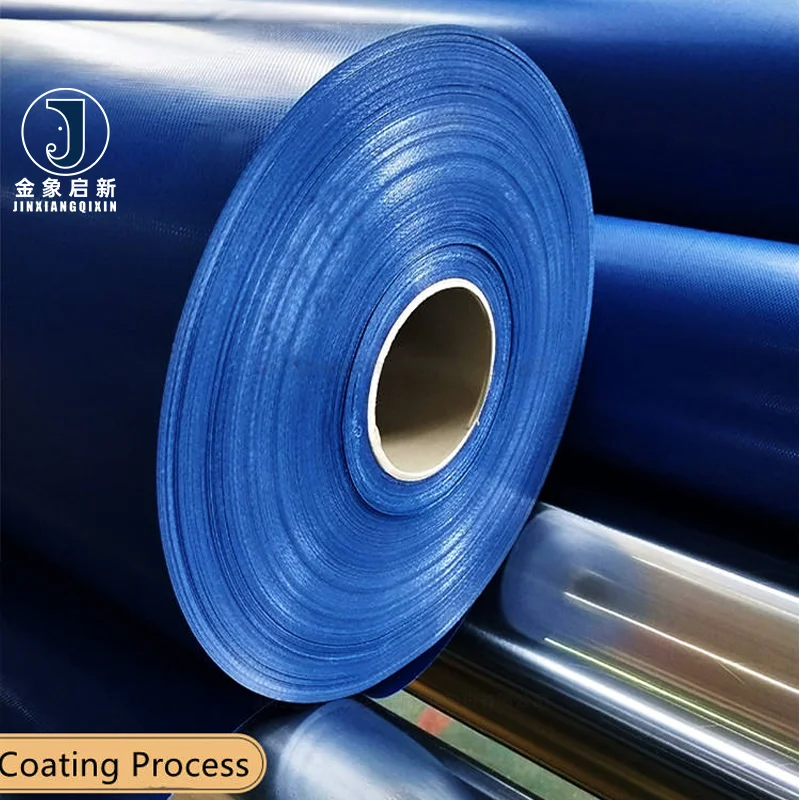
Weight per square metre is the most quoted figure in coated fabric trading, but it tells only part of the story. A 650 g/m² fabric built on a 1000D base with a tight weave will outperform a 650 g/m² fabric on a 500D base with a loose construction when it comes to tear propagation and weld-line strength. The PVC coating weight and the method — knife-over-roll, dip or calender — determine peel strength and how well the material responds to hot-air or wedge welding. Base fabric denier and knitting density govern how a puncture or cut spreads under load. Buyers specifying PVC coated tarpaulin roll stock for fabrication should request the base fabric denier alongside the GSM to make an informed comparison between suppliers.
The Hidden Cost of Specifying on Price Per Kilogram Alone
When a purchasing decision rests entirely on unit cost, the shipment may arrive lighter than the agreed GSM, with a thinner coating that compromises weld integrity and accelerates UV degradation. Rolls that are undersized in width force the fabricator to add a welded seam in a high-stress zone, creating the exact point where the cover will fail first. Batch colour variation means part of the order is unsaleable as first-grade stock. These are not rare occurrences — they are the predictable outcome of treating coated fabric as a commodity rather than a process-controlled material [NEED_CITE: impact of GSM shortfall on coated fabric service life].
Why Sourcing This PVC Coated Tarpaulin Roll Here Makes Sense
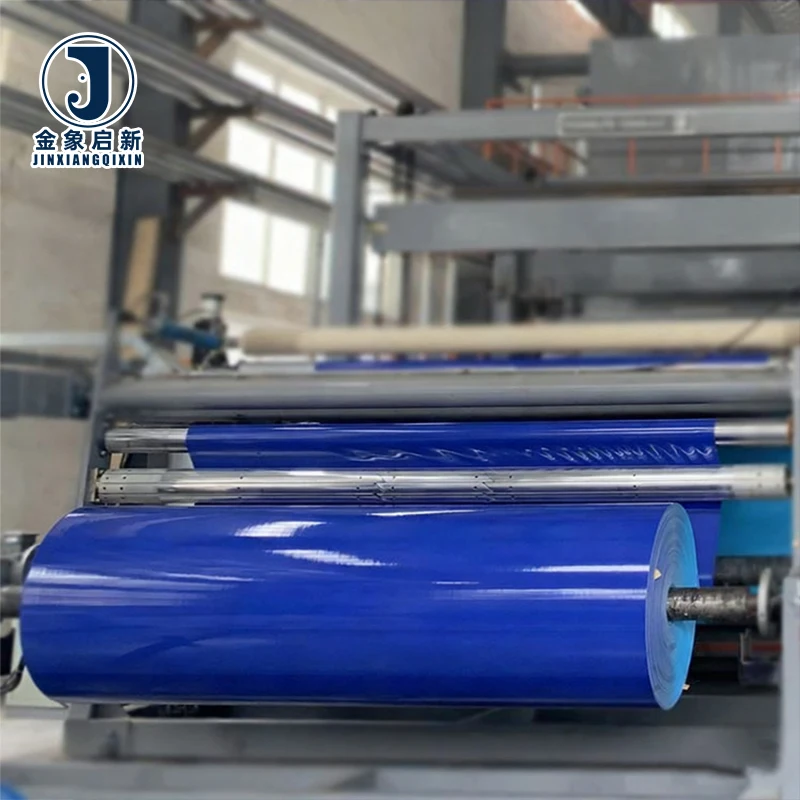
Three full production lines and 36 sets of professional equipment support bulk output without sacrificing lead-time reliability for container-load orders. A 10-person R&D team handles custom width, colour and pattern printing in-house, delivering samples within days so buyers can verify hand feel, colour and weld behaviour before committing to volume. Dedicated QA and QC stations at every production stage — coating, curing, winding and packing — catch GSM drift and colour shift before the roll leaves the line. Pre-shipment inspection covers 100% of the order, not a statistical sample, so every roll that ships is accounted for on the packing list.
Documentation & Verification
- Material specification sheet stating exact GSM, base fabric denier and coating weight per roll
- Colour reference code tied to production batch for side-by-side verification on arrival
- Pre-shipment inspection record confirming weight and visual consistency before dispatch
- Roll packing list matched to container loading plan for straightforward customs clearance
- Certificate of origin and customs documentation included with every export shipment
- UV and flame retardant test reports supplied where the specified grade requires third-party evidence
Fabrication, Handling & Storage
- Hot-air welding temperature should be matched to the PVC coating weight to avoid delamination at seams
- Reinforce eyelet zones with additional fabric patches to distribute tie-down loads across the base weave
- Store rolls upright on pallets to prevent flat spots that show as creases when unrolled on site
- Avoid dragging heavy-grade rolls across abrasive surfaces during workshop handling to protect the coating face
- Use mild detergent and soft brush for cleaning; solvent-based cleaners may soften the PVC coating surface
- Allow cold-stored rolls to reach ambient temperature before unrolling to prevent coating micro-cracking
What We Need to Quote Your Roll Order Accurately
To move from enquiry to sample, share the GSM range, base fabric denier preference and the colours you need for your market. Let us know the target roll width and whether you require standard stock lengths or a custom cut length for your fabrication setup. If your end use demands flame retardant or anti-static compliance, specify the standard your market requires so we can match the grade and include the correct test documentation with the quotation.
Frequently Asked Questions
Q: What standard widths and GSM grades do you keep in stock for immediate shipment?
A: We produce PVC coated tarpaulin roll stock across medium, heavy and super heavy weight tiers, covering a range of widths suitable for truck cover, construction and industrial applications. Standard grades are scheduled in regular production rotations. For exact stock widths and GSM grades available at the time of your order, submit an enquiry with your target specification and we will confirm availability and lead time.
Q: How do you ensure colour consistency across multiple rolls in the same order?
A: Every roll within a single order is produced under one batch reference with controlled pigment dosing and in-process colour checks. This means the shade on the first roll matches the last. On arrival, the colour reference on the packing list lets you verify consistency roll by roll before cutting or resale.
Q: Can I get a sample roll before committing to a full container order?
A: Yes. Our R&D team prepares sample rolls to your specified GSM, colour and width within days of confirmation. You can test weld parameters, check hand feel and verify colour under your local lighting conditions before releasing the bulk order. Sample costs and courier terms are confirmed at the enquiry stage.
Q: What is the minimum order for custom width, colour or printed branding?
A: Minimum quantities for custom specifications depend on the width, colour and print complexity requested. Custom colours and printed patterns require a production run large enough to ensure batch consistency. Submit your target dimensions and design, and we will advise the minimum alongside the sample development timeline.
Q: What documentation ships with the rolls for customs and quality verification?
A: Each shipment includes a material specification sheet per roll, a roll packing list matched to the container plan, a certificate of origin and standard customs documentation. Where UV or flame retardant grades are specified, the corresponding test report is included so your receiving team can verify compliance against your market requirements.