Description
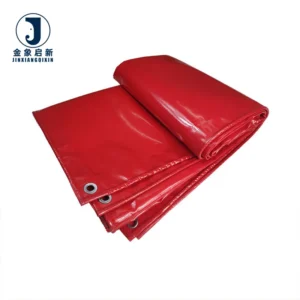
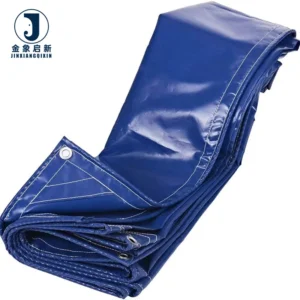
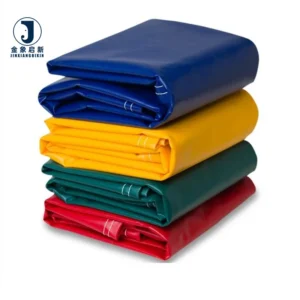
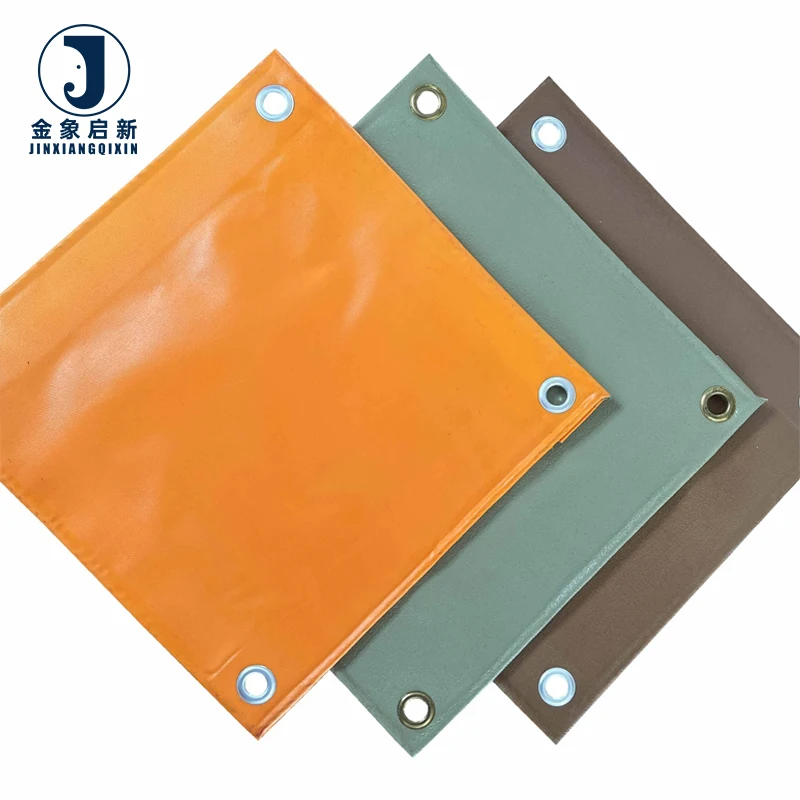
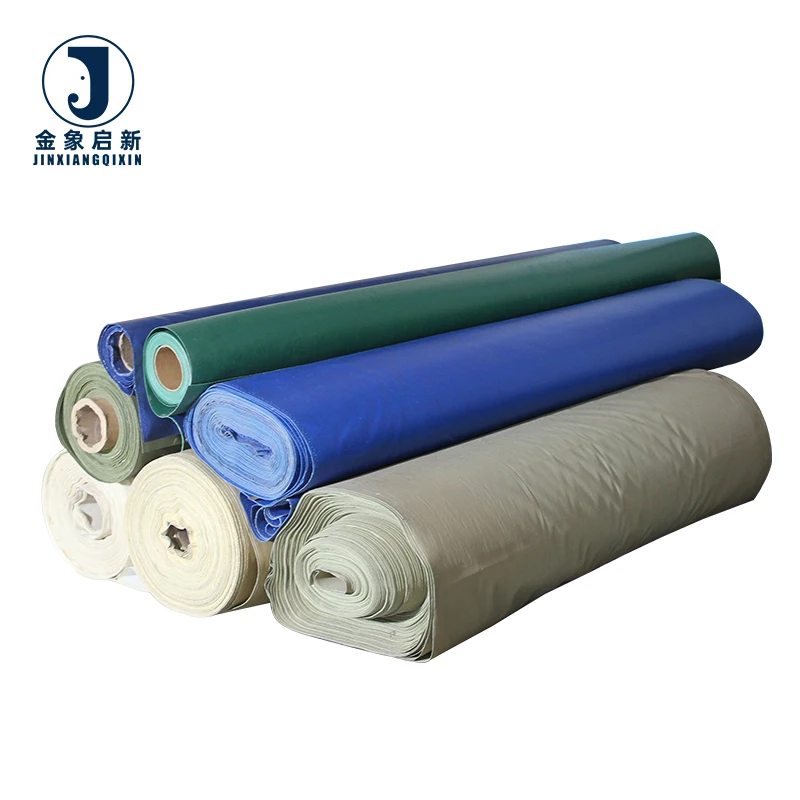
Roll-Stock Consistency — Coating weight and colour formulation controlled across all three production lines, verified roll-to-roll before dispatch so your fabricator never sees a shade shift mid-installation.
Technical Specifications
| Parameter | Value |
|---|---|
| Product Type | PVC Coated Tarpaulin Roll |
| Coating Material | PVC |
| Coating Method | Lamination and hot melt coating technology |
| Base Fabric | High toughness polyester yarn |
| Base Fabric Denier | 500D–2000D (grade-dependent) |
| Weight (GSM) | 400–500, 700–1000, 1100–1500 (confirm grade for your application) |
| Total Thickness | 0.35–0.45 mm / 0.70–1.0 mm / 1.2–1.5 mm (grade-dependent) |
| Tensile Strength (Warp) | 1500–3000 N/5cm (grade-dependent, test standard not stated) |
| Tensile Strength (Weft) | 1200–2800 N/5cm (grade-dependent, test standard not stated) |
| Cold Crack Resistance | -30 °C |
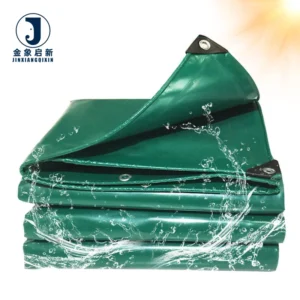
| Waterproof | Yes |
| Mold Proof | Yes |
| Anti-Static | Available — confirm surface resistance value for your market |
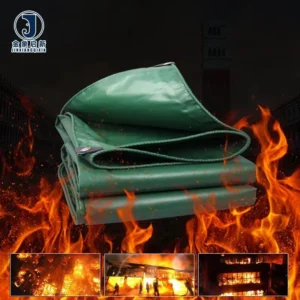
| Flame Retardant | Available in flame retardant grades — confirm the grade required for your market |
| UV Treatment | Available — confirm test basis for your market |
| Color Fastness | High (test basis not stated) |
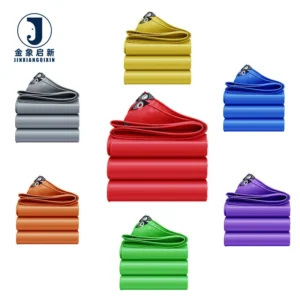
| Custom Options | Custom width, length, colour, pattern printing, branding |
Application Suitability
| Application | Exposure & Requirement |
|---|---|
| Exhibition booth backdrop | Indoor lighting, wide-format digital printing, frequent install and teardown, wrinkle resistance under tension |
| Event staging backdrop | Outdoor wind load, UV exposure during multi-day events, panel-to-panel colour match across large surfaces |
| Sign and banner printing | Ink adhesion on PVC surface, anti-static dust resistance before print, flat lay for plotter and UV printers |
| Lightweight trade show structure | Frame loading limits, low GSM requirement, crease recovery after roll transport |
| Tensioned display fabric | Constant tension on aluminium extrusion, seam stress at keder edges, repeated tension cycles |
Why Colour Varies Between Rolls — and What Batch Control Actually Means
Colour shift between rolls in the same bulk order is one of the most costly defects a PVC coated tarpaulin roll wholesale buyer can face, especially when fabricating large-format event backdrops where panels hang side by side.
When adjacent panels show a visible tint difference under trade-show lighting, the entire backdrop looks unprofessional, and the fabricator absorbs the rework cost. This problem rarely originates from a single faulty roll — it usually stems from inconsistent pigment dispersion or coating temperature drift across production runs. [NEED_CITE:] Batch-controlled production addresses this by locking the colour formulation at the coating stage and verifying shade consistency through pre-shipment inspection across every roll in the order.
Roll-to-Roll Colour Consistency for Backdrop Fabricators
When a PVC coated tarpaulin roll wholesale order spans multiple rolls for a single event, the fabricator cuts and joins panels expecting a uniform appearance. Any deviation in pigment loading or coating gloss between rolls becomes visible once panels are installed side by side on a frame. Our production process controls coating formulation at each of the three full production lines, and the 100% pre-shipment inspection compares colour across all rolls within a single dispatch. This means the backdrop fabricator can schedule cutting and welding without sorting rolls by shade on the shop floor.
Volume Pricing Without Sacrificing Batch Integrity
Buying PVC coated tarpaulin roll wholesale at volume typically means negotiating price at the cost of batch mixing — different production dates, slightly different pigment lots, and inconsistent surface gloss ending up in the same container. The emphasis here is on container loading by roll count and weight, with every roll in a bulk order traced to the same coating batch where feasible. The pre-shipment inspection record documents GSM and colour per roll, so the buyer can cross-reference the packing list against physical stock on arrival.
How Coating Method Affects Printability and Handling
The lamination and hot melt coating technology used on these rolls produces a surface that accepts wide-format solvent, eco-solvent, and UV-curable inks. The hot melt process bonds the PVC layer to the high toughness polyester yarn base fabric, which directly affects peel strength — a poorly bonded coating will delaminate at the cut edge after repeated rolling and unrolling at events. The surface finish, whether glossy or matte, should be specified at inquiry stage to match the print technology and lighting conditions of the venue. [NEED_CITE:]
Reading the Specification Sheet Beyond GSM
GSM alone does not predict how a backdrop fabric will behave under tension on a frame. The base fabric denier — 500D through 2000D depending on grade — determines how well the fabric resists tearing at the keder edge where tension concentrates. Coating weight and base fabric density together define the tensile strength values listed per grade, and neither number is useful in isolation. The total thickness, ranging from 0.35 mm for lightweight exhibition grades to 1.5 mm for super heavy structural applications, correlates with stiffness and crease recovery — a critical factor when the backdrop must be transported rolled and deployed without visible fold lines. The cold crack resistance of -30 °C ensures the coating remains flexible during winter transport and outdoor installation in cold climates.
The Hidden Cost of Underspecifying Backdrop Fabric
Choosing a lower GSM grade to save on material cost often surfaces as a failure during installation, not during procurement. Lightweight rolls with insufficient base fabric density tear at the hem eyelet line when the backdrop is tensioned on an aluminium frame, and the repair cost on-site far exceeds the material saving. Similarly, ordering rolls without confirming anti-static treatment leads to dust attraction on the printed surface — visible in photography and under direct stage lighting. Colour inconsistency discovered only after panels are cut and hung forces the fabricator to reprint entire sections at short notice. [NEED_CITE:]
Why Buyers Source Roll Stock Here
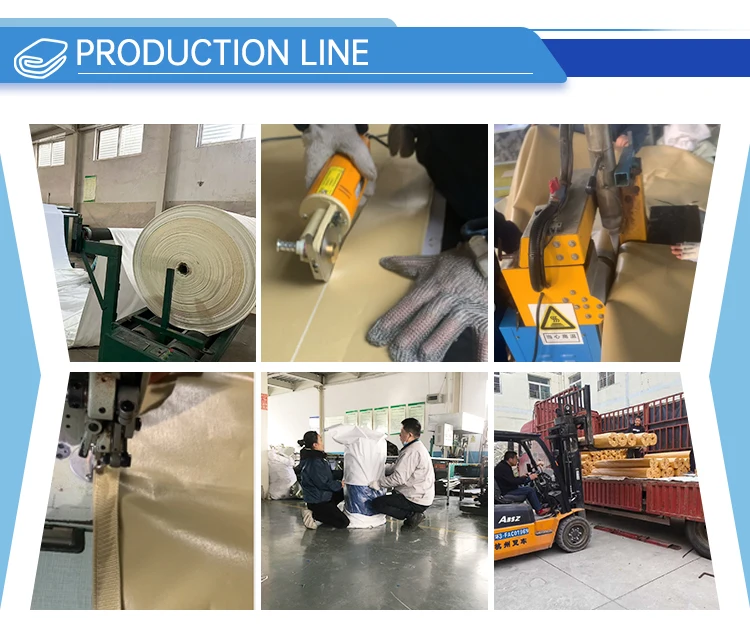
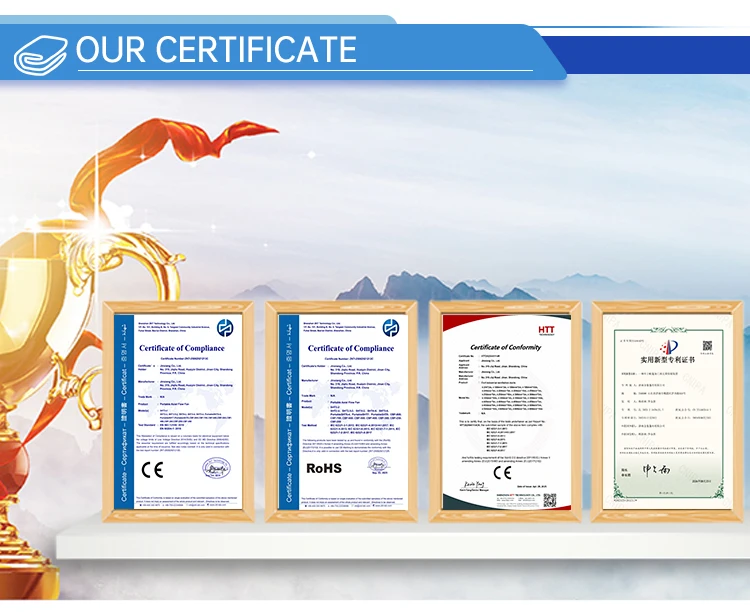
Three full production lines and 36 sets of professional equipment mean bulk PVC coated tarpaulin roll wholesale orders move through coating and winding without bottleneck, supporting container-load dispatch on schedule. The 10-person R&D team develops samples within days, matching custom colour and surface finish before the buyer commits to a production run. Dedicated QA/QC at every production stage catches GSM drift and surface defects before rolls reach the packing area. Nearly 30 years of coating process control provides the depth of experience that shows in roll-to-roll adhesion consistency. ISO and CE certified production documentation travels with every shipment, reducing customs delays at the destination port.
Documentation & Verification
- Material specification sheet stating GSM, base fabric denier, and coating method per roll batch
- Pre-shipment inspection record confirming colour consistency across all rolls in the order
- Roll packing list with roll count, net weight, and GSM per roll for inbound verification
- Anti-static and flame retardant test reports matched to the batch supplied
- Certificate of origin and customs documentation for import clearance
Fabrication, Handling & Storage
- Heat-weld overlapping panels using temperature settings matched to the PVC coating method to avoid delamination at the seam
- Allow cold-stored rolls to acclimatise to workshop temperature before unrolling to prevent coating crack at -30 °C threshold
- Store rolls upright on end caps to prevent flat-spot creasing across the base fabric denier layers
- Use PVC-compatible cleaners only — solvent-based products degrade the hot melt coating bond over repeated cleaning cycles
- Cut panels with a margin for hem allowance accounting for the total thickness of the selected grade
- Plan roll layout to minimise cross-grain joins on wide-format backdrop panels exceeding single-roll width
What to Include in Your Enquiry
Specify the backdrop frame system and maximum panel span so the correct GSM and denier grade can be recommended. Confirm whether the final installation is indoor or outdoor, and whether local fire safety regulations require a specific flame retardant grade. Indicate the roll widths and lengths needed for your printing equipment, along with annual volume and any custom colour or printed branding requirements. Request a sample roll section to verify print compatibility and surface finish before placing the bulk order.
Frequently Asked Questions
Q: How is GSM verified on arrival and what tolerance is accepted roll-to-roll?
A: Each roll is inspected against the stated GSM during the pre-shipment inspection, and the roll packing list documents the verified weight. On arrival, buyers can cross-check using the inspection record. Tolerance expectations should be confirmed at the quotation stage, as acceptable variance depends on the GSM grade selected and the application requirements of the backdrop or banner being fabricated.
Q: How is colour consistency maintained across rolls within the same bulk order?
A: Colour formulation is locked at the coating stage, and all rolls within a single order are produced under the same pigment batch where feasible. The pre-shipment inspection compares shade across every roll before packing. Buyers can request a sample from the production run to approve colour before the full order is dispatched.
Q: What anti-static standard or surface resistance value applies to the printable grade?
A: Anti-static treatment is available across multiple GSM grades, but the specific surface resistance value depends on the grade selected and the coating formulation used. Buyers should state the standard or resistance range required by their print equipment manufacturer or end-client, and the matching test report will be supplied with the shipment documentation.
Q: What roll widths and lengths are available, and what is the minimum per colour?
A: Rolls are produced in custom widths and lengths to suit the buyer’s printing and fabrication equipment. Standard stock grades are available for immediate dispatch, while custom colours and printed branding require sample approval before production. Minimum order quantities per colour vary by grade and should be confirmed at the quotation stage.
Q: How are rolls packed for container loading to prevent creasing and surface damage?
A: Rolls are packed on core tubes with protective wrapping and loaded upright or horizontally depending on container configuration and roll diameter. The packing method accounts for the total thickness and weight of the selected GSM grade to prevent deformation during transit. Specific packing requirements for long sea freight journeys should be discussed at the order confirmation stage.